

Bedside Snapshot
- Normal Result
- Negative (below ≈20 WBC/µL, 20 × 10⁶/L). Trace is equivocal: repeat on a clean specimen or check microscopy.
- Significant Result
- No critical value. Small (1+) or more = pyuria; it matters only with urinary symptoms, fever, pregnancy or a febrile infant (any LE counts).
- Positive Suggests
- UTI: cystitis, pyelonephritis, urosepsis
- STI: gonorrhea, chlamydia, Trichomonas
- Contamination
- Sterile pyuria: antibiotics, stones, nephritis, Kawasaki
- Negative Does Not Exclude
- UTI with neutropenia, very dilute urine (infants), vitamin C, heavy glycosuria or proteinuria, or prior antibiotics. Culture anyway when the story is strong.
- Act Now If
- Positive LE with fever, flank pain, hypotension or confusion: sepsis screen, blood and urine cultures before antibiotics, notify receiving. Febrile infant ≤60 days: catheter culture.
- Watch Out For
- Positive strip without urinary symptoms (older adults, catheters) is usually asymptomatic pyuria. Do not treat it as UTI; find the real cause of delirium or fever.
Reference & Critical Ranges
Lab-specific ranges: Every lab sets its own interval, based on its analyzer and its population. Read the range on your report. The values below are typical.
Reference ranges
| Population | Conventional | SI | Notes |
|---|---|---|---|
| Adult | Negative | — | Below the pad's detection limit (≈20 WBC/µL). Counts below 10 WBC/µL are within the normal range. |
| Pregnancy | Negative | — | Positive strips from contamination are common; screen for bacteriuria by culture, not strip. |
| Older adult | Negative | — | Asymptomatic pyuria is common, especially in long-term care. |
| Children | Negative (same as adult) | — | Dilute infant urine can hide pyuria; read with specific gravity. |
Severity & critical values
| Result grade | Approximate concentration | Meaning |
|---|---|---|
| Negative | Below about 20 WBC/µL (20 × 10⁶/L) | No significant pyuria in a fresh, well-collected specimen. UTI less likely, not excluded. |
| Trace | Near the detection limit, about 20 WBC/µL | Equivocal in adults: repeat or send microscopy. In febrile infants, count any LE as positive. |
| Small (1+) | Above the detection limit; conversion to cells is brand-specific | Pyuria. Meaningful only with urinary symptoms, fever or a high-risk patient. |
| Moderate to large (2+ to 3+) | Higher counts; brand-specific cell equivalents, so read against the vial chart | Marked pyuria. In older adults, LE ≥2+ (or ≥1+ with nitrite) is more specific but less sensitive than any positive (one 2026 study; see Clinical Pearls). |
| Critical | None | No panic value. Urgency comes from the patient: sepsis, febrile infant, pregnancy, obstructed kidney. |
Critical values: No leukocyte esterase result is critical. A positive strip gets urgent only with fever, flank pain, hypotension, confusion or a febrile infant. Then treat the patient, not the strip.
Conversion: 1 WBC/µL = 1 × 10⁶ WBC/L
Pyuria thresholds by method
| Method | Pyuria if | Notes |
|---|---|---|
| Uncentrifuged chamber count | ≥10 WBC/µL | Reference method; lab workflows often use >30 WBC/µL with a 10–30 grey zone. |
| Centrifuged microscopy | ≥5 WBC/hpf | Common in US reports and infant studies (>5 WBC/hpf). |
| Infant, SG-adjusted microscopy | ≥3 WBC/hpf (SG <1.015) or ≥6 WBC/hpf (SG ≥1.015) | Infant study thresholds; they shift with urine concentration. |
| Dipstick | Any leukocyte esterase | Sensitivity rises with cell count; a negative strip does not exclude low-grade pyuria. |
Causes of Abnormal Results
Positive result
Most pyuria is infection. The non-infectious list is still long, so the can't-miss causes are in bold.
| Cause | Clue |
|---|---|
| Pyelonephritis or urosepsis | Fever, rigors, flank or costovertebral angle (CVA) tenderness, vomiting, hypotension or confusion |
| Infected obstructed kidney | Fever with renal colic or a known stone; needs urgent urologic drainage, not antibiotics alone |
| Cystitis | Dysuria, frequency, urgency, suprapubic pain; usually nitrite and bacteria too |
| Sexually transmitted infection (STI) | Gonorrhea, chlamydia or Trichomonas: discharge, pelvic pain, new partner; culture often sterile |
| Prostatitis | Men with fever, perineal pain or obstructive voiding |
| Catheter, stent or neurogenic bladder | Pyuria is expected with devices and intermittent catheterization; it does not prove infection |
| Contamination | Vaginal discharge, menstruation, many squamous cells on microscopy; repeat a clean or catheter specimen |
| Sterile pyuria (culture negative) | See below: recent antibiotics, stones, interstitial nephritis, TB, Kawasaki disease, adjacent inflammation |
Fever plus pyuria is not always a UTI: Appendicitis and pelvic inflammation can both turn the urine positive. If the abdominal exam doesn't fit, don't let the strip anchor you.
Sterile pyuria (positive LE, negative routine culture)
| Group | Common causes | Bedside clue |
|---|---|---|
| Infection not grown on routine culture | Recent or current antibiotics; gonorrhea, chlamydia, Trichomonas, Mycoplasma, Ureaplasma; genitourinary tuberculosis; fungi; schistosomiasis | Antibiotics in the last days; sexual history; TB risk or travel; persistent pyuria |
| Kidney disease | Acute interstitial nephritis, glomerulonephritis, nephrotic syndrome, kidney transplant, dialysis | New drug (NSAID, PPI, antibiotic, anticonvulsant) with rising creatinine; hematuria and protein |
| Stones and structure | Nephrolithiasis or nephrocalcinosis, tumors, catheters, stents, neurogenic bladder | Colic, hematuria, device in place |
| Systemic disease | Kawasaki disease, lupus, sickle cell disease, toxic shock syndrome | Child with ≥5 days of fever; rash, joint or multisystem findings |
| Adjacent inflammation | Appendicitis, ovarian torsion, pelvic inflammatory disease, colitis | Abdominal or pelvic tenderness out of proportion to urinary symptoms |
| Drugs | Drug-induced cystitis (cyclophosphamide, some NSAIDs) | Chemotherapy or NSAID history; hematuria |
False positive vs true positive
| Finding | False positive (no true pyuria) | True positive |
|---|---|---|
| Source of the cells | Vaginal or skin contamination; menstruation | White cells from the urinary tract |
| Chemical | Oxidizing detergents, formaldehyde, sodium azide in the container | Esterase from granulocytes, including lysed cells |
| Color | Red or brown urine (beets, bilirubin) masks the pad color | Pad color develops at the labeled read time |
| Microscopy | Many squamous epithelial cells, few WBCs | WBCs present; WBC casts point to the kidney |
Interpretation & Bedside Approach
Step-by-step approach
- Is it real? Start with a fresh midstream clean catch, tested within 2 hours and read at the labeled time. Never use a drainage bag. Patients who can't void on request need a catheter or suprapubic specimen.
- Does the patient have urinary symptoms? Dysuria, frequency, urgency, suprapubic pain, flank pain or fever give the strip its meaning. Without them, a positive LE usually means asymptomatic pyuria or bacteriuria. The IDSA 2019 guideline says don't treat that, except in pregnancy and before urologic procedures that breach the mucosa.
- How sick is the patient? Fever, rigors, CVA tenderness, hypotension, confusion or a rising lactate means possible pyelonephritis or urosepsis. Screen for sepsis. Send blood and urine cultures only if they don't delay antibiotics. Give antibiotics per sepsis protocol without waiting for urine results. Fever with an obstructing stone needs urgent urology.
- Read it with the nitrite and microscopy. LE adds sensitivity. Nitrite adds specificity. Together the pair rules out better than it rules in. Use the pattern table below.
- Decide who needs a culture. Otherwise healthy, non-pregnant women with typical uncomplicated cystitis don't need lab tests, per the EFLM 2023 guideline. Send a culture for pyelonephritis, sepsis, pregnancy, men, children, catheters, recurrent or treatment-failure UTI and immunosuppression.
- Culture negative but LE positive? Work through sterile pyuria. Check recent antibiotics, STI testing, stones, drug-induced interstitial nephritis, TB and, in children, Kawasaki disease. Persistent unexplained pyuria needs follow-up.
Pattern recognition
| LE / nitrite | Suggests | Next step |
|---|---|---|
| LE + / nitrite + | Bacterial UTI likely; nitrite is >90% specific | Treat if symptomatic; culture if complicated |
| LE + / nitrite − | UTI with a non-nitrate-reducing organism (Enterococcus, Staphylococcus, Pseudomonas) or short bladder dwell; STI; sterile pyuria; contamination | Microscopy and culture; STI testing when sexually active |
| LE − / nitrite + | Bacteriuria without pyuria: neutropenia, asymptomatic bacteriuria, or bacterial growth in a delayed specimen | Repeat a fresh specimen; culture if symptomatic or neutropenic |
| LE − / nitrite − | UTI less likely in a fresh, well-collected specimen | Look for another cause; culture anyway if pretest probability is high (febrile infant, neutropenia, classic pyelonephritis) |
How well the strip performs
| Population | Performance | Practical meaning |
|---|---|---|
| Adults, mixed settings: EFLM 2023 guideline | LE or nitrite positive: about 80% sensitive for ≥10⁵ CFU/mL, lower at lower colony counts | Better for ruling out than ruling in |
| Febrile infants ≤60 days: PECARN 2018 study | Any LE, nitrite or >5 WBC/hpf: sensitivity 94% (100% with bacteremia), specificity 91% | Negative makes bacteremic UTI very unlikely |
| Adults ≥60 years: 2026 meta-analysis | Sensitivity 90%, specificity 56% for bacteriuria; in symptomatic patients 92% and 39% | Positive does not confirm UTI |
Do not let the strip make the diagnosis: Older, catheterized or confused patients often test positive without infection. Treating the strip hides the real cause and adds antibiotic harm.
Special Populations
| Population | What changes | Clinical implication |
|---|---|---|
| Neonates & infants | Dilute urine lowers the white cell concentration. Bag specimens are often contaminated. | In febrile infants ≤60 days, any LE, nitrite or >5 WBC/hpf is a positive urinalysis under the AAP 2021 febrile-infant pathway. Confirm with a catheter or suprapubic culture; Under the AAP 2011 UTI guideline, UTI in infants and young children needs pyuria plus ≥50,000 CFU/mL of one uropathogen on a catheter specimen. |
| Children & adolescents | Sterile pyuria is common: viral illness, STI in adolescents, Kawasaki disease. | A child with ≥5 days of fever and sterile pyuria: consider Kawasaki disease (urine ≥10 WBC/hpf is an AHA supplemental criterion). Test sexually active teens for STI. |
| Pregnancy | Contamination is frequent. Untreated bacteriuria can progress to pyelonephritis, which is linked to preterm birth. | Screen once early in pregnancy with urine culture, not a dipstick, and treat bacteriuria. Fever or flank pain in pregnancy: evaluate for pyelonephritis. |
| Older adults | Asymptomatic bacteriuria and pyuria are common, especially in long-term care. | Test only when you intend to treat. Delirium or a fall without urinary symptoms or sepsis: look for other causes and observe. |
| Catheter, spinal cord injury, neurogenic bladder | Pyuria is almost universal and is not diagnostic of catheter-associated UTI. | Do not dipstick to diagnose catheter UTI. Culture from a new catheter (or freshly sampled port) only when there are symptoms or sepsis. |
| Neutropenia & immunosuppression | Too few neutrophils to make pyuria. | A negative LE does not exclude UTI; culture when febrile. Kidney transplant recipients beyond 1 month: do not screen for asymptomatic bacteriuria. |
| CKD & dialysis | Pyuria, including sterile pyuria, is common. | Rely on symptoms and culture. |
Asymptomatic bacteriuria, per IDSA 2019: Pregnancy and urologic procedures with mucosal trauma are the only times to screen and treat. Children, older adults, diabetes, catheters and spinal cord injury are all off that list.
Interfering Factors & Pitfalls
Collection & handling
| Factor | Effect | Why | Avoid / fix |
|---|---|---|---|
| Vaginal or skin contamination | False + | White cells from discharge, menstruation or cervicitis | Midstream clean catch; catheter specimen if repeated |
| Delayed testing | False − (or nitrite false +) | Cells degrade after 2–6 h at room temperature; refrigeration also lowers LE; bacteria multiply | Test within 2 hours |
| Catheter drainage bag | Unreliable | Stagnant urine with biofilm bacteria | Sample from the port of a new or freshly placed catheter |
| Dilute urine | False − | Overhydration or infant urine lowers the cell concentration | Read with specific gravity; repeat on a first-morning or concentrated specimen |
| Wrong read time | False − or false + | The leukocyte pad develops slowly (commonly read at 2 min) | Read at the time on the vial label |
Medications & substances
| Factor | Effect | Why | Avoid / fix |
|---|---|---|---|
| Vitamin C (gram doses) | False − | Ascorbate inhibits the color reaction | Ask about supplements; use microscopy |
| Cephalexin, cephalothin, gentamicin, tetracycline, high oxalic acid | False − | Listed in strip labeling as decreasing the esterase reaction; antibiotics also mean partial treatment | Note antibiotics given before collection |
| Boric acid preservative (1%) | False − | Inhibits the pad | Use an unpreserved cup for the dipstick |
| Oxidizing detergents, formaldehyde | False + | Chemical reaction on the pad | Clean, chemical-free container |
| Beets, bilirubinuria | Masked or false + | Urine color hides or mimics the pad color | Microscopy or automated count |
Physiologic / biologic
| Factor | Effect | Why | Avoid / fix |
|---|---|---|---|
| Heavy glycosuria (about >2,000 mg/dL) | False − | Inhibits the reaction; threshold varies by brand | Microscopy in hyperglycemia or SGLT2-inhibitor use |
| Heavy proteinuria (about >500 mg/dL) | False − | Inhibits the reaction | Microscopy |
| Neutropenia | True negative despite infection | No neutrophils to shed | Culture any febrile neutropenic patient |
| Lysed white cells | Strip + / microscopy − | Lysed cells keep esterase activity but are not counted | Expected in old or dilute urine; trust the strip |
Common misinterpretations
- "Positive LE = UTI": with no symptoms, that's usually asymptomatic pyuria or bacteriuria.
- "Negative nitrite rules out UTI": Enterococcus, Staphylococcus and Pseudomonas don't make nitrite. LE carries the sensitivity.
- "Sterile pyuria is nothing": Think STI, TB, interstitial nephritis, stones and Kawasaki disease.
- "Strip negative, so no culture": Not in neutropenia, very dilute infant urine or a high-probability story.
Physiology & Test Basics
What it measures
The leukocyte esterase pad picks up esterase enzymes from granulocytes, mainly neutrophils, and from macrophages in urine. It's a chemical marker of pyuria. Lymphocytes carry no esterase, so the pad never sees them. This page covers the dipstick. For a direct cell count, use urine microscopy. Nitrite marks bacteria.
Physiology & regulation
- Source: neutrophils migrate into the urinary tract when infection or inflammation is present.
- Lysed cells count: esterase stays active after cells break down. The strip can read positive when microscopy finds few WBCs.
- Concentration matters: the result is cells per volume. Dilution lowers it. Concentration raises it.
- Needs neutrophils: severe neutropenia blunts the response.
How it is measured
- Specimen: fresh midstream clean-catch urine in a sterile, preservative-free cup. Infants and patients who cannot void on request need a catheter or suprapubic specimen. Collect before antibiotics.
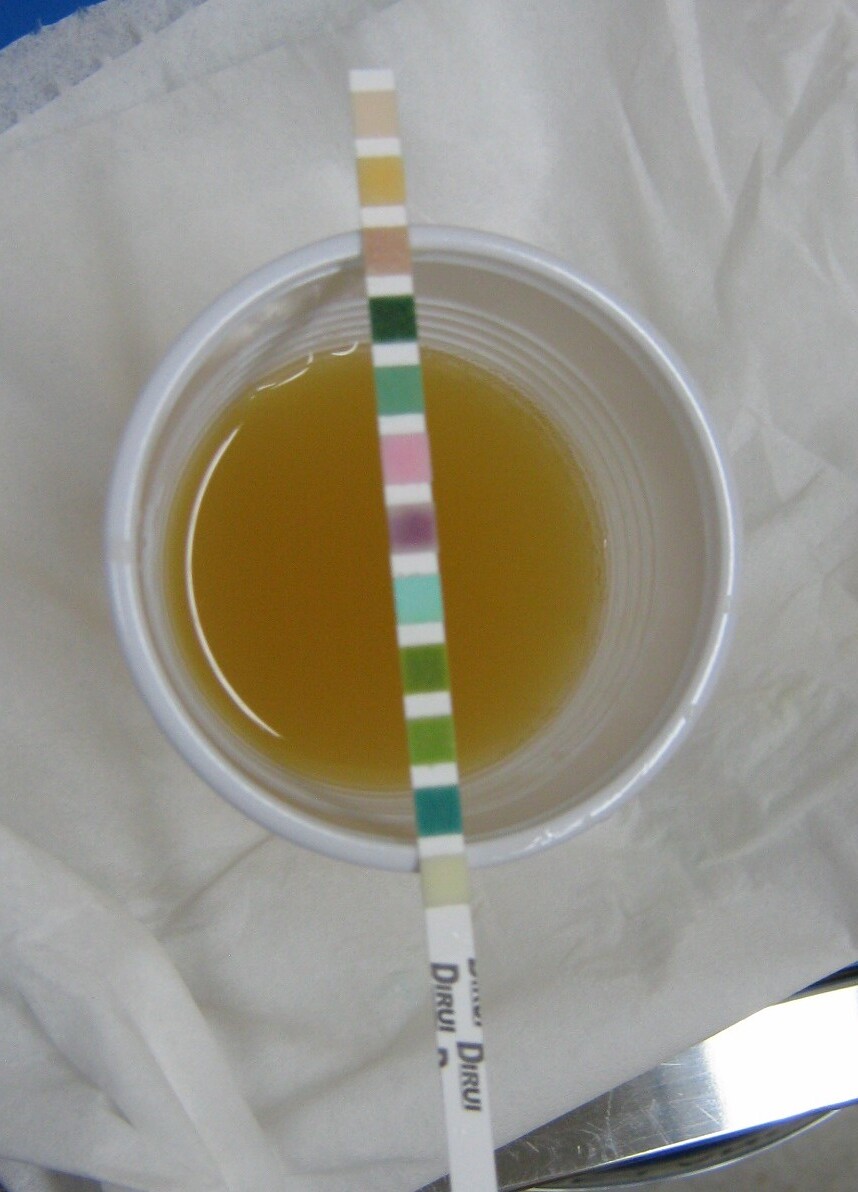
- Method: the pad holds an indoxyl (or pyrrole amino acid) ester. Esterase frees a compound, which couples with a diazonium salt and turns beige-pink to purple. Read it against the vial chart, or use an automated reader.
- Reporting: negative, trace, small (1+), moderate (2+), large (3+). Cell equivalents differ by brand.
- Timing: test within 2 hours of collection. No fasting. Results come in about 2 minutes at the point of care.
Why it matters
LE is the most sensitive dipstick sign of urinary tract infection. It belongs in every febrile-infant and urosepsis workup. It's also the single biggest driver of treating asymptomatic bacteriuria. Knowing when to ignore it matters as much as knowing when to act.
Clinical Pearls
EMS and transport: Rarely does a crew run a dipstick, and it shouldn't change prehospital care. Fever, rigors, flank pain, hypotension or confusion with urinary symptoms is possible urosepsis. Treat per sepsis protocol. Don't delay antibiotics or transport to get cultures. Pass the need for blood and urine cultures to the receiving team.
Interfacility handoff: On a pyelonephritis or urosepsis transfer, send the urinalysis with its collection time and method. Add culture and antibiotic times, lactate, creatinine and any imaging that shows obstruction.
Nursing home transfers: A positive LE in the transfer packet is not a diagnosis. Delirium or a fall without urinary symptoms, fever or sepsis signs calls for a search for other causes. Don't reach for antibiotics by reflex.
Nursing: get the specimen right: Collect before the first antibiotic dose. Label the time and method. Send it within 2 hours. In a catheterized patient, sample from the port of a newly placed catheter. Never the drainage bag.
Febrile young infant: In an infant ≤60 days old, any LE, trace included, makes the urinalysis positive. Get a catheter culture. A negative urinalysis doesn't rule out other serious bacterial infection. Follow the age-based febrile infant pathway.
Pyuria with negative nitrite in a sexually active patient: Think STI before UTI. Gonorrhea, chlamydia and Trichomonas cause sterile pyuria. They get missed when only a urine culture is sent.
Pregnancy: Screen for asymptomatic bacteriuria early in pregnancy, with a urine culture. The dipstick is neither sensitive nor specific enough. Contamination is common.
Older adults: raise the bar: Raise the cutoff in adults ≥60 years and you trade sensitivity for specificity. In one 2026 study (Baart et al.), LE ≥2+, or LE ≥1+ with a positive nitrite, was about 76% specific against 59% for a conventional positive. The price was about 82% sensitive against 94%. That needs prospective confirmation. Test only when you would treat.
References
- Kouri TT, Hofmann W, Falbo R, et al. (2024). The EFLM European Urinalysis Guideline 2023. Clinical Chemistry and Laboratory Medicine, 62, 1653–1786. https://doi.org/10.1515/cclm-2024-0070
- Nicolle LE, Gupta K, Bradley SF, et al. (2019). Clinical Practice Guideline for the Management of Asymptomatic Bacteriuria: 2019 Update by the Infectious Diseases Society of America. Clinical Infectious Diseases, 68(10), e83–e110. https://doi.org/10.1093/cid/ciy1121
- Tzimenatos L, Mahajan P, Dayan PS, et al. (2018). Accuracy of the Urinalysis for Urinary Tract Infections in Febrile Infants 60 Days and Younger. Pediatrics, 141(2), e20173068. https://doi.org/10.1542/peds.2017-3068
- Moragas A, Monfà R, García-Sangenís A, Llor C. (2026). Accuracy of leukocyte esterase and nitrite tests for diagnosing bacteriuria in older adults: a systematic review and meta-analysis. Clinical Microbiology and Infection, 32(1), 19–29. https://doi.org/10.1016/j.cmi.2025.08.027
- Baart AM, Oosterkamp CI, Mc Garrigle RS, et al. (2026). An observational diagnostic accuracy study comparing the urine dipstick with a consensus-based reference standard for the diagnosis of urinary tract infections in older adults. BMC Geriatrics, 26, 1025. https://doi.org/10.1186/s12877-026-07741-y
- McCrindle BW, Rowley AH, Newburger JW, et al. (2017). Diagnosis, Treatment, and Long-Term Management of Kawasaki Disease: A Scientific Statement for Health Professionals From the American Heart Association. Circulation, 135(17), e927–e999. https://doi.org/10.1161/CIR.0000000000000484
- Pantell RH, Roberts KB, Adams WG, et al. (2021). Evaluation and Management of Well-Appearing Febrile Infants 8 to 60 Days Old. Pediatrics, 148(2), e2021052228. American Academy of Pediatrics clinical practice guideline.
- Roberts KB, Downs SM, Finnell SM, et al. (2011). Reaffirmation of AAP Clinical Practice Guideline: The Diagnosis and Management of the Initial Urinary Tract Infection in Febrile Infants and Young Children 2–24 Months. Pediatrics, 128(3), 595–610. American Academy of Pediatrics clinical practice guideline.
Medical Disclaimer
- For Educational Purposes Only: This content is intended for educational reference and should not be used for clinical decision-making.
- Not a Substitute for Professional Judgment: Always consult your local protocols, institutional guidelines, and supervising physicians.
- Verify Before Acting: Users are responsible for verifying information through authoritative sources before any clinical application.
AI Assistance Notice
AI was used to assist in organizing, paraphrasing, and formatting this information.