

Bedside Snapshot
- Recognize
- A positive pregnancy test with pelvic or abdominal pain, tenderness, or vaginal bleeding. Treat a pregnancy of unknown location as ectopic until the location is known.
- Red Flags
- Tachycardia over 100/min; blood pressure under 100/60 mm Hg; shock, collapse or syncope; abdominal distension or peritoneal signs; heavy bleeding
- First Actions
- Assess stability; IV or IO access per protocol; oxygen to SpO₂ 94–98%; fluid per shock protocol, limiting crystalloid if bleeding; analgesia per protocol; transport without delay for hCG or ultrasound
- Key Doses
- Methotrexate 50 mg/m² IM once, ED/OB, stable unruptured tubal pregnancy (off-label)
- Rh(D) immune globulin 300 mcg IM at 12 weeks or more. Under 12 weeks, guidelines differ (see Pitfalls)
- Don't Miss
- Ectopic with no risk factors (about one third have none); shock from a ruptured tube; a pregnancy of unknown location; GI or urinary symptoms that hide an ectopic
- Escalate & Transport
- Surgery for instability or significant pain; direct to the ED for unstable patients; early pregnancy service for stable patients (per local protocol)
Definition & Pathophysiology
Ectopic means the pregnancy implanted outside the uterine cavity, and the fallopian tube is the most common site (ACOG Practice Bulletin 193). Early pregnancy loss is a loss in the first trimester. Here's the number: about 10% of clinically recognized pregnancies end this way. About 80% of those losses happen in the first trimester (ACOG Practice Bulletin 200).
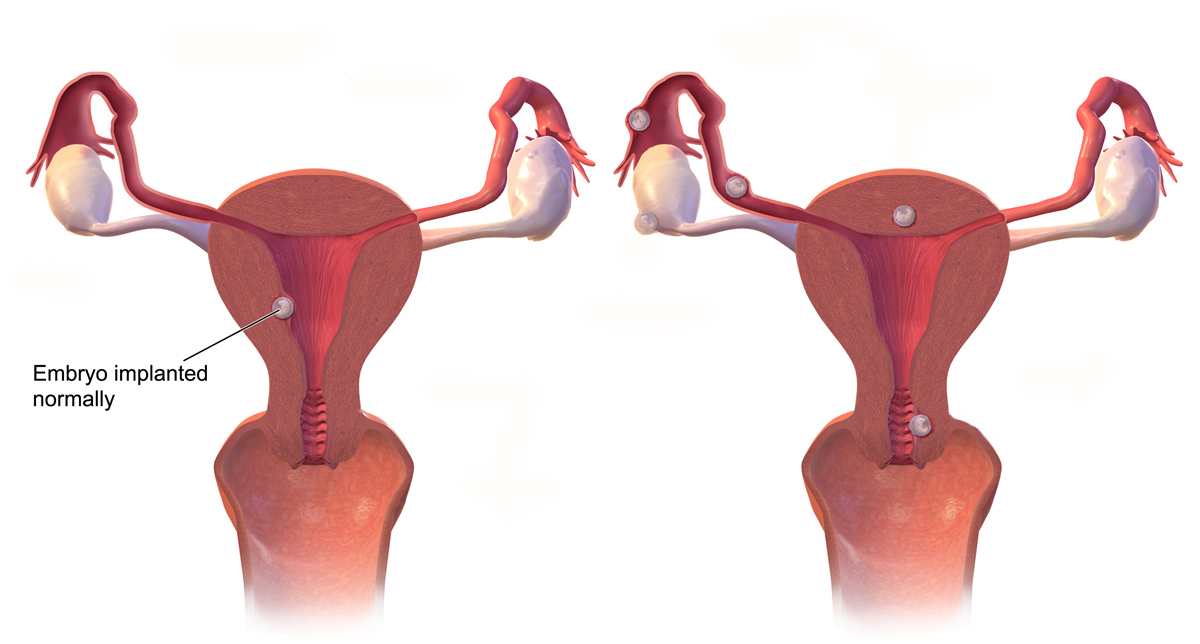
- Risk factors: The one risk factor NICE names is a previous ectopic pregnancy. Don't lean on it, though: about one third of women with an ectopic pregnancy have no known risk factors (NICE NG126).
- Early pregnancy loss causes: Fetal chromosomal abnormalities account for about half of losses. Advanced maternal age and a prior early pregnancy loss top the risk list (ACOG Practice Bulletin 200).
- Rupture: the tube can burst and bleed into the abdomen (haemoperitoneum), and that blood can drive shock. Unstable with a tubal ectopic? That is a medical emergency that needs prompt surgery (ACOG Practice Bulletin 193).
- Possible courses: an unruptured tubal pregnancy has three routes: expectant, methotrexate, or surgery. The evidence is thin. NICE found little proof that natural resolution or tubal rupture differ between expectant and medical management in selected stable patients (NICE NG126).
Recognition & Red Flags
Ectopic pregnancy often looks atypical. Its symptoms and signs can mimic gastrointestinal illness or a urinary tract infection. The patient may not know she is pregnant (NICE NG126). Symptoms non-specific in a patient of reproductive age? Offer a pregnancy test.
Typical symptoms and signs
- Symptoms: abdominal or pelvic pain, missed period, vaginal bleeding with or without clots. Reported less often: breast tenderness, gastrointestinal symptoms, dizziness, fainting or syncope, shoulder-tip pain, urinary symptoms, passage of tissue, and rectal pressure.
- Signs: pelvic, adnexal or abdominal tenderness (the most common). Others: cervical motion tenderness, rebound or peritoneal signs, pallor, abdominal distension, an enlarged uterus, tachycardia over 100 beats per minute, blood pressure under 100/60 mm Hg, shock or collapse, and orthostatic hypotension.
Early pregnancy loss
- Threatened: bleeding, with a confirmed intrauterine pregnancy that still has a fetal heartbeat (NICE NG126).
- Incomplete: bleeding and pain that persist or grow after expectant management. The process has not finished (NICE NG126).
- Missed: the pregnancy has stopped progressing, and the gestational sac has not yet passed (NICE NG126 treatment advice).
- Complete: bleeding and pain have resolved. Ultrasound shows the pregnancy has passed (NICE NG126).
Red Flags
- Shock, collapse, or syncope with pain or bleeding.
- Tachycardia over 100 beats per minute, or blood pressure under 100/60 mm Hg (NICE NG126 signs).
- Orthostatic hypotension, or pallor with abdominal pain.
- Abdominal distension, rebound tenderness, or peritoneal signs.
- Significant pain, or pelvic or abdominal tenderness with a positive pregnancy test. Refer immediately (NICE NG126).
- Heavy vaginal bleeding, or bleeding with clots that causes concern (NICE NG126).
- Fever, foul-smelling discharge or purulent bleeding, uterine tenderness, or shock during a pregnancy loss: treat as possible septic abortion and follow your sepsis protocol.
Assessment & Diagnostics
Ultrasound and serial serum hCG together decide the location. Symptoms count for more than the hCG value (NICE NG126). A pregnancy of unknown location is a positive pregnancy test, but transvaginal ultrasound shows no intrauterine or extrauterine pregnancy. Until the location is known, treat it as possible ectopic pregnancy.
| Check | Why | Act If |
|---|---|---|
| Urine pregnancy test | Needed for any pregnancy complication | Positive with pain or tenderness: refer immediately (NICE NG126) |
| Vital signs | NICE tachycardia and hypotension thresholds | Over 100/min, under 100/60 mm Hg, or shock: unstable, direct to ED |
| Transvaginal ultrasound | Locates the pregnancy (NICE NG126) | Adnexal mass moving separately from the ovary with a yolk sac or fetal pole: tubal ectopic. Empty uterus or moderate to large free fluid: possible ectopic |
| Serum hCG | Trend only, not location. Repeat 48 hours apart (NICE NG126) | Rise over 63% at 48 hours: likely intrauterine, not excluded. Fall over 50%: unlikely to continue. Fall under 50% or rise under 63%: review within 24 hours |
| Viability scan | Intrauterine pregnancy with no heartbeat | Crown–rump length 7.0 mm or more, no heartbeat: second opinion or repeat scan in at least 7 days |
| ABO and Rh(D) type | Rh(D)-negative, unsensitized patients may need anti-D. Gestation and guideline decide (ACOG; NICE NG126) | Rh(D)-negative: see ED & ICU for anti-D by gestation |
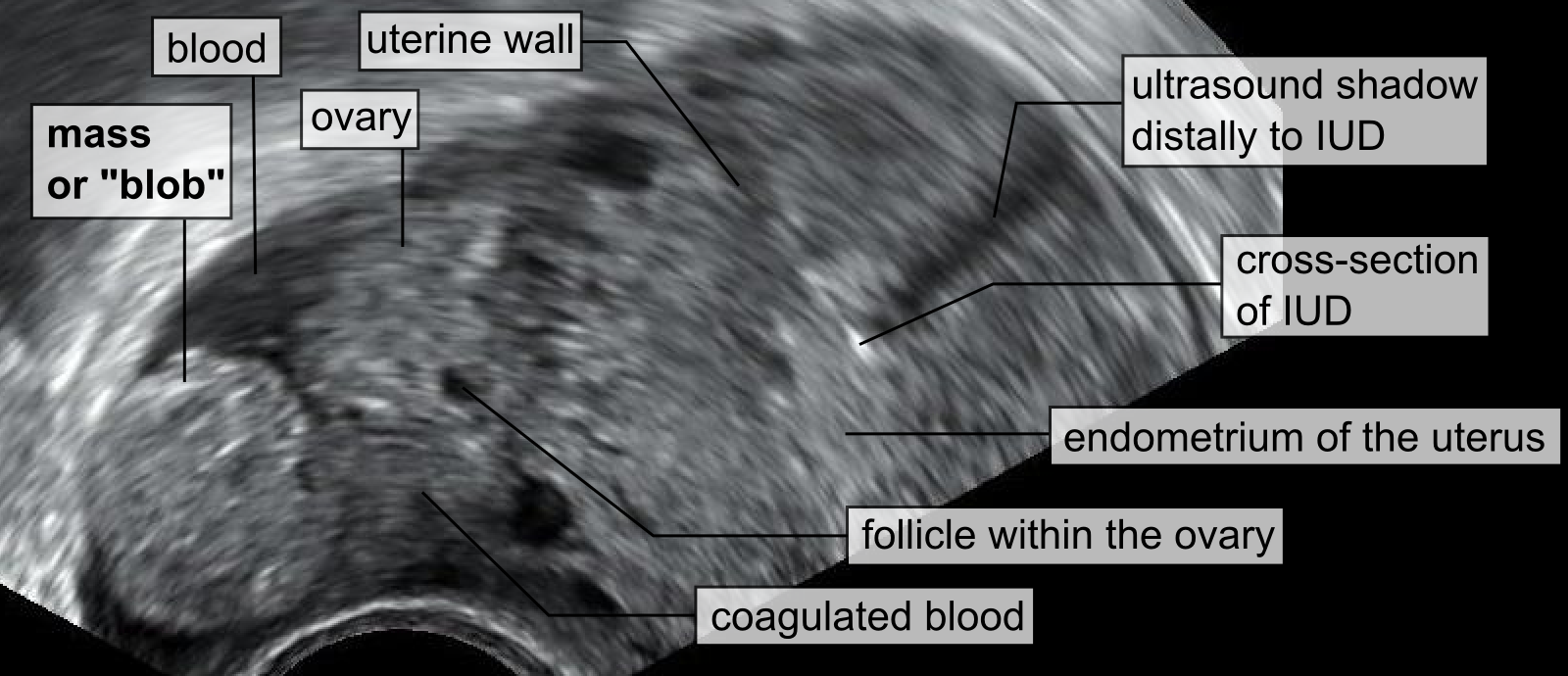
Hit 1,500 IU/L or more? NICE wants the scan sooner (NICE NG126). For hCG, IU/L and mIU/mL are the same unit. Progesterone should not be used to diagnose either viable intrauterine or ectopic pregnancy (NICE NG126).
Differential & Mimics
- Viable intrauterine pregnancy: the main alternative location. Ultrasound confirms it. hCG alone does not (NICE NG126).
- Early pregnancy loss: bleeding and cramping don't tell you which one it is. Normal gestation, ectopic pregnancy and molar pregnancy all produce them (ACOG Practice Bulletin 200).
- Gastrointestinal illness or urinary tract infection: The symptoms can look like these conditions (NICE NG126).
- Heterotopic pregnancy: two pregnancies at once, one intrauterine and one ectopic. Scan the uterus and adnexae for both (NICE NG126).
BLS Management
Look at the patient, not the hCG number. Signs set the urgency. Symptoms count for more than any hCG result (NICE NG126).
- Ask about pregnancy: last menstrual period, a missed period, fertility treatment history and any prior ectopic pregnancy. Last menstrual period alone is not reliable for dating (NICE NG126).
- Assess stability: heart rate, blood pressure, skin colour, mental status, and syncope. Heart rate over 100/min, blood pressure under 100/60 mm Hg, or collapse means unstable.
- Quantify bleeding: pad count or estimate, clots, and any passed tissue. Keep passed tissue for the receiving team per protocol.
- Oxygen: titrate to SpO₂ 94–98% (see Oxygen).
- Position for comfort and keep the patient warm. Reassess pain and bleeding.
- Route and notify: unstable patients go directly to the emergency department (NICE NG126). Stable patients with pain or tenderness go to the early pregnancy service or out-of-hours gynaecology (see Transport).
ALS Management
Doses vary by protocol; follow local protocols and medical direction. Establish IV or IO access for unstable or heavily bleeding patients per protocol.
- IV or IO access (Paramedic/RN/CCT): per protocol. See IV Insertion and IO Access.
- Shock fluid (Paramedic/RN/CCT): 500 mL IV or IO crystalloid bolus, reassess after each bolus, repeat per the shock protocol. In suspected ruptured ectopic, limit crystalloid and move early to blood products where your protocol allows, because over-resuscitation worsens haemorrhage. See Normal Saline.
- Hemorrhagic shock (Paramedic/RN/CCT): follow the Hemorrhagic Shock pathway, including blood products where your protocol allows. See Blood Components.
- Analgesia (Paramedic/RN/CCT): fentanyl 1 mcg/kg IV or IO slowly (usual 25–100 mcg; max initial 100 mcg), repeat after at least 5 minutes. In hypotension or suspected hypovolemia, use smaller titrated doses and watch blood pressure. Do not delay transport for analgesia. See Fentanyl.
- Nausea: ondansetron 4 mg IV over 2–5 minutes, repeat per protocol. See Ondansetron.
- Oxygen: titrate to SpO₂ 94–98%.
ED & ICU Management
Unstable or ruptured
An unstable patient with a tubal pregnancy needs surgery (ACOG Practice Bulletin 193). Laparoscopy comes first whenever it is possible, done by a surgeon who is competent in it (NICE NG126). Offer salpingectomy unless there are infertility risk factors. With those risk factors, salpingotomy is the alternative, such as with contralateral tube damage (NICE NG126).
Stable, unruptured tubal pregnancy
- Expectant management (ED/OB): offer when the patient is stable and pain-free, the tubal mass is under 35 mm with no visible heartbeat, hCG is 1,000 IU/L or less, and she can return for follow-up. Consider it at hCG above 1,000 and under 1,500 IU/L (NICE NG126). Repeat hCG on days 2, 4 and 7. A fall of 15% or more: repeat weekly until under 20 IU/L. No fall: senior review (NICE NG126).
- Methotrexate (ED/OB, off-label): offer when there is no significant pain, the tubal mass is under 35 mm with no visible heartbeat, hCG is under 1,500 IU/L, there is no intrauterine pregnancy, and she can return (NICE NG126). Choice between methotrexate and surgery applies at hCG 1,500 IU/L or more and under 5,000 IU/L (NICE NG126).
- Methotrexate regimen (protocol-dependent): single-dose methotrexate 50 mg/m² IM on day 1, with a repeat dose if β-hCG falls less than 15% between days 4 and 7 (secondary review, 2023). Confirm against ACOG Practice Bulletin 193 and your protocol. See Rho(D) Immune Globulin for anti-D if indicated.
- Methotrexate follow-up: hCG on days 4 and 7, then weekly until negative. If hCG plateaus or rises, reassess for further treatment (NICE NG126).
- Methotrexate safety (ED/OB): get a baseline CBC, creatinine and liver tests before you start. NSAIDs, including aspirin, make methotrexate toxicity worse, so avoid them. Folic acid or folinic acid? Ask the prescriber first. Avoid live vaccines, and limit sun exposure. Use contraception per the label, for 6 months after the last dose (DailyMed label).
Early pregnancy loss
- Expectant (first line): 7–14 days for a confirmed miscarriage. Explore other options if there is increased haemorrhage risk (for example, late first trimester), a previous adverse or traumatic experience, increased risk from haemorrhage, or infection (NICE NG126).
- Medical, missed: mifepristone 200 mg by mouth, then misoprostol 800 mcg 48 hours later, unless the gestational sac has passed (NICE NG126).
- Medical, incomplete: misoprostol 600 mcg once, vaginal, oral or sublingual. Misoprostol 800 mcg may be used as an alternative to align protocols for missed and incomplete miscarriage. Mifepristone is not offered for incomplete miscarriage (NICE NG126).
- Alternative protocol (ACOG): misoprostol 800 mcg vaginally, with one repeat no earlier than 3 hours after the first dose if needed. Mifepristone 200 mg orally 24 hours before misoprostol should be considered when available (ACOG Practice Bulletin 200).
- Threatened loss with a prior miscarriage: micronised vaginal progesterone 400 mg twice daily for a confirmed intrauterine pregnancy with a fetal heartbeat, continued to 16 completed weeks (NICE NG126).
- Rh(D)-negative and unsensitized: anti-D within 72 hours. From 12 weeks, 300 mcg IM (ACOG Practice Bulletin 181). Under 12 weeks, the guidance has moved. ACOG's 2024 Clinical Practice Update changed Rh testing and anti-D advice. NICE gives none before 12+0 weeks. Follow your protocol. See Rho(D) Immune Globulin.
- Infection or hemorrhage: urgent surgical uterine evacuation (ACOG Practice Bulletin 200). A single preoperative dose of doxycycline is recommended before surgical management (ACOG Practice Bulletin 200). For sepsis, follow Sepsis and Septic Shock.
Transport Considerations
- Unstable patient: direct to the emergency department. Not an early pregnancy service (NICE NG126).
- Stable, with pain or tenderness: refer her to the early pregnancy assessment service. Where none exists, use out-of-hours gynaecology (NICE NG126). Local protocol decides whether EMS takes her to the ED or to the early pregnancy unit.
- In transit: continue monitoring heart rate, blood pressure, SpO₂, pain, and bleeding. Keep the IV open and reassess at each interval per protocol.
- Handoff: pregnancy test result, last menstrual period (noting it is not reliable for dating), Rh type if known, bleeding and shock trend, drugs given, and whether tissue was passed.
- Do not delay transport for hCG or ultrasound in an unstable patient.
Special Populations
- Pediatrics: No separate pediatric ectopic pathway is established here. Pregnant adolescents get the same fixed Rh(D) immune globulin doses as adults (see Rho(D) Immune Globulin). Weight-based dosing (see Weight-Based Dosing) doesn't apply to these pregnancy medications.
- Pregnancy: by definition, the patient is pregnant. Estimate gestational age with ultrasound, not last menstrual period (NICE NG126). Methotrexate is contraindicated in pregnancy for non-neoplastic disease (DailyMed label). NICE classes its use for ectopic pregnancy as off-label. Work through the decision pathway above with medical direction.
- Cardiac arrest: follow the Adult Cardiac Arrest pathway. For pregnancy-specific arrest care, see Maternal Cardiac Arrest.
- Renal Impairment: the methotrexate label warns that impaired renal function raises toxicity. Monitor renal function, and withhold for severe renal toxicity (DailyMed label).
- Breastfeeding: the label says no breastfeeding during treatment. Keep that up for 1 week after the last dose (DailyMed label).
Pitfalls & Safety Checks
- Error: treating hCG as the diagnosis. Ultrasound and clinical signs decide, not hCG (NICE NG126).
- Error: dating by last menstrual period, then expecting a heartbeat on that timeline (NICE NG126).
- Error: reassuring her because the hCG is low, while she is unstable or in significant pain. Clinical symptoms weigh more than the hCG number. Unstable patients go to the ED (NICE NG126).
- Error: dismissing ectopic for lack of risk factors. About one third of patients have none (NICE NG126).
- Error: missing anti-D in an Rh(D)-negative, unsensitized patient who needs it. From 12 weeks on, don't wait: give anti-D within 72 hours (ACOG Practice Bulletin 181). Under 12 weeks? Follow the ACOG 2024 update, NICE, and your protocol.
- Error: discharging after methotrexate with no follow-up. hCG on days 4 and 7, then weekly until negative (NICE NG126).
- Error: giving methotrexate to someone who is unstable, in significant pain, or showing a visible heartbeat (NICE NG126).
- Error: starting methotrexate before a baseline blood count, creatinine and liver tests. Ignoring the myelosuppression, infection, renal or liver warnings (DailyMed label) is an error too.
Clinical Pearls
References
- National Institute for Health and Care Excellence. (2026). Ectopic pregnancy and miscarriage: diagnosis and initial management (NG126, last updated June 2026). https://www.nice.org.uk/guidance/ng126
- American College of Obstetricians and Gynecologists. (2018). ACOG Practice Bulletin No. 193: Tubal ectopic pregnancy. Obstetrics & Gynecology, 131, e91–e103. https://doi.org/10.1097/AOG.0000000000002560
- American College of Obstetricians and Gynecologists. (2018). ACOG Practice Bulletin No. 200: Early pregnancy loss. Obstetrics & Gynecology, 132, e197–e207. https://doi.org/10.1097/AOG.0000000000002899
- American College of Obstetricians and Gynecologists. (2017). ACOG Practice Bulletin No. 181: Prevention of Rh D alloimmunization. Obstetrics & Gynecology, 130, e57–e70. https://doi.org/10.1097/AOG.0000000000002232
- American College of Obstetricians and Gynecologists. (2024). ACOG Clinical Practice Update: Rh D immune globulin administration after abortion or pregnancy loss at less than 12 weeks of gestation. Obstetrics & Gynecology, 144(6), e140–e143. https://doi.org/10.1097/AOG.0000000000005733
- Accord Healthcare, Inc. (2025). Methotrexate injection [prescribing information], revised December 2025. DailyMed, U.S. National Library of Medicine. https://dailymed.nlm.nih.gov/dailymed/drugInfo.cfm?setid=dd035a9f-cd40-4314-b9d8-2294b8a924e2
- Kedrion Biopharma. (2025). RhoGAM Ultra-Filtered PLUS, Rho(D) immune globulin (human) [prescribing information]. DailyMed, U.S. National Library of Medicine. https://dailymed.nlm.nih.gov/dailymed/drugInfo.cfm?setid=d87e4d0b-2442-4135-b3f9-5c4f74845b87
- Mullany K, Minneci M, Monjazeb R, Coiado OC. (2023). Overview of ectopic pregnancy diagnosis, management, and innovation. Women's Health (London). Secondary review, used for the methotrexate regimen. https://doi.org/10.1177/17455057231160349
Medical Disclaimer
- For Educational Purposes Only: This content is intended for educational reference and should not be used for clinical decision-making.
- Not a Substitute for Professional Judgment: Always consult your local protocols, institutional guidelines, and supervising physicians.
- Verify Before Acting: Users are responsible for verifying information through authoritative sources before any clinical application.