

Bedside Snapshot
- Use It For
- Topical eye anesthesia for exam, fluorescein staining, foreign body removal and chemical-exposure irrigation; laceration repair as LET; mucous membrane anesthesia (combination sprays)
- Adult Dose
- Eye: 1 drop 0.5% per eye, repeat as needed for the procedure (fewest drops)
- LET: up to 3 mL in and over the wound, occluded 20–30 min
- Pediatric Dose
- Eye: 1 drop 0.5% per eye, as adults. LET: not established in children; specialist use only. Cetacaine spray: contraindicated under 2 yr
- Onset / Duration
- Eye: maximal within 10–20 sec / 10–20 min; LET: apply 20–30 min before repair; mucosal spray: about 30 sec–1 min / about 30–60 min
- Do Not Give / Hold If
- Ester or PABA allergy; suspected open globe or penetrating eye injury; intraocular (intracameral) use; self-use at home; LET on mucous membranes; Cetacaine under 2 yr or with cholinesterase deficiency
- Watch For
- Corneal toxicity from repeated drops (non-healing defect on fluorescein); injury to the numb eye (rubbing); methemoglobinemia after mucosal sprays (cyanosis, low SpO₂ on oxygen); LAST (tinnitus, seizures, arrhythmia)
- Reversal / Rescue
- No antidote. LAST: 20% lipid emulsion 1.5 mL/kg bolus (about 100 mL if over 70 kg) per ASRA; methemoglobinemia: methylene blue 1 mg/kg IV; anaphylaxis: IM epinephrine
- Must Remember
- Never dispense tetracaine drops for home use: they are labeled for provider administration only, and repeated self-dosing can ulcerate the cornea. Tell the patient not to rub the eye for 10–20 min
Indications
Emergency & Prehospital
- Eye pain that prevents examination: the drop numbs the cornea and conjunctiva, so an eye that is light-sensitive and squeezing shut can be opened for inspection and fluorescein staining
- Chemical eye exposure: numb the eye before and during irrigation, so the patient can sit through a long flush (Paramedic/RN, per local protocol)
- Corneal or conjunctival foreign body: the drop lets you look, flip the lid and remove the object
ED / ICU / Transport
- Short ophthalmic procedures: tonometry, gonioscopy, slit-lamp exams and any other eye procedure that needs fast, short-lived numbing (FDA-labeled indication)
- Laceration repair: tetracaine 0.5% is one part of compounded LET (lidocaine-epinephrine-tetracaine) gel or solution. You put it on the open wound before suturing, especially in children (off-label, compounded)
- Mucous membrane anesthesia: sprays and liquids (benzocaine-butamben-tetracaine) for work in the nose, mouth, pharynx, larynx, trachea, bronchi and esophagus. They blunt the gag reflex, which makes them useful before endoscopy or an awake airway procedure (see intubation)
Other Uses
- Spinal anesthesia: tetracaine 1% injection for procedures that last 2–3 hr. Only anesthesia clinicians give it
- Superficial dermatologic procedures on intact skin: lidocaine 7%/tetracaine 7% cream in adults, before laser, dermal filler and tattoo-removal work
- Dental anesthesia: the tetracaine-oxymetazoline nasal spray is for restorative work on maxillary teeth. Availability is uncertain
Dosing & Administration
Doses vary by protocol; follow local protocols and medical direction.
Available Forms
- Ophthalmic solution 0.5% (5 mg/mL): tetracaine hydrochloride 0.5% (equivalent to 0.44% tetracaine base). Multi-dose 5 mL and 15 mL dropper bottles (preserved) and 4 mL single-patient-use units (preservative-free; discard after use). This is the form EMS, EDs and transport services carry.
- LET (compounded): lidocaine 4%, epinephrine 0.1%, tetracaine 0.5% gel or solution, for example as a 3 mL unit dose. Compounding pharmacies do not all mix the same strength. Read the label.
- Benzocaine-butamben-tetracaine (Cetacaine): benzocaine 14%, butamben 2%, tetracaine HCl 2% spray and liquid for mucous membranes. A 1-second spray gives about 200 mg of product, and 4 mg of that is tetracaine HCl.
- Lidocaine-tetracaine cream (Pliaglis): lidocaine 7%/tetracaine 7% for intact skin in adults.
- Tetracaine-oxymetazoline nasal spray (Kovanaze): 6 mg tetracaine HCl and 0.1 mg oxymetazoline HCl per 0.2 mL single-dose sprayer, dental use. DailyMed lists its only NDC as inactivated, so availability is uncertain.
- Tetracaine 1% injection (10 mg/mL): preservative-free, for spinal anesthesia only.
Adult Dosing
| Indication | Dose & Route | Repeat / Max | Notes |
|---|---|---|---|
| Topical eye anesthesia (exam, fluorescein, tonometry, foreign body, irrigation) | 1 drop 0.5% per eye, topically in the affected eye(s) | Repeat as needed for the procedure; no fixed max: titrate to effect with the fewest drops | Maximal effect within 10–20 sec; lasts 10–20 min. Provider-administered only: never dispense for self-use. Not for injection or intraocular use. |
| Laceration repair (LET, compounded; off-label) | Up to 3 mL (120 mg lidocaine, 15 mg tetracaine) applied in and over the wound under an occlusive dressing for 20–30 min | Max 3 mL per application (institutional limits vary) | Open skin wounds only: never on mucous membranes. Institutional practice, no guideline source verified: some services avoid end-artery sites (digits, nasal tip, pinna, penis) because of the epinephrine. Count LET lidocaine before infiltrating more. |
| Mucous membrane anesthesia (Cetacaine) | Spray for about 1 sec or less (about 200 mg; 4 mg tetracaine HCl), or 0.2 mL liquid applied directly to the site | Spray longer than 2 sec or liquid more than 0.4 mL is contraindicated | Never on the eyes or by injection. Contains benzocaine: methemoglobinemia risk. |
| Spinal anesthesia (1% injection; anesthesia only) | Perineum 5 mg (0.5 mL); perineum and lower extremities 10 mg (1 mL), intrathecal | Up to 15–20 mg for a block to the costal margin; doses above 15 mg are rarely required | Label: dilute with an equal volume of CSF, or mix with an equal volume of 10% dextrose for a hyperbaric solution. Inject about 1 mL per 5 sec. Saddle block for vaginal delivery: 2–5 mg in dextrose. Intrathecal use is restricted to anesthesia clinicians. |
Pediatric Dosing
| Indication | Dose (per kg) & Route | Max Single / Max Total | Notes |
|---|---|---|---|
| Topical eye anesthesia | 1 drop 0.5% per eye (same as adults) | No fixed max: fewest drops needed | Pediatric safety shown in clinical trials; efficacy extrapolated from adults. Keep small children from rubbing the numb eye. |
| Laceration repair (LET, compounded; off-label) | Not established in children; specialist use only | — | No pediatric LET volume in AHA 2025 or NASEMSO v3.0, and LET is not FDA-labeled. The adult 3 mL maximum is a ceiling, not a pediatric dose. |
| Mucous membrane anesthesia (Cetacaine) | Contraindicated under 2 yr; pediatric dose not established | — | Label advises reduced doses in children 2 yr and older. |
| Spinal anesthesia | Not established in children | — | Pediatric anesthesia specialist use only. |
Check the volume against weight-based dosing.
Preparation & Administration
- Eye drops: instill 1 drop without touching the dropper tip to the eye or any surface. Single-patient-use units contain no preservative: discard after use.
- After instillation: the eye stays numb for up to 20 min. Tell the patient not to touch or rub it for at least 10–20 min.
- Inspect before use: do not use a solution that contains crystals or is cloudy or discolored.
- LET: place the gel or a soaked pledget in and over the wound, cover with an occlusive dressing, wait 20–30 min, then test the wound edges before suturing. Open skin wounds only: never on mucous membranes (mouth, inner lip, nose, genitals). Epinephrine is in the mix, so some services keep it off end-artery sites (digits, nasal tip, pinna, penis). That is institutional practice. No guideline source was verified.
- Mucosal spray: the tissue does not have to be dried first. Apply it straight to the site that needs numbing. Do not leave it under dentures or cotton rolls.
- Total dose: add up every local anesthetic the patient receives (topical, infiltrated and nebulized lidocaine, benzocaine, tetracaine).
Contraindications & Precautions
Contraindications
- Eye drops: hypersensitivity to any component (Bausch & Lomb label; the Alcon single-patient-use label lists none)
- Ester or para-aminobenzoic acid (PABA) allergy: a labeled contraindication for the spinal injection (PABA or its derivatives), Pliaglis and Kovanaze. Avoid the eye drops too. The cross-sensitivity runs through the whole class
- Cetacaine: children under 2 yr; use on the eyes; injection; large areas of denuded or inflamed tissue; hypersensitivity to any ingredient; known plasma cholinesterase deficiency; use under dentures or cotton rolls (escharotic effect)
- Spinal injection: standard contraindications to spinal anesthesia (e.g. septicemia, infection at the site, uncontrolled hypotension)
Precautions
- Not for injection or intraocular use (eye-drop label warning): intracameral use damages the corneal endothelium. Do not instill in a suspected open globe or penetrating eye injury. Never inject a topical product.
- Provider administration only (eye-drop label warning): the patient does not self-dose. Never dispense drops for home use.
- Repeated ocular dosing: prolonged use or abuse brings epithelial toxicity to the cornea, and it can progress to permanent damage.
- Plasma cholinesterase deficiency: the ester breaks down more slowly. Use caution. For Cetacaine it is a contraindication.
- Methemoglobinemia risk: G6PD deficiency, congenital or idiopathic methemoglobinemia, cardiac or pulmonary compromise, infants under 6 months, and other oxidizing drugs.
- Mucosa, abraded skin, large areas: they let the drug into the bloodstream faster. Use the smallest amount over the smallest area, and stay inside labeled amounts and contact times. Never apply LET to mucous membranes.
- Debilitated, older or acutely ill patients: reduce mucosal and spinal doses.
Proparacaine is also an ester: Proparacaine keeps you in the same drug class, so a convincing ester or PABA allergy still applies. If you need an amide for the eye, the option is lidocaine 3.5% ophthalmic gel (Akten).
Adverse Effects & Toxicity
Common
- Transient stinging or burning on instillation
- Conjunctival redness, eye irritation, eye pain or discomfort
- Skin blanching where LET is applied (expected epinephrine effect)
- Contact dermatitis (erythema, itching, vesicles) after prolonged or repeated aminobenzoate exposure
Serious / Life-Threatening
| Effect | Recognition | Management |
|---|---|---|
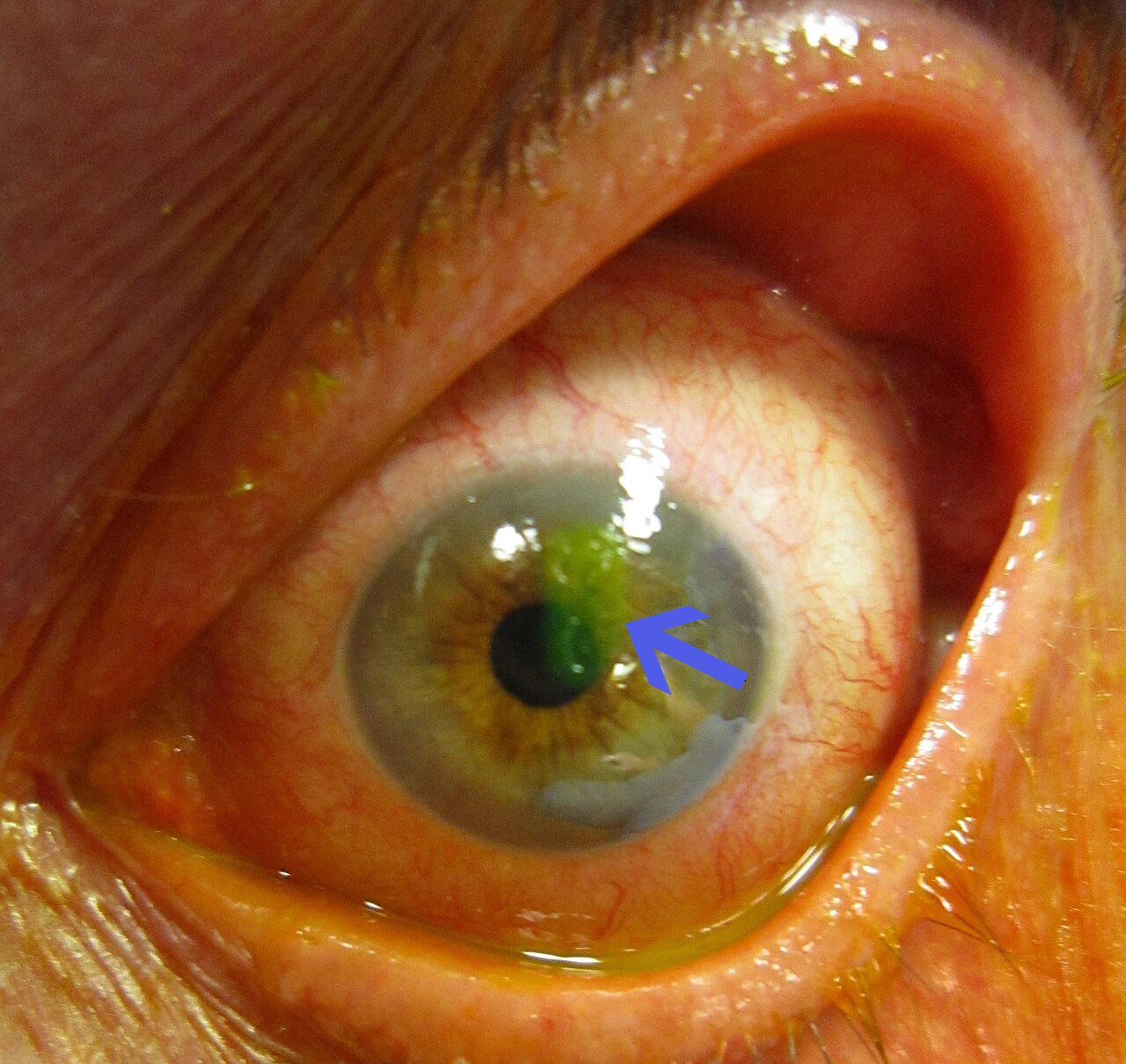
| Corneal toxicity (repeated or abusive dosing) | Persistent epithelial defect on fluorescein, stromal infiltrate, ulceration, corneal opacification, vision loss | Stop all anesthetic drops; urgent ophthalmology referral |
| Corneal injury while anesthetized | Rubbing or a new foreign body in an eye that cannot feel for up to 20 min | Counsel before discharge; re-examine any new pain |
| Methemoglobinemia (mainly benzocaine-containing mucosal products) | Cyanosis, abnormally colored blood, headache, tachycardia, dyspnea; can be delayed hours | Stop the product; oxygen; co-oximetry; methylene blue if severe |
| Local anesthetic systemic toxicity (LAST) | Nervousness, dizziness, blurred vision, tremor or tinnitus, then drowsiness, seizures; hypotension, arrhythmia, arrest | Airway, seizure control, 20% lipid emulsion (below) |
| Hypersensitivity or anaphylaxis | Urticaria, edema, bronchospasm, hypotension; rare and not dose-related | Stop; IM epinephrine for anaphylaxis |
Overdose & Toxicity Management
- Signs: CNS excitation or depression (nervousness, dizziness, tremor, drowsiness, seizures, coma) and cardiovascular depression (hypotension, arrhythmia, arrest). Here's what people miss: excitation may be absent, and drowsiness can be the first sign.
- Immediate management: stop the anesthetic, call for help, secure the airway and give oxygen. Treat seizures with a benzodiazepine (midazolam, lorazepam); if only propofol is available, use small doses (e.g. 20 mg increments).
- 20% lipid emulsion, per the ASRA 2020 checklist: over 70 kg: bolus about 100 mL over 2–3 min, then about 250 mL over 15–20 min. 70 kg or less (including children): bolus about 1.5 mL/kg over 2–3 min, then about 0.25 mL/kg/min. Still unstable: repeat the bolus and double the infusion. Continue at least 15 min after stability; max 12 mL/kg.
- Arrest or arrhythmia: LAST resuscitation is not standard ACLS, so go light on epinephrine doses (start with 1 mcg/kg or less). Avoid vasopressin, calcium-channel blockers, β-blockers and more local anesthetic (including lidocaine).
- Methemoglobinemia: methylene blue 1 mg/kg IV over 5–30 min (adults and children); repeat 1 mg/kg after 1 hr if methemoglobin stays above 30% or symptoms persist. eGFR 15–59 mL/min/1.73 m²: single dose only. Not resolved after 2 doses (or 1 hr after the single renal dose): consider alternative treatment with a poison center. Contraindicated in G6PD deficiency (hemolysis); serotonin syndrome risk with serotonergic drugs (boxed warning).
- Observation once stable: at least 2 hr after a seizure and 4–6 hr after cardiovascular instability.
- Ocular overdose: long use can leave the cornea permanently cloudy or ulcerated. Get ophthalmology involved.
Monitoring
| Parameter | When / How Often | Target / Act If |
|---|---|---|
| Clinical: corneal surface | Fluorescein exam before discharge and at follow-up of any corneal injury | Enlarging or non-healing defect, infiltrate or ulcer: stop anesthetic drops, refer to ophthalmology |
| Clinical: eye protection | 10–20 min after the last drop | Patient rubbing the eye: counsel again; re-examine any new pain |
| Clinical: pain after the drop wears off | When the 10–20 min effect ends | Repeated requests for drops or a history of frequent anesthetic use: consider anesthetic misuse and refer |
| Clinical: LET wound anesthesia | After 20–30 min under occlusion | Edges not anesthetized: infiltrate buffered lidocaine within the total dose limit, counting the lidocaine already in LET (5 mg/kg pediatric dose; 120 mg in 3 mL) |
| Systemic toxicity | During and after mucosal or large-area application; continuous monitoring after any LAST signs | Nervousness, dizziness, tinnitus, drowsiness, seizure, hypotension or arrhythmia: stop, treat as LAST |
| Laboratory: oxygenation and methemoglobin | After benzocaine-containing mucosal products; signs may be delayed hours | Cyanosis or low SpO₂/SaO₂ that does not improve with oxygen: co-oximetry; methylene blue if severe |
| Observation after LAST | Once stable | At least 2 hr after a seizure; 4–6 hr after cardiovascular instability |
Interactions & Compatibility
Clinically Significant Interactions
| Drug / Class | Effect | What To Do |
|---|---|---|
| Other local anesthetics (lidocaine, benzocaine, bupivacaine, prilocaine) | Additive systemic toxicity; additive methemoglobinemia risk | Add up the total local anesthetic dose; monitor for LAST |
| Oxidizing drugs (nitroglycerin, nitroprusside, nitric oxide, nitrous oxide, dapsone, sulfonamides, rasburicase, primaquine, phenytoin, acetaminophen, metoclopramide) | Higher methemoglobinemia risk | Monitor color and SpO₂; co-oximetry if cyanotic |
| Sulfonamide antibiotics | The aminobenzoic acid metabolite (a PABA derivative) antagonizes sulfonamide action | Injectable label: do not use spinal tetracaine with sulfonamides; tell the prescriber |
| Methylene blue (rescue) with SSRIs, SNRIs, MAOIs or opioids | Serotonin syndrome | Boxed warning: avoid the combination when possible. If methemoglobinemia is severe enough to need methylene blue, monitor for serotonin syndrome and avoid serotonergic drugs for 72 hr after the last dose (Provayblue label) |
Never give tetracaine IV, so IV compatibility data do not apply.
Special Populations
- Pediatrics: Ophthalmic tetracaine is labeled for children, and it is safe there. LET spares a child the painful injection at a laceration. Cetacaine is contraindicated under 2 yr. The lidocaine-tetracaine cream is not established in children, since it failed to show benefit for venipuncture at 5–17 yr. The dental nasal spray is limited to 40 kg and above. See the Pediatric Dosing table.
- Neonates and Young Infants: infants under 6 months are more prone to methemoglobinemia from local anesthetics. Use the smallest amount and monitor.
- Pregnancy: There are no adequate human studies, and no published animal reproduction studies either. Systemic exposure after eye drops has not been studied. The Cetacaine label says to avoid it in early pregnancy unless the benefit outweighs the unknown risk. Do not hold back an eye exam or irrigation the patient needs.
- Lactation: There are no data on excretion into human milk. Absorbed drug breaks down fast in plasma. Weigh the clinical need against the unknown infant risk.
- Older Adults: Ophthalmic use shows no overall difference by age. Debilitated or acutely ill older adults get smaller mucosal and spinal doses.
- Renal Impairment: No specific adjustment is established for tetracaine itself. The methylene blue rescue drops to a single dose when eGFR is 15–59 mL/min/1.73 m² (see Adverse Effects & Toxicity).
- Hepatic Impairment: No specific adjustment is established. Breakdown runs through plasma pseudocholinesterase and ocular esterases.
- Obesity / Dosing Weight: Adult topical doses are fixed. No pediatric LET volume is established. The adult 3 mL maximum is a ceiling, not a pediatric dose.
- Plasma Cholinesterase Deficiency: Ester metabolism runs slower, so toxicity risk climbs. Use caution, and avoid Cetacaine.
- G6PD Deficiency: The risk of methemoglobinemia is higher. Methylene blue is contraindicated, so discuss treatment with a poison center.
Field & Transport Considerations
- Scope: Some EMS protocols let a Paramedic instill an ophthalmic anesthetic before irrigating a chemical eye exposure. RN and critical-care transport clinicians may give it per protocol. Scope varies by state and agency protocol.
- Storage & Stability: protect from light. Multi-dose bottles: 15–25°C (59–77°F); single-patient-use units: 2–25°C (36–77°F). If crystals form or the solution turns cloudy or discolored, discard it. Keep it out of vehicle heat.
- Carried Concentration: The eye gets 0.5% ophthalmic solution and nothing else. LET, mucosal sprays and creams stay out of the eye.
- Eye Trauma: with a suspected open globe or penetrating eye injury, the drops stay in the box. Shield the eye without pressure on the globe and transport (per protocol).
- Chemical Eye Exposure: Anesthetize, then start irrigation right away and keep it going en route. Don't let a search for the drops hold up the flush.
- Handoff Essentials: agent and time of each drop or application, total volume (LET) or spray time, eye findings before anesthesia, irrigation volume and duration, and any toxicity signs.
Clinical Pearls
Do not send the bottle home: Ophthalmic tetracaine is labeled for provider use only. The 2023 Cochrane review called the evidence too uncertain to back outpatient anesthetic drops for corneal abrasions. So at discharge, the answer is no drops.
Anesthetic abuse keratopathy: Picture a non-healing epithelial defect, or pain that keeps getting worse, in someone who keeps asking for numbing drops. That pattern points to self-treatment with topical anesthetics. Ask them straight out, and bring in ophthalmology early.
Numb first, then flush: In a chemical exposure, one drop makes the water bearable. It never gets to delay the water. Irrigate until the conjunctival pH reads physiologic (about 7.0–7.2). Recheck at least 5 min after you stop, and start again if it drifts.
Give LET time: Put it on at triage and cover it. Come back in 20–30 min. Pale, blanched edges tell you where it has worked. Test before the first suture.
Exam discriminator: ester vs amide: Count the i's. Esters have one (tetracaine, proparacaine, benzocaine, procaine), and they break down into PABA or a PABA derivative, the usual allergen. Amides have two (lidocaine, bupivacaine, prilocaine). Proparacaine is an ester, not an amide.
Cyanosis after a throat spray: After a benzocaine-tetracaine spray, an SpO₂ that will not climb on oxygen is methemoglobinemia until proven otherwise. Send co-oximetry. Severe cases get methylene blue.
Pharmacology
Mechanism of Action
- It blocks voltage-gated sodium channels in nerve membranes. No impulse starts, and none gets through. The result is reversible local anesthesia.
- This is an ester (amino-ester) local anesthetic, a cousin of procaine. Hydrolysis breaks it into p-butylaminobenzoic acid (a para-aminobenzoic acid (PABA) derivative) and dimethylaminoethanol. Those PABA-type metabolites are the usual cause of ester allergy.
- In LET, the epinephrine tightens wound vessels. Less drug gets absorbed, so the contact lasts longer.
Pharmacokinetics
| Route | Onset | Peak | Duration |
|---|---|---|---|
| Topical eye (0.5%) | Seconds | 10–20 sec | 10–20 min |
| Topical wound (LET) | Applied 20–30 min before repair | — | — |
| Mucosal spray (Cetacaine) | About 30 sec–1 min | — | About 30–60 min |
| Spinal (1%) | Rapid | — | 2–3 hr or longer of surgical anesthesia |
- Half-life: not established for topical use. Systemic exposure after eye drops has not been studied.
- Metabolism: Plasma pseudocholinesterase and nonspecific tissue esterases, ocular ones included, break it down into p-butylaminobenzoic acid and dimethylaminoethanol.
- Elimination: The inactive metabolites leave in the urine.
Names & Classification
- Generic Name
- Tetracaine hydrochloride (amethocaine outside the US)
- Brand Names
- Pontocaine (brand no longer listed on DailyMed; generic ophthalmic solution and injection available); combinations: Cetacaine (with benzocaine and butamben), Pliaglis (with lidocaine), Kovanaze (with oxymetazoline); LET is compounded
- Pharmacologic Class
- Ester (amino-ester) local anesthetic
- Therapeutic Class
- Topical ophthalmic, mucosal and dermal anesthetic; spinal anesthetic
- Controlled Substance
- Not controlled
- High-Alert
- No for topical use. Intrathecal (spinal) use: anesthesia clinicians only.
References
- Bausch & Lomb Americas. (2026). Tetracaine hydrochloride ophthalmic solution, USP 0.5% [prescribing information]. DailyMed, National Library of Medicine. https://dailymed.nlm.nih.gov/dailymed/drugInfo.cfm?setid=f12d5944-0d6c-43ff-89fd-e0b5669e9b4a
- Alcon Laboratories. (2024). Tetracaine hydrochloride ophthalmic solution 0.5%, single patient use [prescribing information]. DailyMed, National Library of Medicine. https://dailymed.nlm.nih.gov/dailymed/drugInfo.cfm?setid=5c7b1de4-9f55-1d0e-ef6d-b0ba2cbaba79
- Cetylite Industries. (2025). Cetacaine topical anesthetic spray and liquid (benzocaine, butamben and tetracaine hydrochloride) [prescribing information]. DailyMed, National Library of Medicine. https://dailymed.nlm.nih.gov/dailymed/drugInfo.cfm?setid=89f262a4-a41b-41d7-806b-61b9b89542f0
- BPI Labs. (2025). Tetracaine HCl injection, USP 1% for prolonged spinal anesthesia [prescribing information]. DailyMed, National Library of Medicine. https://dailymed.nlm.nih.gov/dailymed/drugInfo.cfm?setid=2b3349c1-bd02-4442-9bf0-40a654bb8a80
- American Regent. (2025). Provayblue (methylene blue) injection [prescribing information]. DailyMed, National Library of Medicine. https://dailymed.nlm.nih.gov/dailymed/drugInfo.cfm?setid=4f6848e5-35ed-4046-b13c-3032b5ba3232
- Neal, J. M., Neal, E. J., & Weinberg, G. L. (2021). American Society of Regional Anesthesia and Pain Medicine local anesthetic systemic toxicity checklist: 2020 version. Regional Anesthesia & Pain Medicine, 46(1), 81–82. https://doi.org/10.1136/rapm-2020-101986
- Sulewski, M., Leslie, L., Liu, S. H., Ifantides, C., Cho, K., & Kuo, I. C. (2023). Topical ophthalmic anesthetics for corneal abrasions. Cochrane Database of Systematic Reviews, 2023(8), CD015091. https://doi.org/10.1002/14651858.CD015091.pub2
- IPG Pharmaceuticals. (2025). Pliaglis (lidocaine and tetracaine) cream [prescribing information]. DailyMed, National Library of Medicine. https://dailymed.nlm.nih.gov/dailymed/drugInfo.cfm?setid=d854faa5-0af8-4684-b5cd-a0b8a91fb7cd
- St. Renatus. (2018). Kovanaze (tetracaine and oxymetazoline) nasal spray [prescribing information]. DailyMed, National Library of Medicine. https://dailymed.nlm.nih.gov/dailymed/drugInfo.cfm?setid=d2af5404-3cfe-445d-8328-19e667ecdc43
- American Academy of Ophthalmology. (2026). Chemical (alkali and acid) injury of the conjunctiva and cornea. EyeWiki. https://eyewiki.org/Chemical_(Alkali_and_Acid)_Injury_of_the_Conjunctiva_and_Cornea
Medical Disclaimer
- For Educational Purposes Only: This content is intended for educational reference and should not be used for clinical decision-making.
- Not a Substitute for Professional Judgment: Always consult your local protocols, institutional guidelines, and supervising physicians.
- Verify Before Acting: Users are responsible for verifying information through authoritative sources before any clinical application.
AI Assistance Notice
AI was used to assist in organizing, paraphrasing, and formatting this information.