

Bedside Topline
- What It Does
- Moves a patient by helicopter or fixed-wing aircraft to definitive care. Crew, aircraft, landing site, ground unit and radio are coordinated before and during each flight.
- Key Settings & Targets
- Risk analysis: complete before each flight
- Servicing vehicles: 10 ft (3 m) behind a barrier; 20 ft (6 m) with none, plus a trained director
- Radio: 123.025 MHz monitored
- Orbit: 500 ft between helicopters
- Check Every Hour
- Weather and fuel en route, crew fatigue and hearing protection, patient status per protocol, and any LZ change reported on the radio.
- Top Alarm → First Move
- No LZ set up on arrival: the first helicopter orbits at a set altitude, contacts the ground unit and reports LZ conditions.
- Never
- Load or unload with rotors turning off-procedure
- Hot refuel with a patient aboard and engine running
- Servicing vehicle within 10 ft (3 m) of rotors with a barrier, or 20 ft (6 m) with none and no trained director
- Escalate Now If
- Shock or injury from the hoist or aircraft
- Fuel leak, fuel smell or fire
- Dangerous LZ condition on approach
- Weather change that affects the risk analysis
Overview & How It Works
An air medical flight carries a patient and a trained crew by aircraft, from a scene or a hospital to definitive care. This page covers helicopter air ambulance (HAA) operations, regulated by the FAA under 14 CFR Part 135, and the interfacility and fixed-wing points that affect crew safety. Three groups need protecting: the crew, the landing zone (LZ) and the people on the ground. All three get managed before launch, at the LZ and in flight.
Scope and limits: you will find risk analysis, LZ and ground-crew hazards, radio, AMRM principles, EMTALA transfer rules and crew hazards here. Not here: post-crash survival or egress technique, structured patient handoff technique, in-flight drug dosing, or medical contraindications to flight. Patient-side altitude physiology lives on the Flight and Transport Physiology page.
Key Components
| Component | Where It Sits | What It Does |
|---|---|---|
| Operator and aircraft | Part 135 certificate holder | Flies the mission under an approved risk analysis. The operator selects landing sites under its operations specifications |
| Pilot in command (PIC) | Cockpit | Flies the aircraft and advises other aircraft at a shared heliport on off-load timing |
| Medical crew | Cabin | Cares for the patient en route and works the loading and unloading with the crew |
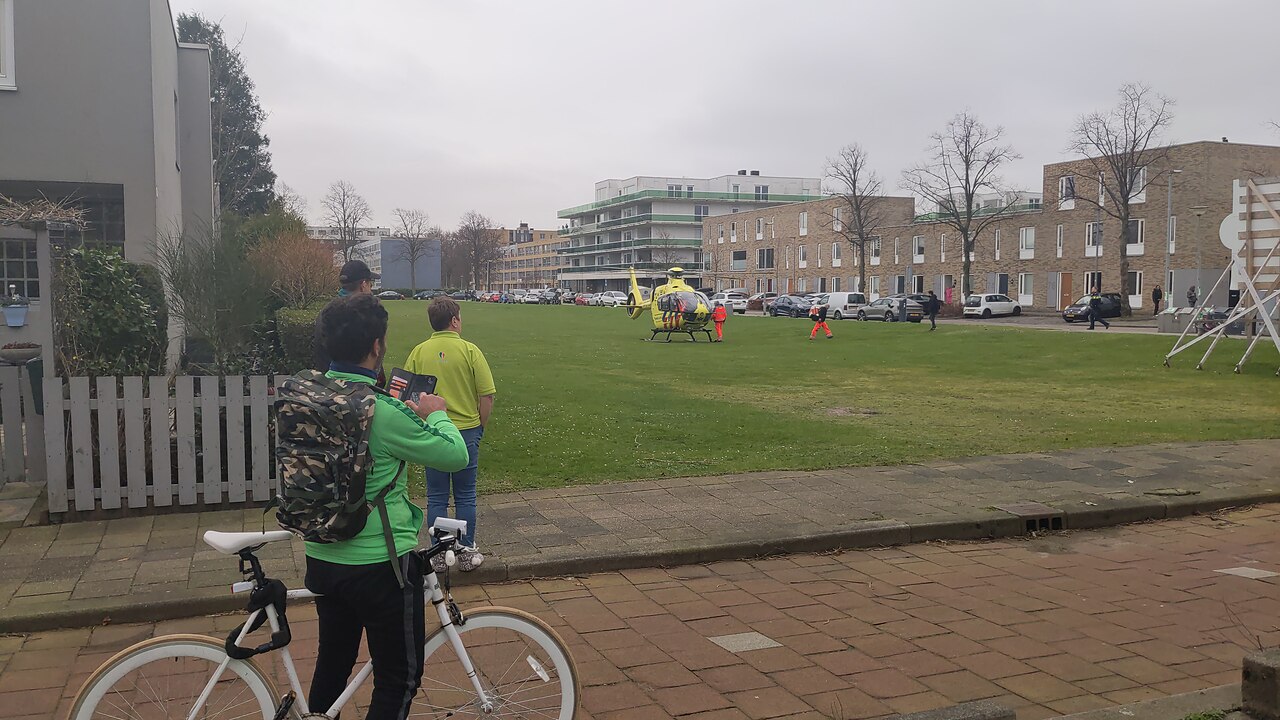
| Landing zone (LZ) | Scene, field or hospital heliport | Any area of land used for helicopter landing. Size, obstructions, lighting, surface, wires and wind are assessed before use |
| Ground unit | At the scene or LZ | Gives the LZ briefing to arriving aircraft and secures the site with law enforcement or fire crews |
| Communications | Dispatch center and radio | Receives requests, coordinates with hospitals and first responders, and keeps flight locating. 123.025 MHz is the multi-aircraft channel |
Flow Path
- Request and risk analysis: the operator completes an FAA-approved preflight risk analysis before the flight (14 CFR 135.617).
- Site check: the LZ is assessed against the operator's criteria. Unfamiliar or off-airport sites get airborne and ground reconnaissance.
- Approach and briefing: the first helicopter contacts the ground unit when at least 10 NM from the LZ.
- Landing and loading: the patient is loaded with the aircraft shut down or with rotors turning, under the rules for each.
- Flight: the crew monitors the patient, weather and the aircraft. Radio contact continues on the multi-aircraft channel.
- Handoff: at the receiving heliport, the crew states whether the patient will come off with rotors turning or stopped, and when.
Physiology & Hemodynamic Effects
The aircraft changes physiology for both the patient and the crew. Helicopter and fixed-wing flights differ, so know which aircraft you are in before you plan for it.
What It Does
| Parameter | Effect | Why It Matters |
|---|---|---|
| Cabin pressure (airplane) | ↓ with altitude | Transport-category airplanes are designed to hold cabin pressure altitude at or below 8,000 ft under normal operations (14 CFR 25.841(a)). That rule applies to airplanes, not helicopters. Many air ambulance airplanes are not transport-category, so this is a design reference, not a rule for every fixed-wing flight |
| Humidity (fixed-wing) | ↓ low in flight | Low humidity is one of the factors the fixed-wing review lists as unique to that transport |
| Duration | ↑ longer exposure | Longer transport duration is listed as a factor in fixed-wing transport |
| Noise (helicopter) | ↑ hearing threshold shift | Noise regularly exceeds 85 dB(A) and can reach 108 dB(A). Over one shift, the hearing threshold of crew without added hearing protection shifted most |
What It Depends On
- Aircraft type: rotor-wing and fixed-wing flights differ in pressure, noise and landing constraints.
- Flight time and noise exposure: the crew study tracked both across duty days.
- Crew hearing protection: a helmet alone may not be enough.
Patient altitude physiology (gas laws, hypoxia, endotracheal cuff and pneumothorax changes, and tube and line management at altitude) lives on the Flight and Transport Physiology page. No pre-departure patient-securing checklist is set here. For that, use your transport protocol and that page.
Types, Modes & Configurations
The mission type decides how the aircraft lands or reaches the patient, and which hazards and limits come with it. The table names one common type per row, with its main limit.
| Type | Landing or Access | Main Use | Key Limit |
|---|---|---|---|
| Helicopter, scene (primary) | Off-airport LZ or field | Rapid access to an injured or ill patient | Needs a suitable LZ and, at night, adequate lighting |
| Helicopter, hospital heliport | Hospital helipad | Receipt and transfer of patients | Several aircraft may share the pad. The off-load status should be announced |
| Helicopter, hoist | Rescue hoist or static underslung line | Access where no LZ exists | Electrostatic discharge (ESD) reaches the crew (see Complications) |
| Fixed-wing | Airport | Longer distances | Reduced atmospheric pressure, low humidity and longer duration (see Physiology) |
Night Operations and Night Vision Goggles
- Pilot recency: flying with night vision goggles (NVG) needs NVG recency of flight experience under 14 CFR 61.57(f).
- Lighting: a night landing at an unimproved site needs enough light for the pilot to see the site and its hazards. If NVIS is in use, the lighting has to be compatible with the night vision imaging system (NVIS).
- Marking: pyrotechnic road hazard flares are not recommended for marking or lighting a landing site.
- Night networks: one 2026 Italian case flew a night mission to a municipal sports field. The field was one of about 20 lit sites found across the region, because hospitals had no nighttime landing sites of their own.
Indications, Contraindications & Evidence
Indications
- Time-critical secondary transfer: the 2026 Italian expert consensus (expert opinion, not a guideline) finds HEMS most appropriate when cutting transfer time matters clinically and advanced in-transit care may help stabilize the patient.
- Conditions named in that consensus: acute coronary syndromes, stroke, traumatic injuries, aortic emergencies, cardiac tamponade, toxicological conditions and hyperbaric emergencies.
- Scene access: a suitable LZ within reach of the patient, or a hoist where no LZ exists.
Contraindications and Flight Limits
- Risk analysis: a green result may be accepted with no further action. A yellow result may be accepted only with mitigation, and the decision goes to the person in charge of operational control before the flight.
- Refused flights: the risk analysis has to include a way to check whether another HAA operator has turned the request down (14 CFR 135.617(a)(4)).
- Medical contraindications to flight: not covered here. Lean on your transport protocol and medical direction.
Key Evidence
| Source | Population | Bottom Line |
|---|---|---|
| Italian expert consensus (2026), expert opinion | Interfacility HEMS activation | A structured model (RATIONAL-HEMS) combines clinical priority (A–C) with logistics. Statements needed at least 80% agreement |
| Scoping review (2026) | HEMS transports, 48 studies | Adverse-incident risk spans patient, crew, machinery, environment and management factors |
| Turkey fatal crash report (2025) | Single HEMS accident | The report examines weather, human error and operational hazards as contributory factors and proposes recommendations |
| Night network case (2026) | One pediatric severe TBI case | Night primary HEMS was feasible at a distributed set of lit sites. One case shows feasibility, not outcome benefit |
| Fixed-wing review (2026) | 12 studies, 105 spinal injury cases | Fixed-wing transport adds reduced pressure, low humidity and longer duration as physiologic stressors |
Most of these rows are single studies, case reports or expert opinion. None of them is a guideline or a regulation. The NAEMSP position statement in the references covers physician oversight of air-based EMS.
Setup, Settings & Targets
Preflight Risk Analysis (14 CFR 135.617)
| Element | What to Confirm |
|---|---|
| Flight considerations | Obstacles and terrain on the route, LZ conditions and fuel |
| Human factors | Crew fatigue, life events and other stressors |
| Weather | Departure, en route, destination and forecast |
| Other operator refusal | Whether another HAA operator refused or rejected the request |
| Mitigation | Strategies for each identified risk |
Weight and Balance
- Crew weights and carry-on medical equipment are actual weights, not estimates.
- Patient weights are asked for or estimated, not measured, for every aircraft size.
- An isolette or balloon pump that comes out and goes back in counts toward payload, the same as carry-on baggage.
Landing Zone Criteria
- Assess size, obstructions, lighting, surfaces, wires and wind direction before use, and keep the assessment current.
- Report unsatisfactory or dangerous LZ conditions through the operator's reporting system.
- The operator's criteria set the dimensions. Established heliports should meet the FAA heliport design guidance (AC 150/5390-2) as far as possible.
AMRM and Safety Culture
- AMRM: a moving process that brings pilots, medical staff, maintenance, operational support and management together, built on communication and team building (AC 135-14B para 1-6f; AC 00-64 covers training issues).
- Shared training: aviation and medical management should set safety responsibility and authority together. Then everyone can speak safely to each other (AC 135-14B para 4-10).
- Decisionmaking: training covers where to refuel, the terrain, weather changes, and when to change route or end the flight (AC 135-14B para 4-11).
- Just Culture: the AC calls it "justness." The organization reports its errors on its own initiative, holds staff and management to account, looks for systemic causes, and does not tolerate reckless behavior or willful disregard for procedures (AC 135-14B App. B, para B-2c(2)).
Monitoring & Ongoing Care
Your checks on the crew and the aircraft run through the whole mission, not only at the patient's side. Patient and lab monitoring fall under the transport protocol. Repeated lab checks, such as the lactate trend, are covered on the lactate page.
| When | What to Check | Why |
|---|---|---|
| Before each flight | Risk analysis elements, weight and balance, LZ briefing and radio plan | Operator requirements: the approved preflight analysis and weight and balance |
| In flight | Weather en route and at the destination, crew fatigue, hearing protection | Weather and fatigue are named risk factors in the preflight analysis |
| At landing | Rotor status, ground crew positions, LZ hazards that have changed | Rotor state sets the loading rules for the crew and the ground personnel |
Crew Health
- Use hearing protection in the aircraft. In one prospective series, the crew without added protection had the largest threshold shift.
- Fatigue is one of the human factors the preflight analysis has to assess (14 CFR 135.617(a)(2)).
Anticoagulation & Hematology
No anticoagulation targets are set on this page. A patient on heparin or another anticoagulant in transport needs the targets from the device or medication page, plus your transport protocol. Device circuits are covered on the ECMO page.
Key Medications & Drug Considerations
No doses appear on this page. Each medication page holds the dosing. Use it, and follow local protocols and medical direction. The cautions here are general, so check the medication page before you transport.
| Medication | Role in Transport | Transport Caution |
|---|---|---|
| Heparin | Anticoagulant infusion, for a patient or device circuit | Pump and line security before each move. Label every line. Watch for bleeding after each move, per protocol |
| Norepinephrine | Vasoactive infusion for blood pressure support | Pump and line security. Check the IV site for extravasation before and after each move |
| Propofol | Sedation for an intubated patient | Hypotension with sedation. Keep ventilation and monitoring running through each move |
| Midazolam | Sedation or anxiolysis | Hypotension and respiratory depression. Keep airway and ventilation support ready per protocol |
| Fentanyl | Analgesia | Respiratory depression. Opioid reversal per protocol |
Alarms & Troubleshooting
Most air medical problems start on the ground or on the radio, not in the air. The common ones sit at the top of the table.
| Problem | What You See | First Actions |
|---|---|---|
| No LZ set up | Ground unit not in place when the first helicopter arrives | 1) The first helicopter sets orbit altitude and location for the others. 2) Recommended separation between orbiting helicopters is 500 ft. 3) The first helicopter updates the others once it lands |
| Unclear night site | Lighting does not show the site or hazards | 1) Landing needs adequate lighting that lets the pilot see the site and its hazards. 2) Use NVIS-compatible lighting if NVIS is in use. 3) Do not use road flares to mark the site |
| Refuel with patient aboard | Rapid (hot) fuel or oxygen replenishment is planned while the patient is on board | 1) Off-load the patient first. 2) If the patient must stay, shut down all engines before replenishing |
| Static at the hoist | Shock on contact with the hoist or line | 1) Assess the crew member. Two rescue paramedics needed hospital admission in one 839-operation series. 2) Stop the hoist operation if the crew member or communications are affected. The series ended the hoist in 18% of ESD events. 3) Report the event. 4) Use the operator's grounding procedure |
| Radio silence | No response on 123.025 MHz | 1) Monitor 123.025 MHz at all times. 2) Before leaving the LZ, state position and intentions on the channel |
| Weather change | Conditions change en route or at the destination | 1) Reassess against the risk analysis. 2) Risk accepted with mitigation goes to operational control before the flight |
These come from AC 135-14B best practice and operator policy. They are not general regulation.
- Loading or unloading with the rotors turning, except under the operator's approved rotor-running procedure. AC 135-14B expects that procedure to use a tail rotor guard or lookout (ch. 4)
- Rapid (hot) refuelling or oxygen replenishment while a patient is aboard and an engine runs. Off-load first, or shut every engine down (para 3-13a(4))
- Letting a servicing vehicle come closer than 10 ft (3 m) to rotating components when a curb or barrier is in place, or closer than 20 ft (6 m) with no barrier and no trained person directing it (para 3-13a(4)(g))
Rapid refuelling with engines running is the operator's procedure to follow. A qualified pilot stays on the controls. Nobody is loaded or unloaded while servicing goes on.
Complications & Red Flags
| Hazard | How It Shows Up | Immediate Action | Prevention |
|---|---|---|---|
| Electrostatic discharge (hoist) | Shock to the crew member on the hoist line. Communication equipment can fail | Assess the crew member. Operations were ended in 18% of ESD events in one series | Use the operator's grounding procedure. In one nationwide series, grounding equipment was judged inadequate in 64% of ESD events |
| Rotating components | Injury near the tail rotor or main rotor during loading | Stop the movement and alert the pilot | Load with the aircraft shut down where possible. With rotors turning, follow the operator's approved procedure, which includes a tail rotor guard or lookout |
| Fuel and static | Arcing risk when fuel is introduced | Stop fueling and follow the fire procedure | Bond the helicopter to the fuel source before fuel goes in. Keep doors and windows near the fuel inlet closed |
| Servicing vehicles | A vehicle near the rotor disc | Stop the vehicle and clear the area | A curb or barrier keeps vehicles at least 10 ft (3 m) from rotating components. Without one: 20 ft (6 m), with a trained person directing the vehicle |
| Hearing loss | Threshold shift after one shift in the aircraft | Remove the source and protect the ears | Use hearing protection. Helmets alone may not be adequate |
| Risk factors across the mission | Adverse incidents trace to patient, crew, machinery, environment and management factors | Report the event through the safety system | Match the preflight analysis to each risk factor group |
- A shock or burn-like injury from the hoist line or from the aircraft
- A fuel leak, the smell of fuel or a fire near the aircraft
- A servicing vehicle closer than 10 ft (3 m) to rotating components with a curb or barrier in place, or closer than 20 ft (6 m) with no barrier and no trained person directing it (para 3-13a(4)(g), rapid refueling and oxygen servicing)
- A dangerous LZ condition found on the approach (wires, obstacles, people in the landing area)
Emergencies: Arrest, Power Loss & Device Failure
Aircraft and ground events are covered below. Start with the aircraft's emergency checklist. A cardiac arrest on board runs under the team's arrest protocol, and this page gives no CPR settings.
Post-crash survival and egress technique are not taught here. The required medical crew briefing is where in-flight emergency, emergency landing and emergency evacuation procedures get covered (AC 135-14B para 4-4a).
Aircraft Emergency Landing or Fire
- Protect the crew and patient: secure the patient and loose equipment, and follow the pilot's emergency procedure.
- Shut down the aircraft: use the emergency shut-off procedure. Secure equipment before you leave the aircraft.
- Fuel leak or fire: follow the fire procedure. Ground crew training covers fuel leaks, helicopter fires and fire suppression (AC 135-14B, ch. 4).
- Evacuate: follow the helicopter evacuation procedure, with patients moved to a safe location.
Overwater Flight
- Brief before takeoff: brief passengers on life preservers and emergency exits that meet the regulations. Best practice is to brief every overwater flight. The regulations cover flights beyond autorotational distance.
- Check the equipment: confirm the life preservers and exits named in the brief are in the cabin.
Weaning & Discontinuation
This page does not wean a device. A patient transported on one needs the weaning guidance on that device's own page: ECMO, Impella or balloon pump.
Transport Considerations
Before You Move
- Risk analysis: the preflight analysis is finished and covers LZ, fatigue and weather (14 CFR 135.617).
- LZ and security: the LZ is assessed, and law enforcement or fire crews should secure the scene.
- Weight and balance: crew and equipment weights are actual; patient weight is estimated.
- Radio plan: the crew knows the 123.025 MHz channel and who it will contact.
Ground Crew Briefing
- Brief the LZ area: size, surface, hazards, obstacles and rotor wash.
- Use standard hand signals to position and park the helicopter.
- Know how to load and unload with the aircraft shut down, and with rotors running under the operator's procedure (tail rotor guard or lookout).
LZ Approach and Ground Hazards
- LZ area evaluation: size, surface, terrain suitability, hazards, obstacles and rotor wash (AC 135-14B para 4-7a).
- Visual cues: standard hand signals and communications position and park the helicopter (para 4-7b). The AC does not define a signal set, so use the operator's signals.
- Servicing vehicles: a trained person directs their approach and departure (para 3-13a(4)(g)).
- Night sites: lighting of night LZs and NVG discipline (para 4-7c).
- Shared heliports: aircraft announce whether the patient comes off with rotors turning or stopped, and the approximate time (para 3-9g(2)).
Interfacility Transfer Rules (EMTALA)
EMTALA (42 CFR 489.24) governs the transfer of a patient with an unstabilized emergency medical condition from a participating hospital. The transfer has to be appropriate, and one of three things must be in place. First, a written request from the patient or a representative, made after the patient has been told the risks and obligations. Second, a physician's signed certification that the medical benefits outweigh the increased risks. Third, if no physician is on site, a qualified medical person's certification made after consulting a physician. A hospital with specialized capabilities may not refuse an appropriate transfer when it has the capacity to treat the patient.
For the sending hospital, a transfer counts as appropriate only when four things hold. The hospital first treats the patient within its capacity to minimize risk. The receiving facility has space and qualified personnel and has agreed to accept. The sending hospital sends the available records. The transfer moves with qualified personnel and transport equipment, including the life support the patient needs in transit (42 CFR 489.24(e)(2)).
Air Medical and Altitude
- Transport-category airplane cabins are designed for no more than 8,000 ft cabin pressure altitude under normal operations (14 CFR 25.841(a)). Many air ambulance airplanes are not transport-category, so read this as a design reference. Patient altitude physiology lives on the Flight and Transport Physiology page.
- High-density-altitude LZs can cap performance. Reduce the load or pick a lower LZ, as the risk analysis allows.
Handoff
- State the off-load plan at a shared heliport: rotors turning or stopped, and the time.
- Before leaving a shared heliport, state position and intentions to other aircraft on 123.025 MHz.
Not covered here: structured handoff, such as a standard template, falls outside this page. Your transport protocol and the receiving team's requirements cover it.
Special Populations
Pediatric and Neonatal
The dose and size limits for children are not on this page. Work from the weight-based dosing and length-based tools: weight-based dosing and Broselow. Pediatric shock is covered at shock in children.
Pregnancy and Labor
For a woman in labor, the EMTALA transfer certification weighs the risks of transfer to both the woman and the unborn child (42 CFR 489.24(e)(1)(ii)(B)).
Bedside Pearls & Teaching Script
Systematic Walk-Through
- Confirm the risk analysis and the reason for air transport.
- Confirm the LZ is assessed, and the ground unit and security are in place.
- Confirm the rotor state, and that the ground crew is briefed and positioned.
- Confirm the radio channel, and state your position and intentions.
- Confirm the off-load plan and time for the receiving heliport.
Pearls
- A helmet alone may not give enough hearing protection.
- Off-load the patient before refueling. If the patient must stay aboard, shut down the engines.
- The preflight analysis names fatigue and weather as risk factors.
References
- Federal Aviation Administration. (2015). Advisory Circular 135-14B: Helicopter air ambulance operations (dated March 26, 2015). https://www.faa.gov/documentLibrary/media/Advisory_Circular/AC_135-14B.pdf
- Electronic Code of Federal Regulations. (accessed 2026). Title 14 CFR §135.617, Preflight risk analysis. Legal Information Institute, Cornell Law School. https://www.law.cornell.edu/cfr/text/14/135.617
- Electronic Code of Federal Regulations. (accessed 2026). Title 14 CFR §25.841, Pressurized cabins. Legal Information Institute, Cornell Law School. https://www.law.cornell.edu/cfr/text/14/25.841
- Electronic Code of Federal Regulations. (accessed 2026). Title 42 CFR §489.24, Special responsibilities of Medicare hospitals in emergency cases (EMTALA). Legal Information Institute, Cornell Law School. https://www.law.cornell.edu/cfr/text/42/489.24
- Accurso, G., Carenzo, L., Palmeri, M., Palma, D. M., Mina, A., Isoni, P., Paoli, A., Sbrana, G., Borga, S., Genco, F., Lombardo, M., Giarratano, A., Bignami, E. G., & Raineri, S. M. (2026). Helicopter emergency medical services for interfacility transfers: an Italian expert consensus. Scandinavian Journal of Trauma, Resuscitation and Emergency Medicine. https://doi.org/10.1186/s13049-026-01636-y
- Chen, C., Zhang, K., Liu, Z., Zhang, T., Li, J., Yang, Q., Zha, N., Li, Y., Xu, H., Hu, X., & Lang, H. (2026). Risk factors for adverse incidents in patients during helicopter emergency medical services transports: a scoping review. Scandinavian Journal of Trauma, Resuscitation and Emergency Medicine. https://doi.org/10.1186/s13049-026-01627-z
- Brede, J. R., Storli, A., von Tangen-Jordan, S. B., & Coucheron, L. (2026). Electrostatic discharge during helicopter hoist operations: A nationwide prospective study of the Norwegian Search and Rescue Service. Journal of the American College of Emergency Physicians Open. https://doi.org/10.1016/j.acepjo.2026.100468
- Hohm, M., Schulze, H., Schmidt, S., Ritter, D. M., Schmidbauer, W., Schwietring, J., Schmitt, F. C. F., Jaenig, C. W., & Gruebl, T. (2026). Hearing loss in HEMS operations: A prospective analysis of audiometric tests for temporary hearing threshold shift of an air rescue helicopter crew during several days of emergency duty. International Journal of Emergency Medicine. https://doi.org/10.1186/s12245-026-01382-z
- Golcuk, Y., & Güler, L. M. (2025). The first fatal helicopter emergency medical services crash in Turkey: Weather, human factors, and lessons learned. Air Medical Journal. https://doi.org/10.1016/j.amj.2025.02.002
- Filippelli, O. S. G., Polimeni, N., & Romano, C. (2026). First nighttime primary helicopter emergency medical services (HEMS) mission in pediatric severe traumatic brain injury: Establishing a functional night landing network in a resource-limited setting. Cureus. https://pmc.ncbi.nlm.nih.gov/articles/PMC13273609/
- Thamilmaran, A., Hodgson, Z., Peramatzis, K., Karampouga, M., Jarratt, M., Tsianaka, E., Janssen, I. K., Tasiou, A., Keser, N., & Murphy, M. (2026). Fixed-wing air transport of patients with spinal pathologies: A scoping review of current evidence and future research priorities. Acta Neurochirurgica. https://doi.org/10.1007/s00701-026-06852-0
- Lyng, J., Bleess, B., Fairless, J., Guyette, F. X., Martin-Gill, C., Steuerwald, M. T., & Swanson, D. (2020). Physician oversight of air-based EMS [Position statement]. National Association of EMS Physicians. Accessed 2026. https://naemsp.org/position-statement/physician-oversight-of-air-based-ems/
Medical Disclaimer
- For Educational Purposes Only: This content is intended for educational reference and should not be used for clinical decision-making.
- Not a Substitute for Professional Judgment: Always consult your local protocols, institutional guidelines, and supervising physicians.
- Verify Before Acting: Users are responsible for verifying information through authoritative sources before any clinical application.