

Bedside Snapshot
- Normal (Adult)
- ANC 1,500–8,000/µL (1.5–8.0 ×10⁹/L)
Lymphocytes 1,000–4,800/µL (1.0–4.8 ×10⁹/L)
Bands 0–5%; no blasts - Critical Values
- ANC <500/µL (<0.5 ×10⁹/L), or new blasts on the smear (typical; lab-specific)
- High Suggests
- Neutrophils + bands: bacterial infection, sepsis
- Blasts: acute leukemia
- Lymphocytes: viral illness, pertussis, CLL
- Eosinophils: drug reaction, allergy, parasites
- Low Suggests
- Neutropenia: chemotherapy, overwhelming sepsis, drugs, viral illness
- Lymphopenia: sepsis, steroids, HIV
- Benign: Duffy-null baseline ANC
- Act Now If
- Fever after recent chemotherapy, or ANC <500/µL with fever: blood cultures, then IV antipseudomonal β-lactam within 1 hour of triage (institutional target); do not wait for the ANC
- Watch Out For
- A normal total WBC can hide severe neutropenia or bandemia: always calculate ANC = WBC × (% segs + % bands) ÷ 100
Reference & Critical Ranges
Reference ranges
| Cell type | Conventional | SI | Notes |
|---|---|---|---|
| Neutrophils (ANC) | 1,500–8,000/µL | 1.5–8.0 ×10⁹/L | About 40–70% of the WBC. The absolute neutrophil count (ANC) includes segmented neutrophils plus bands |
| Bands | 0–5% (some labs 0–3%) | — | Manual smear only; many labs group them with segmented neutrophils |
| Lymphocytes | 1,000–4,800/µL | 1.0–4.8 ×10⁹/L | About 20–40% of the WBC |
| Monocytes | 200–800/µL | 0.2–0.8 ×10⁹/L | About 2–8% of the WBC |
| Eosinophils | 0–500/µL | 0–0.5 ×10⁹/L | About 1–4% of the WBC |
| Basophils | 0–100/µL | 0–0.1 ×10⁹/L | About 0.5–1% of the WBC |
| Blasts, myelocytes, metamyelocytes | None | — | Not normally seen in adult blood; always reviewed on a smear |
| Population | ANC | Lymphocytes | Notes |
|---|---|---|---|
| Pregnancy | Higher than nonpregnant | — | WBC rises early in pregnancy, driven by neutrophils, then plateaus; use pregnancy-specific ranges |
| Older adult | Same as adult | Same or lower | No separate range; lymphocyte counts fall with age |
| Duffy-null adult | About 1,200–5,400/µL (1.2–5.4 ×10⁹/L) | Same as adult | Healthy Duffy-null cohorts (US and UK); lower ANC without added infection risk |
| Neonate (0–28 days) | Age-in-hours dependent | — | Values change rapidly after birth; use neonatal or NICU reference charts |
| Infant (under 1 year) | 900–4,600/µL | 3,300–8,800/µL | Lymphocytes predominate (35–82% of the WBC under 2 years) |
| Child (1–4 years) | 1,500–6,400/µL | 1,800–7,100/µL | Lymphocytes still a large share; neutrophil share rises with age |
| Child (5–14 years) | 1,500–6,400/µL | 1,400–4,100/µL | Approaching the adult pattern |
| Adolescent (15–20 years) | 1,500–6,400/µL | 1,100–3,600/µL | Adult pattern |
Severity & critical values
| Level | Conventional | SI | What it means / typical findings |
|---|---|---|---|
| Mild neutropenia | ANC 1,000–1,499/µL | 1.0–1.49 ×10⁹/L | Often transient after a viral illness, or a benign Duffy-null baseline; infection risk rises as the ANC falls |
| Moderate neutropenia | ANC 500–999/µL | 0.5–0.99 ×10⁹/L | Common grading band, not a guideline febrile neutropenia cutoff (febrile neutropenia uses ANC <500/µL) |
| Critical | ANC <500/µL, or new blasts on the smear | <0.5 ×10⁹/L | Severe neutropenia: with fever this is febrile neutropenia, a medical emergency. New blasts suggest acute leukemia |
| Profound neutropenia | ANC <100/µL | <0.1 ×10⁹/L | Highest infection risk, especially if expected to last over 7 days; confirm on a manual smear |
| Bandemia | Bands >10% | — | Left shift; raises the likelihood of bacteremia even when the total WBC is normal |
| Hypereosinophilia | >1,500/µL | >1.5 ×10⁹/L | Can damage the heart, lungs, skin and nerves; needs a cause and hematology input |
Normal adult ANC is 1,500–8,000/µL. Every absolute count is built the same way: WBC × that cell's % ÷ 100.
Conversion: cells/µL ÷ 1,000 = ×10⁹/L (×10³/µL); 500/µL = 0.5 ×10⁹/L
Causes of Abnormal Results
High (neutrophilia, lymphocytosis, eosinophilia, monocytosis, basophilia, blasts)
| Finding | Common causes | Bedside clue |
|---|---|---|
| Blasts or immature forms | Acute leukemia; marrow infiltration (leukoerythroblastic picture); chronic myeloid leukemia | Bleeding, pallor, bone pain, low platelets or hemoglobin, very high or very low WBC |
| Neutrophilia with left shift (ANC >8,000/µL, bands >10%) | Bacterial infection and sepsis, abscess, necrotizing infection, severe inflammation, tissue injury | Fever or hypothermia, tachycardia, hypotension, a source on exam, rising lactate |
| Neutrophilia without left shift | Corticosteroids, stress and epinephrine (demargination), exercise, smoking, pregnancy, lithium, G-CSF (immature forms appear) | Well patient, recent steroid dose, known cause, stable trend |
| Lymphocytosis (>4,800/µL) | Viral infection (Epstein-Barr virus (EBV), cytomegalovirus (CMV)), pertussis in infants, tuberculosis, chronic lymphocytic leukemia (CLL) | Reactive (atypical) lymphocytes in mononucleosis; smudge cells and age over 50 in CLL |
| Eosinophilia (>500/µL) | Allergy and asthma, drug reaction (including DRESS), helminths (Strongyloides), adrenal insufficiency, eosinophilic neoplasms | New drug in the last 2–8 weeks with rash, fever, liver injury; travel or residence in endemic areas |
| Monocytosis (>800/µL) | Chronic infection (tuberculosis), viral infection, chronic inflammatory disease, chronic myelomonocytic leukemia | Persistent and unexplained in an older adult: smear and hematology |
| Basophilia (above lab range) | Chronic myeloid leukemia and other myeloproliferative neoplasms; allergy; after splenectomy | Basophilia plus leukocytosis and splenomegaly: think CML; confirm with BCR-ABL1 testing |
Low (neutropenia <1,500/µL, lymphopenia <1,000/µL)
| Finding | Common causes | Bedside clue |
|---|---|---|
| Neutropenia: decreased production | Chemotherapy and radiation, leukemia or marrow infiltration, aplastic anemia, B12/folate/copper deficiency | Recent chemotherapy, low hemoglobin and platelets too (pancytopenia) |
| Neutropenia: consumption or destruction | Overwhelming sepsis, viral infection (influenza, EBV, HIV), immune and drug-induced neutropenia (clozapine, antithyroid drugs, sulfonamides), hypersplenism | Low ANC in a septic patient is a poor sign; new drug started in recent weeks |
| Neutropenia: benign | Duffy-null associated neutrophil count; transient post-viral neutropenia in children | Well, no infections, stable count for years; post-viral counts recover in 2–4 weeks |
| Lymphopenia | Sepsis, corticosteroids, chemotherapy and radiation, HIV, aging | Persistent lymphopenia in sepsis marks immunosuppression and worse outcomes |
Interpretation & Bedside Approach
Step-by-step approach
- Is it real? Check the analyzer flags and whether a manual smear was done. Bands, blasts and immature forms need a smear to be called. In a well patient, repeat a surprising result before you act on it.
- How sick is the patient? Fever after recent chemotherapy (typically within the last several weeks; per local protocol) counts as febrile neutropenia until proven otherwise. Start the pathway before the count returns.
- Acute vs chronic, and the trend: compare with prior counts. Mild neutropenia that has sat flat for years in a well adult points to a benign baseline. A falling ANC after chemotherapy means the nadir is still ahead.
- Calculate absolute counts: ANC = WBC × (% segs + % bands) ÷ 100. A percentage on its own misleads when the total WBC runs high or low.
- Classify with named criteria: neutropenia severity (ANC bands in the reference table); febrile neutropenia (IDSA 2010: fever plus ANC <500/µL or expected to fall below 500 within 48 hours); bandemia >10%; hypereosinophilia >1,500/µL.
- Escalate or dispose: febrile neutropenia, blasts, bandemia with sepsis signs and hypereosinophilia with organ symptoms all get same-day action. An isolated mild abnormality in a well patient gets a repeat count and outpatient follow-up.
Febrile neutropenia definition
| Element | Threshold | Notes |
|---|---|---|
| Fever | Single oral temperature ≥38.3 °C (101 °F), or ≥38.0 °C (100.4 °F) sustained over 1 hour | IDSA 2010 |
| Neutropenia | ANC <500/µL, or expected to fall below 500/µL within 48 hours | A patient on day 7 after chemotherapy with ANC 800/µL and falling qualifies |
| High risk | Multinational Association for Supportive Care in Cancer (MASCC) score <21, ANC ≤100/µL expected over 7 days, unstable, or serious comorbidity | Admit for IV therapy |
| Low risk | MASCC score ≥21 and clinically stable | Oncology may consider outpatient oral therapy after observation |
Patterns
| Pattern | Suggests |
|---|---|
| ANC 18,000/µL, bands 12% | Bacterial infection with left shift; look for a source and sepsis |
| WBC 7,000/µL, bands 15% | Bandemia with a normal total: still a bacteremia risk; blood cultures if febrile or unwell |
| WBC 2,000/µL, segs 20%, bands 2% | ANC 440/µL: severe neutropenia hidden behind a "near-normal" looking report |
| WBC 14,000/µL, lymphocytes 60%, reactive lymphocytes | Infectious mononucleosis (EBV or CMV); confirm with monospot or EBV serology |
| WBC 10,000/µL, eosinophils 20% (2,000/µL) | Eosinophilia: allergy, drug reaction or helminth infection; ask about travel and new drugs |
| WBC 40,000/µL, mature lymphocytes, smudge cells, older adult | Chronic lymphocytic leukemia: flow cytometry |
| Leukocytosis with myelocytes, metamyelocytes and basophils | Chronic myeloid leukemia |
Management Priorities
The differential treats nothing by itself. Two things make it an emergency: febrile neutropenia and new blasts. Febrile neutropenia is the time-critical one, and it starts before the result comes back.
Emergency: Febrile neutropenia (fever after recent chemotherapy, or ANC <500/µL with fever)
- Recognize and triage: assume bacterial infection and assess within 15 minutes of triage. Don't wait for the ANC to start the pathway.
- Cultures first, without delay: draw at least 2 sets of blood cultures (one from each central line lumen plus a peripheral site), plus urinalysis and culture, and cultures from any suspected source.
- Antibiotics urgently: aim for 1 hour from triage (institutional standard; IDSA 2010 says urgently, within 2 hours of presentation). Give IV antipseudomonal β-lactam monotherapy, and send clinically unstable children and adults first. With a severe immediate-type β-lactam allergy, don't hold the antibiotic while you sort it out. Use an institution-approved alternative. IDSA 2010 names ciprofloxacin plus clindamycin or aztreonam plus vancomycin.
- Treat sepsis: run fluids and vasopressors per the sepsis protocol, and check lactate. Skip rectal temperatures, suppositories, enemas and rectal exams.
- Risk-stratify and dispose: use MASCC or clinical criteria. Admit high-risk patients and involve oncology early.
Medications
| Drug | Adult dose | Pediatric dose (max) | Onset / key notes |
|---|---|---|---|
| Cefepime: empiric febrile neutropenia | 2 g IV over about 30 min, every 8 hours (creatinine clearance >60 mL/min) (max 2 g/dose) | 2 months–16 years, up to 40 kg: 50 mg/kg IV every 8 hours (max 2 g/dose) | FDA-labeled for febrile neutropenia monotherapy. Reduce the dose when creatinine clearance is ≤60 mL/min: unadjusted dosing causes encephalopathy, myoclonus and nonconvulsive seizures |
| Piperacillin-tazobactam, meropenem or imipenem-cilastatin | Per institutional febrile neutropenia order set, renally adjusted (max per order set) | Not routinely used (consult pediatric oncology protocol) | Equal first-line options. Prefer a carbapenem if an extended-spectrum β-lactamase (ESBL) organism is known or suspected |
| Vancomycin: added only for specific indications | Weight-based loading then pharmacy-dosed maintenance (area-under-the-curve guided) (max per pharmacy protocol) | Not routinely used (consult pharmacy for weight-based dosing) | Not part of the routine first regimen. Add for hemodynamic instability, pneumonia, gram-positive blood culture, suspected catheter or skin infection, or MRSA colonization |
Definitive care & disposition
- High risk (MASCC <21, ANC ≤100/µL expected over 7 days, hypotension, new organ dysfunction): admit for IV antibiotics; ICU for shock.
- Low risk (MASCC ≥21, stable, reliable follow-up): oncology may treat as an outpatient with an oral fluoroquinolone plus amoxicillin-clavulanate after the first dose and at least 4 hours of observation, unless fluoroquinolone prophylaxis was used.
- Persistent fever: fever alone is not a reason to broaden antibiotics in a stable patient. Reassess after 2–3 days. Escalate if the patient becomes unstable.
- Growth factors: G-CSF is not routinely recommended for established febrile neutropenia.
- New blasts or hypereosinophilia with organ symptoms: same-day hematology. With eosinophilia and possible Strongyloides exposure, test or treat for it before high-dose steroids.
Doses are typical references. Follow local protocols, medical direction and institutional policy.
Special Populations
| Population | What changes | Clinical implication |
|---|---|---|
| Neonates & infants | ANC changes hour by hour after birth; infants run a lower ANC (900–4,600/µL) and higher lymphocytes | Use age-specific ranges; a lymphocyte-predominant differential is normal under 2 years |
| Children & adolescents | Lymphocyte share falls and neutrophil share rises through childhood | Mild post-viral neutropenia is common and resolves in 2–4 weeks. Pediatric febrile neutropenia follows the 2023 international pediatric guideline |
| Pregnancy | WBC and ANC rise early in pregnancy and plateau | Mild neutrophilia is expected; bands, blasts or neutropenia are not |
| Older adults | Lymphocyte counts are lower; infection may cause little fever or leukocytosis | A normal WBC does not exclude sepsis; look at bands, lactate and the patient |
| Cancer therapy & transplant | Predictable ANC nadir after chemotherapy; profound prolonged neutropenia after stem cell transplant | Any fever is an emergency; avoid rectal procedures; neutropenic precautions per policy |
| Duffy-null individuals | Lower ANC (about 1,200–5,400/µL) without added infection risk; common in people of African and Middle Eastern ancestry | Avoids needless workups and inappropriate drug holds. Does not change the febrile neutropenia pathway after chemotherapy |
Interfering Factors & Pitfalls
Collection & handling
| Factor | Effect | Why | Avoid / fix |
|---|---|---|---|
| Delayed processing | Unreliable differential | Cells swell and degenerate in EDTA over time | Send promptly; tell the lab if the sample was delayed |
| Clotted or short-draw tube | ↓ counts, rejected sample | Cells trapped in clot; wrong blood-to-EDTA ratio | Fill to line, invert gently, redraw |
| Platelet clumps, nucleated red cells | ↑ WBC on some analyzers | Counted as white cells | Smear review; lab corrects the count |
Medications & physiology
| Factor | Effect | Why | Avoid / fix |
|---|---|---|---|
| Corticosteroids | ↑ neutrophils, ↓ lymphocytes and eosinophils | Demargination and marrow release; lymphocyte redistribution | Note steroid timing; do not read the neutrophilia as infection by itself |
| Epinephrine, acute stress, exercise | Transient ↑ neutrophils | Marginated cells released from vessel walls | Repeat when calm if the patient is well |
| G-CSF (filgrastim, pegfilgrastim) | ↑ ANC, immature forms | Marrow stimulation | Expected; not a left shift from infection |
Assay & device-specific
| Factor | Effect | Why | Avoid / fix |
|---|---|---|---|
| Band count | False + or False − | Band vs segmented is subjective; band counts vary widely between labs and observers, while grouped neutrophils agree well | Trust trends from one lab; never rule infection in or out on bands alone |
| Automated differential | No band count | Analyzers count bands as neutrophils and may misclassify blasts; flags trigger a smear | Ask for a manual differential when it matters; read the smear comment |
| Immature granulocyte (IG) count | Different from bands | Counts metamyelocytes, myelocytes and promyelocytes, not bands | Do not compare IG% with a band threshold |
Common misinterpretations
- "Neutrophils 80%" sounds high, but with a WBC of 3,000/µL the ANC is 2,400/µL, so it is not neutrophilia.
- "Neutrophils mean bacteria, lymphocytes mean viruses" is a rough guide at best. Sepsis can cause neutropenia, and pertussis can cause lymphocytosis.
- A normal total WBC doesn't rule out bacteremia, neutropenia or leukemia.
- In a well Duffy-null adult, a lower ANC is a baseline. It is not a disease.
Physiology & Test Basics
What it measures
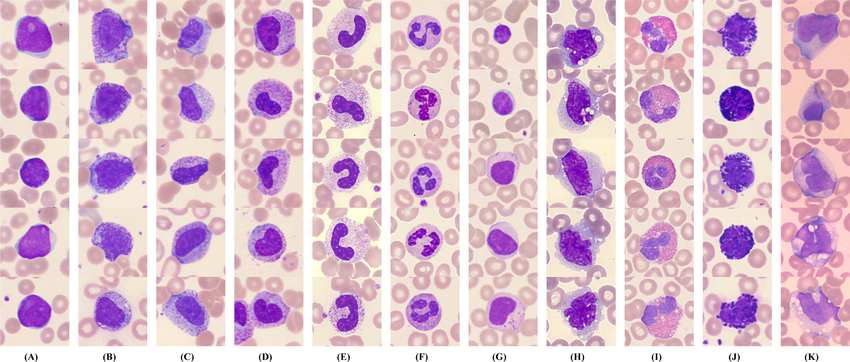
The differential breaks the white count into its parts: the share and absolute count of each white cell type (neutrophils with bands, lymphocytes, monocytes, eosinophils and basophils), plus any abnormal cells. The total white count lives on the WBC page. Want to know which line moved? This is the test. It is also the only route to the ANC.
Physiology & regulation
- Neutrophils: the first-line defense against bacteria and fungi. Most sit in the marrow storage pool or along vessel walls, so counts can jump within hours.
- Left shift: infection pulls younger forms out of the marrow: bands first, then metamyelocytes and myelocytes.
- Lymphocytes: T cells, B cells and natural killer cells. They run adaptive and antiviral immunity.
- Monocytes: they become tissue macrophages, and they rise in chronic infection and inflammation.
- Eosinophils and basophils: they handle allergy and parasite defense. Eosinophils drop sharply with stress and steroids.
How it is measured
- Specimen: whole blood, lavender top (EDTA), fill to the line and invert gently; same tube as the CBC.
- Automated differential: analyzers sort cells by size, granularity and staining. A flag or an abnormal result sends the sample to a manual smear review.
- Manual differential: a technologist classifies 100 cells on a stained smear. It is the only way to count bands and confirm blasts.
- Point of care: no field device reports a differential. It comes from the hospital lab.
Why it matters
The ANC decides whether a febrile patient after chemotherapy has a medical emergency. Bands, blasts and eosinophils point to sepsis, new leukemia and drug reactions. A normal total WBC can hide every one of them.
Clinical Pearls
References
- Freifeld, A. G., Bow, E. J., Sepkowitz, K. A., Boeckh, M. J., Ito, J. I., Mullen, C. A., et al. (2011). Clinical practice guideline for the use of antimicrobial agents in neutropenic patients with cancer: 2010 update by the Infectious Diseases Society of America. Clinical Infectious Diseases, 52(4), e56–e93. Current IDSA guideline. https://doi.org/10.1093/cid/cir073
- Taplitz, R. A., Kennedy, E. B., Bow, E. J., Crews, J., Gleason, C., Hawley, D. K., et al. (2018). Outpatient management of fever and neutropenia in adults treated for malignancy: American Society of Clinical Oncology and Infectious Diseases Society of America clinical practice guideline update. Journal of Clinical Oncology, 36(14), 1443–1453. https://doi.org/10.1200/JCO.2017.77.6211
- Lehrnbecher, T., Robinson, P. D., Ammann, R. A., Fisher, B., Patel, P., Phillips, R., et al. (2023). Guideline for the management of fever and neutropenia in pediatric patients with cancer and hematopoietic cell transplantation recipients: 2023 update. Journal of Clinical Oncology, 41(9), 1774–1785. https://doi.org/10.1200/JCO.22.02224
- Tahmasebi, H., Higgins, V., Bohn, M. K., Hall, A., & Adeli, K. (2020). CALIPER hematology reference standards (I). American Journal of Clinical Pathology, 154(3), 330–341. https://doi.org/10.1093/ajcp/aqaa059
- Hibbs, S. P., Chipare, I., Halawani, A. J., Legge, S. E., Fell, G., Dees, D., et al. (2026). Multinational assessment of absolute neutrophil counts and white blood cell counts among healthy Duffy-null adults. Blood, 147(3), 290–298. https://doi.org/10.1182/blood.2025029359
- Vergara-Lluri, M., Kovach, A. E., Nakashima, M. O., Bradley, K. T., Mahe, E., Tsao, L., et al. (2024). Significant variability in the identification and reporting of band neutrophils by participants enrolled in the College of American Pathologists proficiency testing program: Time for a change. Archives of Pathology & Laboratory Medicine, 148(6), 666–676. https://doi.org/10.5858/arpa.2023-0015-CP
- Harada, T., Harada, Y., Morinaga, K., Hirosawa, T., & Shimizu, T. (2022). Bandemia as an early predictive marker of bacteremia: A retrospective cohort study. International Journal of Environmental Research and Public Health, 19(4), 2275. https://doi.org/10.3390/ijerph19042275
- Shomali, W., & Gotlib, J. (2024). World Health Organization and International Consensus Classification of eosinophilic disorders: 2024 update on diagnosis, risk stratification, and management. American Journal of Hematology, 99(5), 946–968. https://doi.org/10.1002/ajh.27287
Medical Disclaimer
- For Educational Purposes Only: This content is intended for educational reference and should not be used for clinical decision-making.
- Not a Substitute for Professional Judgment: Always consult your local protocols, institutional guidelines, and supervising physicians.
- Verify Before Acting: Users are responsible for verifying information through authoritative sources before any clinical application.