

Bedside Snapshot
- Normal (Adult)
- Typical immunoassay interval 2.0–4.4 pg/mL (3.1–6.8 pmol/L). Assay- and lab-specific, so use your lab's range. Textbook tables differ (Katzung 15e lists 2.6–5.7 pmol/L)
- Critical Values
- No universal critical value: interpret by trend and clinical context. Thyroid storm is a clinical diagnosis
- High Suggests
- Graves’ disease
- Toxic nodular goiter or adenoma (T3-toxicosis)
- Thyroiditis or T3-containing tablets
- Biotin or other assay interference
- Low Suggests
- Critical illness (nonthyroidal illness)
- Fasting or starvation
- Amiodarone, steroids, high-dose propranolol, PTU
- Advanced hypothyroidism (late finding)
- Act Now If
- Thyrotoxicosis plus fever, delirium, HR ≥130/min, heart failure or gut/liver dysfunction: suspect thyroid storm; monitor, cool, beta-blocker per protocol, ICU; do not wait for labs
- Watch Out For
- A low T3 in an ICU patient is nonthyroidal illness until proven otherwise: do not give thyroid hormone for a low T3 alone
Reference & Critical Ranges
Reference ranges
| Population | Conventional | SI | Notes |
|---|---|---|---|
| Adult (19 years and older) | 2.0–4.4 pg/mL | 3.1–6.8 pmol/L | Typical immunoassay (electrochemiluminescence) range from a US reference laboratory. Free T3 assays vary more than free T4 assays. Katzung 15e Table 38-2 lists 2.6–5.7 pmol/L (about 1.7–3.7 pg/mL). Rosen's gives no interval and prefers free over total assays |
| Pregnancy | Trimester- and assay-specific | — | About 5–10% higher near week 10 (high hCG), then falls; late third trimester runs 10–30% below nonpregnant values. Total T3 rises about 1.5-fold |
| Older adult | 2.0–4.4 pg/mL | 3.1–6.8 pmol/L | No separate range. A low value usually reflects illness, poor intake or drugs, not age |
| Neonate (0–1 month) | 2.7–8.5 pg/mL | 4.1–13.1 pmol/L | Highest values of life. One reference lab's interval; use your lab's age-specific range |
| Infant (1–12 months) | 3.4–5.6 pg/mL | 5.2–8.6 pmol/L | Children run higher than adults. One reference lab's interval; use your lab's age-specific range |
| Child (1–13 years) | 3.0–5.1 pg/mL | 4.6–7.8 pmol/L | One reference lab's interval; use your lab's age-specific range |
| Adolescent (14–18 years) | 3.3–5.3 pg/mL | 5.1–8.1 pmol/L | Adult range applies from 19 years. One reference lab's interval; use your lab's age-specific range |
Severity & critical values
| Level | Conventional | SI | What it means / typical findings |
|---|---|---|---|
| Low | <2.0 pg/mL | <3.1 pmol/L | Usually nonthyroidal illness, fasting or a drug effect. Falls last in primary hypothyroidism |
| Normal | 2.0–4.4 pg/mL | 3.1–6.8 pmol/L | With a low TSH and normal free T4: subclinical hyperthyroidism |
| High | >4.4 pg/mL | >6.8 pmol/L | Thyrotoxicosis when TSH is suppressed. With a normal free T4: T3-toxicosis |
| Critical | No universal critical value | — | The level correlates only moderately with symptoms. Thyroid storm is defined by organ dysfunction, not by a number |
Conversion: pg/mL × 1.536 = pmol/L
Causes of Abnormal Results
High (free T3 >4.4 pg/mL)
| Mechanism | Common causes | Bedside clue |
|---|---|---|
| TSH-receptor antibodies | Graves’ disease | Diffuse goiter, eye signs, positive TSH-receptor antibody (TRAb). T3 often rises more than T4 |
| Autonomous nodules | Toxic multinodular goiter, toxic adenoma | Nodular gland, older adult. Classic cause of T3-toxicosis |
| Release of stored hormone (destructive thyroiditis) | Painless, postpartum or subacute thyroiditis; amiodarone-induced thyrotoxicosis (AIT) type 2 | Painful gland and very high ESR in subacute thyroiditis. T4 rises more than T3 |
| Iodine load | AIT type 1, iodinated contrast | Recent contrast or amiodarone, usually on an underlying nodular goiter |
| Exogenous hormone | Liothyronine, desiccated thyroid, combination T4/T3, factitious intake or overdose | Disproportionately high T3 with a low thyroglobulin |
| hCG stimulation | Gestational thyrotoxicosis, molar pregnancy, choriocarcinoma | First trimester (weeks 9–13) or very high hCG |
| TSH-driven (rare) | TSH-secreting pituitary adenoma, thyroid hormone resistance | High free T4 and T3 with a normal or high TSH |
| Artifact | Biotin, heparin, interfering antibodies | Result does not fit the patient: see Interfering Factors |
Low (free T3 <2.0 pg/mL)
| Mechanism | Common causes | Bedside clue |
|---|---|---|
| Nonthyroidal illness (low-T3 syndrome) | Sepsis, myocardial infarction, trauma, surgery, any critical illness | TSH normal or low, no goiter or myxedema. Mild illness lowers T3 only; severe or prolonged illness lowers T4 as well |
| Reduced intake | Fasting, starvation, prolonged nutritional deficit in the ICU | Low T3 without a TSH rise |
| Blocked T4-to-T3 conversion | Amiodarone, high-dose propranolol, glucocorticoids, propylthiouracil (PTU) | Free T4 high-normal or high with a low T3 |
| TSH suppressed by drugs | Dopamine, glucocorticoids | TSH low despite low hormones; can hide true hypothyroidism |
| Primary hypothyroidism (advanced) | Hashimoto thyroiditis, post-ablation, amiodarone-induced hypothyroidism | TSH clearly high and free T4 low. T3 is the last value to fall |
| Central hypothyroidism | Pituitary or hypothalamic disease | Low free T4 with a low or inappropriately normal TSH; pituitary history |
Interpretation & Bedside Approach
Step-by-step approach
- Is it real? Ask about biotin, heparin and thyroid hormone tablets. If the result does not fit the patient, repeat on a different assay platform before acting.
- How sick is the patient? Check temperature, heart rate and rhythm, mental status, heart failure and gut/liver signs. Score with the Burch–Wartofsky Point Scale (BWPS) or Japan Thyroid Association (JTA) criteria.
- Read it with TSH and free T4. TSH is the most sensitive single test. With an intact pituitary and no assay interference, a normal TSH excludes thyrotoxicosis.
- Classify the pattern with the table below. Free T3 changes the answer mainly when TSH is low and free T4 is normal.
- Find the cause: TRAb, total T3:T4 ratio, radioiodine uptake, thyroglobulin and thyroid ultrasound per endocrinology.
- Escalate or follow up: storm goes to the ICU; an ICU low T3 is retested after recovery; Graves’ disease on antithyroid drugs gets free T4 and T3 at 2–6 weeks.
Pattern recognition
| TSH | Free T4 | Free T3 | Suggests |
|---|---|---|---|
| Low (often <0.01 mIU/L) | High | High | Overt hyperthyroidism: Graves’ disease, toxic nodular goiter, thyroiditis |
| Low | Normal | High | T3-toxicosis: early Graves’ disease or an autonomous nodule |
| Low | Normal | Normal | Subclinical hyperthyroidism; also first trimester, drugs or recovering illness |
| Normal or high | High | High | TSH-secreting adenoma, thyroid hormone resistance or assay interference |
| Normal or low | Normal or low | Low | Nonthyroidal illness, fasting or drug effect |
| Normal | High or high-normal | Low or low-normal | Amiodarone in a euthyroid patient |
| High | Low | Normal or low | Primary hypothyroidism: T3 is preserved until late |
A ratio above 20 points to Graves’ disease or toxic nodular goiter, because the gland is making more T3. Below 20 points to painless or postpartum thyroiditis or excess levothyroxine. Use it when a scan isn’t possible, in pregnancy for example.
Thyroid storm scores
- BWPS: points for temperature, CNS dysfunction, gut/liver dysfunction, heart rate, atrial fibrillation, heart failure and a precipitant. ≥45 is consistent with storm; 25–44 is impending storm and needs clinical judgment.
- JTA criteria: require an elevated free T3 and/or free T4, plus combinations of CNS signs, fever ≥38 °C (100.4 °F), heart rate ≥130/min, heart failure and gut/liver dysfunction.
- Both overcall: many compensated thyrotoxic patients land in the impending range. The diagnosis stays a bedside call.
Management Priorities
Emergency: Thyroid storm (thyrotoxicosis plus fever, delirium, tachyarrhythmia, heart failure or gut/liver dysfunction)
- Support and find the trigger: put a cardiac monitor on, give oxygen and IV fluids, cool actively and use acetaminophen (avoid aspirin). Look for infection, ischemia or DKA, and run a pregnancy test. Admit to ICU or a high-dependency unit.
- Block adrenergic effects: titrate a beta-blocker to heart rate. Reach for esmolol if thyrotoxic cardiomyopathy, hypotension or shock is possible. Use diltiazem if beta-blockers are contraindicated.
- Stop new hormone synthesis: that means high-dose methimazole or PTU, the thionamides.
- Stop hormone release: give iodide at least 1 hr after the thionamide. It helps in Graves’ disease or toxic nodular goiter and offers little benefit in destructive thyroiditis.
- Block T4-to-T3 conversion: give a glucocorticoid. High-dose propranolol and PTU add to the effect.
- Reassess: improvement should show within 24–48 hr. No improvement? Specialist teams consider plasma exchange, ECMO or urgent thyroidectomy.
Medications
| Drug | Adult dose | Pediatric dose (max) | Onset / key notes |
|---|---|---|---|
| Propranolol | Thyroid storm: 60–80 mg PO/NG every 4 hr (no fixed max: titrate to heart rate). IV: protocol- and physician-directed. The labeled IV dose (1–3 mg at ≤1 mg/min, repeat once after 2 min) is the arrhythmia dose, not a storm regimen. For IV beta-blockade in storm, esmolol is preferred | Not established for storm: consult pediatric endocrinology | Slows T4-to-T3 conversion at high doses. Start lower if heart failure is suspected. High-alert (IV) |
| Esmolol | Labeled SVT dosing: optional 500 mcg/kg IV over 1 min, then 50–200 mcg/kg/min titrated to heart rate. Label: do not exceed 200 mcg/kg/min for tachycardia. Storm dosing is protocol-dependent | Not established for storm: consult pediatric endocrinology | Minutes on and off: preferred when cardiac function is uncertain. High-alert |
| Methimazole | Severe hyperthyroidism: 60 mg/day PO/NG in 3 divided doses (label; no labeled maximum). Storm dosing is protocol-dependent | Not established for storm: consult pediatric endocrinology | Blocks synthesis only. Preferred if liver tests are abnormal; outcomes appear similar to PTU. Agranulocytosis: stop and report fever or sore throat. First trimester: can cause fetal harm; PTU may be preferred in early pregnancy |
| Propylthiouracil (PTU) | 500–1,000 mg PO/NG load, then 250 mg every 4 hr (1,500 mg/day after the load) | Not established for storm: consult pediatric endocrinology | Also blocks T4-to-T3 conversion (T3 falls faster). FDA boxed warning: severe liver injury. Agranulocytosis: report fever or sore throat. Label: may be the treatment of choice during or just before the first trimester |
| Iodide (SSKI or Lugol’s solution) | SSKI 5 drops (0.25 mL, 250 mg) PO every 6 hr, or Lugol’s 8 drops 4 times daily | Not established for storm: consult pediatric endocrinology | Give at least 1 hr after the thionamide. Dilute in juice or milk. Stop once stable |
| Hydrocortisone | ATA 2016: 300 mg IV load, then 100 mg every 8 hr. Protocol-dependent | Not established for storm: consult pediatric endocrinology | Blocks T4-to-T3 conversion; covers relative adrenal insufficiency. Monitor glucose and potassium; thyrotoxic periodic paralysis can cause hypokalemia |
Definitive care & disposition
- Storm: ICU, and endocrinology early. Definitive treatment (radioiodine, surgery or long-term antithyroid drug) comes after stabilization.
- Amiodarone-induced thyrotoxicosis: cardiology and endocrinology decide together whether to stop amiodarone. Deaths from ventricular fibrillation have followed withdrawal.
- Isolated low T3 in the ICU: no thyroid hormone. Retest after recovery.
- Myxedema coma: IV thyroid hormone (oral products are not used). Cover with glucocorticoid first if adrenal insufficiency is possible. The dosing is on the Free T4 page.
Doses are typical references. Follow local protocols, medical direction and institutional policy.
Special Populations
| Population | What changes | Clinical implication |
|---|---|---|
| Neonates & infants | Free T3 is highest in the first month (up to 8.5 pg/mL) and stays above adult values through infancy | Use age-specific ranges. Babies of mothers with high TRAb can develop neonatal hyperthyroidism days after birth |
| Children & adolescents | Upper limits run about 5 pg/mL until 18 years | An adult range overcalls hyperthyroidism in a child. Pediatric storm care is specialist-led |
| Pregnancy | hCG stimulates the thyroid in weeks 9–13; free T3 rises slightly then falls 10–30% by late pregnancy; total T3 rises 1.5-fold | A low TSH with normal free hormones in the first trimester is normal. Use trimester- and assay-specific ranges; consider total T3 |
| Older adults | Same reference range; thyrotoxicosis and even storm may be “apathetic”, with blunted tachycardia and vague symptoms | Test thyroid function even when the picture is atypical. Toxic multinodular goiter is a more common cause than in younger adults |
| Critically ill | Low T3, then low T4, with normal or low TSH; dopamine and steroids suppress TSH further | Do not diagnose hypothyroidism from a low T3. A clearly high TSH points to true hypothyroidism |
| On amiodarone | Higher T4, lower T3, higher reverse T3 in euthyroid patients; hypothyroidism in up to 10%, hyperthyroidism in about 2% | Test before starting, within 3 months, then every 3–6 months. New arrhythmia breakthrough: check for thyrotoxicosis |
| On liothyronine or desiccated thyroid | About 95% of an oral T3 dose is absorbed within 4 hr; levels rise within hours of each dose | Record the time of the last dose. Disproportionately high T3 suggests T3-containing tablets |
Interfering Factors & Pitfalls
Collection & handling
| Factor | Effect | Why | Avoid / fix |
|---|---|---|---|
| Gross hemolysis | Rejected | Interferes with the immunoassay | Redraw a clean sample |
| Heparin therapy | Free hormone ↑ (False +), described for free T4 | Heparin activates lipase in the tube; released fatty acids displace hormone from binding proteins | Note heparin on the request; interpret free values with caution |
Medications & supplements
| Factor | Effect | Why | Avoid / fix |
|---|---|---|---|
| Biotin (high-dose supplements) | Free T3 and free T4 ↑ (False +); TSH ↓ (False −) | Excess biotin competes in streptavidin–biotin assays; the pattern mimics Graves’ disease | Stop biotin at least 2 days before testing (label minimum; longer for high doses, so check the assay's biotin limit), then repeat |
| Aspirin (salicylates) | ↑ free T3 and free T4 | Displaces hormone from thyroxine-binding globulin (TBG) | Use acetaminophen for fever in thyrotoxicosis |
| Amiodarone | T3 ↓, T4 ↑, reverse T3 ↑ | Blocks peripheral T4-to-T3 conversion | Expected in euthyroid patients; get a baseline |
| Glucocorticoids, high-dose propranolol, PTU | T3 ↓ | Block conversion; steroids also lower TSH | Interpret in context |
| Liothyronine, desiccated thyroid | T3 ↑ after each dose | Direct T3 intake | Record dose timing |
| Estrogen, pregnancy | Total T3 ↑; free T3 less affected | TBG rises | Use free hormone or pregnancy-adjusted total ranges |
Physiologic, biologic & assay factors
| Factor | Effect | Why | Avoid / fix |
|---|---|---|---|
| Critical illness, fasting | T3 ↓ | Reduced conversion, more inactivation, low intake | Retest after recovery |
| Binding-protein disorders (TBG excess, familial dysalbuminemic hyperthyroxinemia) | Total ↑; free estimates can be wrong | Abnormal carrier proteins | Free hormone by equilibrium dialysis at a reference lab |
| Heterophile or thyroid hormone autoantibodies | False + or False − | Antibodies bind assay reagents or the hormone | Different platform, dilution or blocking studies |
| Anti-streptavidin or anti-ruthenium antibodies | False + or False − | Platform-specific reagent interference | Repeat on a different platform |
Common misinterpretations
- “Low T3 = hypothyroid”: in the ICU, that is almost always nonthyroidal illness.
- “Normal T3 rules out hypothyroidism”: T3 is the last value to fall, so it can’t rule hypothyroidism out. Use TSH and free T4.
- “Low TSH + normal free T4 = subclinical”: that holds only if T3 is normal too. If it isn’t, it is T3-toxicosis.
- “TSH shows treatment response”: TSH stays suppressed for weeks to months. Follow free T4 and T3 instead.
Physiology & Test Basics
What it measures
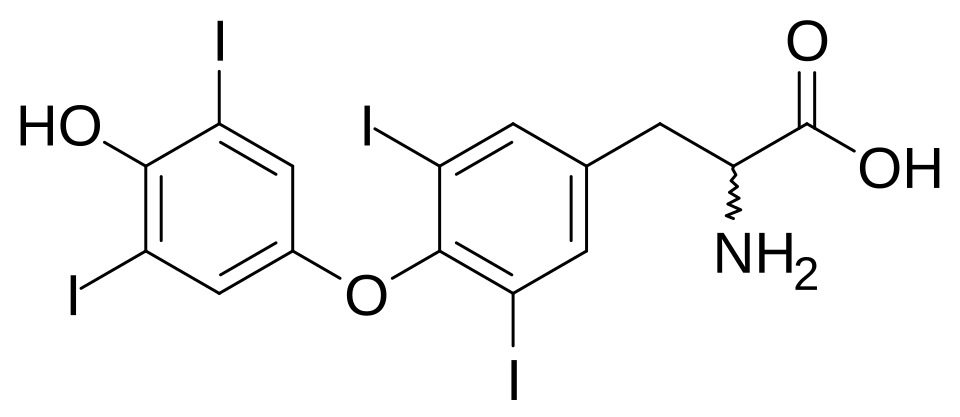
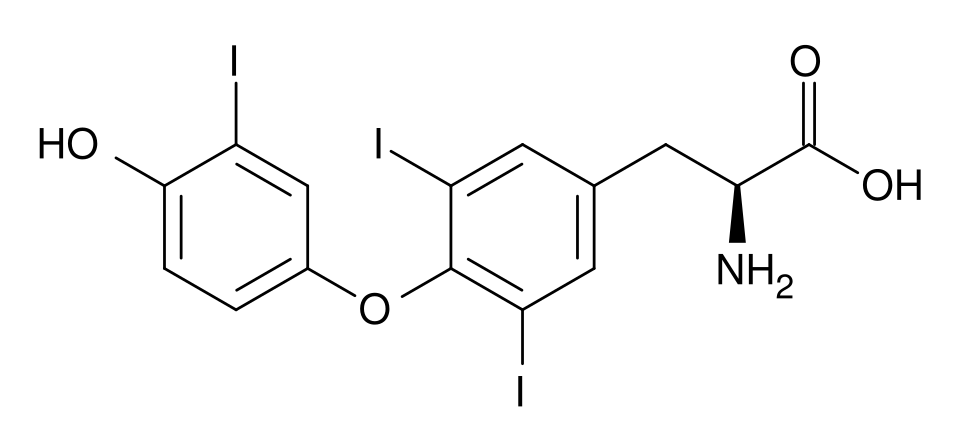
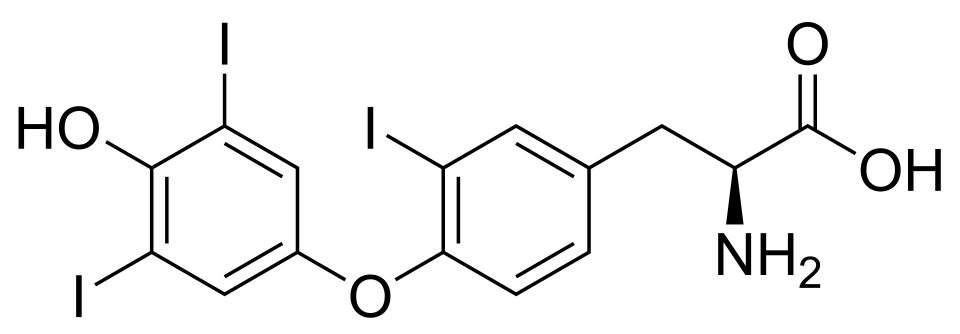
Free T3 is the small unbound slice of triiodothyronine, the part that gets into cells. Total T3 (bound plus free) lives on the Total T3 page, and the T3 page compares the two. Free T4 measures the main circulating hormone and prohormone.
Physiology & regulation
- Mostly made outside the thyroid: about 80% of circulating T3 comes from tissues stripping one iodine off T4.
- Deiodinases: type 1 (liver, kidney) and type 2 (brain, including the hypothalamus, and muscle) make T3. Type 3 switches T4 into reverse T3 and T3 into T2. All of them are selenium-containing enzymes.
- Potency: about 4 times the biologic potency of T4. T4 works largely as a prohormone for T3.
- Binding: about 99.5% protein-bound (TBG, transthyretin, albumin). It grips those proteins less tightly than T4 does.
- Half-life: T3 ≤2 days; T4 6–7 days (3–4 days in hyperthyroidism, 9–10 days in hypothyroidism).
- Feedback: the pituitary’s TSH drives the gland. Free hormone pushes TSH down.
How it is measured
- Specimen: serum, gel (gold-top) or plain red-top tube. Laboratory test, not point of care.
- Method: competitive immunoassay on automated analyzers, which gives an estimate of the free fraction. Reference labs offer free T3 by equilibrium or tracer dialysis when binding proteins are abnormal.
- Ordering: a second-line test. When TSH is low, some labs add free T4 and T3 to the same sample and save a redraw.
Why it matters
Free T3 tells T3-toxicosis apart from subclinical hyperthyroidism. It also tracks Graves’ disease early in treatment. In the ICU, a low T3 marks how sick the patient is. It is not a reason to give thyroid hormone.
Clinical Pearls
References
- Ross, D. S., Burch, H. B., Cooper, D. S., Greenlee, M. C., Laurberg, P., Maia, A. L., Rivkees, S. A., Samuels, M., Sosa, J. A., Stan, M. N., & Walter, M. A. (2016). 2016 American Thyroid Association guidelines for diagnosis and management of hyperthyroidism and other causes of thyrotoxicosis. Thyroid, 26(10), 1343–1421. https://doi.org/10.1089/thy.2016.0229
- Fliers, E., & Boelen, A. (2021). An update on non-thyroidal illness syndrome. Journal of Endocrinological Investigation, 44(8), 1597–1607. https://doi.org/10.1007/s40618-020-01482-4
- Favresse, J., Burlacu, M. C., Maiter, D., & Gruson, D. (2018). Interferences with thyroid function immunoassays: Clinical implications and detection algorithm. Endocrine Reviews, 39(5), 830–850. https://doi.org/10.1210/er.2018-00119
- Mayo Clinic Laboratories. (2026). Test ID T3FR: T3 (triiodothyronine), free, serum. Reference values, specimen and method. https://www.mayocliniclabs.com/test-catalog/overview/621321
- AbbVie. (2024). SYNTHROID (levothyroxine sodium) tablets: Prescribing information (biotin interference: sections 2.2, 2.4 and 7.10). DailyMed. https://dailymed.nlm.nih.gov/dailymed/drugInfo.cfm?setid=1e11ad30-1041-4520-10b0-8f9d30d30fcc
- Upsher-Smith Laboratories. (2025). PACERONE (amiodarone hydrochloride) tablets: Prescribing information, section 5.6 thyroid abnormalities. DailyMed. https://dailymed.nlm.nih.gov/dailymed/drugInfo.cfm?setid=4c4ec9b0-13a5-49a8-b57b-b3f64e4316a7
- Hikma Pharmaceuticals USA Inc. (2022). Propranolol hydrochloride injection: Prescribing information, dosage and administration (arrhythmias; revised May 2022). DailyMed. https://dailymed.nlm.nih.gov/dailymed/drugInfo.cfm?setid=91f2ff1d-68d8-4e83-a2db-618f0410ead7
- Upsher-Smith Laboratories. (2023). Methimazole tablets: Prescribing information, dosage and administration and warnings (revised December 2023). DailyMed. https://dailymed.nlm.nih.gov/dailymed/drugInfo.cfm?setid=2185e6e0-7c21-4348-a7b4-d898f50a0184
Medical Disclaimer
- For Educational Purposes Only: This content is intended for educational reference and should not be used for clinical decision-making.
- Not a Substitute for Professional Judgment: Always consult your local protocols, institutional guidelines, and supervising physicians.
- Verify Before Acting: Users are responsible for verifying information through authoritative sources before any clinical application.