

Bedside Snapshot
- Use It For
- Shock-refractory VF/pulseless VT; stable monomorphic VT; AF/flutter rate or rhythm control without pre-excitation
- Adult Dose
- VF/pVT: 300 mg IV/IO push, then 150 mg once (max 450 mg)
- Stable VT: 150 mg IV over 10 min, then 1 mg/min ×6 hr, then 0.5 mg/min
- Differs from FDA label: labeled load is 150 mg IV over 10 min; no 300 mg push
- Pediatric Dose
- VF/pVT: 5 mg/kg IV/IO (max 300 mg); repeats max 150 mg, up to 3 doses. Stable wide-complex VT: 5 mg/kg over 10 min (max 150 mg). SVT: specialist use only. Differs from FDA label: pediatric use not established
- Onset / Duration
- IV: minutes / bolus redistributes in 30–45 min, so start an infusion. PO: days to weeks. Effects last weeks to months
- Do Not Give / Hold If
- Torsades; pre-excited AF (WPW); marked bradycardia or 2nd/3rd-degree AV block without pacer; cardiogenic shock; iodine allergy. Caution in long QT: correct K⁺/Mg²⁺ first
- Watch For
- Hypotension during the load (slow it); bradycardia or AV block (ECG); QTc ≥500 ms or torsades (12-lead); phlebitis (site checks)
- Reversal / Rescue
- No specific reversal; not dialyzable. Slow or stop; vasopressors for hypotension; pacing for bradycardia; magnesium for torsades
- Must Remember
- Push only in arrest. With a pulse, load 150 mg over 10 min, never faster than 30 mg/min. Check the QT and rule out pre-excitation first.
Indications
Emergency & Prehospital
- Shock-refractory VF/pulseless VT: still there after defibrillation and epinephrine? Amiodarone is one choice, and lidocaine is an equal alternative (2025 AHA Part 9, COR 2b, LOE B-R)
- Stable monomorphic VT: IV amiodarone is one option, alongside procainamide and sotalol (2025 AHA Part 9, COR 2b, LOE B-R). Unstable, or the drugs fail? Go to cardioversion
ED / ICU / Transport
- Recurrent VF or unstable VT: the FDA-labeled IV use. Think electrical storm, usually with a beta-blocker (2017 AHA/ACC/HRS guideline)
- Recurrent polymorphic VT with a normal QT: usually ischemic. Treat the ischemia. IV amiodarone may be considered (2025 AHA Part 9, COR 2b, LOE C-LD)
- AF/flutter with rapid ventricular response, no pre-excitation: reach for an IV beta-blocker or diltiazem/verapamil first (2025 AHA Part 9, COR 1). Class 3: Harm in decompensated HF or LV systolic dysfunction. IV amiodarone is COR 2a, LOE B-NR, for rate control in critically ill adults when those drugs are contraindicated or fail (off-label). Differs from the FDA label: IV labeling covers only VF and hemodynamically unstable VT.
- Pharmacologic cardioversion of AF: stable patients; conversion often takes 8–12 hr (off-label)
Other Uses
- Oral prevention of recurrent VF/unstable VT: FDA-labeled once other drugs have failed
- Oral AF rhythm maintenance: used mainly with reduced ejection fraction (HFrEF), or when other options fail (off-label)
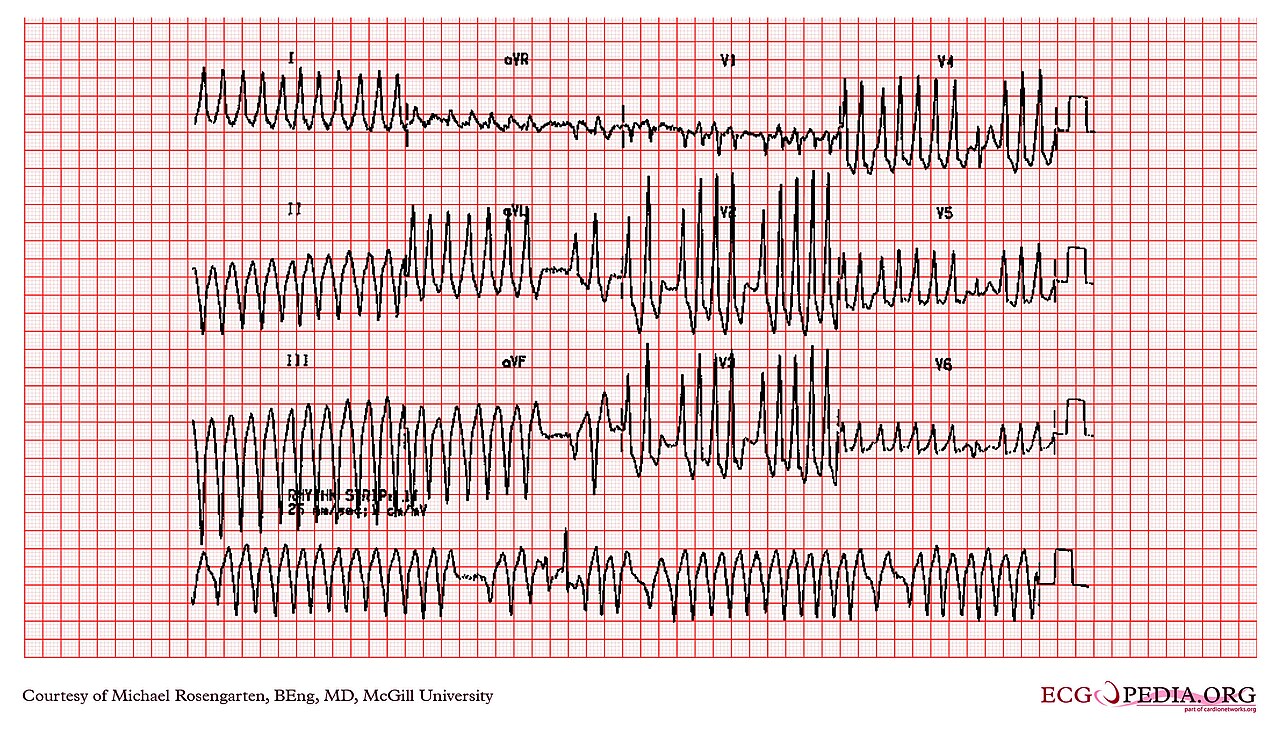
Not for Torsades de Pointes: Torsades is polymorphic VT on a long QT, and amiodarone makes that QT longer still. Pulseless? Defibrillate. Otherwise give IV magnesium, stop the QT-prolonging drugs, correct K⁺/Mg²⁺, and use overdrive pacing or isoproterenol.
Dosing & Administration
The doses below come from the 2025 AHA guidelines, NASEMSO v3.0 for pediatric VT, and the 2023 AF guideline for AF cardioversion. The FDA label appears where noted. Check concentration and rate against the pump library.
Available Forms
- Vial: 50 mg/mL in 3 mL (150 mg) and 9 mL (450 mg); contains polysorbate 80 and benzyl alcohol. The 3 mL vial is used for arrest boluses.
- Premix (Nexterone): 1.5 mg/mL in 100 mL (150 mg) and 1.8 mg/mL in 200 mL (360 mg); no polysorbate 80 or benzyl alcohol.
- Tablets: 100 mg, 200 mg, 400 mg.
High-Alert Medication: Three traps catch crews. The 300 mg arrest dose pushed into a patient with a pulse. A load faster than 30 mg/min. Drop-counting sets, which underdose by up to 30%. Run a smart pump, and check concentration, rate and the 24-hour total independently.
Adult Dosing
| Indication | Dose & Route | Repeat / Max | Notes |
|---|---|---|---|
| VF/pulseless VT (shock-refractory) | 300 mg IV/IO push | Repeat 150 mg once; max 450 mg in arrest | High-alert IV first (2025 AHA Part 9, COR 1, LOE A); IO if IV fails (COR 2a, LOE A). Or lidocaine 1–1.5 mg/kg, then 0.5–0.75 mg/kg (2025 ACLS algorithm). Differs from FDA label: labeled load is 150 mg over 10 min; the 300 mg push is the ACLS arrest dose. |
| Stable monomorphic VT | 150 mg IV over 10 min | Repeat if VT recurs, then infusion; max initial rate 30 mg/min | High-alert Cardiovert if unstable. Use one agent: adding procainamide or sotalol stacks QT prolongation and proarrhythmia, so get expert input before a second drug. |
| Recurrent VF / unstable VT, breakthrough on infusion | 150 mg IV over 10 min | Mean >2,100 mg/day caused hypotension | High-alert Label regimen gives about 1,050 mg in the first 24 hr. |
| AF rate control, no pre-excitation (off-label) | 300 mg IV over 1 hr (2025 AHA Part 9 table; other schemes exist) | Then 10–50 mg/hr over 24 hr; include the load in the 24-hr total | High-alert May convert AF: weigh stroke risk and anticoagulation. Critically ill only (2025 AHA Part 9, COR 2a, LOE B-NR). |
| AF cardioversion (off-label) | 5–7 mg/kg or 300 mg IV | Then 1,200–3,000 mg over 24 hr; upper end exceeds the label hypotension threshold | High-alert Guideline range from the 2023 AF guideline table (as cited); the guideline gives no dosing weight or load duration. |
| Oral loading, VF/VT (labeled) | 800–1,600 mg/day PO, divided, 1–3 weeks | Then 600–800 mg/day for 1 month; maintenance usually 400 mg/day | Take the same way each day relative to food; divide doses with meals at 1,000 mg/day or more, or for GI upset. AF maintenance (off-label): 100–200 mg/day. |
Pediatric Dosing
| Indication | Dose (per kg) & Route | Max Single / Max Total | Notes |
|---|---|---|---|
| VF/pulseless VT | 5 mg/kg rapid IV/IO bolus | Max 300 mg first dose; repeats max 150 mg; PALS 2025 wording: may repeat up to 3 doses | High-alert Lidocaine 1 mg/kg IV/IO is an equal alternative (2025 AHA Part 8, COR 2b, LOE C-LD; PALS algorithm). |
| Stable wide-complex VT (with pulse) | 5 mg/kg IV over 10 min | Max 150 mg per dose (NASEMSO v3.0) | High-alert Expert consultation. NASEMSO v3.0 Tachycardia with a Pulse, pediatric step iii.2 (adenosine first if SVT with aberrancy is possible). Use one antidysrhythmic at a time (NASEMSO v3.0). |
| SVT with cardiopulmonary compromise | Not established in children; specialist use only | — | High-alert AHA 2025 Part 8 SVT recommendation 5 (COR 2b, LOE C-LD): for SVT unresponsive to vagal maneuvers, adenosine and cardioversion, when expert consultation is unavailable, it may be reasonable to consider procainamide, amiodarone or sotalol. No pediatric dose is given. |
| Neonates | Not established: specialist use only | — | Generic vials contain benzyl alcohol (gasping syndrome). |
See weight-based dosing.
Continuous Infusion
| Setting | Example Concentration | Start | Titrate | Usual Range / Max |
|---|---|---|---|---|
| Label regimen (VT/VF) | 1.8 mg/mL: premix 360 mg/200 mL or 900 mg/500 mL D5W (example, institution-specific) | 1 mg/min for 6 hr | 0.5 mg/min for 18 hr | 0.5 mg/min (720 mg/day) for up to 2–3 weeks |
Preparation & Administration
- Arrest push: 300 mg = 6 mL; 150 mg = 3 mL. Protocols split on diluting the arrest push, even though the vial label says "must be diluted". Follow yours. Push and flush.
- Load: 150 mg (3 mL) in 100 mL D5W (1.5 mg/mL) over 10 min.
- Pump and filter: a volumetric pump is required, because amiodarone shrinks drop size. Add an in-line filter.
- Line: dedicated central line when possible; peripherally, 2 mg/mL or less for infusions over 1 hr.
- IV to oral (label): the oral dose depends on how much IV drug has been given. After an infusion of under 1 week, start 800–1,600 mg/day PO; 1–3 weeks, 600–800 mg/day; over 3 weeks, 400 mg/day. No grapefruit juice on oral therapy.
- Containers: generic admixtures running over 2 hr in glass or polyolefin; no light protection needed during infusion.
Renal and hepatic considerations: see Special Populations.
Contraindications & Precautions
Contraindications
- Cardiogenic shock
- Marked sinus bradycardia, sick sinus syndrome, or 2nd/3rd-degree AV block without a functioning pacemaker
- Hypersensitivity to amiodarone or any component, including iodine
- Pre-excited AF or flutter (Wolff-Parkinson-White, WPW): contraindicated. 2025 AHA Part 9 gives IV amiodarone, digoxin, non-dihydropyridine calcium channel blockers and beta-blockers a Class 3: Harm (C-LD). The reason: these drugs can speed the ventricular response and cause VF. Cardioversion is the recommended management.
- Torsades de pointes: avoid
Precautions
- Long QT or QT-prolonging drugs: correct K⁺, Mg²⁺ and Ca²⁺ first.
- Hypotension, LV dysfunction, older adults: load slowly.
- Lung disease or recent surgery: acute lung injury and ARDS occur with IV use.
- AF over 48 hr or unknown duration: may convert; address anticoagulation first.
- Pacemaker or ICD: thresholds can change.
Hold / Reassess If
- Symptomatic hypotension: slow the infusion; fluids, vasopressors
- Symptomatic HR <50/min, new AV block or pauses: slow or stop; pacing ready
- QTc ≥500 ms or a rise >60 ms: slow or hold amiodarone and contact the prescriber; correct K⁺/Mg²⁺; stop other QT-prolonging drugs
- ALT/AST >3 times normal (or double an elevated baseline): reduce or stop
FDA Boxed Warning: Keep oral amiodarone for life-threatening arrhythmias. Only those. Watch three dangers: pulmonary toxicity (fatal in about 10% of cases), hepatotoxicity that can be fatal, and worsened arrhythmia. Start it with ECG monitoring and resuscitation ready. IV labels carry no boxed warning.
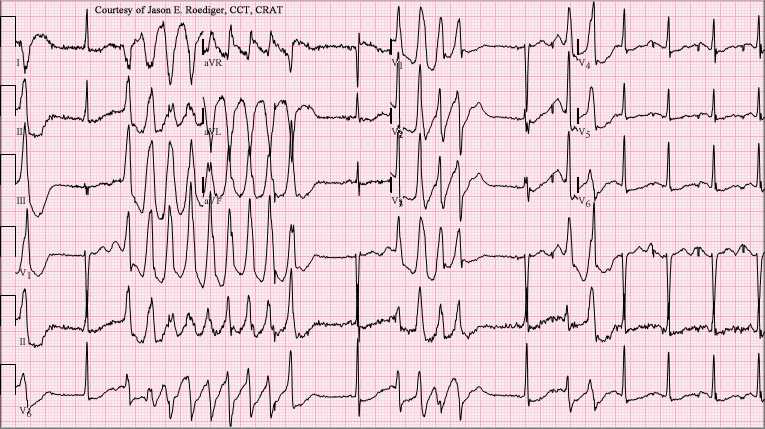
Pre-Excited AF (WPW): A very fast, irregular, broad-complex tachycardia with QRS shapes that keep changing? That is AF down an accessory pathway. Give any of these and you can tip it into VF: amiodarone, adenosine, diltiazem, verapamil, beta-blockers and digoxin. Unstable means cardiovert. Stable means IV procainamide or ibutilide.
Adverse Effects & Toxicity
Common
- IV hypotension, rate-related: 16% in trials; about 3% needed a therapy change and under 2% stopped
- Bradycardia and AV block
- Phlebitis, especially above 3 mg/mL peripherally
- Asymptomatic transaminase rise
- Oral: nausea and vomiting, abnormal taste, corneal microdeposits, photosensitivity (about 10%), blue-gray skin, tremor, neuropathy
Serious / Life-Threatening
| Effect | Recognition | Management |
|---|---|---|
| Hypotension / shock | Falling BP during the load | Slow or stop; fluids, vasopressors, inotropes |
| Bradycardia, AV block | HR, PR, pauses | Slow or stop; pacing or a beta-agonist |
| Torsades / proarrhythmia | QTc ≥500 ms; IV: under 2% | Stop; magnesium; defibrillate if pulseless |
| Hepatic injury | Rising ALT/AST; necrosis with high IV rates | Reduce or stop |
| Pulmonary toxicity | Acute (ARDS in 2% of 48-hr IV studies) or chronic pneumonitis; cough, hypoxia | Stop; imaging; steroids may help |
| Thyroid dysfunction | Hypothyroid (up to 10%), thyrotoxic (about 2%) | TSH/free T4; endocrinology |
| Optic neuropathy, anaphylaxis | Visual loss; shock, rash | Stop; ophthalmology; epinephrine |
Overdose & Toxicity Management
- Signs: hypotension, shock, bradycardia, AV block, torsades, hepatotoxicity.
- Treat: stop the infusion; vasopressors and inotropes; pacing or isoproterenol; magnesium for torsades. Refractory shock: consider mechanical circulatory support (such as VA-ECMO) where it is available, and bring in toxicology.
- Antidote: no antidote, and dialysis does not clear it. Expect the effects to last a long time. Call poison control (1-800-222-1222).
Monitoring
| Parameter | When / How Often | Target / Act If |
|---|---|---|
| Clinical: ECG and BP | Continuous ECG; BP every few minutes during the load | Symptomatic hypotension or HR <50/min: slow or stop |
| Clinical: QTc (12-lead) | Baseline, after the load, daily on infusion | QTc ≥500 ms or rise >60 ms: slow or hold amiodarone, tell the prescriber, correct K⁺/Mg²⁺, stop other QT drugs |
| Clinical: IV site | Hourly if peripheral | Phlebitis: resite or move central |
| Laboratory: potassium, magnesium | Baseline, then daily | Correct deficits |
| Laboratory: ALT, TSH | Baseline; oral at 3–6 months, then every 6 months | ALT >3 times normal: reduce or stop; abnormal TSH: endocrinology |
| Laboratory: INR, digoxin | Every few days after starting | Cut warfarin by one-third to one-half; halve digoxin |
| Long-term (oral): lungs, eyes | Baseline CXR and lung function tests with diffusion capacity; history, exam and CXR every 3–6 months; regular eye exams | New cough, dyspnea or visual change: evaluate promptly; consider stopping |
Interactions & Compatibility
Clinically Significant Interactions
| Drug / Class | Effect | What To Do |
|---|---|---|
| QT-prolonging drugs, including other antiarrhythmics | Torsades | Avoid; if needed, ECG and K⁺/Mg²⁺ |
| Beta-blockers, diltiazem, verapamil, digoxin, fentanyl | Bradycardia, AV block; fentanyl also hypotension and low cardiac output | Monitor HR and BP; pacing available |
| Sofosbuvir regimens | Severe bradycardia, some needing pacemakers, within hours to 2 weeks | Avoid; monitor HR, even if amiodarone was stopped recently |
| Digoxin, dabigatran, cyclosporine, phenytoin | Levels rise (digoxin about 70%) | Halve digoxin or stop it; monitor cyclosporine and phenytoin levels; watch for bleeding with dabigatran |
| Warfarin | INR up about 100% in 3–4 days | Reduce warfarin by one-third to one-half |
| Simvastatin, lovastatin | Myopathy, rhabdomyolysis | Simvastatin max 20 mg/day; lovastatin max 40 mg/day |
| Lidocaine | Lidocaine levels rise: seizures reported with IV amiodarone; sinus bradycardia with local-anesthetic lidocaine | Lower lidocaine doses; watch for CNS toxicity and HR |
| Grapefruit juice, CYP3A inhibitors (azoles, macrolides, protease inhibitors); inducers (St John's wort) | Inhibitors raise and inducers lower amiodarone levels | Avoid; no grapefruit juice on oral therapy |
Expect interactions to last for weeks to months after you stop it.
IV Compatibility
- Diluent: D5W.
- Y-site incompatible: heparin, digoxin, argatroban, bivalirudin, sodium bicarbonate, furosemide, magnesium sulfate 500 mg/mL, cefazolin, piperacillin–tazobactam, nitroprusside, phosphates; use a separate line.
- Verify with an institutional compatibility resource.
Special Populations
- Pediatrics: not established in FDA labeling, but PALS uses it. A pediatric trial reported hypotension (36%), bradycardia (20%) and AV block (15%). See the Pediatric Dosing table.
- Neonates: vials contain benzyl alcohol. Specialist use only.
- Pregnancy: it crosses the placenta. Reported effects include neonatal thyroid dysfunction, bradycardia, QT prolongation, neurodevelopmental effects, preterm birth and fetal growth restriction. Reserve it for life-threatening arrhythmia. In maternal arrest, use standard ACLS doses.
- Lactation: it passes into breast milk, so breastfeeding is not recommended.
- Older Adults: clearance is slower and the half-life longer, so start low. AGS Beers 2023: avoid as first-line AF therapy unless HF or substantial LV hypertrophy.
- Renal Impairment: no specific adjustment is established, and dialysis does not clear it.
- Hepatic Impairment: the label gives no adjustment. Reduce or stop if ALT/AST >3 times normal or the liver is injured.
- Obesity / Dosing Weight: adult doses stay fixed. It is very lipophilic, so it builds up in fat.
Field & Transport Considerations
- Scope: Paramedic and above, plus critical-care transport, per local protocol. Amiodarone sits outside EMT and AEMT scope in the National EMS Scope of Practice Model (NHTSA 2021, Section V, footnote 5). It is on no EMT list. The AEMT IV list is limited to analgesia, antinausea/antiemetic, dextrose, epinephrine, glucagon, naloxone and others a state or local protocol defines. It varies by state and agency protocol.
- Storage & Stability: 20–25°C (68–77°F). The premix label allows excursions to 15–30°C (59–86°F). Keep vials and bags in the carton until use, because of light. Avoid freezing and heat.
- Carried Concentration: 50 mg/mL vials; premix 1.5 or 1.8 mg/mL: match bag to pump library.
- Infusions in Transport: pump and filter, on a dedicated line. Check the site.
- Handoff Essentials: hand off every bolus time and dose, the infusion rate, the 24-hr total, the rhythm and BP response, and the QTc.
Clinical Pearls
Amiodarone vs Lidocaine in Refractory VF: AHA 2025 calls it a tie (Part 9, COR 2b, LOE B-R).
- In the large prehospital trial, both raised survival to admission. Not to discharge.
- Lidocaine: less hypotension and no QT prolongation
- Nothing in the data supports giving both
Exam Discriminator: Polymorphic VT: Check the QT first. Long QT means torsades: magnesium, no amiodarone. Normal QT usually means ischemia. Treat that. Amiodarone is an option.
Drugs Are Adjuncts in Arrest: Amiodarone does not replace high-quality CPR or prompt defibrillation. Still no ROSC? Look again for the Hs and Ts.
Pulse Changes the Dose: Pulseless patients get the rapid push, and only them. A patient with a pulse gets the slow 10-minute load.
Rate Before Rhythm: IV amiodarone hits the AV node first. The class III effects take hours to build. In AF, expect rate control before conversion. That same AV-nodal effect is why it is dangerous in WPW.
The Drug Outlasts the Order: The order ends. The drug does not. With a half-life of weeks, toxicity and interactions persist after stopping. Ask about recent use before you start warfarin, digoxin or sofosbuvir.
Pharmacology
Mechanism of Action
- K⁺ channel block (class III): refractoriness lasts longer, which suppresses re-entry. QT prolongation builds with continued dosing.
- Na⁺ channel block (class I): conduction slows at fast rates.
- Antiadrenergic and Ca²⁺ effects (classes II, IV): they slow the sinus node and AV node. That gives rate control and bradycardia.
- Acute IV: AV-nodal slowing is the main effect. Vasodilation lowers BP.
Pharmacokinetics
| Route | Onset | Peak | Duration |
|---|---|---|---|
| IV/IO | Minutes | End of load | Serum falls to 10% of peak in 30–45 min; infusion maintains it |
| PO | 2–3 days (usually 1–3 weeks) | 3–7 hr | Weeks to months |
- Half-life: about 58 days (15–142) after oral dosing.
- Metabolism: CYP3A and CYP2C8 to active desethylamiodarone; inhibits CYP1A2, 2C9, 2D6, 3A and P-glycoprotein.
- Elimination: biliary; not dialyzable.
- Protein binding / Vd: 96%; about 60 L/kg.
- Oral bioavailability: about 50%. Food increases absorption.
Names & Classification
- Generic Name
- Amiodarone hydrochloride
- Brand Names
- Nexterone (IV premix); Pacerone (tablets); Cordarone (original brand)
- Pharmacologic Class
- Class III antiarrhythmic with class I, II and IV properties
- Therapeutic Class
- Antiarrhythmic
- Controlled Substance
- Not controlled
- ISMP High-Alert
- Yes: ISMP high-alert medication (antiarrhythmics, IV)
- Look-Alike / Sound-Alike
- amiodarone / amantadine
References
- Wigginton, J. G., et al. (2025). Part 9: Adult advanced life support: 2025 American Heart Association Guidelines for CPR and ECC. Circulation, 152(16 Suppl 2), S538–S577. https://doi.org/10.1161/CIR.0000000000001376
- Lasa, J. J., et al. (2025). Part 8: Pediatric advanced life support: 2025 AHA and AAP Guidelines for CPR and ECC. Circulation, 152(16 Suppl 2), S479–S537. https://doi.org/10.1161/CIR.0000000000001368
- Joglar, J. A., et al. (2024). 2023 ACC/AHA/ACCP/HRS guideline for the diagnosis and management of atrial fibrillation. Circulation, 149(1), e1–e156. https://doi.org/10.1161/CIR.0000000000001193
- Al-Khatib, S. M., et al. (2018). 2017 AHA/ACC/HRS guideline for management of patients with ventricular arrhythmias and the prevention of sudden cardiac death. Circulation, 138(13), e272–e391. https://doi.org/10.1161/CIR.0000000000000549
- Baxter Healthcare. (2026). Nexterone (amiodarone HCl) premixed injection: Prescribing information. DailyMed. https://dailymed.nlm.nih.gov/dailymed/drugInfo.cfm?setid=e9108958-b8d7-4fba-87c3-9a32990de551
- Fresenius Kabi USA. (2025). Amiodarone hydrochloride injection: Prescribing information. DailyMed. https://dailymed.nlm.nih.gov/dailymed/drugInfo.cfm?setid=9772ab48-2ef1-4b9f-9a27-794f3e7e5c7a
- Upsher-Smith Laboratories. (2020). Pacerone (amiodarone HCl) tablets: Prescribing information. DailyMed. https://dailymed.nlm.nih.gov/dailymed/drugInfo.cfm?setid=4c4ec9b0-13a5-49a8-b57b-b3f64e4316a7
- Florek, J. B., Lucas, A., & Girzadas, D. (2023). Amiodarone. In StatPearls. StatPearls Publishing. https://www.ncbi.nlm.nih.gov/books/NBK482154/
- Institute for Safe Medication Practices. (2024). ISMP list of high-alert medications in acute care settings. ISMP (via ECRI). https://home.ecri.org/blogs/guidance-insights-tools/high-alert-medications-in-acute-care-settings
- American Geriatrics Society 2023 Beers Criteria Update Expert Panel. (2023). American Geriatrics Society 2023 updated AGS Beers Criteria for potentially inappropriate medication use in older adults. J Am Geriatr Soc, 71(7), 2052–2081. https://doi.org/10.1111/jgs.18372
- National Highway Traffic Safety Administration. (2021). National EMS scope of practice model, 2019, including change notices 1.0 and 2.0 (DOT HS 813 151). Minnesota Office of EMS copy
- National Association of State EMS Officials. (2022). National model EMS clinical guidelines, version 3.0. Iowa HHS copy
Medical Disclaimer
- For Educational Purposes Only: This content is intended for educational reference and should not be used for clinical decision-making.
- Not a Substitute for Professional Judgment: Always consult your local protocols, institutional guidelines, and supervising physicians.
- Verify Before Acting: Users are responsible for verifying information through authoritative sources before any clinical application.
AI Assistance Notice
AI was used to assist in organizing, paraphrasing, and formatting this information.