

Bedside Snapshot
- Use It For
- Urgent warfarin (vitamin K antagonist) reversal for acute major bleeding or before urgent surgery or a procedure; factor Xa inhibitor bleeding is off-label
- Adult Dose
- INR 2–<4: 25 units/kg IV (max 2,500 units)
- INR 4–6: 35 units/kg IV (max 3,500 units)
- INR >6: 50 units/kg IV (max 5,000 units)
- Pediatric Dose
- Not established in children: specialist or medical-control use only; labels state safety and efficacy not studied
- Onset / Duration
- IV: in most trial patients INR fell to 1.3 or less (Kcentra) or 1.5 or less (Balfaxar) within 30 min (trial endpoint, not a target); factor VII half-life about 5 hr
- Do Not Give / Hold If
- Anaphylaxis to product or heparin; known heparin allergy or HIT (both products); DIC (Kcentra contraindication; Balfaxar: monitor closely); thrombosis within 3 months (not studied; relative)
- Watch For
- Arterial and venous thrombosis (boxed warning); hypersensitivity (urticaria, bronchospasm, hypotension); fluid overload
- Reversal / Rescue
- No antidote; repeat dosing not recommended. If bleeding or INR persists, recheck INR, confirm vitamin K was given and reassess the bleeding source
- Must Remember
- Give IV vitamin K at the same time: factor VII has a half-life of about 5 hr and warfarin keeps suppressing new factor synthesis, so the INR can rebound
Indications
ED / ICU / Transport
- Urgent warfarin (VKA) reversal for acute major bleeding: Kcentra's label covers it. Intracranial bleeding on a VKA is in this group too, and it runs on the stroke and neurocritical care protocol
- Urgent warfarin (VKA) reversal before urgent surgery or an invasive procedure: both labels cover this one
- Factor Xa inhibitor bleeding (apixaban, rivaroxaban, edoxaban) (off-label): 4F-PCC is the fallback when a specific reversal agent is unavailable. Vitamin K's role is warfarin-only, so see Vitamin K
Other Uses
- INR elevation without bleeding or a procedure (off-label): not a labeled use. The labels confine PCC to urgent bleeding or urgent surgery
- Balfaxar product limit: the label covers urgent surgery or an invasive procedure only. Acute major bleeding is not on it, so using it there is off-label
Dosing & Administration
Doses vary by protocol; follow local protocols and medical direction.
Available Forms
- Kcentra 500-unit kit: single-dose vial, actual potency 400–620 units, with 20 mL sterile water (Mix2Vial)
- Kcentra 1,000-unit kit: single-dose vial, actual potency 800–1,240 units, with 40 mL sterile water (Mix2Vial)
- Balfaxar 500-unit vial: actual potency 400–640 units, reconstituted in 20 mL diluent; Balfaxar 1,000-unit vial: 800–1,280 units in 40 mL
- Read the actual potency off each carton or vial label. Dose from that number, not the nominal strength.
Adult Dosing
| Indication | Dose & Route | Repeat / Max | Notes |
|---|---|---|---|
| VKA reversal, acute major bleeding or urgent surgery (INR-based) | 25–50 units/kg IV (by INR) | Single dose; repeat not recommended by labels. Max per INR row below | Dose on actual body weight, capped at 100 kg. Kcentra and Balfaxar labels use the same table |
| INR 2–<4 | 25 units/kg IV | Max 2,500 units | Example: 80 kg = 2,000 units |
| INR 4–6 | 35 units/kg IV | Max 3,500 units | Example: 80 kg = 2,800 units (label example) |
| INR >6 | 50 units/kg IV | Max 5,000 units | Reached at 100 kg; heavier patients stay at the max |
| VKA reversal, INR or weight unknown (fixed dose, off-label) | 2,000 units IV (fixed) | Single dose; max 3,000 units per dose | Only when delay is unacceptable (Canadian expert guidance). That guidance also gives sample INR-band doses of 1,000 units (INR 1.5 to <3), 2,000 (3 to 5) and 3,000 (>5), with bands that differ from the labels. Not the labeled regimen; follow local protocol |
| Factor Xa inhibitor bleeding (off-label) | 2,000 units IV (fixed) or 25–50 units/kg IV | Max 3,000 units for weight-based dosing (Canadian expert guidance); repeat per protocol (not established) | Off-label; institutional protocol, and some protocols differ. No FDA-labeled DOAC indication. Andexanet alfa is no longer sold in the US |
Pediatric Dosing
| Indication | Dose (per kg) & Route | Max Single / Max Total | Notes |
|---|---|---|---|
| VKA reversal (bleeding or urgent procedure) | Not established in children | — | Labels: safety and efficacy not studied in pediatric patients. Specialist or medical-control use only |
| Factor Xa inhibitor bleeding | Not established in children | — | No pediatric dose in any source reviewed; pediatric hematology or toxicology input. See Weight-Based Dosing |
Pediatric Use: Neither label establishes safety or efficacy in children. Do not scale the adult table by weight without specialist direction.
Preparation & Administration
- Reconstitution: use aseptic technique. Kcentra: 20 mL sterile water for the 500-unit kit, 40 mL for the 1,000-unit kit, through the Mix2Vial device. Balfaxar: same diluent volumes with its transfer device
- Dose volume: calculate from the actual potency per mL, not the nominal number (label example: 2,800 units at 30 units/mL = 93 mL)
- Rate: IV infusion by pump at 0.12 mL/kg/min (about 3 units/kg/min), maximum 8.4 mL/min (about 210 units/min)
- Hold time: start promptly after reconstitution; within 4 hours (Kcentra) or within 8 hours (Balfaxar), provided sterility is kept
- Line: give it on its own line and never mix it with other medicines. Balfaxar may be flushed with normal saline before and after. Keep blood out of the syringe, since blood brings a fibrin clot risk
- Vials: single-dose and preservative-free, so whatever is left goes in the bin. Pooling vials for one patient means a separate transfer device for each one
- Inspection: do not use if cloudy, discolored or containing particles. Give at room temperature
Dosing Notes:
- The cap is 100 kg of actual body weight. Above 100 kg, the labeled maximum applies.
- Get the INR before dosing, close to the time you give it. In acute bleeding, factors may be unstable.
- Give IV vitamin K at the same time (dose on the Vitamin K page).
Contraindications & Precautions
FDA Boxed Warning: Fatal and nonfatal arterial and venous thromboembolic complications have been reported. Weigh the reversal against the thrombosis risk. That matters most after a prior thromboembolic event. Keep watching for thrombosis. It was not studied within 3 months of a thromboembolic event, MI, DIC, stroke, TIA, unstable angina or severe peripheral vascular disease.
Contraindications
- Known anaphylactic or severe systemic reaction to the product or its components, including heparin, albumin and antithrombin
- Disseminated intravascular coagulation (DIC): Kcentra contraindication; for Balfaxar, monitor closely for DIC and thrombosis (warning, not contraindication)
- Known heparin allergy or heparin-induced thrombocytopenia (HIT); both Kcentra and Balfaxar contain heparin
- Balfaxar only: IgA deficiency with known antibodies against IgA
Precautions
- Recent thrombosis (relative): it was not studied within 3 months of a thromboembolic event, and it may not be suitable
- Coronary disease or liver disease: the Balfaxar label says to watch closely for thrombosis and DIC
- Hypersensitivity: reports include flushing, urticaria, angioedema, wheezing, hypotension and bronchospasm
- Plasma-derived product: because it comes from plasma, it may pass on infectious agents, including the vCJD agent
Hold / Reassess If
- Anaphylaxis or severe systemic reaction: stop the infusion and treat per protocol
- New stroke, MI, PE, DVT or limb ischemia: evaluate now and reassess before any anticoagulant restart
- INR still above the trial endpoint (1.3 Kcentra, 1.5 Balfaxar) 30 minutes after the infusion ends: that is a trial number, not a label target. Recheck INR, confirm vitamin K was given and reassess bleeding, because a corrected INR does not prove hemostasis. Repeat PCC is not label-recommended
Not for a High INR Alone: The labeled uses are urgent bleeding and urgent surgery. Reverse a high INR without either and you are off-label, and you add thrombosis risk.
Adverse Effects & Toxicity
Common
- Headache (about 7%), hypotension (about 7%), nausea or vomiting (about 6%) and anemia (about 6%); the most common reactions at 2.8% or higher in the Kcentra trials
- Tachycardia (about 5%) and atrial fibrillation (about 4%) in the same trial table
Serious / Life-Threatening
| Effect | Recognition | Management |
|---|---|---|
| Arterial thrombosis (MI, ischemic stroke) | Chest pain, ECG change, new focal deficit | Activate the stroke or ACS pathway; reassess the anticoagulation plan |
| Venous thrombosis or PE | Dyspnea, hypoxia, unilateral leg swelling | Evaluate per protocol; restart decisions per the team |
| Anaphylaxis or severe hypersensitivity | Urticaria, angioedema, wheezing, hypotension | Stop the infusion; treat anaphylaxis per protocol |
| Fluid overload or pulmonary edema | Dyspnea, crackles, rising oxygen need | Assess volume status; treat per protocol |
Andexanet figures: The FDA safety communication on ANNEXA-I puts thrombosis at 14.6% vs 6.9%, and thrombosis-related deaths at day 30 at 2.5% vs 0.9% (andexanet vs usual care). Those are not the trial-publication figures quoted in Clinical Pearls (10.3% vs 5.6%). Quote each number with the source named for it.
Overdose & Toxicity Management
- No specific antidote: the excess effect is mostly thrombotic, so treat the thrombosis per protocol
- Vitamin K is not an antidote to PCC: it keeps the liver making factors. Give it with PCC (see Vitamin K)
- Mortality signal: in the acute major bleeding trial, deaths ran 9.7% with Kcentra and 4.6% with plasma. The difference was not significant (95% CI −2.7% to 13.5%). Most of this risk comes from the underlying disease
Monitoring
| Parameter | When / How Often | Target / Act If |
|---|---|---|
| Clinical | — | — |
| Bleeding and neuro status | Serially during and after infusion | Expanding hematoma or new deficit: recheck INR, image and reassess per protocol |
| Hypersensitivity | During the infusion | Urticaria, bronchospasm or hypotension: stop the infusion and treat per protocol |
| Thrombosis signs | During and after infusion, each assessment | New focal deficit, chest pain, limb ischemia or dyspnea: evaluate now |
| Anticoagulation restart | Once bleeding is controlled, after the team's thrombosis risk review | Timing is individualized: labels say resumption should be carefully considered once thrombotic risk outweighs bleeding risk (see Vitamin K for the valve caution) |
| Volume and respiratory status | During the infusion | Dyspnea, hypoxia or crackles: treat fluid overload per protocol |
| Laboratory | — | — |
| INR (PT/INR) | Before dosing (close to infusion) and about 30 minutes after the infusion ends | Trial endpoint, not a label target: most trial patients reached 1.3 or less (Kcentra) or 1.5 or less (Balfaxar). Labels state the INR-hemostasis link is not established. If still high, recheck and reassess per protocol |
| Hemoglobin (Hemoglobin) | Before and after infusion, and during ongoing bleeding | Falling with ongoing bleeding: escalate hemorrhage control and transfusion per protocol |
| Drug Levels | — | — |
| Factor activity assays | Not routine | Labels dose by INR and weight; factor levels are not needed to dose |
Interactions & Compatibility
Clinically Significant Interactions
| Drug / Class | Effect | What To Do |
|---|---|---|
| Warfarin and other VKAs | PCC reverses the anticoagulant; the effect returns when warfarin is restarted | Hold warfarin during reversal; restart decision after bleeding control, per the team |
| Vitamin K (IV or oral) | Restores hepatic factor synthesis after PCC effects fall | Give with PCC per label; see Vitamin K |
| Factor Xa inhibitors (apixaban, rivaroxaban, edoxaban) | Off-label; hemostatic effect varies with drug and plasma level | Follow institutional protocol; andexanet is no longer sold in the US |
| Heparin and LMWH | Both products contain heparin; known heparin allergy or HIT is a contraindication | Ask about HIT and heparin allergy before dosing; see Heparin |
| Tranexamic acid and other prohemostatic agents | Not studied in the labels; PCC thrombotic risk is the main concern | Document each agent and time given; review combined thrombotic risk as a team |
IV Compatibility
- Give through a dedicated line; do not mix with other medicinal products (both labels)
- Balfaxar may be flushed with normal saline before and after the infusion
- Verify with an institutional compatibility resource.
Special Populations
- Pediatrics: neither label establishes safety or efficacy in children. Use it only with a specialist, and see the Pediatric Dosing table
- Neonates: the labels have no specific data for neonates, and the adult table does not cover them
- Pregnancy: the Kcentra label has no human or animal reproduction data. Use it only if clearly needed. Warfarin-related bleeding in pregnancy needs specialist input
- Lactation: the Kcentra label has no information on excretion into human milk. Use it only if clearly needed
- Older Adults: in the Kcentra studies, 66% of 431 patients were 65 or older and 39% were 75 or older. The studies reported no clinically significant safety difference by age
- Renal Impairment: neither label adjusts the dose for kidney function. Dosing runs on INR and weight
- Hepatic Impairment: in liver disease, the Balfaxar label says to monitor closely for thrombosis and DIC. No hepatic dose change is listed
- Obesity / Dosing Weight: dose on actual body weight, capped at 100 kg. Above 100 kg, the maximum applies
- IgA-Deficient Patients: Balfaxar is contraindicated when antibodies against IgA are present
Field & Transport Considerations
- Scope: it varies by state and agency protocol. Most often it is given in the ED, the ICU or on hospital transport
- Storage & Stability: keep it at 2–25°C (36–77°F). Do not freeze it, and keep it in the original carton to protect it from light. Reconstituted, it holds for 4 hours (Kcentra) or 8 hours (Balfaxar)
- Carried Concentration: potency changes with the vial and the product (Kcentra 500-unit vial 400–620 units, Balfaxar 400–640 units). Confirm product name, actual units and volume at the pharmacy and at the bedside
- Infusions in Transport: run it by pump at 0.12 mL/kg/min (maximum 8.4 mL/min) on a dedicated line. Start the hold clock at reconstitution, plan the syringe or bag for the trip, and keep vitamin K ready
- Handoff Essentials: product name, actual units given, start and stop times, weight used, pre-dose INR and time, vitamin K time and dose, last warfarin or DOAC dose, thrombosis history and current bleeding status
Clinical Pearls
Two Numbers, Then the Vial: The INR band sets the units per kg. The vial's actual potency sets the volume. Example: 80 kg at INR 5 means 2,800 units, which is 93 mL at 30 units/mL.
Balfaxar Indication: Balfaxar's label covers only urgent surgery or an invasive procedure. Kcentra also carries acute major bleeding. Do not treat the two as interchangeable for bleeding.
Vitamin K Is Given With PCC: Factor VII has a half-life of about 5 hours. Warfarin keeps shutting down new factor synthesis. Without vitamin K, the INR can rebound.
Kcentra vs Balfaxar:
- Indications: Kcentra covers acute major bleeding and urgent surgery. Balfaxar covers urgent surgery only
- Trial INR endpoint within 30 minutes: 1.3 or less (Kcentra) vs 1.5 or less (Balfaxar). It is a trial endpoint, not a label target
- Hold time after reconstitution: 4 hours (Kcentra) vs 8 hours (Balfaxar)
- Dosing table: identical for both, with the same INR bands and maximums (2,500, 3,500 and 5,000 units)
- Contraindications: DIC is a contraindication for Kcentra. Balfaxar says to watch closely for DIC and thrombosis instead. It also adds IgA deficiency with anti-IgA antibodies
Not Every Anticoagulant Uses 4F-PCC: Dabigatran has its own reversal agent, idarucizumab. Heparin gets protamine (see Protamine Sulfate). PCC is not the answer.
Exam Discriminator: Factor Xa Reversal: In ANNEXA-I, andexanet improved hemostasis (67.0% vs 53.1%). It also raised thrombotic events (10.3% vs 5.6%), and the modified Rankin score did not get better. US sales of andexanet ended December 22, 2025.
Exam Discriminator: PCC vs Plasma: The Sarode randomized trial found 4F-PCC an effective alternative to plasma for urgent warfarin reversal in major bleeding. PCC is a concentrate, so you infuse a far smaller volume than with a plasma transfusion.
Pharmacology
Mechanism of Action
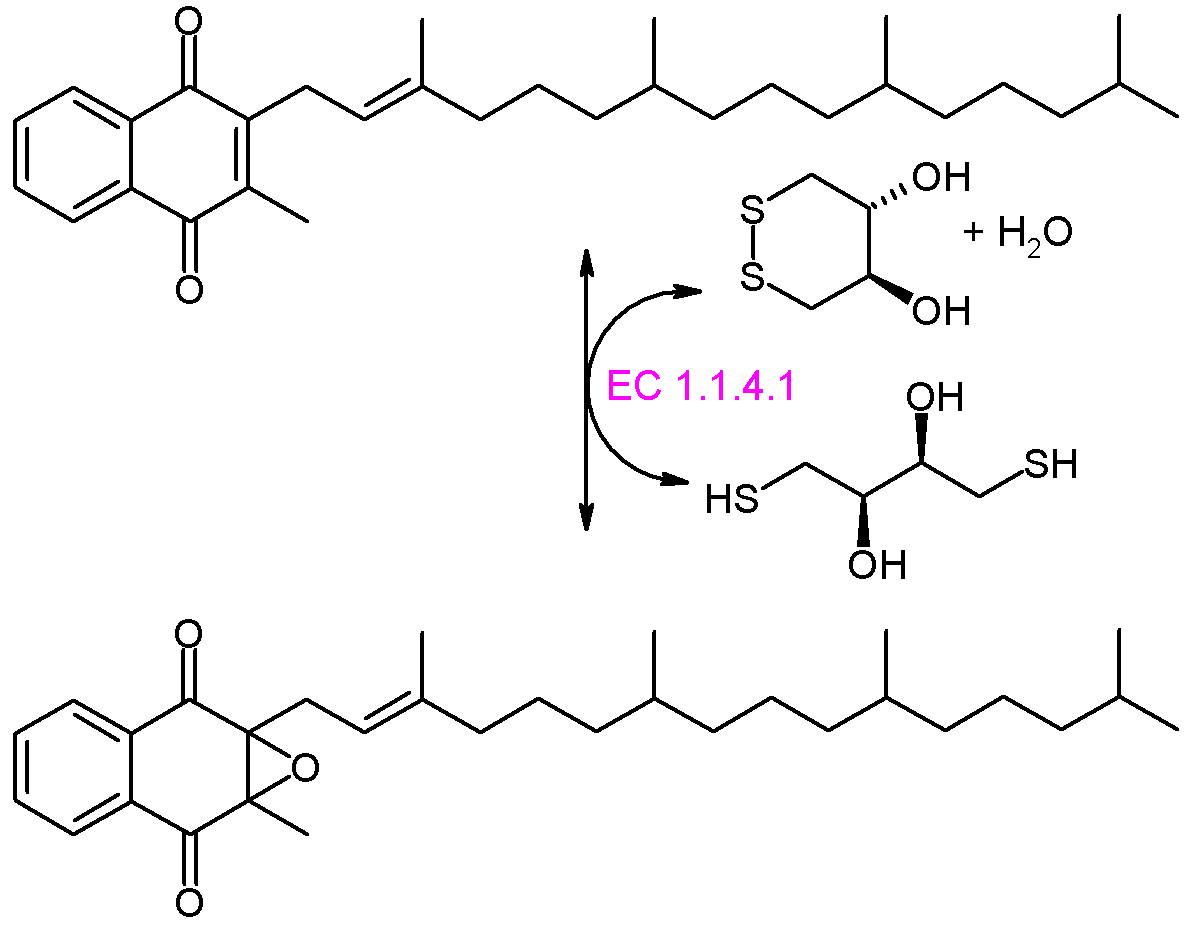
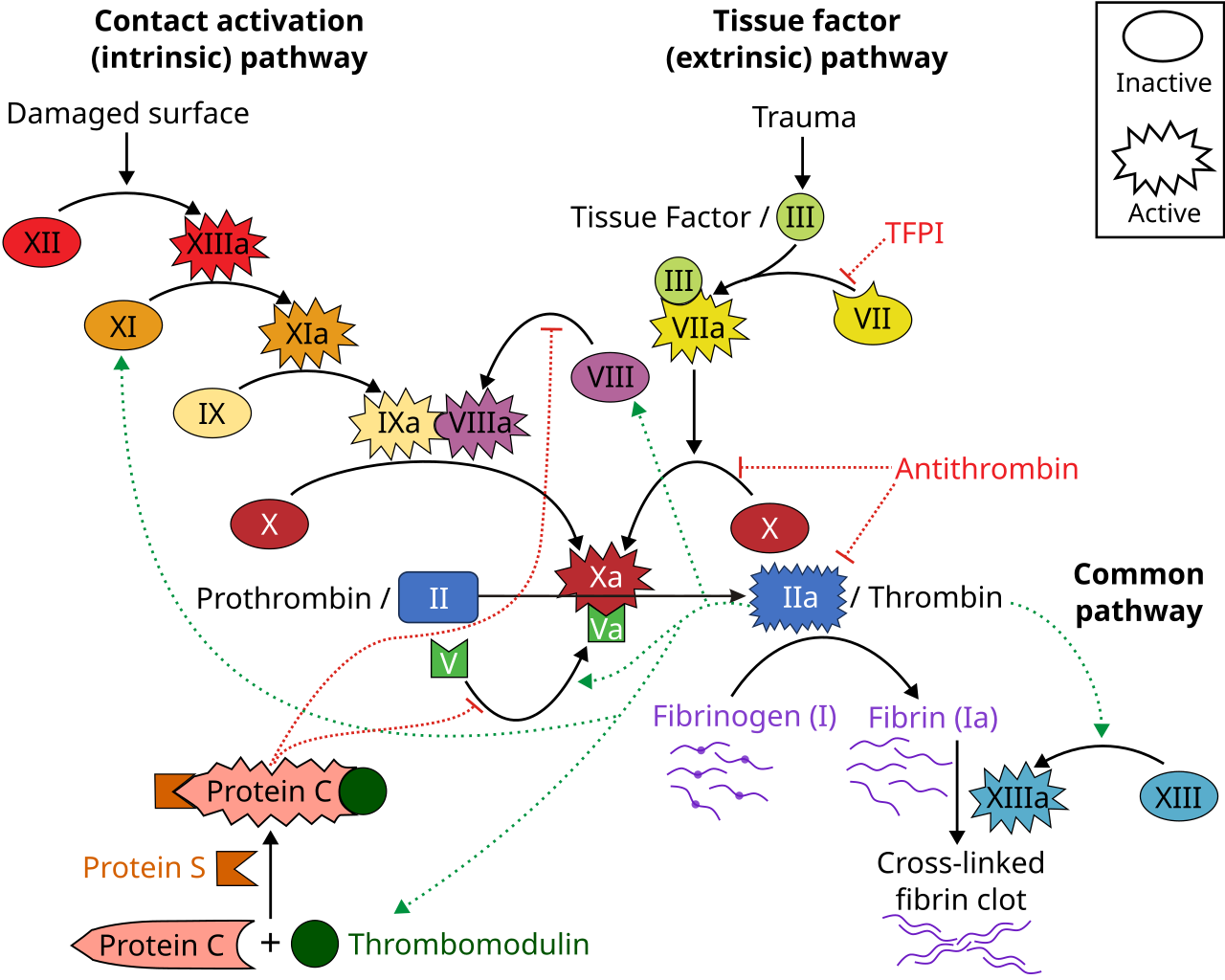
- Target: VKAs such as warfarin block carboxylation of vitamin K-dependent factors II, VII, IX and X, plus proteins C and S. Both their synthesis and their function drop
- Replacement: PCC supplies all four carboxylated factors at once. The high concentrations restore thrombin generation
- Anticoagulant proteins: the product also carries proteins C and S. They inhibit factors Va and VIIIa
- Clinical consequence: in most trial patients the INR falls within about 30 minutes, but INR is not a proven measure of hemostasis. Factor levels keep falling over days, so vitamin K is needed
Pharmacokinetics
| Route | Onset | Peak | Duration |
|---|---|---|---|
| IV | In most trial patients, INR 1.3 or less (Kcentra) or 1.5 or less (Balfaxar) within 30 minutes (trial endpoint, not a label target) | Not defined in labeling | Factor VII half-life about 5 hours; factors X, IX, II and proteins C and S about 32–60 hours (healthy subjects) |
- Half-life: Kcentra terminal half-lives in 15 healthy subjects: factor VII 5.0 hours, factor X 31.8 hours, factor IX 42.4 hours, protein C 49.6 hours, protein S 50.4 hours, factor II 60.4 hours. Factor VII clears fastest, which is one reason the INR can rebound before the other factors fall
- Metabolism: the factors are plasma proteins, cleared through normal protein turnover. No cytochrome P450 metabolism is involved
- Active metabolites: none
- Elimination: the labels describe nothing beyond the factor kinetics. They make no renal or hepatic dose adjustment
Names & Classification
- Generic Name
- Prothrombin complex concentrate (human), 4-factor (4F-PCC)
- Brand Names (US)
- Kcentra (CSL Behring; approved 2013); Balfaxar (Octapharma; approved 2023)
- Pharmacologic Class
- Plasma-derived coagulation factor complex (vitamin K-dependent factors II, VII, IX, X and proteins C and S)
- Therapeutic Class
- Hemostatic agent; VKA reversal agent
- Controlled Substance
- Not controlled
- ISMP High-Alert
- No. Not on the ISMP List of High-Alert Medications in Acute Care Settings (2024 edition, checked 2026-10-15). Its antithrombotic class covers anticoagulants, DOACs and thrombolytics, not 4F-PCC
- Look-Alike / Sound-Alike
- None commonly reported. Kcentra and Balfaxar differ in indication and INR endpoint, so do not substitute by name alone
- Error-Prone Abbreviations to Avoid
- "PCC" alone: write "4F-PCC" (4-factor) or "aPCC" (activated PCC, a different product with different dosing)
References
- CSL Behring. (2023). KCENTRA (prothrombin complex concentrate [human]) prescribing information, revised 05/2023. DailyMed. https://dailymed.nlm.nih.gov/dailymed/drugInfo.cfm?setid=eee1afb8-324c-42e4-8bf0-f0c9da5e6d42
- Octapharma USA. (2023). BALFAXAR (prothrombin complex concentrate [human-lans]) prescribing information, SPL published November 30, 2023. DailyMed. https://dailymed.nlm.nih.gov/dailymed/drugInfo.cfm?setid=68fa4f90-8b01-6498-4140-e0be5247c3fe
- U.S. Food and Drug Administration. (2025). Update on the Safety of Andexxa by AstraZeneca: FDA Safety Communication. FDA. https://www.fda.gov/safety/medical-product-safety-information/update-safety-andexxa-astrazeneca-fda-safety-communication
- Mithoowani S, Bungard T, Castellucci L, Crowther M, et al. (2025). Multidisciplinary expert guidance for the management of severe bleeding on oral anticoagulation: an algorithm for practicing clinicians. Thrombosis and Haemostasis, 125(8), 717–732. https://doi.org/10.1055/a-2464-2887
- Connolly SJ, Sharma M, Cohen AT, et al. (2024). Andexanet for factor Xa inhibitor-associated acute intracerebral hemorrhage (ANNEXA-I). New England Journal of Medicine, 390, 1745–1755. https://doi.org/10.1056/NEJMoa2313040
- Sarode R, Milling TJ Jr, Refaai MA, et al. (2013). Efficacy and safety of a 4-factor prothrombin complex concentrate in patients on vitamin K antagonists presenting with major bleeding (randomized, plasma-controlled trial). Circulation, 128, 1234–1243. https://doi.org/10.1161/CIRCULATIONAHA.113.002283
- Tomaselli GF, Mahaffey KW, Cuker A, et al. (2020). 2020 ACC Expert Consensus Decision Pathway on Management of Bleeding in Patients on Oral Anticoagulants. Journal of the American College of Cardiology, 76(5), 594–622. https://doi.org/10.1016/j.jacc.2020.04.053
- Boehringer Ingelheim Pharmaceuticals. (2024). PRAXBIND (idarucizumab injection) prescribing information, updated January 23, 2024. DailyMed. https://dailymed.nlm.nih.gov/dailymed/drugInfo.cfm?setid=c7400f8a-dcf4-a6df-6d07-983081b1bf34
- Fresenius Kabi USA. (2025). Protamine sulfate injection, solution prescribing information, updated April 29, 2025. DailyMed. https://dailymed.nlm.nih.gov/dailymed/drugInfo.cfm?setid=c76876da-b9a8-45d0-9278-7df3288d3a06
- Institute for Safe Medication Practices (ISMP). (2024). ISMP List of High-Alert Medications in Acute Care Settings. ISMP. https://www.ismp.org/system/files/resources/2024-01/ISMP_HighAlert_AcuteCare_List_010924_MS5760.pdf
Medical Disclaimer
- For Educational Purposes Only: This content is intended for educational reference and should not be used for clinical decision-making.
- Not a Substitute for Professional Judgment: Always consult your local protocols, institutional guidelines, and supervising physicians.
- Verify Before Acting: Users are responsible for verifying information through authoritative sources before any clinical application.
AI Assistance Notice
AI was used to assist in organizing, paraphrasing, and formatting this information.