

Bedside Snapshot
- Use It When
- Any child who needs an airway or suction: size the tube, blade, LMA and suction before the patient arrives. Use the Broselow tape when no weight is known.
- Key Numbers
- Cuffed ETT: age/4 + 3.5 mm
- Uncuffed ETT: age/4 + 4 mm
- Defibrillation: AHA first shock 2 J/kg (range 2–4 J/kg), then 4 J/kg; ERC and ANZCOR 4 J/kg for all shocks
- Formulas
- Depth at lip: ID × 3 (cm)
Suction: 1.5 × ID (Fr), catheter no more than half the lumen
Infants under 1 year: use the table, not the age formula - Action Thresholds
- Cuff pressure: 20 cmH₂O or below (limit used in the Weiss 2009 trial; manufacturer limit applies)
Leak: check size and cuff before going up
No EtCO₂ waveform: remove, ventilate, reconfirm - Watch Out
- Finger width is not a sizing method. Adult energy on a child delivers far too much.
Overview & Pediatric Differences
Kids are not small adults. The gear has to fit the child in front of you. A small change in tube diameter, cuff pressure or energy setting changes the outcome. Size to this patient, then confirm it at the bedside.
Why Kids Are Different
- Narrow airway: there is less room to work with. A little extra cuff pressure, or a tube one size too big, can injure the airway or block it.
- Infant anatomy: a large occiput, a short neck and a floppy epiglottis. That shapes your blade choice and where the tube sits.
- Weight-based drugs and energy: defibrillation and cardioversion doses are per kilogram. Your weight estimate sets the energy.
- Fast decompensation: kids hold on well, then fail fast. Have the equipment ready before the patient arrives.
How to Use
- Get the best age or weight: use a measured weight if you have one, then a recent caregiver weight, then the Broselow tape, then an age formula.
- Calculate the cuffed tube: for a child 1 year or older, ID (mm) = age/4 + 3.5. Plan the calculated size, one half-size smaller and one half-size larger.
- Set the depth: depth at the lip (cm) is 3 × the internal diameter of the tube you actually place, and the table shows the cuffed ID. Think of it as a rule of thumb. Secure at the calculated depth, then confirm with auscultation and waveform EtCO₂.
- Choose the blade and the backup airway: pick the blade by age band and have a supraglottic airway sized to weight ready.
- Size suction for suction through an endotracheal tube (not oral or pharyngeal suction): catheter outer diameter (Fr) lands near 1.5 × tube ID. Keep the catheter at half the tube's internal diameter or less. Desaturating with suction? Consider preoxygenation before each pass. Each pass stays under about 15 seconds.
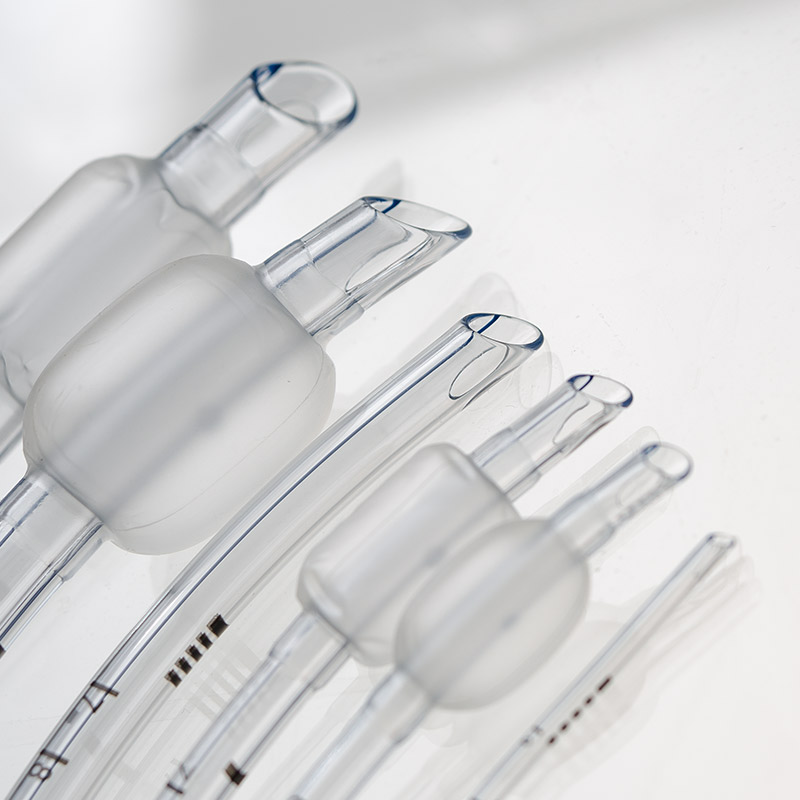
Endotracheal Tube Size by Age
Neonates and infants under 1 year skip the age formula. For neonatal tube size and depth, use the NRP weight-based chart.
| Age | Cuffed ETT ID (mm) | Uncuffed ETT ID (mm) | Depth at Lip (cm), cuffed tube |
|---|---|---|---|
| Premature (<1 kg) | Not routine | 2.5 | NRP weight chart |
| Premature (1–2 kg) | Not routine | 3.0 | NRP weight chart |
| Term neonate | 3.0–3.5 | 3.5 | NRP weight chart |
| 6 months | 3.5 | 3.5–4.0 | 10.5 |
| 1 year | 3.5 | 4.0 | 10.5 |
| 2 years | 4.0 | 4.5 | 12 |
| 4 years | 4.5 | 5.0 | 13.5 |
| 6 years | 5.0 | 5.5 | 15 |
| 8 years | 5.5 | 6.0 | 16.5 |
| 10 years | 6.0 | 6.5 | 18 |
| 12 years | 6.5 | 7.0 | 19.5 |
| 14 years | 7.0 | 7.5 | 21 |
The table is the formula result, rounded to the nearest 0.5 mm. Here's the one exception: the 1-year formula gives 3.75 mm, and the table lists the smaller 3.5 mm (3.5–4.0 mm is acceptable for that row). Depth is 3 × the cuffed ID shown, but set it from the tube you actually place. Premature rows follow the NRP weight bands. Cuffed tubes are not routine in preterm infants. Confirm the tube with auscultation and waveform EtCO₂ after placement.
Master Equipment Table by Age & Weight
| Age | Weight (kg) | Cuffed ETT (ID mm) | Blade | Suction (Fr), 1.5 × ID |
|---|---|---|---|---|
| Term neonate | About 3.5 | 3.0–3.5 | Miller 0–1 | 4–5 |
| 6 months | 7 | 3.5 | Miller 1 | 5 |
| 1 year | 10 | 3.5 | Miller 1 | 5 |
| 2 years | 12 | 4.0 | Miller 1–2 | 6 |
| 4 years | 16 | 4.5 | Mac 2 or Miller 2 | 6 |
| 6 years | 25 | 5.0 | Mac 2 | 7 |
| 8 years | 31 | 5.5 | Mac 2–3 | 8 |
| 10 years | 37 | 6.0 | Mac 3 | 9 |
| 12 years | 43 | 6.5 | Mac 3 | 9 |
| 14 years | 50–70 | 7.0 | Mac 3–4 | 10 |
Those weights come from age formulas: 2 × age + 8 kg for ages 1–5, 3 × age + 7 kg for ages 6–12, and 0.5 × months + 4 kg for infants. Suction runs 1.5 × the cuffed ID and rounds down to a whole Fr. Adolescents near 40 kg or bigger? See Special Populations.
Suction Catheters
- Size: catheter outer diameter (Fr) runs about 1.5 × tube ID, which keeps the catheter at no more than half the internal diameter. AARC 2010 suggests a catheter occluding less than 50% of the lumen, so this rule sits on the safer side. Examples: 3.5 tube = 5 Fr; 4.0 = 6 Fr; 5.0 = 7 Fr; 7.0 = 10 Fr.
- Technique: suction only when secretions are there. If saturation drops with suction, consider preoxygenation before each pass. AARC 2010 suggests under 15 seconds per pass, so keep it short. Don't instill saline routinely. Oral or pharyngeal suction is a separate task, and this rule doesn't size it.
You won't find NG/OG, chest tube or urinary catheter sizes here. For those, use the sizing chart on your Broselow tape or your local protocol.
Laryngoscope Blade Selection
| Age | Miller (Straight) | Macintosh (Curved) | Notes |
|---|---|---|---|
| Premature | Miller 0 | — | Straight blade lifts the epiglottis directly |
| Term neonate | Miller 0–1 | — | Straight blade for a floppy epiglottis |
| 6 months–2 years | Miller 1 | Mac 1 | Either is acceptable |
| 2–6 years | Miller 2 | Mac 2 | Provider preference |
| 6–12 years | Miller 2 | Mac 2–3 | Curved blade used more often |
| Over 12 years | Miller 3 | Mac 3–4 | Adult approach; Mac 3 for most |
Training and local practice set the blade. No guideline assigns one by age. Trained on a video laryngoscope and have one available? Use it for the first attempt per local protocol.
Supraglottic Airway (LMA) Sizing
A supraglottic airway is a rescue device. You reach for it when bag-mask ventilation is inadequate and intubation fails or isn't possible. Size it by weight, and check the seal before you trust it.
| LMA Size | Patient Weight | Notes |
|---|---|---|
| 1 | Up to 5 kg | Neonate and small infant |
| 1.5 | 5–10 kg | Infant |
| 2 | 10–20 kg | Toddler and preschool |
| Larger sizes | Over 20 kg | Use the manufacturer's sizing chart |
Interpretation & Action Thresholds
| Finding or Threshold | Meaning | Action |
|---|---|---|
| Air leak with cuff at or below 20 cmH₂O | Tube may be too small or the cuff is faulty | Check the cuff and the seal; go up one half-size per protocol |
| Resistance at the subglottis on passage | Tube may be too large | Go down one half-size |
| Cuff pressure above 20 cmH₂O | Risk of subglottic mucosal injury | Deflate to 20 cmH₂O or below; use a cuff manometer |
| No EtCO₂ waveform after placement | Esophageal or dislodged tube, or an obstructed tube. In cardiac arrest or very low pulmonary blood flow, a low or absent waveform can occur with a correctly placed tube (most data are neonatal) | Confirm the tube by direct or video view and recheck the depth. If still absent, remove the tube, ventilate by bag-mask and reconfirm. Consider obstruction (DOPE). |
| Deterioration after intubation (falling SpO₂ or EtCO₂, rising resistance, poor chest rise) | DOPE: Displacement, Obstruction, Pneumothorax, Equipment failure | Check the tube first: depth, suction for obstruction, breath sounds, bag and oxygen source. Confirm with waveform EtCO₂. |
Plan three tubes before any intubation attempt: the calculated size, and one half-size on each side. Where does the 20 cmH₂O cuff limit come from? A randomized trial that used a 20 cmH₂O pressure-release limit. Cuffed tubes sealed reliably in that trial, with no more post-extubation stridor than uncuffed tubes. The manufacturer's labelled limit and local protocol still apply, and other references may state different limits.
Limitations & Alternatives
- Age formulas assume an average build. They miss kids who are large or small for their age.
- Length-based tapes are built for a population range. They don't replace a measured weight.
- A caregiver's weight estimate is only as good as their recall.
| Alternative | Method | Strengths | Weaknesses |
|---|---|---|---|
| Measured weight | Scale or confirmed recent weight | Most accurate | Not available in most emergencies |
| Caregiver weight | Recent weight from parent or record | Quick and often reliable | Recall error; check for a recent record |
| Broselow tape | Length-based color zone | Weight plus matched equipment in one step | Population-based; check the child's habitus |
| Age formula | Age in years, formulas above | Fast with no equipment | Least accurate for weight; not for infants |
Medications & Dosing: Electrical Therapy
| Drug | Dose & Route | Max | Notes |
|---|---|---|---|
| Defibrillation (VF / pVT) | 2 J/kg first shock, then 4 J/kg or more 14 kg example: 28 J, then 56 J | 10 J/kg or adult dose | Biphasic device per local protocol. AHA: initial dose 2–4 J/kg (2 J/kg commonly taught); 4 J/kg for refractory VF. ERC and ANZCOR: 4 J/kg for the first and all subsequent shocks. |
| Synchronized cardioversion (SVT with poor perfusion) | 0.5–1 J/kg; if no response, 2 J/kg 14 kg example: 7–14 J, then 28 J | 2 J/kg per attempt; adult max per protocol | Sedation or analgesia when time allows; per local protocol and medical direction |
Pediatric energy is set in joules per kilogram, using the measured or estimated weight. Write the weight you used in the report, whether the tape or a formula gave it to you. Reach for pediatric pads or an attenuator first when you have them. Age cutoffs follow device labeling and local protocol, commonly under about 8 years. Infants under 1 year: a manual defibrillator with a pediatric dose setting is preferred where one is available. Place the largest pad that fits. Anterior-posterior placement works when the standard position can't be used. No pediatric pads? Use adult pads. Don't delay the shock. Doses vary by protocol; follow local protocols and medical direction.
Pitfalls & Safety Checks
| Pitfall | Consequence | Prevention |
|---|---|---|
| Sizing by finger width | Tube too small or too large; leaks or exchanges | Use the age formula (1 year or older) or the neonatal weight chart |
| Overinflating the cuff to stop a leak | Subglottic injury, stridor, later stenosis | Keep cuff pressure at or below 20 cmH₂O (or the manufacturer's limit); use a manometer; go up a half-size if still leaking |
| Oversized suction catheter | Hypoxemia, atelectasis and loss of volume | Catheter about 1.5 × tube ID in Fr (diameter no more than half the tube ID); preoxygenate if saturation falls; keep each pass under about 15 seconds |
| Adult bag on a child or neonate | Excess tidal volume and barotrauma | Use a child-size or neonatal bag; watch chest rise |
| Depth not rechecked | Right mainstem or dislodgement | Set depth at the lip, secure, and confirm EtCO₂ after every move |
| Weight in lb used as kg | Energy or drug dose wrong by 2.2 times | Convert to kg first (÷ 2.2); write kg on the chart |
| Adult pads or energy on an infant | Energy too high or poor pad contact | Pediatric pads or attenuator when available; never delay the shock |
Special Populations
Neonates and Preterm Infants
- Use the NRP weight-based chart for tube size and depth, not the age formula. The chart's depths aren't reproduced here until the 2025 Part 5 table is verified.
- Cuffed tubes aren't routine in preterm infants. Use the uncuffed size from the chart.
- Confirm placement with auscultation and waveform EtCO₂, and record the depth at the lip.
Infants (1–12 Months)
- The table covers most infants: cuffed 3.0–3.5 mm, uncuffed 3.5–4.0 mm. Depth (3 × ID) is a rule of thumb. Confirm it with auscultation and EtCO₂.
- A floppy epiglottis and a small airway mean a 0.5 mm error counts. Have the half-sizes ready.
Adolescents
- Move to adult equipment at about 40 kg, at puberty, or when the child runs past the tape.
- From that point on, run the adult protocol with adult equipment. One rule per page.
Children with Special Health Care Needs
- Check the Emergency Information Form for a tracheostomy size and tube type. The tube already in place is often your best size guide.
- Have the recorded tracheostomy size and one size smaller ready.
Prehospital & Transport Considerations
| Level | Typical Role in This Topic |
|---|---|
| EMT | Bag-mask ventilation with a child-size bag; suction; caregiver support |
| AEMT | Supraglottic airway by weight, as commonly permitted; suction and oxygen |
| Paramedic | Intubation by age or tape; cuff pressure; waveform EtCO₂ confirmation |
| RN (ED/ICU) | Size check and equipment setup; cuff pressure; tube depth and securing |
| Critical care transport | Ventilator and tube management in transit; cuff pressure and securing after moves |
Scope changes by state and by agency. Each role follows its local protocol.
- Equipment: every unit carries a printed size table or the Broselow tape. Keep three tube sizes and a suction catheter opened.
- Destination: once the tube is in place, go to a pediatric-ready ED or a pediatric critical care unit.
- Transport: secure the tube at the lip, check depth after every move, and set a child-size ventilation rate and tidal volume (commonly 6–8 mL/kg) per protocol.
- Handoff: report the tube size, depth at lip, cuff pressure, and the weight used for dosing (MIST or IMIST-AMBO).
Clinical Pearls
References
- American Heart Association. Part 8: Pediatric Advanced Life Support: 2025 American Heart Association and American Academy of Pediatrics Guidelines for Cardiopulmonary Resuscitation and Emergency Cardiovascular Care. Circulation. 2025;152(16 suppl 2). https://doi.org/10.1161/CIR.0000000000001368
- American Heart Association and American Academy of Pediatrics. Part 5: Neonatal Resuscitation: 2025 American Heart Association and American Academy of Pediatrics Guidelines for Cardiopulmonary Resuscitation and Emergency Cardiovascular Care. Circulation. 2025;152(16 suppl 2). https://doi.org/10.1161/CIR.0000000000001367
- Weiss M, Dullenkopf A, Fischer JE, et al. Prospective randomized controlled multi-centre trial of cuffed or uncuffed endotracheal tubes in small children. Br J Anaesth. 2009;103(6):867-873. https://doi.org/10.1093/bja/aep290
- King BR, et al. Endotracheal tube selection in children: a comparison of four methods. Ann Emerg Med. 1993;22(3):530-534. https://doi.org/10.1016/s0196-0644(05)81937-7
- American Association for Respiratory Care. AARC Clinical Practice Guideline: Endotracheal suctioning of mechanically ventilated patients with artificial airways 2010. Respir Care. 2010;55(6):758-764. https://pubmed.ncbi.nlm.nih.gov/20507660/
- Gowda H. Question 2: Should carbon dioxide detectors be used to check correct placement of endotracheal tubes in preterm and term neonates? Arch Dis Child. 2011;96(12):1201-1203. https://doi.org/10.1136/archdischild-2011-300893
- International Liaison Committee on Resuscitation. Energy doses for pediatric defibrillation during resuscitation (PLS 4080.12). CoSTR. Accessed October 14, 2026. https://costr.ilcor.org/document/energy-doses-for-pediatric-defibrillation-during-resuscitation-pls-4080-12-tf-sr
- Teleflex. LMA Classic Reusable Airway: product listing with weight-based sizes. Accessed October 14, 2026. https://us.myteleflex.com/en/USD/All-Categories/Anesthesia/Airway/Supraglottic-Airways/LMA%E2%84%A2-Classic%E2%84%A2-Reusable-Airway/p/lma_classic_reusable_airway
Medical Disclaimer
- For Educational Purposes Only: This content is intended for educational reference and should not be used for clinical decision-making.
- Not a Substitute for Professional Judgment: Always consult your local protocols, institutional guidelines, and supervising physicians.
- Verify Before Acting: Users are responsible for verifying information through authoritative sources before any clinical application.