

Bedside Snapshot
- Recognize
- Glucose ≥200 mg/dL or known diabetes, plus β-hydroxybutyrate ≥3.0 mmol/L, plus acidosis (venous pH <7.30 or HCO₃⁻ <18 mEq/L). Kussmaul breathing, vomiting, abdominal pain.
- Red Flags
- Stupor, coma or new confusion (ICU level)
- Hypotension, tachycardia or cool skin
- K⁺ below 3.5 mEq/L (hold insulin); at or below 2.5 mEq/L is severe
- Slowing or shallow breathing; pH below 7.00
- First Actions
- Point-of-care glucose; cardiac monitor and 12-lead ECG; IV access; blood for K⁺, pH and β-hydroxybutyrate; isotonic fluid; treat the trigger
- Key Doses
- Hospital: insulin 0.1 units/kg/hr IV once K⁺ is above 3.5 mEq/L; add dextrose at glucose <250 mg/dL. Fluids 500–1,000 mL/hr for 2–4 hr. K⁺ 10 mEq/hr IV if below 3.5. Pediatric insulin per protocol
- Don't Miss
- Euglycemic DKA (glucose under 200) on an SGLT2 inhibitor
- Insulin started before potassium is known
- Falling glucose: add dextrose and keep insulin running
- Escalate & Transport
- Severe DKA (pH below 7.00, HCO₃⁻ below 10, β-hydroxybutyrate above 6.0, or stupor or coma) or any altered mental status: ICU. Pregnancy: obstetric-capable hospital. Children: pediatric-capable center.
Definition & Pathophysiology
Diabetic ketoacidosis (DKA) is a life-threatening hyperglycemic emergency. Insulin is absent or not enough, and counterregulatory hormones are raised on top of that. The 2024 ADA-led consensus needs all three components to diagnose it. Hyperglycemia: glucose ≥200 mg/dL, or a known history of diabetes at any glucose. Ketonemia: β-hydroxybutyrate ≥3.0 mmol/L. Metabolic acidosis: venous pH <7.30 and/or bicarbonate <18 mEq/L. Drop one and it isn't DKA.
- Mechanism: without enough insulin, glucagon, cortisol, catecholamines and growth hormone take over. They drive glucose output and lipolysis. Fatty acids become ketone bodies, mainly β-hydroxybutyrate. That is what causes the acidosis.
- Volume and potassium loss: osmotic diuresis and vomiting drain fluid and potassium. The total-body potassium deficit is about 3–6 mmol/kg. Serum potassium is often normal or high on arrival anyway, so the lab number can look fine while the body is short.
- Precipitants: What sets it off? Missed insulin or a failed pump. Infection, with urinary tract and pneumonia the most common. Acute MI. GI bleeding. Sepsis. Drugs too: glucocorticoids, antipsychotics and SGLT2 inhibitors.
- Euglycemic DKA: glucose under 200 mg/dL does not rule it out, and about 10% of DKA presents that way. The causes: SGLT2 inhibitors, pregnancy, reduced food intake, alcohol and liver failure.
- Severity: DKA is graded mild, moderate or severe. The grade comes from pH, bicarbonate, β-hydroxybutyrate and mental status. That grade sets the level of care.
Hyperglycemic hyperosmolar state (HHS) is a separate crisis. Glucose is severely high and the blood is hyperosmolar, with little or no ketosis or acidosis. Even so, overlap with DKA is reported in more than one-third of hyperglycemic crises, so don't sort them by glucose alone.
Recognition & Red Flags
Typical DKA
- Breathing: Kussmaul breathing, deep and rapid, with an acetone or fruity breath odor. That is the respiratory compensation for acidosis.
- Gut: Nausea, vomiting and abdominal pain. More than half of DKA cases have them.
- Volume: Polyuria, polydipsia, weight loss and dehydration. This often builds over days.
- Mental status: normal in mild DKA. Drowsiness or confusion in moderate DKA. Stupor or coma in severe DKA.
- History: known diabetes, missed insulin, a new SGLT2 inhibitor, recent illness or a pump problem.
HHS and Mixed Presentations
- HHS: It develops over days to weeks, with marked dehydration and altered mental status. Vomiting and abdominal pain are uncommon.
- Mixed DKA/HHS: Features of both. The ketone and pH results decide which insulin pathway applies.
Red Flags
- Stupor, coma or new confusion: severe DKA, ICU level
- Hypotension, tachycardia, cool or mottled skin: severe volume loss
- Serum potassium below 3.5 mEq/L (hold insulin) or at or below 2.5 mEq/L (severe)
- Slowing or shallow breathing: this patient depends on high minute ventilation. Apnea worsens acidosis quickly
Assessment & Diagnostics
DKA is diagnosed on labs. The first bedside checks are point-of-care glucose and a 12-lead ECG. Venous blood gas, electrolytes and β-hydroxybutyrate confirm the diagnosis and grade the severity.
| Check | Why | Act If |
|---|---|---|
| Point-of-care glucose | Hyperglycemia criterion; hypoglycemia risk on insulin | ≥200 mg/dL or known diabetes: work up DKA. <70 mg/dL: treat per protocol (see Dextrose) |
| Blood β-hydroxybutyrate | Main ketone in DKA; urine tests lag early and mislead later | 3.0–6.0 mmol/L: mild or moderate. >6.0 mmol/L: severe |
| Venous pH and bicarbonate | Acidosis severity and the resolution endpoint (see pH) | pH <7.30 or HCO₃⁻ <18 mEq/L: DKA. pH <7.00 or HCO₃⁻ <10 mEq/L: severe |
| Serum potassium | Total-body deficit hidden by acidosis; insulin drives K⁺ into cells | Below 3.5 mEq/L: hold insulin and replace (see Potassium). Above 5 mEq/L: do not add potassium until rechecked |
| Anion gap | High gap supports DKA; mixed disorders are common | Gap above 12 mmol/L fits DKA. Do not use it to judge resolution (see Anion Gap) |
| Creatinine (mg/dL), sodium (mEq/L), phosphate (mmol/L) | Kidney injury is common; sodium falls as glucose rises; phosphate shifts | Creatinine rising: reassess volume and dosing. Phosphate below 1.0 mmol/L (about 3.1 mg/dL) with weakness or cardiac or respiratory compromise: replace |
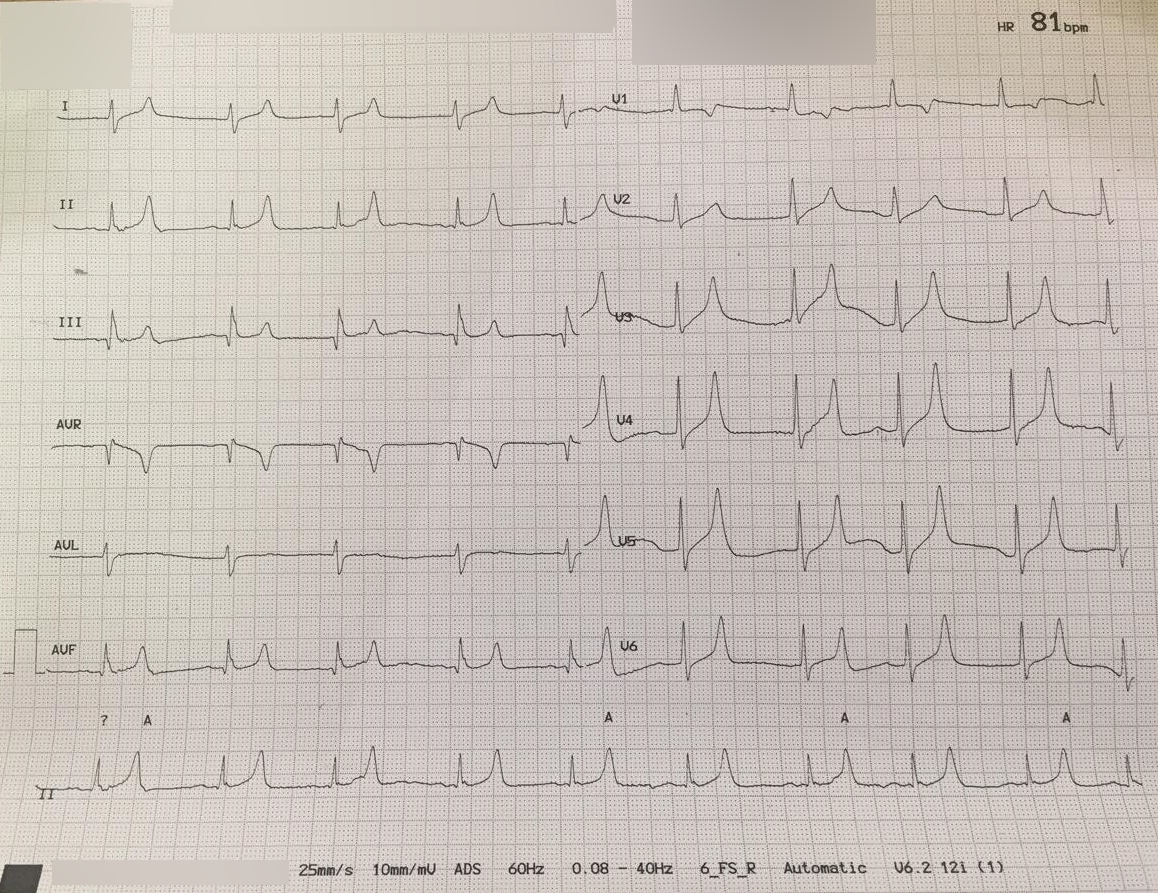
| 12-lead ECG | Hyperkalemia changes; ischemia as the precipitant | Peaked T waves or QRS widening: treat as hyperkalemia (see Electrolyte ECG). ST changes: evaluate for MI |
| Precipitant search | Treating the trigger is part of DKA care | Infection, MI, GI bleeding, missed insulin or a new drug: treat the cause alongside the DKA pathway |
Differential & Mimics
- HHS: severe hyperglycemia and hyperosmolality, with little ketosis or acidosis. Don't separate it by glucose alone. The ketone and pH results do the sorting.
- Starvation ketosis: very low intake, under about 500 kcal/day, with ketones and low insulin levels. The history makes the diagnosis.
- Alcoholic ketoacidosis: chronic alcohol use, a recent binge and vomiting. The ketoacidosis shows up with or without hyperglycemia.
- Ketosis of pregnancy or hyperemesis: ketones with vomiting. Mixed acid-base disorders make the picture harder to read.
- Lactic acidosis or toxic ingestion: a high gap acidosis with no ketonemia. Check lactate and the anion gap (see Lactate).
BLS Management
- Scene safety and airway: check breathing rate and depth, mental status and airway protection before anything else.
- Glucose: check a point-of-care glucose when the protocol allows. Treat hypoglycemia per protocol.
- Position: recovery position if vomiting or drowsy. Sitting up if breathing is labored.
- No oral intake if vomiting, drowsy or unable to protect the airway. Keep the patient nil by mouth for ALS care.
- Record and call: symptom onset time, known diabetes, insulin or SGLT2 inhibitor use, vomiting, and the glucose result. Request ALS for ketoacidosis signs.
Your part on BLS: spot it, keep the scene safe and call early. Fluids, monitoring and any drug therapy are ALS work.
ALS Management
Doses vary by protocol; follow local protocols and medical direction. Know your protocol before the call, not during it.
- Monitor and 12-lead ECG (Paramedic/RN/CCT): Continuous cardiac monitoring. Look for peaked T waves, QRS widening or ischemia.
- IV access and blood (Paramedic/RN/CCT): Get IV access and draw glucose and electrolytes. Add β-hydroxybutyrate and a blood gas where the protocol allows. Don't let the draw delay fluids.
- Isotonic fluid (AEMT/Paramedic/RN/CCT): 0.9% saline or a balanced crystalloid. In hospital, DKA care starts at 500–1,000 mL/hr for 2–4 hr in patients without renal or cardiac compromise. In the field, bolus size and rate follow local protocol. In older adults, heart failure or end-stage kidney disease, use smaller boluses, about 250 mL, and reassess lungs after each one. See Normal Saline or Lactated Ringer's.
- Hypoglycemia (AEMT/Paramedic/RN/CCT): Treat per protocol with dextrose, see Dextrose. Then recheck the glucose.
- No insulin or potassium prehospital: Insulin waits for the ED or ICU. It starts only after a serum potassium result above 3.5 mEq/L. See Insulin.
- Vomiting: Control it per protocol so fluids can go in. See Ondansetron.
- Airway (Paramedic/RN/CCT): If the GCS falls or the patient tires, plan RSI with their respiratory drive in mind. Apnea or hypoventilation makes the acidosis worse. See RSI.
- Bicarbonate: Not given in the field for DKA. The hospital indication is on the Sodium Bicarbonate page.
ED & ICU Management
Below are the drug and fluid rules for adult DKA, except where marked. Glucose, potassium and ketone results tell you how to move insulin, potassium and fluids together.
| Monitor | How Often | Act If |
|---|---|---|
| Capillary glucose | Every 1–2 hr on insulin | Below 250 mg/dL: add dextrose and reduce insulin. Below 70 mg/dL: treat hypoglycemia (hypoglycemia occurs in 16–28% of DKA treatment) |
| Electrolytes, β-hydroxybutyrate, venous pH, phosphate | Every 4 hr until resolved | Potassium below 3.5 mEq/L: hold insulin. Phosphate below 1.0 mmol/L (about 3.1 mg/dL) with weakness: replace |
| Serum osmolality (HHS) | Every 4 hr | Osmolality falling faster than 3–8 mOsm/kg/hr or glucose falling faster than 90–120 mg/dL/hr: slow the rate |
| Mental status and volume | Every check | Any fall in consciousness: urgent reassessment and brain imaging. Lung crackles or rising oxygen need: reassess volume status before any further bolus |
- Insulin (adult): IV regular insulin infusion at 0.1 units/kg/hr, started only after potassium is above 3.5 mEq/L. A 0.1 units/kg bolus is used only if IV access will be delayed. The IM route applies only in that case, and IM is avoided in patients on anticoagulants. See Insulin.
- When glucose falls below 250 mg/dL: add 5–10% dextrose to the saline, reduce insulin to 0.05 units/kg/hr, and hold glucose near 200 mg/dL until ketoacidosis resolves. Do not stop insulin to treat a normal glucose.
- Potassium: below 3.5 mEq/L, hold insulin and give IV potassium at 10 mEq/hr, then recheck. From 3.5 to 5 mEq/L, add 20–30 mEq per liter of fluid to hold 4–5 mEq/L. Above 5 mEq/L, add none until rechecked. See Potassium Chloride.
- Fluid choice: 0.9% saline or balanced crystalloid. The consensus leaves the choice to local availability and cost. Balanced solutions were associated with faster DKA resolution and less hyperchloremic acidosis.
- Bicarbonate: not routine. Consider it only at pH below 7.0. See Sodium Bicarbonate.
- Euglycemic DKA: add 5–10% dextrose with the saline from the start, and stop the SGLT2 inhibitor on admission.
- Subcutaneous insulin: Only for uncomplicated mild or moderate DKA, with a rapid-acting analog every 1–2 hr per protocol. Not for severe DKA, HHS or poor perfusion.
- HHS: Fluids come first. Start fixed-rate insulin at 0.05 units/kg/hr when there is no ketosis or only mild or moderate ketonemia (β-hydroxybutyrate 1.0 to under 3.0 mmol/L) and no acidosis (pH ≥7.30 and HCO₃⁻ ≥18 mEq/L). The consensus sets no fluid-volume criterion for starting insulin. Some clinicians withhold it until glucose stops falling. Mixed DKA/HHS gets 0.1 units/kg/hr. Hold the fall in glucose to 90–120 mg/dL/hr and the fall in osmolality to 3–8 mOsm/kg/hr.
- Transition to subcutaneous insulin: Overlap basal insulin 1–2 hr before stopping the infusion. A low basal dose of 0.15–0.3 units/kg, given during the infusion, shortens time to resolution. For insulin-naive adults, estimate 0.5–0.6 units/kg/day, or about 0.3 units/kg/day if there is kidney failure or frailty.
- Thrombosis prevention: prophylactic low-molecular-weight heparin unless thrombosis is suspected. See Enoxaparin.
- Resolution: β-hydroxybutyrate below 0.6 mmol/L and venous pH ≥7.30 or HCO₃⁻ ≥18 mEq/L, and glucose ideally below 200 mg/dL. Don't judge it by the anion gap or urine ketones.
- Disposition: Severe DKA, altered mental status or a critical-illness trigger means ICU. Moderate DKA goes to step-down or intermediate care. Mild, uncomplicated DKA can be treated in the ED or on a step-down unit, with close monitoring.
Transport Considerations
- Destination: Pick a hospital that can start an insulin infusion and manage DKA. ICU-capable for severe DKA or altered mental status. Pediatric-capable for children. Obstetric-capable for pregnancy.
- Keep running: IV access and the fluid rate set by protocol, cardiac monitor, and repeat glucose per protocol, at least every 1–2 hr if an insulin infusion is running.
- Insulin pump: On a pump? Manage it per medical direction and ICU orders. Management error is the most common precipitant in pump users.
- Insulin in transit (CCT): a dedicated line and pump. Confirm the bag concentration and the pump rate against the order, and check glucose every 1–2 hr.
- Watch for overload: Crackles, rising work of breathing or falling SpO₂ in heart failure or kidney failure. Those are the signs. Stop the bolus and reassess.
- Airway: protect it in a drowsy or vomiting patient. Keep the respiratory pattern you found on scene.
- Handoff: symptom onset time, glucose trend, fluid volume given, potassium result if known, mental status, precipitant and time of last insulin dose.
Special Populations
- Pediatrics: Fluid and insulin are weight-based. They follow the pediatric DKA protocol. In the PECARN FLUID trial, the initial bolus was 10 mL/kg of 0.9% saline, further boluses were at physician discretion, and insulin started at 0.1 units/kg/hr after the boluses. Neither fluid rate nor sodium content changed neurologic outcome. Still, clinically apparent brain injury occurred in 0.9% of episodes, and 1.6% got hyperosmolar therapy (mannitol or hypertonic saline) for possible cerebral edema. Pediatric shock boluses follow the Pediatric Shock page. Bicarbonate is not routine. In children, use it only per pediatric protocol. Suspected cerebral edema is an emergency. Watch for new headache, a falling GCS, bradycardia or rising blood pressure. Treat without delay per the pediatric DKA protocol, which uses hyperosmolar therapy (mannitol or hypertonic saline). Doses are not given on this page. For pediatric insulin and bolus specifics, see ISPAD 2022 (reference 2) and local protocol. See weight-based dosing.
- Pregnancy: Up to 2% of pregestational diabetes pregnancies develop DKA, mostly with type 1 diabetes. Euglycemic DKA can occur. Hyperemesis makes the acid-base picture mixed. In later pregnancy, position on the left side (left lateral tilt) to relieve aortocaval compression. The feto-maternal risk needs immediate senior medical and obstetric input. Ideally, that happens in a delivery suite or high-dependency unit.
- Older Adults: Smaller boluses, about 250 mL, with frequent hemodynamic checks. HHS and mixed DKA/HHS are more common here. Comorbidity drives mortality.
- Renal Impairment: DKA or HHS occurs in about 4% of people with diabetes and end-stage kidney disease. Expect fluid overload, hyperkalemia and hypoglycemia risk. For transition, use the lower insulin estimate, about 0.3 units/kg/day.
- Hepatic Impairment: Liver failure and alcohol use impair gluconeogenesis. Both can cause euglycemic DKA.
- Patients on SGLT2 Inhibitors: Check ketones at any glucose. Stop the drug on admission. The Jardiance label advises monitoring for resolution before restarting. See the label in References.
- Patients on Anticoagulants: Avoid intramuscular insulin. It carries bleeding risk. Use the IV route or subcutaneous rapid-acting insulin per protocol.
Pitfalls & Safety Checks
- Error: insulin before potassium is known. Insulin pushes potassium into cells. Check serum potassium, and hold insulin while it's below 3.5 mEq/L.
- Error: stopping insulin when glucose falls. Add 5–10% dextrose. Keep insulin running until ketoacidosis resolves.
- Error: routine bicarbonate. Bicarbonate has not improved DKA outcomes. It can worsen hypokalemia and paradoxical CNS acidosis. Reserve it for pH below 7.0 in adults.
- Error: judging resolution by the anion gap or urine ketones. Saline causes hyperchloremic acidosis. Urine tests lag and mislead. Use β-hydroxybutyrate and venous pH.
- Error: missing euglycemic DKA. A glucose below 200 mg/dL doesn't exclude DKA, especially on an SGLT2 inhibitor.
- Error: standard fluid volumes in older adults, heart failure or end-stage kidney disease. Use smaller boluses, and reassess the lungs after each one.
- Error: intravenous regular insulin given without monitoring. The regular insulin label allows IV use only under medical supervision, with glucose and potassium checks. Write “units” in full. Check the concentration and pump rate.
- Error: attributing new confusion to the DKA alone. A falling level of consciousness, in a child or an adult, needs urgent reassessment. Keep a low threshold for brain imaging.
Clinical Pearls
References
- Umpierrez GE, Davis GM, ElSayed NA, et al. (2024). Hyperglycemic crises in adults with diabetes: a consensus report. Diabetes Care, 47(8), 1257–1275. https://doi.org/10.2337/dci24-0032
- Glaser N, Fritsch M, Priyambada L, et al. (2022). ISPAD Clinical Practice Consensus Guidelines 2022: Diabetic ketoacidosis and hyperglycemic hyperosmolar state. Pediatric Diabetes, 23(7), 835–856. https://doi.org/10.1111/pedi.13406
- Kuppermann N, Ghetti S, Schunk JE, et al. (2018). Clinical trial of fluid infusion rates for pediatric diabetic ketoacidosis. New England Journal of Medicine, 378(24), 2275–2287. https://doi.org/10.1056/NEJMoa1716816
- Boehringer Ingelheim Pharmaceuticals. (2026). JARDIANCE (empagliflozin) tablets, prescribing information: warnings and precautions on diabetic ketoacidosis. DailyMed, label published February 2026. https://dailymed.nlm.nih.gov/dailymed/drugInfo.cfm?setid=faf3dd6a-9cd0-39c2-0d2e-232cb3f67565
- Eli Lilly and Company. (2026). HUMULIN R (insulin human) injection, prescribing information: intravenous administration and hypokalemia warnings. DailyMed, label published September 2026. https://dailymed.nlm.nih.gov/dailymed/drugInfo.cfm?setid=b519bd83-038c-4ec5-a231-a51ec5cc291f
Medical Disclaimer
- For Educational Purposes Only: This content is intended for educational reference and should not be used for clinical decision-making.
- Not a Substitute for Professional Judgment: Always consult your local protocols, institutional guidelines, and supervising physicians.
- Verify Before Acting: Users are responsible for verifying information through authoritative sources before any clinical application.