

Bedside Snapshot
- Normal (Adult)
- Lab-specific upper limit of normal (ULN, U/L); use the range on your report. Lipase and amylase are each read against their own ULN.
- Critical Values
- No universal critical value. Diagnostic threshold: >3 times ULN with pain or imaging (typical).
- High Suggests
- Acute pancreatitis: gallstones, alcohol, triglycerides above 1,000 mg/dL, recent ERCP, medications
- Nonpancreatic disease: a lab-only rise that needs pain and imaging to confirm
- Low Suggests
- Rarely clinically significant. A low value does not exclude acute pancreatitis, especially when drawn late.
- Act Now If
- Pain with >3 times ULN, or any organ failure or SIRS: monitored bed, isotonic fluid with reassessment, analgesia; ERCP within 24 hours if cholangitis.
- Watch Out For
- A normal lipase does not exclude pancreatitis. In hypertriglyceridemia or alcohol-related pancreatitis, amylase can be normal.
Reference & Critical Ranges
Reference ranges
| Population | Conventional | SI | Notes |
|---|---|---|---|
| Adult | Lab-specific ULN (U/L) | Same unit (U/L) | Enzyme activity. The pancreatitis criterion is above 3 times the ULN, not a fixed value |
| Adult with diabetes | ACG 2024 notes a higher ULN may be needed (above 3–5 times) in some groups, including diabetic patients; the basis is limited | — | Lipase can be raised in nonpancreatic disease. The pancreatitis criterion stays above 3 times ULN unless your lab sets otherwise |
| Children | Lab-specific, age-based | — | Use the pediatric interval on the lab report |
Severity and critical values
| Level | Conventional | SI | What it means |
|---|---|---|---|
| Below ULN | At or below ULN | At or below ULN | Does not exclude acute pancreatitis, especially when drawn late after onset |
| Above 3 times ULN | >3 times ULN | >3 times ULN | Meets the enzyme criterion for acute pancreatitis when pain or imaging also fit |
| Critical | No universal value | No universal value | Act on the clinical picture: organ failure, severe pain, suspected infection |
Conversion: Nothing to convert. Enzyme activity is reported in U/L.
Causes of Abnormal Results
High (above 3 times ULN, with pain or imaging)
| Mechanism | Common causes | Bedside clue |
|---|---|---|
| Biliary obstruction | Gallstones; gallstone pancreatitis usually needs cholecystectomy | Epigastric pain, vomiting. Fever, jaundice or a rising bilirubin suggests cholangitis |
| Alcohol | Alcohol-related pancreatitis; gallstones and alcohol are the first causes to check | Heavy alcohol history. Amylase may be normal |
| Hypertriglyceridemia | Triglycerides preferably above 1,000 mg/dL | Abdominal pain with a lipemic sample. Amylase may be normal |
| Post-ERCP | The most common complication of ERCP; reported incidence 1–30% | Pain after a recent ERCP |
| Medications | Drug-induced pancreatitis is a recognized category | Take a full medication history, including recent starts |
| Metabolic (rare) | Hypercalcemia. ACG 2024 notes it is a rare cause, often attributed to pancreatitis falsely. Triglycerides are covered in their own row above | Check calcium with the lipase when no other cause is found |
| Idiopathic or tumor | No cause found after first workup; in patients older than 40, a pancreatic tumor must be considered | Recurrent or prolonged course, age over 40 |
High amylase without pancreatitis
Amylase also rises with macroamylasemia, a decreased glomerular filtration rate and salivary gland disease. Extrapancreatic inflammation does too, from appendicitis and cholecystitis to intestinal obstruction or ischemia, peptic ulcer and gynecologic disease.
Low values
A value below the ULN does not rule out acute pancreatitis. It is most often a false negative when the sample is drawn late. Work through the interpretation steps before you rule the diagnosis out.
Interpretation & Bedside Approach
Step-by-step approach
- Is the pain consistent? Typical pain is constant. It sits in the epigastric or left upper quadrant and radiates to the back, chest or flanks. Dull, colicky or lower abdominal pain points somewhere else.
- Are two of three criteria present? Pain, lipase or amylase above 3 times ULN, and characteristic imaging.
- How sick is the patient now? Look for organ failure or SIRS. Either one means a monitored bed.
- What is the cause? Check gallstones, alcohol, triglycerides, recent ERCP and medications.
- Grade severity and set the disposition. Use the Atlanta classes below. Trend the BUN and hematocrit rather than relying on one value.
Diagnosis: two of three criteria
| Criterion | What to look for |
|---|---|
| Pain | Abdominal pain consistent with pancreatitis |
| Enzyme | Serum lipase or amylase above 3 times ULN (lipase preferred) |
| Imaging | Characteristic findings on abdominal imaging |
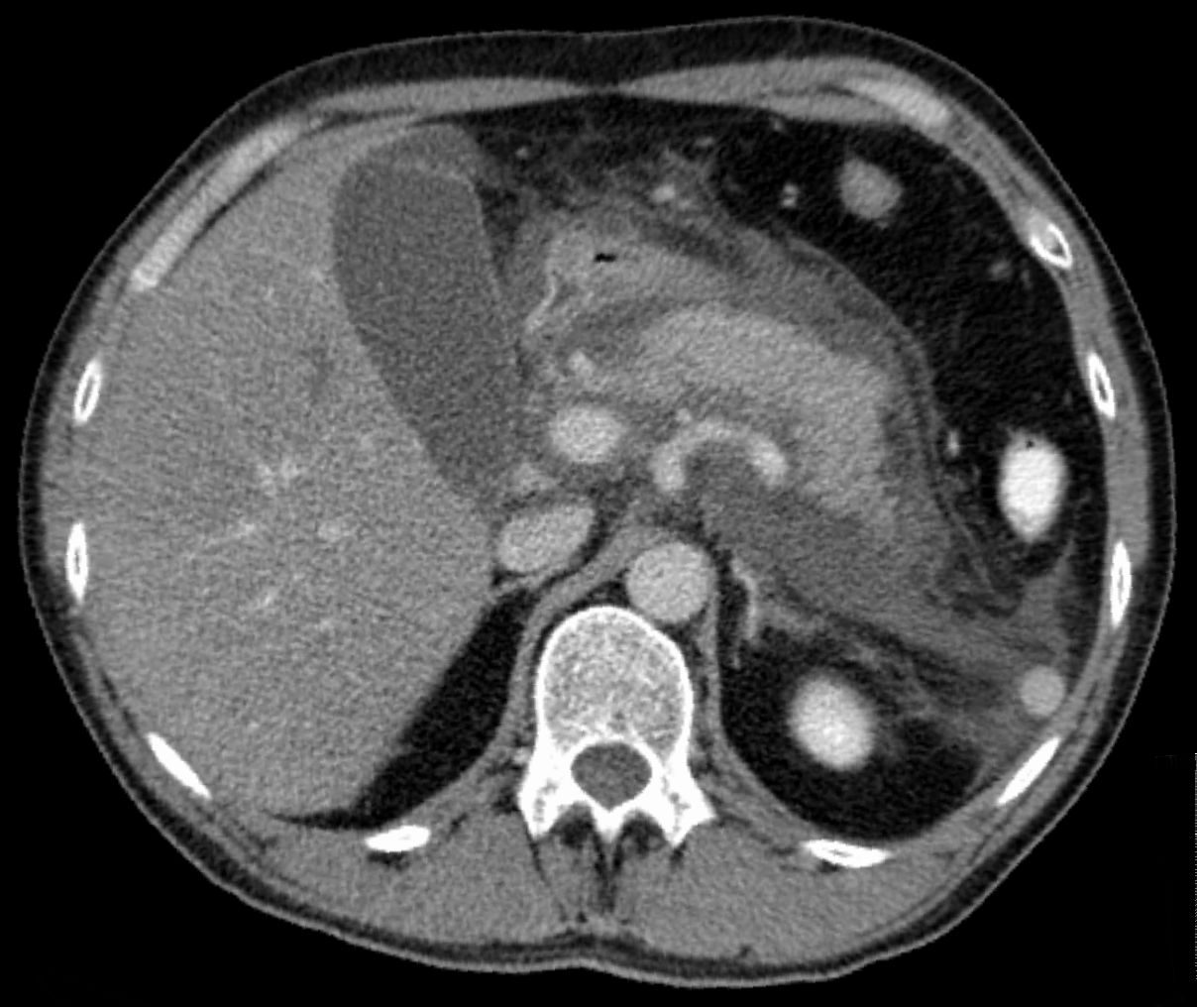
Lipase vs amylase
| Feature | Lipase | Amylase |
|---|---|---|
| Role | Preferred first test | Not reliable alone; limited sensitivity and negative predictive value |
| Duration | Stays elevated longer | Returns to normal sooner, usually within 3–5 days |
| Normal on admission | Possible; sensitivity is limited | Can be normal on admission in up to about one in five patients |
Accuracy at 3 times ULN
A 2017 Cochrane review pulled 10 studies, covering 5,056 people with acute abdominal pain in the emergency department. For lipase above 3 times normal, the pooled sensitivity was 0.79 (95% CI 0.54–0.92) and specificity 0.89 (95% CI 0.46–0.99). Here's the catch: one study, which supplied about two-thirds of the participants, was left out of the pooled analysis because of major concerns about its participants. So these estimates rest on far fewer people. The data were sparse, and risk of bias was unclear or high in every included study.
Amylase above 3 times normal gave similar numbers (sensitivity 0.72, specificity 0.93). Lipase is not clearly better on this evidence. At a sensitivity of 0.79, about one in five people with pancreatitis would be missed, and the confidence interval is wide. About one in ten people without it would be labelled positive.
Severity (revised Atlanta classification)
| Category | Definition | Note |
|---|---|---|
| Mild | No organ failure, no local or systemic complications | The most common form; usually resolves in the first week |
| Moderately severe | Transient organ failure (resolves within 48 hours), local complications, or exacerbation of comorbid disease | Monitor closely for progression in the first 48 hours |
| Severe | Persistent organ failure, more than 48 hours | Needs monitored or ICU-level care under local criteria |
In the ACG 2024 guideline's wording, organ failure means shock (systolic BP <90 mm Hg), PaO₂ <60 mm Hg, renal failure (creatinine >2 mg/dL after rehydration), GI bleeding >500 mL/24 hours, or a modified Marshall score of 2 or more in one of the three accepted organ systems. The Atlanta source text was not read for this page. If your local criteria differ, use them.
Imaging and scores
- CT timing: Early routine CT does not grade severity, so you do not need it for that. Reserve it for diagnostic doubt, or for no improvement within 48–72 hours of admission and IV hydration.
- Scores: Don't lean on scores or imaging alone to predict moderately severe or severe disease. Neither is accurate enough by itself.
- Risk factors: Risk climbs with an elevated BUN, a high hematocrit, obesity, comorbidity and SIRS.
Management Priorities
Emergency: acute pancreatitis with organ failure or SIRS
- Monitored bed: Organ failure or SIRS needs a monitored bed. Whether to send them to ICU is a local decision.
- IV fluids: Give moderately aggressive isotonic crystalloid, with lactated Ringer’s preferred over normal saline. Be careful with cardiovascular or renal disease, and watch for volume overload.
- Analgesia: Severe pain gets opioids without delay. Safety concerns should not hold them up.
- Cause: Cholangitis calls for ERCP within 24 hours.
- Reassess: Reassess volume within 6 hours, then again over the next 24–48 hours. You are aiming for a falling BUN.
Medications and analgesia
| Drug | Role in pancreatitis | Notes |
|---|---|---|
| Lactated Ringer’s | Preferred crystalloid for resuscitation | Reassess volume; see the linked page for rates |
| 0.9% saline | Alternative crystalloid | Use if lactated Ringer’s is not available; follow protocol |
| Morphine | Opioid for severe pain | High-alert Sphincter of Oddi spasm is a listed caution |
| Hydromorphone | Opioid for severe pain | High-alert Watch for worsening biliary symptoms |
| Fentanyl | Opioid for severe pain | High-alert Sphincter of Oddi spasm is a listed caution |
| Tramadol | Weaker opioid option | Trials found similar pain relief to non-opioids. No guideline recommendation; seizure and serotonergic risk, see the tramadol page |
| Ketorolac | NSAID option | NSAIDs did not worsen severity in the 2026 guideline (weak recommendation, low certainty), but studies were underpowered. Ketorolac is contraindicated in patients at risk of renal failure from volume depletion, with advanced renal impairment, active peptic ulcer, recent GI bleeding or perforation, and high bleeding risk. Correct hypovolemia first. Follow the ketorolac page and local protocol. |
| Buprenorphine | Mixed opioid agonist-antagonist; the 2026 guideline suggests it, with pentazocine (weak recommendation, low certainty) | Fewer rescue doses than diclofenac in recent trials. Follow local protocol |
| Pentazocine | Mixed opioid agonist-antagonist named with buprenorphine in the 2026 guideline | No E3 page yet; follow local protocol |
The 2026 European pain guideline favors the numerical rating scale. It suggests against routine epidural analgesia until better evidence exists. Patient-controlled analgesia gets a caution.
Enteral nutrition
- Mild pancreatitis: Start oral feeding early, within 24–48 hours as tolerated. Use a low-fat solid diet, not a stepwise liquid progression.
- Moderately severe or severe: Enteral feeding cuts infectious complications.
- Route: Nasogastric is preferred over nasojejunal, since safety and efficacy are comparable. Continuous feeds beat bolus.
- Parenteral: Avoid it unless the enteral route is not possible, not tolerated, or not meeting needs.
Infection and necrosis
- Prophylaxis: Don't reach for prophylactic antibiotics in severe pancreatitis. The guideline does not suggest them.
- Infected necrosis: Pick antibiotics that penetrate necrosis. Where possible, delay drainage or debridement beyond 4 weeks.
- Sampling: The guideline suggests against fine-needle aspiration for suspected infected necrosis.
Biliary pancreatitis and ERCP
- Cholangitis: Early ERCP within 24 hours.
- No cholangitis or jaundice: If you suspect a bile duct stone, use MRCP or EUS before ERCP. Medical therapy is suggested over early ERCP within 72 hours.
- Mild gallstone pancreatitis: Plan an early cholecystectomy, preferably before discharge. After a second episode with no cause, cholecystectomy is suggested in fit patients.
- Post-ERCP prevention: ACG 2024 strongly recommends rectal indomethacin for patients at high risk of post-ERCP pancreatitis. The dose is a single 100 mg, given before or immediately after ERCP, with periprocedural intravenous hydration. ACG suggests a pancreatic duct stent in high-risk patients who receive it. Avoid indomethacin with a history of asthma, urticaria or allergic reactions to aspirin or NSAIDs. Use caution with renal impairment, hypovolemia or GI bleeding. Dose per local protocol.
Hypertriglyceridemia
Treat it as acute pancreatitis first. Check triglycerides as a possible cause, preferably when above 1,000 mg/dL. The lipid-lowering plan lives on the triglycerides page.
Doses vary by protocol. Doses are typical references. Follow local protocols, medical direction and institutional policy.
Field & Transport Considerations
Point-of-care testing
Lipase is a lab assay, and no point-of-care version was verified for this page. Out in the field, you decide on pain, vomiting, and any history of gallstones, alcohol or known hypertriglyceridemia. The number does not make the call.
Before and during interfacility transport
- Obtain: Time of symptom onset, lipase result, BUN and hematocrit. Triglycerides when there are no gallstones or alcohol history.
- Fluids: Continue isotonic crystalloid per protocol. Watch for volume overload in patients with heart or kidney disease.
- Oral intake: Mild disease is where early feeding is favored. Whether to order NPO is a protocol decision.
- Analgesia: Do not withhold opioids for severe pain. Monitor sedation and breathing after each dose.
- Redirect: Organ failure or SIRS needs a monitored bed. Cholangitis needs ERCP within 24 hours. Confirm the receiving center can do it.
| Setting | Consideration |
|---|---|
| EMS | Pain control per protocol; document symptom onset time |
| Interfacility | Monitored bed for organ failure or SIRS; check ERCP access for cholangitis |
Timing & Kinetics
| Parameter | Value | Clinical implication |
|---|---|---|
| Amylase rise | Within a few hours of symptom onset | An early sample can be normal; repeat if suspicion stays high |
| Amylase return to normal | Usually within 3–5 days | A normal amylase days later does not exclude an earlier attack |
| Lipase duration | Stays elevated longer than amylase | Better suited than amylase to later presentations, but accuracy still falls with time |
| Early normal value | Amylase can be normal on admission in up to about one in five patients | Do not rule out on a single normal result |
| CT timing | Reserve for diagnostic doubt or no improvement at 48–72 hours | Give IV hydration first; early CT does not grade severity |
| Trend | BUN and hematocrit in the first 24 hours | A rising BUN in the first 24 hours is linked to worse outcomes |
Special Populations
| Population | What changes | Clinical implication |
|---|---|---|
| Children and adolescents | The 2026 pain guideline found that non-opioid and opioid analgesia did not clearly change length of stay or ICU admission (very low certainty), and oral feeding did not significantly increase pain (low certainty) | Choose analgesia per the pediatric protocol; the guideline gives no pediatric dose. Pediatric diagnosis and fluid management are not covered on this page |
| Pregnancy | Limited evidence that epidural analgesia relieves pain better than opioid infusions, with similar maternal and fetal outcomes (very low certainty) | Involve obstetric care; the pain guideline gives no fixed recommendation |
| Older adults | No age-specific lipase cut-off in the sources reviewed. A pancreatic tumor must be considered in patients over 40 without an established cause | Plan repeat imaging or endoscopic evaluation for idiopathic cases |
| Kidney disease | Decreased GFR can raise amylase falsely. Use caution with IV fluids in renal disease | Monitor volume status; do not use amylase alone |
| Diabetes | ACG 2024 notes a higher ULN may be needed in some groups, including diabetic patients (limited data) | Interpret the value with the clinical picture; the 3 times ULN criterion is unchanged |
Interfering Factors & Pitfalls
Collection and timing
| Factor | Effect | Why | Avoid / fix |
|---|---|---|---|
| Late presentation | False − | Accuracy declines with time from onset | Repeat testing if suspicion persists |
| Single normal value | False − | About one in five patients with pancreatitis were missed at a sensitivity of 0.79 in the Cochrane analysis | Low threshold to treat when pain fits |
Physiologic and biologic
| Factor | Effect | Why | Avoid / fix |
|---|---|---|---|
| Triglycerides or alcohol | Amylase False − | Amylase may be normal in these causes | Use lipase; check triglycerides |
| Macroamylasemia | Amylase False + | Large amylase-immunoglobulin complexes | Do not treat on amylase alone |
| Decreased GFR | Amylase False + | Listed with macroamylasemia in the guideline | Interpret with renal function |
| Diabetes | ACG notes a higher ULN may be needed (limited data) | Raised lipase in nonpancreatic disease | Use the lab and clinical context; keep 3 times ULN as the criterion |
Common misinterpretations
- "Amylase is normal, so this is not pancreatitis." A normal amylase can miss it, and that is a false negative.
- "Pain location predicts severity." Pain intensity and location do not track severity.
- "Lipase is high, so the cause is alcohol." Gallstones, triglycerides and recent ERCP still need checking.
Physiology & Test Basics
What it measures
Serum lipase comes from the pancreas, and it is the lab test to lean on for acute pancreatitis. Amylase is the older partner. It stays on this page for comparison.
Physiology & regulation
- Amylase and lipase are the pancreatic enzymes you use to diagnose acute pancreatitis.
- Lipase breaks down dietary fat (triglycerides).
- Lipase is the more specific of the two, and it stays elevated longer.
- Salivary gland disease can also push amylase up.
- The enzyme level does not measure severity. Severity comes from an organ failure assessment.
How it is measured
Your lab sets the sample type, serum or otherwise. Results are reported in U/L against an assay-specific ULN, so take the ULN from your report. Draw at presentation and repeat as the course requires.
Why it matters
The enzyme is one of three criteria for acute pancreatitis, and it does not stand alone. A high value still needs pain and imaging behind it. A normal value does not exclude the diagnosis.
Clinical Pearls
References
- Tenner S, Vege SS, Sheth SG, et al. American College of Gastroenterology guidelines: management of acute pancreatitis. Am J Gastroenterol. 2024;119(3):419–437. doi:10.14309/ajg.0000000000002645
- Banks PA, Bollen TL, Dervenis C, et al. Classification of acute pancreatitis—2012: revision of the Atlanta classification and definitions by international consensus. Gut. 2013;62(1):102–111. doi:10.1136/gutjnl-2012-302779
- Rompianesi G, Hann A, Komolafe O, et al. Serum amylase and lipase and urinary trypsinogen and amylase for diagnosis of acute pancreatitis. Cochrane Database Syst Rev. 2017;4:CD012010. doi:10.1002/14651858.CD012010.pub2
- Pandanaboyana S, Knoph CS, Kuhlmann L, et al. European interdisciplinary guidelines on pain management in acute pancreatitis: evidence-based recommendations. United European Gastroenterol J. 2026;14(5):e70230. doi:10.1002/ueg2.70230
- IAP/APA/EPC/IPC/JPS Working Group. International Association of Pancreatology revised guidelines on acute pancreatitis 2025. Pancreatology. 2025. doi:10.1016/j.pan.2025.04.020
Medical Disclaimer
- For Educational Purposes Only: This content is intended for educational reference and should not be used for clinical decision-making.
- Not a Substitute for Professional Judgment: Always consult your local protocols, institutional guidelines, and supervising physicians.
- Verify Before Acting: Users are responsible for verifying information through authoritative sources before any clinical application.