

Bedside Snapshot
- Normal (Adult)
- Typical 5.5–12.5 µg/dL (71–161 nmol/L), per Critical Care Transport Table 18-3; Katzung lists 4.8–10.4 µg/dL.
Assay- and lab-specific; higher in pregnancy and on estrogen - Critical Values
- No universal critical value: interpret by trend and clinical context
- High Suggests
- Raised TBG (pregnancy, estrogen) with normal Free T4 and TSH; true hyperthyroidism if Free T4 is high and TSH low
- Low Suggests
- Reduced TBG (nephrotic syndrome, cirrhosis, severe illness) with normal Free T4 and TSH; true hypothyroidism if Free T4 is low
- Act Now If
- Thyroid storm or myxedema suspected: treat on clinical findings, not Total T4; transport and notify the receiving team
- Watch Out For
- Ordering Total T4 alone: binding protein changes mislead without thyroid disease; order TSH and Free T4 with it
Reference & Critical Ranges
Lab-specific ranges: Ranges belong to the lab, not the textbook. They shift with the analyzer and the population. Read the range on your lab report. The values below are typical.
Reference ranges
| Population | Conventional | SI | Notes |
|---|---|---|---|
| Adult (non-pregnant) | 5.5–12.5 µg/dL | 71–161 nmol/L | Critical Care Transport Ch. 18 Table 18-3. Katzung 15e Table 38-2 lists 4.8–10.4 µg/dL (62–134 nmol/L), so labs and assays differ: confirm against the lab report |
| Pregnancy | Higher than non-pregnant | — | Use the lab's trimester-specific range |
| Children | Age-specific; newborn values are much higher | — | Newborn values are much higher in the first days; use the lab's age-specific range. Not on this page |
Severity & critical values
| Level | Conventional | SI | What it means |
|---|---|---|---|
| Low | <5.5 µg/dL | <71 nmol/L | Reduced TBG, true hypothyroidism, or non-thyroidal illness; interpret with Free T4 and TSH |
| High | >12.5 µg/dL | >161 nmol/L | Raised TBG or true hyperthyroidism; interpret with Free T4 and TSH |
| Critical | No universal value | — | Not used to triage; act on the clinical thyroid emergency and confirm with Free T4 and TSH |
Critical values: There is no universal critical Total T4 value. You recognize thyroid emergencies clinically. One Total T4 result does not establish or exclude one.
Conversion: µg/dL × 12.87 = nmol/L
Causes of Abnormal Results
High (above 12.5 µg/dL)
| Mechanism | Common causes | Bedside clue |
|---|---|---|
| Raised TBG (euthyroid) | Pregnancy, estrogen or oral contraceptives, tamoxifen, acute hepatitis, methadone | Pregnancy or estrogen exposure; Free T4 and TSH normal |
| True hyperthyroidism | Graves disease, toxic nodular goiter, thyroiditis, excess levothyroxine | Free T4 high, TSH suppressed; tachycardia, tremor, heat intolerance |
| Familial dysalbuminemic hyperthyroxinemia | Inherited albumin variant with high T4 affinity | Total T4 high; Free T4 normal by equilibrium dialysis; TSH normal; euthyroid |
| Inherited TBG excess (X-linked) | Inherited TBG variant with high binding | Total T4 high; Free T4 and TSH normal; euthyroid |
| Assay interference | Rare T4 autoantibodies; biotin supplements | Result does not fit the clinical picture; repeat with another method |
Do not treat on Total T4 alone: Treat the number in a euthyroid patient and you can cause iatrogenic thyrotoxicosis. In that patient the high value comes from TBG changes. Check Free T4 and TSH first.
Low (below 5.5 µg/dL)
| Mechanism | Common causes | Bedside clue |
|---|---|---|
| Reduced TBG (euthyroid) | Nephrotic syndrome (urinary TBG loss), cirrhosis, androgens or anabolic steroids, high-dose glucocorticoids | Proteinuria, liver disease, or steroid exposure; Free T4 and TSH normal |
| True hypothyroidism | Hashimoto thyroiditis, post-radioiodine, post-thyroidectomy, iodine deficiency, amiodarone, lithium | Free T4 low, TSH high |
| Inherited TBG deficiency (X-linked) | Inherited TBG variant with low binding | Total T4 low; Free T4 and TSH normal; euthyroid |
| Non-thyroidal illness | Critical illness, sepsis, major surgery, starvation | Low T4 with variable Free T4; TSH low or normal; improves with recovery |
Do not start levothyroxine for an isolated low Total T4: Nephrotic syndrome and cirrhosis can drop Total T4 while Free T4 and TSH stay normal. Critical illness may pull Free T4 down too, with TSH low or normal. One low result does not make these patients hypothyroid. Defer thyroid tests and repeat them after recovery, unless you suspect thyroid disease clinically.
Interpretation & Bedside Approach
Step-by-step approach
- Is it real? Confirm the patient, the sample and the requisition. Ask about pregnancy, estrogen or oral contraceptives, androgens, steroids, levothyroxine, amiodarone and biotin.
- How sick is the patient? Acute and critical illness pull T4 and TSH down. Primary thyroid disease is not required.
- Pair it with TSH and Free T4. Total T4 by itself cannot classify thyroid function. In pituitary disease or severe illness, TSH is unreliable.
- Classify by pattern: use the table below.
- Look for a binding protein cause: pregnancy, estrogen, nephrotic syndrome, liver disease, androgens or steroids.
- Escalate or dispose: Suspected thyroid storm or myxedema is a clinical emergency. Treat on clinical findings and transport to a receiving facility that can manage it.
Pattern interpretation
| Total T4 | Free T4 | TSH | Suggests |
|---|---|---|---|
| High | High | Low | True hyperthyroidism |
| High | Normal | Normal | Raised TBG (pregnancy, estrogen) or familial dysalbuminemic hyperthyroxinemia; euthyroid |
| Low | Low | High | True hypothyroidism |
| Low | Low | Low or normal | Central hypothyroidism (pituitary or hypothalamic disease), or non-thyroidal illness if critically ill; TSH is unreliable here |
| Low | Normal | Normal | Reduced TBG (nephrotic syndrome, cirrhosis) or non-thyroidal illness; euthyroid |
| Normal | Normal | Normal | Euthyroid |
Discordance rule: Total T4 and Free T4 split, and TSH is normal? Think binding protein before you think thyroid disease. A normal TSH is no comfort when Free T4 is low, because in central hypothyroidism TSH runs low or normal.
Special Populations
| Population | What changes | Clinical implication |
|---|---|---|
| Pregnancy | Estrogen raises TBG, so Total T4 rises | Use trimester-specific Free T4 and TSH ranges; Free T4 immunoassay results vary by method in pregnancy. Total T4 is read against a pregnancy-adjusted range, not the non-pregnant range (see ATA 2017, reference 1); this page does not give those values, so use the lab's trimester-specific range |
| Children & adolescents | Newborn Total T4 is much higher than adult values and falls over the first weeks | Use the lab's age-specific range; do not apply adult cutoffs. Congenital hypothyroidism is found by newborn screening that uses T4 and/or TSH |
| Older adults | Same adult Total T4 range is commonly used | Acute illness and medications are common confounders; interpret with TSH and Free T4 |
| Nephrotic syndrome / CKD | Urinary TBG loss lowers Total T4 | Free T4 and TSH guide management; do not treat on Total T4 alone |
| Liver disease | Cirrhosis lowers TBG; acute hepatitis can raise it | Discordant Total T4 is expected; use Free T4 and TSH |
| Critically ill | Non-thyroidal illness lowers Total T4; Free T4 may be normal or low and TSH low or normal | Thyroid tests are best deferred and repeated after recovery unless thyroid disease is suspected clinically; do not start treatment on Total T4 alone |
| Estrogen or hormone therapy | Estrogen-containing contraceptives or hormone therapy raise TBG | Expect a raised Total T4. Oral estrogen can raise levothyroxine requirement, so recheck TSH after starting or stopping estrogen |
Interfering Factors & Pitfalls
Collection & handling
| Factor | Effect | Why | Avoid or fix |
|---|---|---|---|
| Heparin in the sample (ex vivo) | No expected change in Total T4; ↑ free T4 (False +) only | Lipoprotein lipase releases free fatty acids that displace T4 from binding proteins (ETA 2026, reference 7) | If displacement is suspected, Total T4 is expected to stay normal; repeat Free T4 after omitting heparin, if possible |
Medications and supplements
| Factor | Effect | Why | Avoid or fix |
|---|---|---|---|
| Estrogen, oral contraceptives, tamoxifen | ↑ Total T4 | Raise TBG | Interpret with Free T4 and TSH; note the medication on the requisition |
| Androgens, anabolic steroids, high-dose glucocorticoids | ↓ Total T4 | Lower TBG | Interpret with Free T4 and TSH |
| Clofibrate, selective estrogen receptor modulators | ↑ Total T4 | Raise TBG | Interpret with Free T4 and TSH |
| Amiodarone | Can cause hypo- or hyperthyroidism; lowers T3 and raises reverse T3 | Iodine load and deiodinase effects | Check TSH and Free T4 on therapy; interpret T4 and T3 with caution |
| Lithium | Can cause hypothyroidism (TSH rises) | Impairs thyroid hormone release | Check TSH and Free T4 on therapy |
| Biotin (high-dose supplements) | False + or False − (assay dependent) | Interferes with streptavidin-biotin immunoassays | Ask about supplements and tell the lab; stop biotin at least 2 days before testing (Synthroid label) |
| Salicylates (above 2 g/day) | ↓ Total T4 (up to 30%) | Displace T4 from binding proteins (Synthroid label) | Interpret with Free T4 and TSH; note the dose on the requisition |
| Phenobarbital, rifampin | Lower serum T4 (hepatic induction) | Induce hepatic metabolism of T4 (Synthroid label Table 7); levothyroxine requirement rises | Recheck TSH after starting or stopping |
Physiologic and assay factors
| Factor | Effect | Why | Avoid or fix |
|---|---|---|---|
| Pregnancy | ↑ Total T4 | Estrogen-driven TBG rise | Use trimester-specific ranges for Free T4 and TSH |
| Nephrotic syndrome, cirrhosis | ↓ Total T4 | Lower TBG | Interpret with Free T4 and TSH |
| Familial dysalbuminemic hyperthyroxinemia | ↑ Total T4; Free T4 by immunoassay may be falsely high | Albumin variant binds T4 strongly | Confirm with equilibrium dialysis Free T4 and normal TSH |
| Inherited TBG excess or deficiency (X-linked) | ↑ or ↓ Total T4; Free T4 and TSH normal | TBG variant changes binding, not thyroid function | Suspect if discordance persists with normal Free T4 and TSH; check family history |
| T4 autoantibodies | Falsely altered results | Antibodies interfere with the assay | Repeat with another method if the result does not fit |
Common misinterpretations
- Normal Total T4 excludes thyroid disease: It does not. Check TSH.
- High Total T4 in pregnancy is thyrotoxicosis: Usually it is a raised TBG effect, not thyrotoxicosis.
- FTI is a current result: The Free Thyroxine Index was a calculated stand-in for Free T4. It is obsolete.
Biotin: The FDA has warned that biotin can interfere with some lab tests. High-dose biotin can distort streptavidin-biotin immunoassays, thyroid assays included, and push results either way.
Physiology & Test Basics
What it measures
Total T4 counts all the thyroxine in serum, bound and free together. Only the free fraction, about 0.03%, is metabolically active. Total T4 is the long-standing thyroid test. This page covers the bound-plus-free total. Free T4 measures the active fraction.
Physiology & regulation
- Binding proteins: Most circulating T4 rides on thyroxine-binding globulin (TBG). Transthyretin and albumin carry most of what is left.
- Reservoir: Bound T4 is the reservoir. Only free T4 gets into cells.
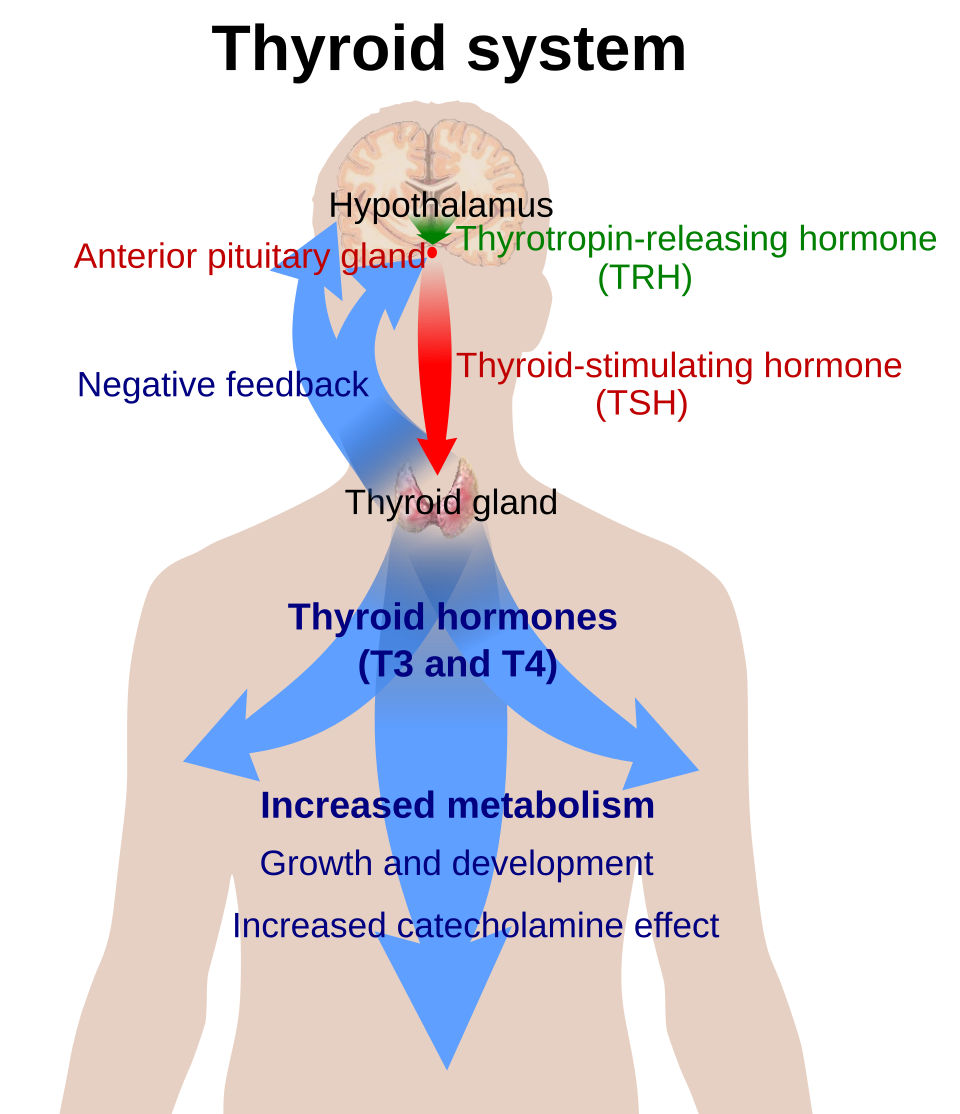
- Axis & feedback: Hypothalamic TRH drives pituitary TSH. TSH drives the thyroid to release T4 and T3. Those hormones feed back to suppress TRH and TSH. TSH tracks the free hormone level, not the total.
- TBG regulation: Estrogen pushes TBG up. Androgens, glucocorticoids, and liver or kidney protein loss push it down.
- Half-life: 6–7 days when euthyroid, 3–4 days in hyperthyroidism and 9–10 days in hypothyroidism (Synthroid label).
- Absorption: 40–80% from the gastrointestinal tract; fasting increases it and soybeans decrease it (Synthroid label).
How it is measured
- Specimen: serum, in a plain red-top or serum separator tube. You do not need to fast. Heparin in the sample can falsely raise Free T4: free fatty acids released in the tube displace T4 (ex vivo). Total T4 is still expected to stay normal in euthyroid patients (ETA 2026, reference 7).
- Method: Automated immunoassay on lab analyzers. The reference measurement procedure for total T4 is isotope-dilution liquid chromatography–tandem mass spectrometry. You will mostly see it in newborn screening and in checking suspected Free T4 interference (ETA 2026, reference 7).
- Timing: hold biotin and biotin-containing supplements for at least 2 days before testing (Synthroid label, sections 2.2 and 2.4).
- Units and turnaround: Results come back in µg/dL, with nmol/L in SI units. Turnaround depends on the lab.
Why it matters
A Total T4 result tells you about binding proteins as much as the thyroid. Free T4 and TSH are the tests that diagnose thyroid dysfunction. Total T4 earns its place mainly when binding protein status is in question.
Free Thyroxine Index (FTI): The FTI multiplied Total T4 by T3 resin uptake, a calculated correction for TBG. Direct Free T4 assays took its place. The FTI is obsolete.
Clinical Pearls
Order Free T4 and TSH, not Total T4: Free T4 reads the active hormone no matter what TBG is doing. Total T4 mainly explains a discordant Free T4 or chases a binding protein problem.
High Total T4, normal Free T4 and TSH: TBG is up from pregnancy or estrogen. The patient is euthyroid, and this result is no reason to treat for hyperthyroidism.
Low Total T4, normal Free T4 and TSH: TBG is down, most often from nephrotic syndrome or cirrhosis. Do not start levothyroxine on Total T4 alone.
Pregnancy: Use trimester-specific Free T4 and TSH ranges. For a woman on levothyroxine who becomes pregnant, the ATA 2017 guideline advises an early dose increase. The dose itself is in the full guideline, not on this page. Read TSH against trimester-specific ranges.
Transport: Suspected thyroid emergency? Make the call on the patient, not on a Total T4 value. Report levothyroxine or antithyroid drug use, amiodarone, iodine exposure and recent thyroid surgery.
Monitoring after starting or stopping estrogen: Oral estrogen raises TBG, and it can raise the levothyroxine requirement. Recheck TSH after starting or stopping estrogen. Total T4 moves with TBG, so TSH is the monitoring test on levothyroxine.
Levothyroxine absorption: Absorption from the gastrointestinal tract runs 40–80%, and fasting pushes it higher. Keep levothyroxine at least 4 hours away from iron, calcium, antacids and phosphate binders (Synthroid label).
Myxedema coma: Give IV glucocorticoid with or before thyroid hormone until you have ruled out adrenal insufficiency (2014 ATA guideline, reference 4, and the hydrocortisone page). Oral thyroid products are not recommended for myxedema coma. Use IV thyroid hormone formulations (Synthroid label).
References
- Alexander EK, Pearce EN, Brent GA, et al. (2017). 2017 Guidelines of the American Thyroid Association for the Diagnosis and Management of Thyroid Disease During Pregnancy and the Postpartum. Thyroid, 27(3), 315–389. https://doi.org/10.1089/thy.2016.0457
- Matyjek A, et al. (2024). The impact of severe nephrotic syndrome on thyroid function, nutrition and coagulation. Clinical Kidney Journal. https://doi.org/10.1093/ckj/sfae280
- MedlinePlus. Thyroxine (T4) test. U.S. National Library of Medicine (accessed 2026). https://medlineplus.gov/lab-tests/thyroxine-t4-test/
- Jonklaas J, Bianco AC, Bauer AJ, et al. (2014). Guidelines for the treatment of hypothyroidism: Prepared by the American Thyroid Association Task Force on Thyroid Hormone Replacement. Thyroid, 24(12), 1670–1751. https://doi.org/10.1089/thy.2014.0028
- Garber JR, Cobin RH, Gharib H, et al. (2012). Clinical practice guidelines for hypothyroidism in adults: Cosponsored by the American Association of Clinical Endocrinologists and the American Thyroid Association. Endocrine Practice, 18(6), 988–1028. https://doi.org/10.4158/EP12280.GL
- Brenta G. (2025). Kidney diseases and the thyroid: interactions and consequences. Nature Reviews Endocrinology, 22(4), 228–241.https://doi.org/10.1038/s41574-025-01203-y
- Campi, I., Feldt-Rasmussen, U., Gruson, D., et al. (2026). 2026 ETA guideline on interference in immunoassay measurements used in assessment of thyroid function. European Thyroid Journal, 15(4), ETJ260011. https://pmc.ncbi.nlm.nih.gov/articles/PMC13482799/
- AbbVie Inc. (2024). SYNTHROID (levothyroxine sodium) tablets, for oral use: Prescribing information (revised 2/2024). DailyMed, U.S. National Library of Medicine. https://dailymed.nlm.nih.gov/dailymed/drugInfo.cfm?setid=1e11ad30-1041-4520-10b0-8f9d30d30fcc
Medical Disclaimer
- For Educational Purposes Only: This content is intended for educational reference and should not be used for clinical decision-making.
- Not a Substitute for Professional Judgment: Always consult your local protocols, institutional guidelines, and supervising physicians.
- Verify Before Acting: Users are responsible for verifying information through authoritative sources before any clinical application.
AI Assistance Notice
AI was used to assist in organizing, paraphrasing, and formatting this information.