

Bedside Snapshot
- Use It For
- Acute symptomatic hypocalcemia (labeled); hyperkalemia with ECG changes; calcium channel blocker (CCB) toxicity; magnesium toxicity; citrate hypocalcemia in massive transfusion
- Adult Dose
- Hyperkalemia with ECG changes: 3 g (30 mL of 10%) IV over 10 min, repeat as needed (arrest: chloride 1 g)
- Hypocalcemia: 1–2 g IV slowly every 6 h (max 2 g/dose)
- Magnesium toxicity: 1 g (10 mL) IV over 3 min (sources vary)
- Pediatric Dose
- 29–60 mg/kg IV (labeled hypocalcemia; max 100 mg/min); CCB or beta-blocker poisoning 60 mg/kg IV, not above the adult dose (AHA 2025 Table 4); hyperkalemia: not established in children, specialist use only
- Onset / Duration
- IV: ≤3 min / 30–60 min (ECG effect in hyperkalemia); repeat doses are often needed
- Do Not Give / Hold If
- Hypercalcemia; neonates 28 days or younger receiving ceftriaxone; with digoxin unless essential (slow, ECG); bradycardia or hypotension during a push: slow or stop
- Watch For
- Calcinosis and tissue necrosis with extravasation; hypotension, bradycardia or arrhythmia with rapid push; hypercalcemia (total calcium 12 mg/dL or higher)
- Reversal / Rescue
- No antidote: stop the calcium. Extravasation: stop at that site and follow protocol. Hypercalcemia: stop, restore volume, monitor ECG and calcium
- Must Remember
- Gluconate has about one-third the calcium of chloride: 10 mL of 10% = 93 mg (4.65 mEq) elemental calcium vs 272 mg (13.6 mEq). Calcium protects the heart but does not lower K⁺: start shift therapy now.
Indications
Emergency & Prehospital
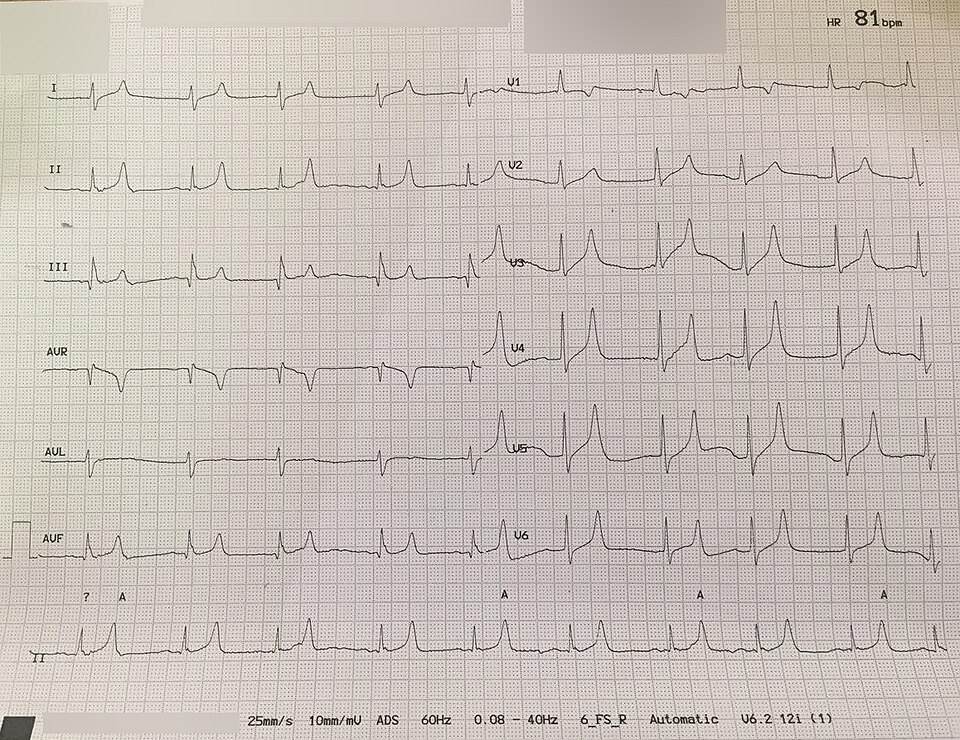
- Hyperkalemia with ECG changes: calcium protects the membrane while K⁺-lowering therapy starts. It does not lower K⁺ (off-label in the US). UKKA 2026 uses calcium gluconate for non-arrest patients with ECG signs.
- Cardiac arrest from suspected hyperkalemia: AHA 2025 gives this Class 2b, and effectiveness is not well established (off-label). In arrest or peri-arrest, UKKA 2026 prefers calcium chloride.
- Calcium channel blocker (CCB) toxicity: calcium is for life-threatening hypotension or conduction block. It goes in alongside high-dose insulin and vasopressors (AHA 2025: calcium Class 2a; insulin and vasopressors Class 1). The evidence is case-level (off-label).
- Life-threatening beta-blocker poisoning: calcium is an adjunct only (AHA 2025 Class 2b, extrapolated from adult case reports). Vasopressors, high-dose insulin and glucagon come first (off-label).
- Magnesium toxicity: calcium is used for respiratory depression, hypotension or heart block during magnesium therapy, including obstetric use (off-label; see magnesium sulfate).
ED / ICU / Transport
- Acute symptomatic hypocalcemia: tetany, seizures, laryngospasm, QT prolongation or hypotension. The FDA label covers this one indication, for adults and children.
- Citrate-related hypocalcemia during massive transfusion: aim to keep ionized calcium in the normal range (1.1–1.3 mmol/L). The 2023 European trauma guideline prefers calcium chloride. Gluconate is an equivalent-dose alternative (off-label).
- Hydrofluoric acid (HF) skin burns: topical calcium gluconate gel or soaking is the usual first step. Intradermal injection or regional IV (Bier block) calcium is used for persistent pain in case series (off-label). Systemic toxicity needs IV calcium titrated to ionized calcium, per toxicology. The 2026 systematic review (Kelly et al.) mentions intra-arterial and subcutaneous calcium injections only in passing, and no intra-arterial dose is given on this page. Involve a poison center or medical toxicology for severe or systemic exposure.
Other Uses
- Not indicated: routine calcium in adult or pediatric cardiac arrest. AHA 2025 Part 9 says routine calcium is not recommended in adults. PALS 2025 limits calcium to special circumstances such as hypocalcemia, CCB overdose or hyperkalemia.
Dosing & Administration
The adult doses below come from four sources: UKKA 2026 for hyperkalemia, AHA 2025 Part 10 Table 4 for CCB and beta-blocker poisoning, ACOG for magnesium toxicity and the US label for hypocalcemia. Where a dose departs from the FDA label, it is marked.
Available Forms
- 10% calcium gluconate injection: 100 mg/mL in single-dose vials of 1,000 mg (10 mL) and 5,000 mg (50 mL), and a pharmacy bulk package of 10,000 mg (100 mL) for pharmacy admixture. Each mL holds 9.3 mg (0.465 mEq) of elemental calcium, so 10 mL holds 93 mg (4.65 mEq, about 2.3 mmol).
- Premixed bags in sodium chloride are also marketed. Read the bag concentration (mg per mL) and total milligrams before use; do not assume the vial dose.
- Stocking: varies by agency. Check your formulary for the vial size and strength carried.
Adult Dosing
| Indication | Dose & Route | Repeat / Max | Notes |
|---|---|---|---|
| Hyperkalemia with ECG changes | 3 g (30 mL of 10%) IV over 10 min via a secure large vein | Repeat if ECG changes persist or recur after about 60 min with K⁺ still high; reassess the ECG after each dose. No fixed max; transient hypercalcemia is the main risk | UKKA 2026 (Guideline 16.2a, 2C): 30 mL over 10 min for non-arrest patients; calcium chloride 10 mL over 5 min in arrest or peri-arrest. Differs from FDA label: the US labels list only hypocalcemia and cap the rate (calcium gluconate 200 mg/min for adults, so 3 g takes at least 15 min; calcium chloride 1 mL/min, central or deep vein, no bolus). The hyperkalemia rate here (gluconate 30 mL over 10 min, chloride 10 mL over 5 min) is from UKKA 2026 and is off-label. Onset within about 3 min; effect lasts 30–60 min. Start insulin-glucose and other K⁺-lowering therapy at the same time. |
| Acute symptomatic hypocalcemia (labeled) | 1–2 g (10–20 mL of 10%) IV, diluted to 10–50 mg/mL, given slowly | Every 6 h as needed; max 2 g per dose (top of label range); no fixed cumulative max | Label: do not exceed 200 mg/min in adults. Infusion alternative: 5.4–21.5 mg/kg/hr, titrated to serum calcium (table below). Renal impairment: start at the low end. |
| Calcium channel blocker toxicity | 6,000 mg (60 mL of 10%) IV initial dose, then 60–120 mg/kg/hr (0.6–1.2 mL/kg/hr) infusion titrated to blood pressure (AHA 2025 Part 10 Table 4) | Titrate to blood pressure and ionized calcium; no fixed max: keep ionized calcium at or below 1.5–2 times the upper limit of normal | Differs from FDA label: the label lists only hypocalcemia; CCB use is off-label. Table 4 gives 100 mg/mL, so dilute per pharmacy. Calcium is given with high-dose insulin and vasopressors, which are AHA Class 1, not instead of them. Dosing weight is not stated in Table 4; confirm the weight basis with toxicology. |
| Symptomatic magnesium toxicity | 1 g (10 mL of 10%) IV over 3 min (ACOG eclampsia algorithm). Severe toxicity: 15–30 mL (1.5–3 g) per UKKA 2026. Sources differ and the dose is protocol-dependent; no pediatric magnesium dose is sourced here | Repeat to clinical response (breathing, blood pressure, ECG). No fixed max; effect is temporary | Stop the magnesium infusion; support ventilation. Obstetric units keep calcium gluconate available for impending respiratory depression. |
| Life-threatening beta-blocker poisoning | 6,000 mg (60 mL of 10%) IV initial dose, then 60–120 mg/kg/hr (0.6–1.2 mL/kg/hr), same as CCB (AHA 2025 Part 10 Table 4) | Per toxicology; same ionized calcium ceiling as CCB (1.5–2 times the upper limit of normal) | AHA 2025 Class 2b (C-EO), adults and children; adult case reports confounded by other vasoactive drugs. Vasopressors, high-dose insulin and glucagon come first. |
| Massive transfusion (citrate) hypocalcemia | Equivalent to 1 g (10 mL of 10%) calcium chloride: 3 g (30 mL of 10%) IV, slowly, guided by ionized calcium | Repeat to ionized calcium 1.1–1.3 mmol/L; no fixed max | Calculated from the label's elemental calcium per 10 mL (93 mg gluconate vs 272 mg chloride). The European guideline prefers chloride; use gluconate when chloride is not available. Check ionized calcium with every blood gas during the massive transfusion protocol. |
Pediatric Dosing
| Indication | Dose (per kg) & Route | Max Single / Max Total | Notes |
|---|---|---|---|
| Acute symptomatic hypocalcemia (labeled, >1 month to <17 years) | 29–60 mg/kg IV, slowly; no faster than 100 mg/min | No fixed max in the label: repeat every 6 h as needed; titrate to serum calcium | Labeled dose range for children. Renal impairment: start at the low end. Small doses need a vial and syringe. |
| Neonates (1 month or younger) | 100–200 mg/kg IV every 6 h (label) | No fixed max; no faster than 100 mg/min | Contraindicated when ceftriaxone is given to a neonate 28 days or younger (see Contraindications). Premature neonates are at higher risk from aluminum in the product. |
| Calcium channel blocker toxicity | 60 mg/kg (0.6 mL/kg of 10%) IV initial dose, then 60–120 mg/kg/hr (0.6–1.2 mL/kg/hr) | Not above the adult dose (6 g single dose). Keep ionized calcium at or below 1.5–2 times the upper limit | AHA 2025 Class 2a in children with life-threatening CCB poisoning; 60 mg/kg per Part 10 Table 4. Confirm with toxicology. Titrate to blood pressure. |
| Hyperkalemia with ECG changes or arrest | Not established in children; specialist use only | Not established | No pediatric hyperkalemia dose for calcium gluconate is verified in AHA/AAP 2025 or the US label, so none is shown. UKKA 2026 is an adult guideline. Do not extrapolate the CCB dose (60 mg/kg) to hyperkalemia. PALS 2025: routine calcium is not recommended in pediatric arrest; calcium is a special-circumstance option for hyperkalemia. See weight-based dosing. |
| Life-threatening beta-blocker poisoning | 60 mg/kg (0.6 mL/kg of 10%) IV initial dose, same as CCB (AHA 2025 Part 10 Table 4) | Not above the adult dose (6 g single dose) | AHA 2025 Class 2b, adults and children; Table 4 gives the same pediatric dose as CCB; no pediatric data beyond that. Vasopressors, high-dose insulin and glucagon come first. |
Continuous Infusion
| Setting | Example Concentration | Start | Titrate | Usual Range / Max |
|---|---|---|---|---|
| Hypocalcemia, adult (label) | Diluted to 5.8–10 mg/mL in 5% dextrose or normal saline (label) | 5.4–21.5 mg/kg/hr (label) | To serum calcium; check every 1–4 h on infusion | Dosing weight not stated in label; follow protocol |
| Hypocalcemia, pediatric (label) | Diluted to 5.8–10 mg/mL in 5% dextrose or normal saline (label) | 8–13 mg/kg/hr (neonates 17–33 mg/kg/hr) | To serum calcium; check every 1–4 h on infusion | Max rate 100 mg/min for any bolus; follow protocol for infusion caps |
| CCB and beta-blocker toxicity (adult and pediatric) | 100 mg/mL solution per AHA 2025 Table 4; dilute per pharmacy | Low end of range: 60 mg/kg/hr (0.6 mL/kg/hr) | To blood pressure; check ionized calcium frequently | 60–120 mg/kg/hr (0.6–1.2 mL/kg/hr); do not exceed ionized calcium 1.5–2 times the upper limit |
Preparation & Administration
- Dilution: Dilute before any bolus or infusion. The label calls for boluses at 10–50 mg/mL and infusions at 5.8–10 mg/mL in 5% dextrose or normal saline. Use the diluted solution immediately. AHA 2025 Part 10 Table 4 lists CCB and beta-blocker doses at 100 mg/mL, so dilute per pharmacy and confirm with toxicology.
- Push rate: Adults no faster than 200 mg/min (2 mL/min of 10%); children no faster than 100 mg/min (1 mL/min of 10%) (label). Differs from FDA label: the US labels list only hypocalcemia and cap the rate (calcium gluconate 200 mg/min for adults, so 3 g takes at least 15 min; calcium chloride 1 mL/min, central or deep vein, no bolus). The hyperkalemia rate here (gluconate 30 mL over 10 min, chloride 10 mL over 5 min) is from UKKA 2026 and is off-label. Rapid injection causes vasodilation, hypotension, bradycardia, arrhythmia, syncope and cardiac arrest.
- Line: Give it through a secure intravenous line (label) to avoid calcinosis cutis and tissue necrosis. Put high-dose or CCB regimens in a central or large proximal vein. Stop at the first pain, swelling or blanching.
- Flush: Flush the line before and after. Never run calcium gluconate through the same line as ceftriaxone, sodium bicarbonate, phosphate or minocycline.
- Monitoring during administration: Continuous ECG during every push and infusion (label).
- Pump requirement: Run infusions on a smart pump with a dedicated line.
Dosing Notes:
- Every dose is in mg of calcium gluconate salt, not elemental calcium. 1 g of salt holds 93 mg (4.65 mEq) of elemental calcium.
- The AHA 2025 Part 10 Table 4 CCB and beta-blocker doses are written for calcium gluconate. The guidance does not state the dosing weight for mg/kg/hr infusions, so confirm the weight basis with toxicology.
- For renal dosing, see Special Populations.
- The sources disagree on magnesium toxicity (ACOG eclampsia algorithm 1 g over 3 min; UKKA 2026 15–30 mL for severe toxicity). Follow the local protocol.
Contraindications & Precautions
Contraindications
- Hypercalcemia (label).
- Neonates 28 days of age or younger who receive ceftriaxone (label): contraindicated. Fatal outcomes occurred with ceftriaxone-calcium precipitates in the lungs and kidneys.
- Routine use in cardiac arrest (relative, not a label contraindication): not recommended without a specific cause such as hyperkalemia, CCB toxicity or hypocalcemia, per AHA 2025.
Precautions
- Cardiac glycosides (digoxin): the label advises avoiding calcium. If it is necessary, give it slowly in small amounts with close ECG monitoring. Hypercalcemia raises the risk of digoxin toxicity.
- Intravenous use only: the label is written for IV administration through a secure line. Calcinosis cutis and necrosis can follow extravasation.
- Renal impairment: start at the lowest dose of the range for every age group. Check serum calcium every 4 h (label).
- Aluminum: the product holds up to 512 mcg/L of aluminum. Parenteral aluminum above 4–5 mcg/kg/day builds up with impaired kidney function, and it is a risk in premature neonates.
- Older adults: start at the low end of the range (label).
Hold / Reassess If
- Total serum calcium 12 mg/dL or higher (hypercalcemia symptoms typically start here, per label), or ionized calcium above 1.5–2 times the upper limit during CCB treatment: stop and reassess before further doses.
- New bradycardia, hypotension, conduction change or arrhythmia during a push or infusion: slow or stop the calcium and get an ECG.
- Pain, swelling, blanching or necrosis at the site: stop at that site and follow the extravasation protocol.
- Repeat hyperkalemia doses only while toxic ECG changes persist; reassess after each dose.
Adverse Effects & Toxicity
Common
- Local soft-tissue inflammation and necrosis, most often with extravasation (label: the most common adverse events).
- Calcinosis cutis and calcification after extravasation.
- Vasodilation, flushing and a chalky taste, mainly with rapid infusion per UKKA 2026.
Serious / Life-Threatening
| Effect | Recognition | Management |
|---|---|---|
| Tissue necrosis, ulceration, infection | Pain, swelling, blanching, induration or nodules at the site | Stop the infusion at that site; treat per extravasation protocol |
| Hypotension, bradycardia, arrhythmia, syncope, cardiac arrest | Falling blood pressure, slow rhythm or new arrhythmia during a rapid push | Stop or slow the push; support blood pressure; ECG; follow ACLS for arrest |
| Ceftriaxone-calcium precipitate | Crystals in lungs and kidneys at autopsy in fatal neonatal cases | Avoid in neonates 28 days or younger; in older infants flush well between drugs and never Y-site |
| Hypercalcemia | Depression, weakness, confusion, hallucinations, seizures, coma; polyuria; symptoms typically at total calcium 12 mg/dL or higher | Stop calcium; restore intravascular volume; promote urinary calcium loss if needed; ECG |
| Aluminum accumulation | CNS and bone toxicity with prolonged use in renal failure or prematurity | Limit prolonged use; long-term use is not established (label) |
Overdose & Toxicity Management
- Hypercalcemia: Stop the calcium. Supportive care restores intravascular volume and promotes urinary calcium excretion if necessary (label). Monitor the ECG and serum calcium.
- Antidote: There is none specific. The label offers supportive treatment only.
- Extravasation: stop at that site, elevate it and treat per local protocol.
- Magnesium toxicity: calcium gluconate is the antidote here (see Dosing). Stop the magnesium, support ventilation and send serum magnesium.
Monitoring
| Parameter | When / How Often | Target / Act If |
|---|---|---|
| ECG | Continuously during each push and infusion | Hyperkalemia: QRS narrowing is the goal. Act if new bradycardia, AV block or arrhythmia: slow or stop and reassess |
| Blood pressure and heart rate | Before, during and after each push or infusion | Act if hypotension or bradycardia: slow or stop the calcium |
| Infusion site | Throughout the infusion | Act if pain, swelling or blanching: stop at that site |
| Serum total calcium | Every 4–6 h with intermittent infusions; every 1–4 h on continuous infusion (label) | Act at 12 mg/dL or higher (hypercalcemia): stop and reassess |
| Ionized calcium | After each dose in massive transfusion and CCB poisoning; every blood gas during the MTP | Massive transfusion: normal range 1.1–1.3 mmol/L. CCB: at or below 1.5–2 times the upper limit |
| Serum K⁺ | After shift therapy starts and with each ECG recheck | Calcium does not lower K⁺: K⁺ falls only with shift and removal. See the potassium page |
| Serum magnesium | Every 4 h on a magnesium infusion; at once for suspected toxicity | Stop magnesium above 9.6 mg/dL; restart below 8.4 mg/dL (ACOG eclampsia algorithm) |
| Renal function | Before and during therapy | Renal impairment: start at the lowest dose; serum calcium every 4 h (label). See calcium |
Interactions & Compatibility
Clinically Significant Interactions
| Drug / Class | Effect | What To Do |
|---|---|---|
| Cardiac glycosides (digoxin) | Hypercalcemia increases digoxin toxicity; synergistic arrhythmias | Avoid. If necessary, give slowly in small amounts with close ECG monitoring (label) |
| Ceftriaxone (ceftriaxone) | Ceftriaxone-calcium precipitates; fatal in neonates | Contraindicated 28 days or younger. Older infants: flush between drugs; never Y-site |
| Calcium channel blockers | Calcium may reduce the response to CCBs (label) | Monitor response when calcium is given to a patient on a CCB. In CCB poisoning calcium is given on purpose, with insulin and vasopressors per AHA 2025 |
| Thiazides, vitamin D, vitamin A, estrogen, calcipotriene, teriparatide | Can raise serum calcium (label) | Check serum calcium when combined |
| Sodium bicarbonate or phosphate (sodium bicarbonate) | Precipitate in the line (label) | Never in the same line; flush or use separate lines |
| Minocycline | Calcium complexes and inactivates minocycline (label) | Do not give together; separate the drugs |
IV Compatibility
- Diluent: 5% dextrose or 0.9% sodium chloride (label).
- Incompatible: sodium bicarbonate, phosphate and minocycline. Ceftriaxone must never be given Y-site with calcium in any age group (label).
- Line: give infusions through a dedicated line. CCB regimens use central access per protocol.
Before you mix anything, check an institutional compatibility resource.
Special Populations
- Pediatrics: The label covers acute symptomatic hypocalcemia in children older than 1 month. Dosing sits in the Pediatric Dosing table. No pediatric hyperkalemia or arrest dose is established in the sources used here.
- Neonates: Contraindicated with ceftriaxone at 28 days or younger. The labeled neonatal dose is 100–200 mg/kg every 6 h. Aluminum in the product may be toxic for premature neonates with immature kidneys.
- Pregnancy: The label has limited data. Maternal hypocalcemia is a risk to the fetus and neonate (neonatal hyperparathyroidism, seizures). The ACOG eclampsia algorithm names calcium gluconate as the antidote for magnesium toxicity, so it is used when a life-threatening maternal indication applies.
- Lactation: Calcium is a natural part of human milk. The label has no data on whether IV calcium changes milk calcium or affects the breastfed infant. Weigh the mother's need against the infant's exposure.
- Older Adults: start at the low end of the dosage range, because of more frequent renal, hepatic or cardiac decline and concomitant drugs (label).
- Renal Impairment: start at the lowest dose in every age group, and check serum calcium every 4 h (label). Aluminum builds up with prolonged use. For dialysis patients with ECG changes, UKKA 2026 says to give IV calcium even when emergency dialysis is planned.
- Hepatic Impairment: The label says hepatic function does not affect ionized calcium from gluconate, so there is no routine adjustment. The European trauma guideline notes chloride may be preferable with abnormal liver function during citrate loading.
- Obesity / Dosing Weight: Adult doses are fixed milligram amounts. Pediatric, neonatal and infusion doses are in mg/kg. The label does not state the dosing weight, so follow protocol.
Field & Transport Considerations
- Scope: depends on state and agency protocol. Before you rely on it, confirm that calcium gluconate is on your formulary.
- Storage & Stability: keep it at room temperature, 20–25 °C (68–77 °F). Do not freeze it (label storage statement).
- Carried Concentration: the 10% vial holds 1 g in 10 mL. Premixed bags come in a different volume and strength. Calculate every dose from the milligrams on the label, not the volume.
- Infusions in Transport: run on a pump with a dedicated line and continuous ECG. Verify product, concentration and total dose at handoff. Check the site throughout the trip.
- Handoff Essentials: time and total dose in mg and mL; salt (gluconate or chloride); ECG response; last total or ionized calcium; K⁺ and shift therapy status.
Clinical Pearls
Salt matters: 10 mL of 10% gluconate holds 93 mg (4.65 mEq) of elemental calcium. 10 mL of 10% chloride holds 272 mg (13.6 mEq). Same volume, very different calcium. About 30 mL gluconate matches 10 mL chloride per UKKA 2026, Table 12.
Rate trap: The hyperkalemia rate here is not the label rate. The US labels list only hypocalcemia and cap the rate (calcium gluconate 200 mg/min for adults, so 3 g takes at least 15 min; calcium chloride 1 mL/min, central or deep vein, no bolus). That rate (gluconate 30 mL over 10 min, chloride 10 mL over 5 min) comes from UKKA 2026 and is off-label.
Calcium buys minutes: The ECG effect lasts 30–60 minutes, and calcium does not lower K⁺. Start insulin-glucose and other shift therapy at the same time. Repeat calcium only while toxic ECG changes persist.
Gluconate vs chloride:
- Arrest or peri-arrest: calcium chloride. UKKA 2026 prefers it (Guideline 16.2b, 1C).
- Other ECG toxicity: calcium gluconate is the choice, through a secure line per UKKA 2026.
- Tissue injury: if it leaks out of the vein, chloride causes more necrosis , per UKKA 2026.
- Massive transfusion: the 2023 European guideline prefers chloride.
Hydrofluoric acid: Pain that is out of proportion to the visible injury can mean fluoride is still at work. Topical gel or soaking comes first. Severe cases can need large cumulative IV doses, titrated to ECG and ionized calcium.
Exam discriminator: Symptomatic hypocalcemia is the only labeled indication. Routine calcium in cardiac arrest is not recommended per AHA 2025. The exception is a specific cause: hyperkalemia or CCB toxicity.
Pharmacology
Mechanism of Action
- Ionized calcium: Calcium gluconate breaks down into ionized calcium in plasma. Ionized calcium and gluconate are both normal body constituents (label). Raising ionized calcium treats hypocalcemia.
- Cardiac membrane: Calcium counters the depolarizing effect of high extracellular K⁺, which is why ECG changes improve within about 3 min per UKKA 2026. Calcium does not change serum K⁺.
- Calcium channel blocker toxicity: AHA 2025 finds the evidence for calcium limited to case reports and case series. That is why it is used alongside insulin and vasopressors.
Pharmacokinetics
| Route | Onset | Peak | Duration |
|---|---|---|---|
| IV | About 3 min for the ECG effect per UKKA 2026 | Not stated in label; 100% bioavailable IV | 30–60 min for the ECG effect per UKKA 2026 |
- Half-life: The label does not state a half-life. Time repeat doses to the 30–60 minute effect window.
- Metabolism: Calcium itself is not metabolized. First-pass hepatic metabolism does not affect the release of ionized calcium (label).
- Distribution and binding: About 50% of serum calcium is ionized, the active fraction. About 40% is protein-bound, mainly to albumin (label).
- Elimination: IV calcium raises urinary calcium excretion (label).
Names & Classification
- Generic Name
- Calcium gluconate (calcium D-gluconate monohydrate)
- Brand Names (US)
- No common brand name; sold generically by several manufacturers, including premixed bags in sodium chloride
- Pharmacologic Class
- Calcium salt
- Therapeutic Class
- Electrolyte replacement; calcium antidote (hyperkalemia, CCB and magnesium toxicity uses are off-label)
- Controlled Substance
- Not controlled
- ISMP High-Alert
- No (not re-checked against the current ISMP acute-care list in this review; verify before relying on this entry)
- Look-Alike / Sound-Alike
- None verified as a name pair. The real risk is salt confusion: calcium chloride has about three times the calcium of gluconate per 10 mL
References
- Fresenius Kabi USA, LLC. (2026). Calcium Gluconate Injection, USP, for intravenous use: prescribing information (revised May 2026). DailyMed, U.S. National Library of Medicine. https://dailymed.nlm.nih.gov/dailymed/drugInfo.cfm?setid=8b77c3d2-992d-4261-8421-9cfd07328fbf
- Cao D, Arens AM, Chow SL, et al. (2025). Part 10: Adult and pediatric special circumstances of resuscitation: 2025 American Heart Association Guidelines for Cardiopulmonary Resuscitation and Emergency Cardiovascular Care. Circulation, 152(16 Suppl 2), S578–S672. https://doi.org/10.1161/CIR.0000000000001380. Also at https://cpr.heart.org/en/resuscitation-science/cpr-and-ecc-guidelines/adult-and-pediatric-special-circumstances-of-resuscitation
- Lasa JJ, Dhillon GS, Duff JP, et al. (2025). Part 8: Pediatric advanced life support: 2025 American Heart Association and American Academy of Pediatrics Guidelines for Cardiopulmonary Resuscitation and Emergency Cardiovascular Care. Circulation, 152(16 Suppl 2), S479–S537. https://doi.org/10.1161/CIR.0000000000001368
- Alfonzo A, Harrison A, Baines R, Chu A, Mann S, MacRury M. (2026). Clinical practice guidelines: Treatment of acute hyperkalaemia in adults (updated July 2026). UK Kidney Association. https://www.ukkidney.org/sites/default/files/documents/FINAL%20VERSION%20-%20UKKA%20CLINICAL%20PRACTICE%20GUIDELINE%20-%20MANAGEMENT%20OF%20HYPERKALAEMIA%20IN%20ADULTS%20-%20UPDATED%20JULY%202026_0.pdf
- Rossaint R, Afshari A, Bouillon B, et al. (2023). The European guideline on management of major bleeding and coagulopathy following trauma: sixth edition. Critical Care, 27, 80. https://doi.org/10.1186/s13054-023-04327-7
- American College of Obstetricians and Gynecologists. (2023). Eclampsia algorithm (magnesium toxicity: calcium gluconate 10 mL of 10% IV over 3 minutes). https://dam.acog.org/download/assets/eclampsia_algorithm.pdf/0996e7b264cd11f1b87d969563514075
- Kelly A, Chan S, Wood MJ. (2026). Hydrofluoric acid cutaneous burns: a systematic review of emergency management and general surgical sequelae. Cureus. https://doi.org/10.7759/cureus.104750
Medical Disclaimer
- For Educational Purposes Only: This content is intended for educational reference and should not be used for clinical decision-making.
- Not a Substitute for Professional Judgment: Always consult your local protocols, institutional guidelines, and supervising physicians.
- Verify Before Acting: Users are responsible for verifying information through authoritative sources before any clinical application.
AI Assistance Notice
AI was used to assist in organizing, paraphrasing, and formatting this information.