

Bedside Snapshot
- Use It For
- Hyperkalemia with ECG changes or hyperkalemic arrest; calcium channel blocker (CCB) toxicity; symptomatic hypocalcemia, including citrate toxicity in massive transfusion; symptomatic hypermagnesemia
- Adult Dose
- Hyperkalemia: 1 g (10 mL) IV over 5 min (peri-arrest/central); arrest IV/IO push; repeat if ECG changes persist
- CCB toxicity: 2 g IV slowly, then 20–40 mg/kg/hr
- Differs from FDA label: hypocalcemia only; 1 mL/min
- Pediatric Dose
- 20 mg/kg (0.2 mL/kg of 10%) IV/IO slowly, max 1 g/dose; hyperkalemia and arrest over 5 min, CCB toxicity over 10 min; labeled hypocalcemia dose 2.7–5 mg/kg slow IV
- Onset / Duration
- IV/IO: ≤3 min / 30–60 min (membrane effect in hyperkalemia); repeat doses are often needed
- Do Not Give / Hold If
- Routine arrest without a specific cause; IM or subcut; neonates on IV ceftriaxone; same line as bicarbonate or phosphate; on digoxin: avoid unless essential (continuous ECG); bradycardia or site pain on the push: stop
- Watch For
- Extravasation necrosis (pain, swelling, blanching at the site); bradycardia, hypotension or syncope with a fast push; hypercalcemia (check ionized Ca²⁺)
- Reversal / Rescue
- No antidote: stop the calcium. Extravasation: stop at that site, follow the extravasation protocol. Hypercalcemia: stop, monitor ECG and ionized Ca²⁺
- Must Remember
- Chloride carries about 3× the calcium of gluconate: 1 g chloride (13.6 mEq) ≈ 3 g gluconate (14 mEq). Calcium protects the heart but does not lower K⁺: start shift therapy now.
Indications
Emergency & Prehospital
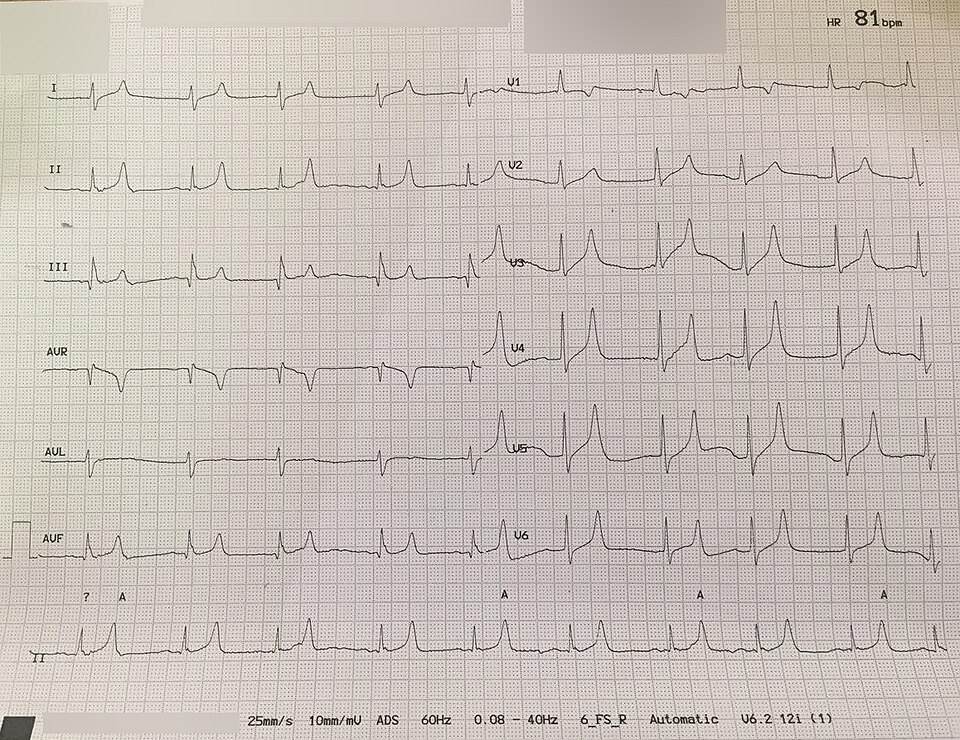
- Hyperkalemia with ECG changes: Calcium stabilizes the heart's cell membranes while K⁺-shifting therapy starts. Watch for peaked T waves, PR prolongation, lost P waves, QRS widening, bradycardia or a sine wave. It does not lower K⁺ (off-label in the US).
- Cardiac arrest from suspected hyperkalemia: The trigger is suspected hyperkalemia. AHA 2025 gives it Class 2b, meaning benefit is not well established. It is not for routine use in arrest (off-label).
- Calcium channel blocker (CCB) toxicity: Calcium goes alongside high-dose insulin and vasopressors. Look for hypotension, bradycardia or conduction block. AHA 2025 rates insulin and vasopressors Class 1 and calcium Class 2a. The guideline says that includes cardiac arrest, but the evidence is case-level (off-label).
- Life-threatening beta-blocker poisoning: Calcium is an adjunct only. AHA 2025 gives it Class 2b, based on adult case reports. Reach for vasopressors and high-dose insulin (Class 1) first, and glucagon (Class 2a). This is off-label.
- Symptomatic hypermagnesemia: Watch for respiratory depression, hypotension or heart block (off-label). For the magnesium side, see magnesium sulfate.
ED / ICU / Transport
- Acute symptomatic hypocalcemia: Tetany, seizures, laryngospasm, QT prolongation or hypotension. This is the only FDA-labeled indication, for adults and children.
- Citrate-induced hypocalcemia during massive transfusion: Citrate binds calcium during massive transfusion. Keep ionized calcium in the normal range. The European trauma guideline prefers calcium chloride as the salt.
- Systemic hydrofluoric acid (HF) toxicity: IV calcium treats the hypocalcemia, per toxicology (off-label). Calcium chloride is irritating and toxic to local tissue. Do not use it on or around HF burns. Use calcium gluconate gel or infiltration there.
Other Uses
- Not indicated: Don't give it for routine cardiac arrest (VF, asystole or PEA without a specific cause above). AHA 2025 Class 3: No Benefit.
Dosing & Administration
Each dose traces to a cited guideline: AHA 2025, UKKA 2026 or NASEMSO v3.0. Some differ from the FDA label, as stated below.
Available Forms
- 10% calcium chloride injection: 100 mg/mL calcium chloride dihydrate, in a 10 mL (1,000 mg) single-dose prefilled syringe or vial. Each mL gives 27 mg (1.36 mEq, which labels round to 1.4 mEq) of elemental calcium. That is 272 mg (13.6 mEq, 6.8 mmol) per 10 mL. The prefilled syringe is what EMS, crash carts and transport teams carry.
- Hypertonic and irritant: 2.04 mOsm/mL. Give it IV or IO only. Never IM or subcut.
| Feature | Calcium Chloride 10% | Calcium Gluconate 10% |
|---|---|---|
| Elemental calcium per 10 mL | 272 mg; 13.6 mEq (6.8 mmol) | 93 mg; 4.65 mEq (about 2.3 mmol) |
| Equivalent hyperkalemia dose | 10 mL (1 g) | 30 mL (3 g) |
| Preferred line | Central or deep vein (label); large proximal peripheral vein or IO in an emergency | Secure peripheral IV acceptable |
| Extravasation | Severe necrosis and calcinosis cutis more likely | Lower risk, but calcinosis and necrosis still occur |
| Best fit | Cardiac arrest and peri-arrest, central access in place, massive transfusion | Stable patients with ECG changes, peripheral access only, hydrofluoric acid burns, neonates |
Adult Dosing
| Indication | Dose & Route | Repeat / Max | Notes |
|---|---|---|---|
| Hyperkalemia with ECG changes | 1 g (10 mL of 10%) IV over 5 min when peri-arrest or with central, deep or large proximal access; calcium gluconate 30 mL (3 g) IV over 10 min for other patients | Reassess the ECG after the dose (effect within 3 min). Repeat the same dose if ECG changes persist, or if K⁺ is still high once the effect wears off (about 60 min). No fixed max: check ionized calcium after repeated doses | Differs from FDA label: the US labels list only hypocalcemia and cap the rate (calcium gluconate 200 mg/min for adults, so 3 g takes at least 15 min; calcium chloride 1 mL/min, central or deep vein, no bolus). The hyperkalemia rate here (gluconate 30 mL over 10 min, chloride 10 mL over 5 min) is from UKKA 2026 and is off-label. 10 mL chloride = 30 mL gluconate in calcium content. Start insulin-glucose and other K⁺-lowering therapy at the same time. |
| Cardiac arrest from suspected hyperkalemia, hypermagnesemia or hypocalcemia | 1 g (10 mL of 10%) IV/IO push | Repeat per protocol if the arrest continues and the cause persists; no fixed max | Suspected hyperkalemic arrest: UKKA 2026 suggests (2C); AHA 2025 Part 10 rec 1 gives COR 2b, C-LD (effectiveness not well established). Routine calcium in arrest without a specific cause is AHA 2025 COR 3: No Benefit (Part 9). Flush well before and after sodium bicarbonate, or use a separate line. |
| Calcium channel blocker toxicity | 2 g (20 mL of 10%) IV initial dose, central line preferred, given slowly (label maximum 1 mL/min, about 20 min), then 20–40 mg/kg/hr (0.2–0.4 mL/kg/hr) infusion titrated to blood pressure | Repeat and titrate to blood pressure (AHA 2025 Table 4 footnote: antidotes are repeated frequently and titrated). Keep ionized calcium at or below 1.5–2 times the upper limit of normal | AHA 2025: calcium is reasonable in life-threatening CCB poisoning (Class 2a), while high-dose insulin and vasopressors are Class 1: give calcium alongside them, not instead (calcium alone is rarely enough). Initial dose and infusion per AHA 2025 Part 10 Table 4 (calcium chloride 2,000 mg, 20 mL of 10%; infusion 20–40 mg/kg/hr). AHA 2025 states these recommendations include CCB-induced cardiac arrest; the evidence is case-level. |
| Life-threatening beta-blocker poisoning | 2 g (20 mL of 10%) IV, central line preferred, given slowly, then 20–40 mg/kg/hr (0.2–0.4 mL/kg/hr) infusion titrated to blood pressure | Repeat and titrate to blood pressure as for CCB toxicity (AHA 2025 Table 4); keep ionized calcium at or below 1.5–2 times the upper limit of normal | Adjunct only: AHA 2025 Class 2b, C-EO, based on adult case reports confounded by other vasoactive drugs. AHA 2025 Part 10 Table 4 gives the same calcium doses as for CCB poisoning. Vasopressors and high-dose insulin (Class 1) and glucagon (Class 2a) come first. Call toxicology or the poison center. |
| Symptomatic hypermagnesemia | 500–1,000 mg (5–10 mL of 10%) IV over 5–10 min | Repeat to clinical effect (breathing, blood pressure, conduction); max 1,000 mg per dose | Obstetric magnesium toxicity: adult calcium gluconate 3 g or calcium chloride 1 g (NASEMSO v3.0, Eclampsia p. 173). Stop the magnesium and support ventilation. |
| Acute symptomatic hypocalcemia (labeled) | 200–1,000 mg (2–10 mL of 10%) slow IV, no faster than 1 mL/min | Max 1,000 mg per dose; repeat as needed (calcium is excreted quickly) | Renal impairment: start at 200 mg. Individualize to ionized calcium, symptoms and how fast the drop occurred. |
| Massive transfusion (citrate) hypocalcemia | 1 g (10 mL of 10%) slow IV | Repeat guided by ionized calcium; target 1.1–1.3 mmol/L; correct promptly below 0.9 mmol/L | Check ionized calcium on every blood gas during the massive transfusion protocol (MTP). Empiric dosing per units transfused varies by protocol. |
Pediatric Dosing
| Indication | Dose (per kg) & Route | Max Single / Max Total | Notes |
|---|---|---|---|
| Hyperkalemia with ECG changes; arrest from hyperkalemia, hypermagnesemia or hypocalcemia | 20 mg/kg (0.2 mL/kg of 10%) IV/IO slowly over 5 min | 1 g per dose; repeat if ECG toxicity or the arrest cause persists | Source: NASEMSO National Model EMS Clinical Guidelines v3.0 (2022), Cardiac Arrest p. 119 (20 mg/kg = 0.2 mL/kg) and Crush Injury p. 223 (max 1 g over 5 minutes). The 2025 PALS guideline gives no calcium dose. Not for routine use in pediatric arrest (AHA/AAP 2025 PALS Class 3: No Benefit). Central line or IO preferred. Peripheral-only alternative: calcium gluconate 60 mg/kg (0.6 mL/kg of 10%), max 3 g (30 mL) per dose, the equivalent of 1 g chloride. See weight-based dosing. |
| Calcium channel blocker toxicity | 20 mg/kg (0.2 mL/kg of 10%) slow IV over 10 min | Max 1 g or 10 mL per bolus; keep ionized calcium at or below 1.5–2 times the upper limit of normal | Calcium gluconate 60 mg/kg (0.6 mL/kg of 10%) over 10 min is preferred in children because chloride carries more tissue-injury risk (NASEMSO v3.0, Calcium Channel Blocker Poisoning p. 296). Differs: AHA 2023 Table 2 (as cited on this page) allows a pediatric bolus up to the adult 2 g and gives an infusion of 20–40 mg/kg/hr. AHA 2025 Table 4 gives 20 mg/kg, with a footnote that pediatric doses should not exceed the adult dose (2 g); this page keeps the 1 g pediatric maximum. AHA 2025 Part 10 rec 5: calcium is reasonable in life-threatening CCB poisoning in children (Class 2a, C-EO). Central line advised; titrate to blood pressure. |
| Life-threatening beta-blocker poisoning | Not established in children: calcium may be reasonable (AHA 2025 Class 2b, C-EO) | No pediatric dose established | AHA 2025 Part 10 rec 9 (Class 2b, C-EO): no pediatric data were identified, so no pediatric dose is given. Vasopressors, high-dose insulin and glucagon come first. Call toxicology or the poison center. |
| Acute symptomatic hypocalcemia (labeled) | 2.7–5 mg/kg slow IV, no faster than 1 mL/min | Max 1 g per dose; repeat as needed | Labeled dose (Hospira label, section 2.2). Renal impairment: start at 2.7 mg/kg. Small doses need a vial and syringe: the prefilled syringe cannot measure doses under 200 mg. Peripheral alternative: calcium gluconate 60 mg/kg, max 3 g (adult dose), per NASEMSO v3.0 (Calcium Channel Blocker Poisoning p. 296). |
| Neonates (28 days or younger) | Not routinely used (consult) | Per NICU protocol | Contraindicated with current or expected IV ceftriaxone. Calcium gluconate labeling carries neonatal dosing. |
Continuous Infusion
| Setting | Example Concentration | Start | Titrate | Usual Range / Max |
|---|---|---|---|---|
| CCB toxicity (adult) | 100 mg/mL undiluted, central line, example (institution-specific) | 20 mg/kg/hr (0.2 mL/kg/hr) | To blood pressure and perfusion; ionized calcium frequently | 20–40 mg/kg/hr (0.2–0.4 mL/kg/hr); stop above 1.5–2 times the upper limit of normal for ionized calcium |
Preparation & Administration
- Dilution: Bolus doses go in undiluted, at 100 mg/mL, straight from the prefilled syringe. Warm it to body temperature if time allows.
- Push rate: Differs from FDA label: the US labels list only hypocalcemia and cap the rate. Gluconate is capped at 200 mg/min for adults, so 3 g takes at least 15 min. Chloride is capped at 1 mL/min, central or deep vein, no bolus. The hyperkalemia rate here (gluconate 30 mL over 10 min, chloride 10 mL over 5 min) comes from UKKA 2026 and is off-label. A faster push causes vasodilation, hypotension, bradycardia, arrhythmia, syncope and even cardiac arrest.
- Line: The label calls for a central or deep vein. Without central access in an emergency, use a secure, free-flowing large proximal peripheral IV or IO, and watch the site the whole time. Stop at the first pain, swelling or blanching.
- Flush: Flush with saline before and after. Never mix it with sodium bicarbonate or phosphate. Never run it through a line that carries citrated blood products.
- Pump requirement: Run infusions on a smart pump through a dedicated central lumen.
Dosing Notes:
- Every dose is written in mg of calcium chloride salt. It is not elemental calcium.
- Dosing weight for the mg/kg/hr CCB infusion is not specified in the guidance: follow local protocol.
- Renal dose guidance: see Special Populations.
Contraindications & Precautions
Contraindications
- Routine use in cardiac arrest: the US label lists VF, asystole and PEA (electromechanical dissociation) as contraindications. Guidelines allow calcium when a specific cause is suspected, on weak recommendations or expert consensus. That covers hyperkalemia (AHA 2025 Class 2b, effectiveness not well established), life-threatening CCB poisoning (Class 2a, arrest included), beta-blocker poisoning (Class 2b), arrest during IV magnesium in pregnancy (Class 2a) and hypocalcemia (expert practice).
- Neonates (28 days or younger) who need or are expected to need IV ceftriaxone: the calcium-ceftriaxone precipitates are fatal in the lungs and kidneys. Separate lines at different times don't make it safe.
Precautions
- IM or subcut injection: The label says no IM or subcut, because it causes tissue necrosis and calcinosis cutis. Give IV or IO only.
- Digoxin therapy or toxicity: The label says to avoid calcium, and to monitor the ECG if it is needed. The AHA 2023 update cites limited observational and animal data. Those data suggest calcium is neither harmful nor beneficial in digoxin poisoning. The risk is not quantified, and there is no evidence of benefit. For digoxin hyperkalemia, digoxin immune Fab is the definitive treatment.
- Peripheral access: extravasation risk is highest with the chloride salt. When the patient is stable and only a small or distal vein is available, prefer gluconate.
- Renal impairment: the calcium-phosphate product runs higher. For hypocalcemia, start low and monitor calcium closely.
- Prolonged therapy, especially preterm infants: The product contains aluminum. With parenteral nutrition, keep total aluminum to no more than 5 mcg/kg/day.
Hold / Reassess If
- Heart rate falls, a new arrhythmia appears or blood pressure drops during the push: stop or slow the injection.
- Pain, swelling, blanching or a cold limb at the IV/IO site: stop at that site immediately.
- Ionized calcium above the normal range (1.1–1.3 mmol/L) with no ongoing indication. In persistent hyperkalemic ECG toxicity, repeat the dose per the Dosing table (no fixed maximum) and recheck ionized calcium. In CCB toxicity the ceiling is 1.5–2 times the upper limit of normal.
Chloride is not gluconate: Same volume, different drug. Calcium chloride carries about 3 times the calcium of calcium gluconate in a 10 mL syringe. Name the salt out loud on every order and handoff.
Adverse Effects & Toxicity
Common
- Injection-site burning and pain: frequency not established
- Peripheral vasodilation, flushing, a sense of heat: mainly with fast injection
- Chalky or calcium taste; tingling (paresthesia) with rapid injection
- Fall in blood pressure: transient, rate-related
Serious / Life-Threatening
| Effect | Recognition | Management |
|---|---|---|
| Extravasation: tissue necrosis, calcinosis cutis | Pain, swelling, blanching at the site; later firm papules, plaques or ulceration | Stop at that site; leave the catheter in to aspirate per protocol; elevate; follow the institutional extravasation protocol; surgical consult for skin changes |
| Bradycardia, hypotension, syncope, arrest | Falling HR or blood pressure during a fast push | Stop or slow the injection (label maximum 1 mL/min); support circulation |
| Hypercalcemia | Short QT, bradycardia, nausea, weakness, confusion; ionized calcium above range | Stop calcium; ECG and ionized calcium; treat per protocol |
| Ceftriaxone-calcium precipitates | Neonates: respiratory or renal failure after co-exposure | Prevent: never give both to neonates; in older patients never simultaneously, even through separate lines; give sequentially with a thorough flush between |
Overdose & Toxicity Management
- Signs: usually appear at total calcium of 12 mg/dL or higher: QT shortening, bradycardia, hypertension, vomiting, constipation, polyuria, weakness, confusion, seizures, coma.
- Immediate management: stop calcium, monitor the ECG and recheck ionized and total calcium; treat significant hypercalcemia per protocol with nephrology input.
- Antidote: none.
Monitoring
| Parameter | When / How Often | Target / Act If |
|---|---|---|
| Clinical: ECG and heart rate | Continuous during and after each dose | Bradycardia or new arrhythmia during the push: stop or slow. Hyperkalemia: persistent or recurrent QRS widening or peaked T waves: repeat dose |
| Clinical: IV/IO site | Continuously during each push; frequently during infusions per policy | Pain, swelling, blanching: stop at that site, start extravasation protocol |
| Clinical: blood pressure | During and after each push; continuous or frequent in CCB toxicity | Drop during the push: slow the rate. CCB toxicity: titrate infusion to perfusion |
| Laboratory: ionized calcium | After repeated doses; with every blood gas during MTP; frequently during CCB infusion; before any repeat dose; closely in renal impairment | Ionized calcium target 1.1–1.3 mmol/L; below 0.9 mmol/L during transfusion: give calcium now; CCB toxicity: stop above 1.5–2 times the upper limit of normal |
| Laboratory: potassium | Baseline, then after shift therapy (calcium does not lower K⁺) | K⁺ still high or ECG changes returning: repeat calcium and escalate K⁺ removal (dialysis) |
| Drug levels: digoxin | Patients taking digoxin with hyperkalemia or arrhythmia | Digoxin toxicity suspected: give digoxin immune Fab; monitor ECG closely if calcium is also given |
Interactions & Compatibility
Clinically Significant Interactions
| Drug / Class | Effect | What To Do |
|---|---|---|
| Digoxin | Label: synergistic arrhythmias; hypercalcemia increases digoxin toxicity. AHA 2023: limited observational and animal data suggest neither harm nor benefit (risk not quantified) | Avoid when possible; if needed, continuous ECG and calcium monitoring; digoxin immune Fab for digoxin toxicity |
| Ceftriaxone | Insoluble calcium-ceftriaxone precipitate | Neonates: contraindicated together. Older than 28 days: never simultaneously, even through separate lines or sites. Give sequentially only, flushing the line thoroughly (or using a separate or new line) between them |
| Sodium bicarbonate | Calcium carbonate precipitate in the line | Separate lines or flush well between them |
| Phosphate-containing solutions | Calcium phosphate precipitate | Do not mix; separate lines |
| Calcium channel blockers (verapamil, diltiazem) | Calcium reduces the CCB response | Intended in CCB toxicity; otherwise monitor blood pressure and rate control |
| Thiazides, vitamin D, lithium, teriparatide | Added hypercalcemia risk | Check calcium more often |
IV Compatibility
- Diluents: Use normal saline or D5W when you need to dilute. Bolus doses go in undiluted.
- Do not mix: the label advises against mixing calcium chloride with other drugs. The key incompatibilities are sodium bicarbonate, phosphates, ceftriaxone and propofol.
- Blood products: Never run it through the same line as citrated blood, because of clotting. During massive transfusion, use a separate line.
- Verify with an institutional compatibility resource.
Special Populations
- Pediatrics: The label covers symptomatic hypocalcemia in children. Prefer a central line or IO, because small veins extravasate easily. See the Pediatric Dosing table.
- Neonates: Do not give it with current or expected IV ceftriaxone. Aluminum matters in preterm infants on parenteral nutrition. NICUs generally use calcium gluconate, which carries neonatal dosing.
- Pregnancy: Treating acute symptomatic hypocalcemia is not expected to cause birth defects, miscarriage or adverse outcomes. Maternal hypocalcemia carries its own maternal and fetal risk. Give it for a life-threatening indication. For magnesium toxicity on labor and delivery, NASEMSO v3.0 (Eclampsia p. 173) gives adult calcium gluconate 3 g or calcium chloride 1 g. In cardiac arrest during IV magnesium sulfate, giving calcium is reasonable (AHA 2025 Class 2a, expert opinion). Stop the magnesium.
- Lactation: Breast milk normally contains calcium. Labeled doses are not expected to harm a breastfed infant.
- Older Adults: No specific adjustment is established. Clinical studies included too few patients 65 and older.
- Renal Impairment: For symptomatic hypocalcemia, start at the low end (adults 200 mg, children 2.7 mg/kg) and check serum calcium before any repeat dose. With hyperkalemia and ECG changes, or CCB toxicity, give the full emergency dose, even if dialysis is planned.
- Hepatic Impairment: Short-term use needs no adjustment. In massive transfusion, shock and liver dysfunction slow citrate clearance. That makes ionized hypocalcemia more likely.
- Obesity / Dosing Weight: Adult bolus doses are fixed. No data support changing short-term doses. The dosing weight for mg/kg/hr infusions is defined by protocol.
Field & Transport Considerations
- Scope: Paramedic, RN and critical-care transport, per protocol or medical direction (hyperkalemia, CCB toxicity, arrest from a specific cause). It varies by state and agency protocol.
- Storage & Stability: Store at 20–25°C (68–77°F). Excursions to 15–30°C (59–86°F) are permitted. It is single-dose, so discard the unused portion. Do not use it if the solution is cloudy or the seal is broken.
- Carried Concentration: 1 g/10 mL (10%) prefilled syringe. Calcium gluconate 10% syringes look almost the same but carry about one-third the calcium. Read the salt on the label before every push.
- Infusions in Transport: CCB-toxicity calcium infusions run on a pump through a dedicated central lumen. Get a recent ionized calcium before departure, and carry enough volume for the whole trip.
- Massive Transfusion: Rotor-wing and ground teams giving blood should expect citrate hypocalcemia. Use a separate line from the blood products, and recheck ionized calcium on arrival. Without point-of-care ionized calcium, some prehospital and military protocols (TCCC) give 1 g of calcium (10 mL of 10% chloride or 30 mL of 10% gluconate) with or right after the first blood product. Then give more by protocol. Follow the local transfusion protocol.
- Handoff Essentials: salt (chloride vs gluconate), each dose and time, total grams, site and line, ECG response, latest K⁺ and ionized calcium, and K⁺-shifting drugs given.
Clinical Pearls
Not a routine arrest drug: The COCA trial (Vallentin et al., JAMA 2021) randomized 397 adults in out-of-hospital arrest, and 391 were analyzed. Patients received up to two 5 mmol doses. Sustained ROSC happened in 19% with calcium and 27% with saline (P = .09). Of calcium patients with ROSC and a measured level, 74% were hypercalcemic. The trial stopped early over possible harm. Calcium in arrest is for a specific cause only.
Exam discriminator: Calcium protects the myocardium in hyperkalemia. It does not lower K⁺. Insulin-glucose and albuterol move K⁺ into cells, and binders and dialysis remove it. In hyperkalemic arrest, albuterol is not recommended (AHA 2025 Class 3: No Benefit). Calcium, bicarbonate and insulin-glucose are each Class 2b. Expect the exam to offer calcium as the K⁺-lowering step.
Treat the ECG, not only the number: QRS widening, bradycardia or a sine wave can show up before the lab confirms anything. In a high-risk patient, like a dialysis patient who missed a session, give calcium on a toxic ECG. Don't wait for the K⁺.
Digoxin patient with high K⁺: The old "stone heart" teaching came from animal studies and case reports. The AHA 2023 update cites limited observational and animal data. Those data suggest calcium is neither harmful nor beneficial. The risk is not quantified, and there is no evidence of benefit. Digoxin immune Fab is the definitive treatment.
Massive transfusion: Each unit of red cells or plasma carries citrate, and citrate binds calcium. Check ionized calcium on every blood gas, and keep it at 1.1–1.3 mmol/L. Hypocalcemia makes coagulopathy and contractility worse.
When gluconate is the better choice:
- Hydrofluoric acid burns: topical gel, infiltration or intra-arterial gluconate (toxicology input first)
- Stable patient, peripheral IV only
- Neonates
CCB overdose needs more than calcium: Calcium often lifts blood pressure only briefly. Start high-dose insulin and a vasopressor early. For refractory shock, call toxicology and an ECMO center (AHA 2025: ECLS is reasonable, Class 2a). Glucagon, methylene blue (refractory vasodilatory shock) and IV lipid emulsion (refractory shock only) have uncertain usefulness (AHA 2025 Part 10 Class 2b, C-EO). Expert consensus advises against routine lipid emulsion for CCB poisoning, since it may increase absorption of an oral overdose. Use it only on toxicology advice.
Pharmacology
Mechanism of Action
- It dissociates fully in plasma, so ionized calcium rises at once.
- Higher extracellular Ca²⁺ raises the myocyte threshold potential. That restores the gap hyperkalemia narrows, giving a narrower QRS and fewer arrhythmias. K⁺ does not change.
- It competes with magnesium at the membrane and neuromuscular junction. That reverses magnesium-induced weakness, hypotension and conduction block.
- It pushes more Ca²⁺ in through partly blocked L-type channels. Contractility, vascular tone and conduction improve in CCB toxicity.
- It replaces Ca²⁺ that citrate has chelated. Coagulation factor and platelet function return, along with contractility.
Pharmacokinetics
| Route | Onset | Peak | Duration |
|---|---|---|---|
| IV | ≤3 min (ECG improvement in hyperkalemia) | Within minutes | 30–60 min (membrane effect in hyperkalemia) |
- Bioavailability: 100% IV. IO is an accepted alternative route in resuscitation.
- Half-life: Not applicable. Calcium is an endogenous ion, regulated by parathyroid hormone, vitamin D and the kidneys.
- Metabolism: none.
- Distribution: 99% of body calcium sits in bone. Of serum calcium, about 50% is ionized and active. About 40% is protein-bound, mainly to albumin. The rest is complexed.
- Elimination: Elimination is renal, through filtration with tubular reabsorption. Urinary loss rises during infusion, which is why repeat doses are often needed.
Names & Classification
- Generic Name
- Calcium chloride (dihydrate) injection, 10%
- Brand Names
- No proprietary brand; marketed under the generic name in prefilled syringes and vials by several US manufacturers
- Pharmacologic Class
- Calcium salt (electrolyte)
- Therapeutic Class
- Electrolyte replacement; cardiac membrane stabilizer in hyperkalemia; antidote for CCB toxicity and hypermagnesemia
- Controlled Substance
- Not controlled
- ISMP High-Alert
- No: not on the ISMP list of high-alert medications in acute care settings
- Look-Alike / Sound-Alike
- Calcium chloride / calcium gluconate: same 10%, 10 mL presentation with about a 3-fold difference in calcium
- Error-Prone Abbreviations to Avoid
- Abbreviated salt names on orders (write calcium chloride or calcium gluconate in full)
References
- Hospira, Inc. (2026). 10% Calcium Chloride Injection, USP, for intravenous use: prescribing information. DailyMed, U.S. National Library of Medicine. https://dailymed.nlm.nih.gov/dailymed/drugInfo.cfm?setid=c4c65e48-85f8-4dcf-6281-06e40959cc79
- National Association of State EMS Officials (NASEMSO). (2022). National Model EMS Clinical Guidelines, Version 3.0. https://nasemso.org/content.aspx?page_id=22&club_id=157064&module_id=701974
- Fresenius Kabi USA. (2026). Calcium gluconate injection: prescribing information. DailyMed, U.S. National Library of Medicine. https://dailymed.nlm.nih.gov/dailymed/drugInfo.cfm?setid=8b77c3d2-992d-4261-8421-9cfd07328fbf
- Lasa, J. J., Dhillon, G. S., Duff, J. P., Hayes, J., et al. (2025). Part 8: Pediatric advanced life support: 2025 American Heart Association and American Academy of Pediatrics Guidelines for Cardiopulmonary Resuscitation and Emergency Cardiovascular Care. Circulation, 152(16 Suppl 2), S479–S537. https://doi.org/10.1161/CIR.0000000000001368
- Wigginton, J. G., Agarwal, S., Bartos, J. A., Coute, R. A., et al. (2025). Part 9: Adult advanced life support: 2025 American Heart Association Guidelines for Cardiopulmonary Resuscitation and Emergency Cardiovascular Care. Circulation, 152(16 Suppl 2), S538–S577. https://doi.org/10.1161/CIR.0000000000001376
- Cao, D., Arens, A. M., Chow, S. L., Easter, S. R., et al. (2025). Part 10: Adult and pediatric special circumstances of resuscitation: 2025 American Heart Association Guidelines for Cardiopulmonary Resuscitation and Emergency Cardiovascular Care. Circulation, 152(16 Suppl 2), S578–S672. https://doi.org/10.1161/CIR.0000000000001380
- Lavonas, E. J., Akpunonu, P. D., Arens, A. M., Babu, K. M., et al. (2023). 2023 American Heart Association focused update on the management of patients with cardiac arrest or life-threatening toxicity due to poisoning. Circulation, 148(16), e149–e184. https://doi.org/10.1161/CIR.0000000000001161
- Alfonzo, A., Harrison, A., Baines, R., Chu, A., Mann, S., & MacRury, M. (2026). Clinical practice guidelines: Treatment of acute hyperkalaemia in adults (updated July 2026). UK Kidney Association. https://www.ukkidney.org/sites/default/files/documents/FINAL%20VERSION%20-%20UKKA%20CLINICAL%20PRACTICE%20GUIDELINE%20-%20MANAGEMENT%20OF%20HYPERKALAEMIA%20IN%20ADULTS%20-%20UPDATED%20JULY%202026_0.pdf
- Rossaint, R., Afshari, A., Bouillon, B., Cerny, V., et al. (2023). The European guideline on management of major bleeding and coagulopathy following trauma: Sixth edition. Critical Care, 27, 80. https://doi.org/10.1186/s13054-023-04327-7
- Hsu, C. H., Couper, K., Nix, T., Drennan, I., Reynolds, J., Kleinman, M., & Berg, K. M. (2023). Calcium during cardiac arrest: A systematic review. Resuscitation Plus, 14, 100379. https://doi.org/10.1016/j.resplu.2023.100379
- Vallentin, M. F., Granfeldt, A., Meilandt, C., Povlsen, A. L., et al. (2021). Effect of intravenous or intraosseous calcium vs saline on return of spontaneous circulation in adults with out-of-hospital cardiac arrest: A randomized clinical trial. JAMA, 326, 2268–2276. https://doi.org/10.1001/jama.2021.20929
- Murray, B. (2016, December 5). Hydrofluoric acid: the burn that keeps on burning. EMDocs. https://www.emdocs.net/hydrofluoric-acid-burn-keeps-burning/
Medical Disclaimer
- For Educational Purposes Only: This content is intended for educational reference and should not be used for clinical decision-making.
- Not a Substitute for Professional Judgment: Always consult your local protocols, institutional guidelines, and supervising physicians.
- Verify Before Acting: Users are responsible for verifying information through authoritative sources before any clinical application.
AI Assistance Notice
AI was used to assist in organizing, paraphrasing, and formatting this information.