

Bedside Snapshot
- Use It For
- Facilitating intubation (not RSI: slow onset); surgical relaxation; ICU ventilation by infusion; early severe ARDS (protocol)
- Adult Dose
- Intubation: 0.15–0.2 mg/kg IV bolus
- Maintenance: 0.03 mg/kg IV per train-of-four
- ICU infusion: 3 mcg/kg/min after recovery, then 1–2 mcg/kg/min
- Pediatric Dose
- 1–23 months: 0.15 mg/kg IV; 2–12 years: 0.1–0.15 mg/kg IV. Not established under 1 month
- Onset / Duration
- IV: max block 2–4 min / clinically effective block about 40–60 min
- Do Not Give / Hold If
- Known hypersensitivity; 10 mL multiple-dose vial under 1 month or low birth weight; no airway, ventilation or reversal agent ready; patient not sedated or analgesic
- Watch For
- Residual paralysis (train-of-four ratio <0.9 at extubation); anaphylaxis; awareness under paralysis; laudanosine seizures with long infusions in renal or hepatic failure
- Reversal / Rescue
- Neostigmine with glycopyrrolate once twitches return (dose per protocol); sugammadex does not reverse cisatracurium. Ventilate until recovered
- Must Remember
- Paralysis is not sedation: start analgesia-sedation first; re-bolus before restarting an infusion and titrate by train-of-four
Indications
ED / ICU / Transport
- Adjunct to general anesthesia for tracheal intubation: adults and children 1 month to 12 years. Not recommended for rapid sequence intubation. Onset is too slow for that job (see Rapid Sequence Intubation).
- Skeletal muscle relaxation during surgery: adults. Children 2–12 years get it as a bolus or as infusion maintenance. The infusion is for patients 2 years and older.
- Mechanical ventilation in the ICU: adults with a continuous infusion once spontaneous neuromuscular recovery has occurred. Protocol governs how it is used.
Other Uses
- Early severe ARDS (PaO₂/FiO₂ below 150): SCCM 2026 suggests continuous neuromuscular blockade (conditional). ATS 2024 does too (conditional, low certainty). This use is off-label. See ARDS.
Dosing & Administration
Doses vary by protocol; follow local protocols and medical direction.
Available Forms
- 2 mg/mL (10 mg/5 mL): 10 mg per 5 mL single-dose vial. Benzyl alcohol-free.
- 2 mg/mL (20 mg/10 mL): 20 mg per 10 mL multiple-dose vial containing 9 mg/mL benzyl alcohol. Infants under 1 month and low birth-weight infants must not get this vial.
- 10 mg/mL (200 mg/20 mL): single-dose vial for ICU use only. Dilute it before infusion. Discard any unused portion.
- Transport: the 2 mg/mL vials are what usually travels. The 10 mg/mL ICU vial needs a pharmacy-prepared infusion.
High-Alert Medication: Neuromuscular blockers paralyze with no sedation or analgesia behind them. A wrong product, concentration or dose can be fatal. Keep the cap and ferrule intact on the vial. Before every bolus or infusion change, confirm the product, concentration and dose with an independent double-check.
Adult Dosing
| Indication | Dose & Route | Repeat / Max | Notes |
|---|---|---|---|
| Tracheal intubation | 0.15–0.2 mg/kg IV bolus (starting range, label) |
Repeat: see maintenance row. No fixed label max; up to 0.4 mg/kg given safely in studies |
High-alert Onset about 4 min or less. Give with propofol or thiopental induction and co-induction agents. Geriatric and end-stage renal disease: allow at least 1 min more before laryngoscopy. Dosing weight: see Special Populations. |
| Maintenance (surgery) | 0.03 mg/kg IV bolus |
Repeat per train-of-four; no fixed max: titrate to effect |
High-alert First dose 40–50 min after 0.15 mg/kg or 50–60 min after 0.2 mg/kg. Give less often or at lower doses with volatile agents at 1.25 MAC for over 30 min. |
| Neuromuscular disease or carcinomatosis | Initial bolus up to 0.02 mg/kg IV |
Max initial bolus 0.02 mg/kg |
High-alert Myasthenia gravis, myasthenic syndrome and carcinomatosis carry a higher risk of residual paralysis. |
| Burn patients | Consider higher intubation and maintenance doses |
No fixed max: titrate to train-of-four |
High-alert Resistance to nondepolarizing blockers. Cisatracurium has not been studied in burns. |
Dosing weight: the label doses by weight and gives no obesity-specific instruction. Check Special Populations for the dosing-weight approach.
Pediatric Dosing
| Indication | Dose (per kg) & Route | Max Single / Max Total | Notes |
|---|---|---|---|
| Intubation, 1–23 months | 0.15 mg/kg IV over 5–10 s |
No label max; dose by weight |
Maximum block about 2 min; clinically effective block about 43 min (34–58). |
| Intubation, 2–12 years | 0.1–0.15 mg/kg IV over 5–10 s |
No label max; dose by weight |
0.1 mg/kg: maximum block about 2.8 min, block 28 min. 0.15 mg/kg: about 3 min, block 36 min. |
| Surgical relaxation, ages 2–12 years | Bolus or infusion maintenance; bolus dose per anesthesia protocol |
No fixed max: titrate to train-of-four |
Infusion in patients 2 years and older. Rate per anesthesia protocol; pediatric rate tables are not reproduced on this page. |
| Under 1 month | Not established in children under 1 month |
Contraindicated for the 10 mL multiple-dose vial |
Benzyl alcohol gasping syndrome risk with the 10 mL multiple-dose vial. Editorial guidance, not label wording: if a neonate needs the drug, specialist direction should choose a benzyl alcohol-free single-dose vial. |
Continuous Infusion
| Setting | Example Concentration | Start | Titrate | Usual Range / Max |
|---|---|---|---|---|
| ICU ventilation, adults | 0.1 mg/mL or 0.4 mg/mL (institution-specific) |
3 mcg/kg/min, only after spontaneous recovery and after a re-bolus |
1–2 mcg/kg/min, titrated to train-of-four |
Label range 0.5–10.2 mcg/kg/min. No fixed max: titrate to effect |
| Surgery, pediatric (age 2 years and older) | Per anesthesia protocol |
Per protocol |
Per protocol |
No fixed max: titrate to train-of-four |
Preparation & Administration
- Dilution: dilute to 0.1 mg/mL in 5% dextrose, 0.9% sodium chloride or 5% dextrose with 0.9% sodium chloride. Stable 24 h refrigerated or at room temperature. Lactated Ringer's alone is the wrong diluent (chemical instability).
- Rate examples: at 0.1 mg/mL, a 70 kg adult needs 42 mL/h for 1 mcg/kg/min, 84 mL/h for 2 mcg/kg/min and 126 mL/h for 3 mcg/kg/min.
- Push rate: over 5–10 seconds for pediatric bolus doses. Adult bolus is given as a single IV injection.
- Line: peripheral IV is acceptable. Y-site compatible with 5% dextrose, 0.9% sodium chloride, sufentanil, alfentanil, fentanyl, midazolam and droperidol (diluted as directed). Not compatible with propofol, ketorolac or alkaline solutions above pH 8.5 (for example barbiturate solutions).
- Light and temperature: refrigerate 2–8 °C in the carton; protect from light; do not freeze. After removal to room temperature, use within 21 days even if re-refrigerated.
- Pump: run it on an infusion pump with the dose-rate table. You need a peripheral nerve stimulator to titrate.
Dosing Notes: The label's starting dose is 0.15–0.2 mg/kg. The label wants a peripheral nerve stimulator to read block depth and guide titration. After spontaneous recovery, give a re-bolus before you start the infusion.
Contraindications & Precautions
Contraindications
- Known hypersensitivity to cisatracurium. Severe anaphylactic reactions have been reported.
- 10 mL multiple-dose vial (20 mg/10 mL) in infants under 1 month or low birth-weight infants (benzyl alcohol).
Precautions
- Neuromuscular disease or carcinomatosis: higher risk of residual paralysis; maximum initial bolus 0.02 mg/kg.
- Renal or hepatic impairment with long infusions: laudanosine builds up. Watch the block and limit exposure.
- Cross-reactivity: be careful after anaphylaxis to any other neuromuscular blocker, depolarizing or nondepolarizing.
- Inadequate anesthesia: the patient can be paralyzed and aware. Sedation or analgesia comes first, and it keeps running.
- Burns: resistance. The label advises considering higher doses.
- Malignant hyperthermia: not studied in MH-susceptible patients. Know how to recognize and treat MH in any patient under general anesthesia.
- Hypothermia, acid-base and electrolyte disturbance: in CABG with induced hypothermia, consider half the normothermic infusion rate. Acid-base and serum electrolyte abnormalities, and magnesium salts, can potentiate block. Reassess with train-of-four.
Hold / Reassess If
- Train-of-four ratio below 0.9 at planned extubation (protocol threshold): do not extubate. Reverse and reassess. The label wants recovery to be sufficient before extubation.
- Signs of awareness under paralysis (heart rate or blood pressure rising, tearing, ventilator fighting): deepen sedation and analgesia before any further dose.
- No response (count 0) to nerve stimulation during infusion: hold the infusion until a response returns.
- Sustained return of 3–4 twitches, patient movement or ventilator dyssynchrony: deepen sedation and analgesia first, then re-bolus and increase the rate per protocol. Titrate to the protocol train-of-four target. The label's ICU study dosed to the presence of a single twitch.
- Seizure-like activity during a prolonged infusion with renal or hepatic failure: stop, support ventilation and assess.
Paralysis without sedation: Cisatracurium does nothing for sedation or pain. Don't give it to a patient who isn't already sedated and analgesic, or who may be awake.
Adverse Effects & Toxicity
Common
- Bradycardia (0.4%), hypotension (0.2%), flushing (0.2%), bronchospasm (0.2%) and rash (0.1%) in surgical trials.
- Prolonged recovery in some ICU patients. In one ICU study, 2 of 28 cisatracurium patients had prolonged recovery, versus 13 of 30 with vecuronium.
- Residual paralysis after the block ends. It shows up most often when extubation comes early.
Serious / Life-Threatening
| Effect | Recognition | Management |
|---|---|---|
| Residual paralysis | Train-of-four ratio below 0.9; weak head lift or grip; hypoxia after extubation |
Keep ventilating; reverse with neostigmine after some recovery; extubate only when recovered |
| Anaphylaxis | Hypotension, bronchospasm, rash, wheeze, laryngospasm |
Secure the airway and ventilate: the patient stays paralyzed. Give epinephrine per the local anaphylaxis protocol. Stop the drug; cross-reactivity with other NMBAs is possible. |
| Seizure (laudanosine) | Seizure after extended infusion, most with renal or hepatic impairment |
Stop the infusion, treat seizures per protocol, support ventilation. |
| Awareness under paralysis | Rising heart rate and blood pressure, tearing, ventilator fighting |
Deepen sedation and analgesia first; do not add paralytic dose to cover the problem. |
Overdose & Toxicity Management
- Prolonged paralysis: maintain the airway and ventilate until recovery is assured.
- Reversal: give a cholinesterase inhibitor once recovery begins, not when the block is complete. Neostigmine is the usual agent (neostigmine). Dose per protocol and local reversal guidance. The label studied neostigmine 0.04–0.07 mg/kg at about 10% recovery.
- Sugammadex does not reverse cisatracurium (sugammadex).
- Neonatal benzyl alcohol toxicity: gasping syndrome (CNS depression, metabolic acidosis, gasping) with the 10 mL multiple-dose vial.
Monitoring
| Parameter | When / How Often | Target / Act If |
|---|---|---|
| Clinical | Before the first dose; continuously |
Heart rate or blood pressure rising, tearing, ventilator fighting: deepen analgesia-sedation first |
| Clinical | Before extubation |
Five-second head lift and grip strength. Do not extubate without a recovered train-of-four |
| Neuromuscular | Before each bolus and during infusion per protocol (protocol-dependent) |
No response (count 0): hold infusion until a response returns. Sustained 3–4 twitches, movement or ventilator dyssynchrony: deepen sedation and analgesia first, then re-bolus and increase rate per protocol. Ratio below 0.9 at extubation: do not extubate; reverse |
| Laboratory | Glucose during prolonged infusion (SCCM 2016 suggestion) |
Target below 180 mg/dL (SCCM 2016 suggestion); treat hyperglycemia per protocol |
| Laboratory | Renal and hepatic function at start of long infusions |
Impairment: limit duration and dose; watch for seizure |
| Infusion Safety | At every bag change and handoff |
Concentration, rate and line match the order (mcg/kg/min vs mg/hr) |
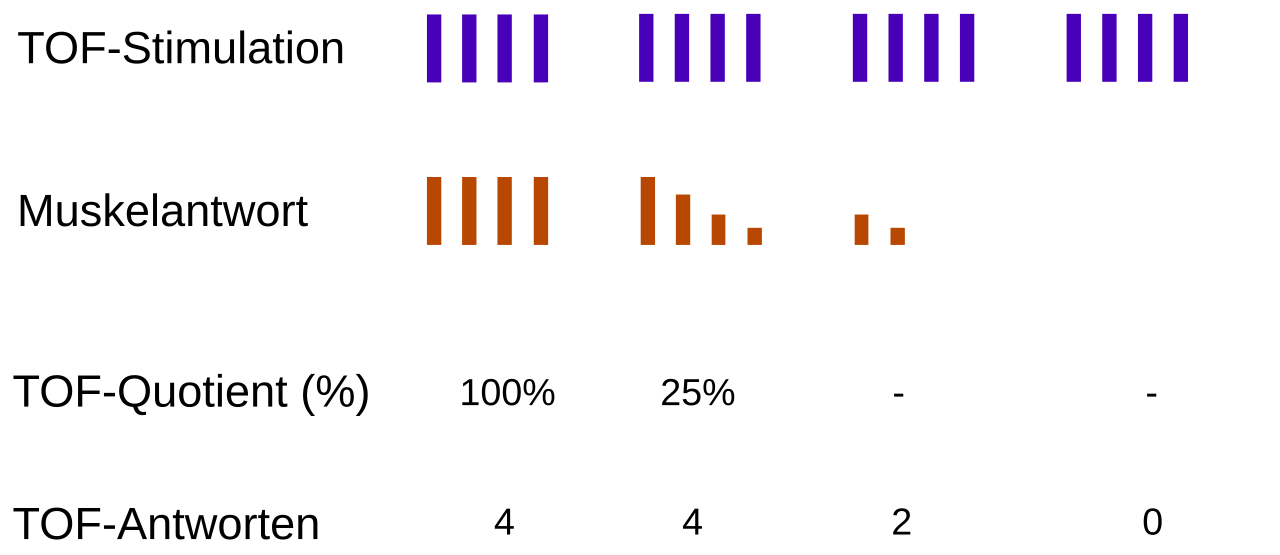
SCCM 2016 suggests against relying on a train-of-four count by itself during a continuous infusion. Read the count alongside the patient and the ventilator (see Figure 1).
Interactions & Compatibility
Clinically Significant Interactions
| Drug / Class | Effect | What To Do |
|---|---|---|
| Inhalational anesthetics (isoflurane, enflurane) with nitrous oxide at 1.25 MAC over 30 min | Prolong block; lower infusion requirement by up to 30–40% |
Lower or less frequent maintenance; monitor the train-of-four |
| Aminoglycosides, polymyxins, colistin, tetracyclines, clindamycin, lincomycin | Potentiate block; prolonged paralysis |
Check train-of-four; avoid stacking unnecessarily |
| Magnesium, lithium, procainamide, quinidine, local anesthetics | May prolong block |
Monitor the train-of-four; adjust doses |
| Phenytoin, carbamazepine | Resistance; shorter block and higher infusion needs |
Expect higher doses and monitor the block |
| Succinylcholine | Faster onset of cisatracurium; no change in duration |
No maintenance dose change needed |
| Propofol | No effect on duration or dose |
Y-site incompatible; use a separate line |
IV Compatibility
- Y-site compatible: 5% dextrose, 0.9% sodium chloride, sufentanil, alfentanil, fentanyl, midazolam and droperidol (diluted as directed).
- Incompatible: propofol (Y-site), ketorolac, and alkaline solutions above pH 8.5 such as barbiturates.
- Do not dilute in Lactated Ringer's alone; dedicated line preferred for infusions.
- Verify with an institutional compatibility resource.
Special Populations
- Pediatrics: labeled from 1 month for intubation and from 2 years for infusion. Not established under 1 month. The doses sit in the Pediatric Dosing table. See weight-based dosing.
- Neonates: the 10 mL multiple-dose vial is contraindicated in infants under 1 month and low birth-weight infants. Editorial guidance: if a neonate needs the drug, specialist direction should choose a benzyl alcohol-free single-dose vial.
- Pregnancy: clinical trials give no data on pregnancy risk. Rat studies found no fetal harm at 0.8 times the human exposure from a 0.2 mg/kg bolus. If it is needed, use it. Prefer benzyl alcohol-free vials.
- Lactation: there are no data on cisatracurium in human milk. If the drug is needed, benzyl alcohol-free presentations are preferred.
- Older Adults: the maximum block comes about 1 minute slower. Allow at least 1 more minute before laryngoscopy. Greater sensitivity in some older patients cannot be ruled out. AGS Beers Criteria: not applicable (hospital-administered IV drug).
- Renal Impairment: recovery does not change after 0.1 mg/kg in end-stage renal disease, but the maximum block is about 1 minute slower. Laudanosine builds up with long infusions. Watch the block.
- Hepatic Impairment: in liver transplant patients, volume of distribution is slightly larger and clearance is higher. Laudanosine concentrations may run higher.
- Obesity / Dosing Weight: the label doses by weight and gives no obesity-specific instruction. SCCM 2016 suggests a consistent ideal or adjusted body weight for obese adults (protocol-dependent).
- Neuromuscular Disease: maximum initial bolus 0.02 mg/kg.
- Burns: resistance. Consider higher doses and a shorter duration.
Field & Transport Considerations
- Scope: ICU and critical-care transport (CCT) use. EMS use is uncommon. Varies by state and agency protocol.
- Storage & Stability: refrigerate at 2–8 °C in the carton. Protect from light and do not freeze. After room-temperature storage, use within 21 days.
- Carried Concentration: 2 mg/mL vials are typical in transport. The 10 mg/mL ICU vial is a different strength and has to be diluted. Never draw it up without a label check.
- Infusions in Transport: use a pump, a dedicated line or verified compatibility. Carry the bag volume for the trip. A peripheral nerve stimulator has to be available for dose titration.
- Handoff Essentials: time and total dose of last bolus, current rate in mcg/kg/min and mL/h, last train-of-four, sedation status and reversal plan.
Clinical Pearls
Hofmann elimination: Kidneys and liver don't set the pace. Body pH and temperature do, through chemical breakdown. The label still warns that laudanosine builds up with long infusions in renal or hepatic failure.
Exam discriminator (CCRN, CFRN): Know this one. Neostigmine reverses cisatracurium. Sugammadex does not. It reverses rocuronium and vecuronium only.
Re-bolus before restarting the infusion: After spontaneous recovery, give a bolus to re-establish block before the infusion starts. Restart the infusion on a patient who is moving on the ventilator and you invite awareness.
ARDS evidence, compared: ACURASYS (2010) found crude 90-day mortality of 31.6% versus 40.7% (P=0.08; adjusted HR 0.68). ROSE (2019) found 42.5% versus 42.8% with deep sedation and cisatracurium. SCCM 2026 suggests use at PaO₂/FiO₂ below 150 (conditional).
ICU-acquired weakness: Postmarketing reports in the label include muscle weakness and myopathy. Use the lowest effective dose for the shortest time. Reassess the need for paralysis every day. Start a structured physiotherapy plan (SCCM 2016 suggestion).
Nursing bundle while paralyzed: schedule eye care with lubricating drops or gel, and close the eyelids (SCCM 2016 strong recommendation for continuous infusion). Protect pressure areas. Give VTE prophylaxis per protocol. Agree on a way to communicate with the patient, who cannot signal pain or fear.
Train-of-four is not enough alone: SCCM 2016 suggests against a train-of-four count on its own during continuous infusion. Pair the count with the ventilator waveform, heart rate and sedation depth.
Wrong-vial risk: The 10 mg/mL ICU vial is 5 times as concentrated as the 2 mg/mL vials. Read the strength on the label and on the infusion bag before you connect anything.
Pharmacology
Mechanism of Action
- Target: it acts as a competitive antagonist (nondepolarizing) at nicotinic acetylcholine receptors on the motor endplate.
- Effect: it blocks depolarization of skeletal muscle, and the result is flaccid paralysis. Doubling the dose adds about 25 minutes of effective block.
- Elimination: Hofmann elimination at physiologic pH and temperature. It does not depend on organ function. Metabolites are cleared by liver and kidney.
- Consequence: recovery stays predictable in organ failure. Laudanosine (seizures in animals) can still accumulate with long infusions.
Pharmacokinetics
| Route | Onset | Peak | Duration |
|---|---|---|---|
| IV | Under 4 min (adults, 0.15–0.2 mg/kg) |
2–4 min (maximum block) |
About 40–60 min clinically effective block; about 43 min in infants at 0.15 mg/kg |
- Half-life: elimination half-life (t½β) about 22 minutes, in a two-compartment model. Clearance 4.57 mL/min/kg. Volume of distribution at steady state 145 mL/kg.
- Metabolism: Hofmann elimination. Laudanosine is a metabolite.
- Active metabolites: laudanosine (seizure risk in animals). Its half-life runs longer in renal or hepatic impairment.
- Protein binding: not reliably studied. The drug degrades at physiologic pH.
Names & Classification
- Generic name
- Cisatracurium besylate
- Brand names
- Nimbex (original US brand); generic cisatracurium is marketed by several manufacturers.
- Pharmacologic class
- Nondepolarizing neuromuscular blocker (benzylisoquinolinium)
- Therapeutic class
- Skeletal muscle relaxant (adjunct to anesthesia; ICU ventilation)
- Controlled substance
- Not controlled
- ISMP High-Alert
- Yes: ISMP high-alert medication (neuromuscular blocking agents class, acute care list)
- Look-Alike / Sound-Alike
- None commonly reported
References
- Hospira, Inc. Cisatracurium besylate injection, USP: prescribing information. DailyMed (2026). https://dailymed.nlm.nih.gov/dailymed/drugInfo.cfm?setid=67908e20-044d-454d-9c51-bf106e817bd0
- Erstad BL, Cobas MA, Qadir N, et al. Society of Critical Care Medicine Guidelines for the Administration of Neuromuscular Blockade in Adults With Acute Respiratory Distress Syndrome. Crit Care Med. 2026;54(3):634–643. https://doi.org/10.1097/CCM.0000000000007002
- American Thoracic Society ARDS guideline panel. An Update on Management of Adult Patients with Acute Respiratory Distress Syndrome: An Official American Thoracic Society Clinical Practice Guideline. Am J Respir Crit Care Med. 2024. https://doi.org/10.1164/rccm.202311-2011ST
- Moss M, Huang DT, Brower RG, et al. Early Neuromuscular Blockade in the Acute Respiratory Distress Syndrome (ROSE trial). N Engl J Med. 2019;380(21):1997–2008. https://doi.org/10.1056/NEJMoa1901686
- Papazian L, Forel JM, Gacouin A, et al. Neuromuscular blockers in early acute respiratory distress syndrome (ACURASYS; landmark trial). N Engl J Med. 2010;363(12):1107–1116. https://doi.org/10.1056/NEJMoa1005372
- Murray MJ, DeBlock H, Erstad B, et al. Clinical Practice Guidelines for Sustained Neuromuscular Blockade in the Adult Critically Ill Patient. Crit Care Med. 2016;44(11):2079–2103. https://doi.org/10.1097/CCM.0000000000002027
- Morales Castro D, Carini FC, Fan E. Sedation, Analgesia, and Neuromuscular Blockade. Clin Chest Med. 2026. https://doi.org/10.1016/j.ccm.2026.04.003
- Institute for Safe Medication Practices. ISMP List of High-Alert Medications in Acute Care Settings (2024 update). https://www.ismp.org/system/files/resources/2024-01/ISMP_HighAlert_AcuteCare_List_010924_MS5760.pdf
Medical Disclaimer
- For Educational Purposes Only: This content is intended for educational reference and should not be used for clinical decision-making.
- Not a Substitute for Professional Judgment: Always consult your local protocols, institutional guidelines, and supervising physicians.
- Verify Before Acting: Users are responsible for verifying information through authoritative sources before any clinical application.
AI Assistance Notice
AI was used to assist in organizing, paraphrasing, and formatting this information.