

Bedside Snapshot
- Indications
- Asthma or COPD bronchospasm with wheeze and work of breathing
- Bronchospasm in a ventilated patient, in-line (per protocol); BVM and CPAP are not covered here
- Anaphylaxis with bronchospasm: adjunct only, after IM epinephrine
- Croup or post-extubation stridor: epinephrine per its own page
- Contraindications / Abort
- Known hypersensitivity; ipratropium also atropine and derivatives
- Paradoxical bronchospasm: stop and switch therapy
- Critical Steps
- MDI with spacer: one puff at a time, 5–6 breaths each
- Shake before every puff; prime a new inhaler with 4 sprays
- Nebulizer 2.5 mg in 3 mL, run until mist stops (5–15 min)
- In-line: spacer in circuit; avoid continuous nebulization
- Confirm & Monitor
- Work of breathing, speech, wheeze, respiratory rate and SpO₂
- Reassess 20–30 min after each set; review at least hourly
- Watch heart rate, rhythm and potassium with repeated doses
- Ventilated: EtCO₂, pressures and alarms
Key Numbers
Inhaled drugs work only when they reach the airway. Use a spacer with one puff at a time, or run a nebulizer until the mist stops, and reassess before any repeat dose.
| Parameter | Value |
|---|---|
| Albuterol nebulized (asthma) | Adult: 2.5 mg moderate, 5 mg severe (per GINA 2026); 2.5 mg = one 3 mL vial of 0.083% Child 5 years and under: 2.5 mg (GINA). The US 0.083% label is for ages 2 years and older; under 2 is off-label |
| Bronchodilator, COPD exacerbation | No fixed nebulizer or puff dose on this page; short-acting bronchodilator per local protocol |
| Albuterol MDI with spacer | 100 mcg per puff (GINA reference). Adult: 4 puffs mild; 4–6 moderate; 6–10 severe Child 5 years and under: 4 puffs mild; 4–6 moderate or severe |
| Spacer technique | One puff at a time; 5–6 breaths after each puff; shake before every puff |
| Ipratropium with each albuterol set (asthma) | Adult: 0.25 mg nebulized (per GINA 2026). The US vial is 0.5 mg per 2.5 mL, so 0.25 mg is 1.25 mL; the label dose is 0.5 mg. GINA's 4 puffs of 20 mcg is a non-US MDI strength, so do not convert puffs; up to 3 sets, 20–30 min apart. Protocol or medical direction sets the dose Child 5 years and under: 0.25 mg nebulized (GINA); safety under 12 is not established on the US label |
| Repeat interval | Mild: once after 30–60 min. Moderate or severe: up to 3 times, 20–30 min apart, then reassess |
| Nebulization time | 5–15 min per 2.5 mg vial (albuterol label) |
| Oxygen target, asthma | Adult: 92–95% when oxygen is given (per GINA 2026) Child 5 years and under: 92% or higher Pregnancy: above 95% (NAEPP EPR-3); GINA sets no separate target |
| Oxygen target, hypercapnia risk | 88–92% with continuous oximetry (per BTS 2017) |
| Oxygen-driven nebulizer, COPD (EMS) | Limit to 6 min when an air-driven compressor is not available (per BTS 2017) |
| Albuterol MDI maintenance (US label) | 90 mcg per actuation; 2 puffs every 4–6 hours; age 4 years and older |
Overview & Principles
Inhaled bronchodilators relax airway smooth muscle right where they land. A small dose is enough, because it goes straight to the target. Most of it never gets there, though. It stays in the device, the mouth or the circuit. How much arrives depends on the device, the patient's breathing and, when ventilated, the circuit.
How It Works
- Beta-2 agonists: albuterol (salbutamol) relaxes bronchospasm. You repeat the dose by response. In an attack there's no fixed schedule.
- Anticholinergic: ipratropium adds bronchodilation in moderate to severe attacks. It doesn't replace a beta-2 agonist.
- Delivery route: Adults get similar lung function gains from an MDI with spacer or from a nebulizer (per GINA 2026). The spacer wins on efficiency and costs less per patient.
- Ventilator circuit: where the device sits in the circuit changes how much drug reaches the lung. So does the device itself.
Where It Fits
| Device | Best Use | Main Limit |
|---|---|---|
| MDI with spacer | Most children and adults who can coordinate one puff with breaths | Needs cooperation; mask fit matters under about 5 years |
| Jet nebulizer | Patients who cannot use a spacer; mask or mouthpiece | Slow; driving gas and infection spread |
| In-line (ventilated) | Patients on a ventilator (BVM and CPAP are not covered here) | Dyssynchrony, alarms and circuit position |
For most children, GINA picks pMDI with spacer over a nebulizer. The spacer is more efficient and more comfortable, and it avoids spreading respiratory viruses. The nebulizer stays the choice in two cases. The patient can't use a spacer, or oxygen is needed to drive the mist.
Indications & Contraindications
Indications
- Bronchospasm with wheeze and increased work of breathing from asthma or COPD exacerbation
- Bronchospasm in a ventilated patient, delivered in-line (per protocol); BVM and CPAP in-line use are not covered here
- Bronchospasm with anaphylaxis: a bronchodilator is an adjunct only, after IM epinephrine
- Croup or post-extubation stridor: nebulized epinephrine, covered on the racemic epinephrine page
Absolute Contraindications
- Known hypersensitivity to the drug or any product component (albuterol and ipratropium labels)
- Ipratropium: hypersensitivity to atropine or its derivatives (label)
Relative Contraindications & Cautions
- Cardiovascular disorders, arrhythmias or sympathomimetic sensitivity: beta-agonists may cause tachycardia and arrhythmia (albuterol label).
- Non-potassium-sparing diuretics may make hypokalemia and ECG changes worse. Digoxin levels may fall too (albuterol label).
- Narrow-angle glaucoma: ipratropium in the eyes can worsen it. The label says a mouthpiece may be the better choice over a face mask (ipratropium label).
- Hypercapnia risk (COPD): an oxygen-driven nebulizer can make CO₂ retention worse (per BTS 2017).
- Beta-blockers blunt the effect of albuterol. Non-selective agents may provoke bronchospasm (albuterol label, mutual inhibition).
- MAOIs or tricyclic antidepressants, including use within 2 weeks of stopping them, may boost albuterol's vascular effects (albuterol label).
Consider an Alternative
- IM epinephrine first when anaphylaxis is present, then the bronchodilator (epinephrine IM)
- Noninvasive ventilation or intubation when the patient tires or cannot maintain oxygenation (Noninvasive Ventilation, Intubation)
- IV magnesium for severe asthma in patients 2 years and older (Magnesium Sulfate)
Stop Criteria
- Paradoxical bronchospasm: stop the drug and switch therapy (albuterol and ventilator labels)
- Hypersensitivity reaction to the drug or a component: stop and treat per protocol
Escalate, Do Not Stop
- SpO₂ below 92% on oxygen, or a silent chest, with no response: escalate per protocol. A low SpO₂ means more oxygen and escalation. It doesn't mean stopping (GINA 2026: failure to respond at 1 hour, or SpO₂ below 92%, prompts admission and/or IV magnesium).
- Drowsiness or confusion in asthma is life-threatening. Treat it immediately.
Scope & Team Roles
| Provider Level | Typical Role | Notes |
|---|---|---|
| EMT | Assists | Patient's own inhaler; nebulizer and other drugs vary by state protocol |
| AEMT | Performs (protocol/credentialing required) | Albuterol and ipratropium per local protocol |
| Paramedic | Performs (protocol/credentialing required) | Nebulized and MDI bronchodilators; in-line devices per protocol |
| RN (ED/ICU) | Performs | Ordered doses; in-line set-up and circuit checks by unit policy |
| Critical Care Transport (CFRN / CCP-C / FP-C) | Performs | Same drugs as paramedic plus ventilator in-line delivery per protocol |
| Physician / APP | Performs | Sets the order, dose and escalation |
Team Roles During the Procedure
- Operator: sets up the device and gives the dose
- Monitor: work of breathing, SpO₂, heart rate and rhythm, and waveform EtCO₂ when ventilated
- Recorder: drug, dose, device, time of each set and response
Pre-Procedure Assessment
Patient Check
- Severity: adult severe features per GINA 2026: unable to speak, drink or lie down; SpO₂ below 92%; respiratory rate above 30/min; silent or quiet chest; PEF or FEV₁ below 50% predicted
- Life-threatening features: drowsiness, confusion, cyanosis or silent chest; treat immediately and call for help (per GINA 2026)
- Age and size: spacer with mask under about 5 years; nebulizer dose and concentrate chosen by weight under 15 kg (albuterol label)
- Current drugs: recent beta-agonist doses and frequency, oral steroids, diuretics, digoxin, beta-blockers (especially non-selective), and MAOIs or tricyclic antidepressants within 2 weeks
- Baseline: SpO₂, respiratory rate, heart rate, mental status and, if ventilated, EtCO₂ and peak pressure before the first dose
Physiologic Risk
Severe asthma can fail inside an hour. Repeated beta-agonist doses bring their own trap: toxicity that looks like worsening asthma. Check potassium and rhythm when you repeat them. In COPD with hypercapnia risk, the drive gas changes the risk of CO₂ retention (see Medications & Settings).
Device Check
- MDI: check the dose counter, prime a new or dropped inhaler (4 sprays into the air), and confirm the canister matches the chart
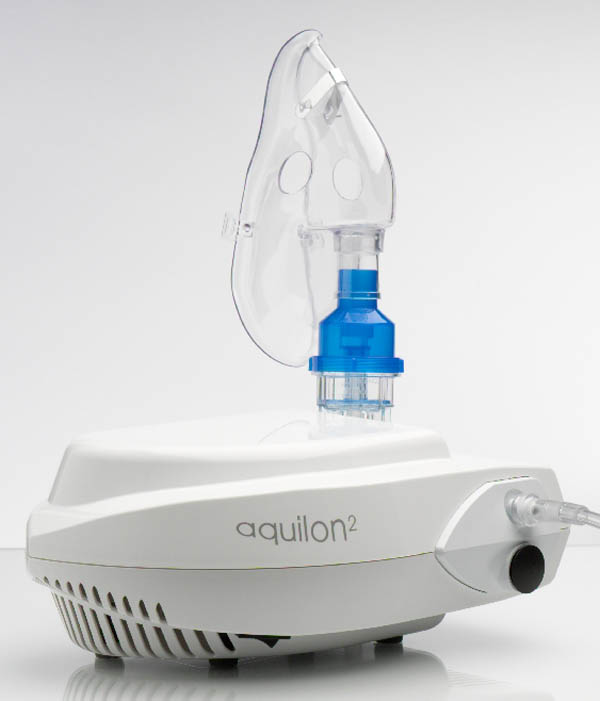
- Nebulizer: unit-dose vial, compressor or oxygen source, tubing and cup; confirm the driving gas before the drug is added
Equipment & Preparation
Equipment
| Item | Spec | Notes |
|---|---|---|
| Albuterol MDI | 90 mcg per actuation (US label); 100 mcg per puff (GINA reference) | Puff counts differ by reference; name the product on the chart |
| Valved holding chamber (spacer) | With mouthpiece, and a face mask for young children | Pre-wash or prime per manufacturer (static charge) |
| Albuterol nebulizer solution | 0.083%: 2.5 mg in 3 mL unit-dose vial | For doses under 2.5 mg (children under 15 kg), use the 0.5% concentrate (label) |
| Ipratropium nebulizer solution | 0.02%: 0.5 mg in 2.5 mL unit-dose vial | GINA dose 0.25 mg is 1.25 mL; the label dose is the whole 0.5 mg vial. Protocol sets the dose; see the ipratropium page |
| Jet nebulizer and driving gas | Compressor (air) or oxygen cylinder with high-flow regulator | Set flow per the device label; see Medications & Settings |
| Mouthpiece or mask | Mouthpiece for ipratropium eye risk; mask only when the mouthpiece cannot be used | A loose mask puts mist in the eyes |
| PPE and infection control | Follow local policy for aerosol-generating procedures when respiratory infection is suspected | Nebulizers aerosolize drug; use a spacer when the patient can use one |
| Pulse oximeter, EtCO₂ | Continuous oximetry; capnography if ventilated | Confirm the response, not just the device |
Sizing
- Adult: standard mouthpiece or facemask; full dose on one MDI or nebulizer vial
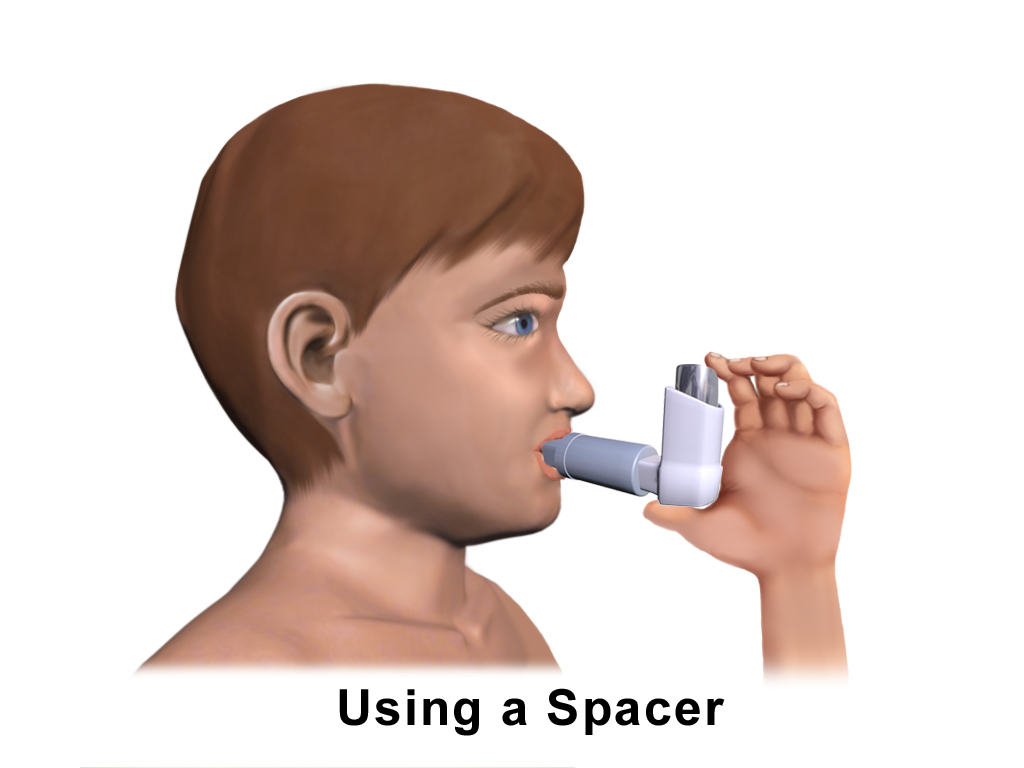
- Child 5 years and under: spacer with face mask; one puff at a time with 5–6 breaths
- Child under 15 kg: doses under 2.5 mg use the 0.5% concentrate (albuterol label); check the weight-based dosing page
Patient Positioning & Preparation
Sit the patient upright, shoulders relaxed. Walk them through the breathing pattern before the first puff. A child who can't follow that pattern needs a mask fitted before any dose.
Pre-Procedure Checklist
- The drug, the dose in mcg or mg, the puffs or mL. Checked aloud by a second clinician
- Product and strength read off the vial or canister
- Spacer, mask or mouthpiece fitted to this patient's age and size
- New or dropped MDI primed. Dose counter read.
- Driving gas and flow set first. Only then does the drug go in the cup
- Oxygen on hand. SpO₂ and heart rate showing on the monitor
- Ventilator circuit ready for in-line delivery, if it applies here
- Epinephrine IM and a transfer plan on standby for anaphylaxis or failure
Medications & Settings
Treat these as reference doses. Check them against local protocol and the current drug label. Doses vary by protocol; follow local protocols and medical direction.
| Indication / Drug | Adult | Pediatric | Route / Device | Max / Repeat |
|---|---|---|---|---|
| Asthma bronchospasm (per GINA 2026) Albuterol nebulized (0.083%) |
2.5 mg moderate; 5 mg severe (per GINA 2026) |
2.5 mg, 5 years and under (GINA). US label is age 2 years and older; under 2 is off-label. 6 years and older as adult |
Jet nebulizer, 2.5 mg in 3 mL, over 5–15 min |
Every 20–30 min, up to 3 times, then reassess |
| COPD exacerbation bronchodilator COPD exacerbation |
No fixed dose on this page; short-acting bronchodilator per local protocol |
No fixed dose on this page; per protocol |
Nebulizer or MDI, per protocol |
Per protocol; monitor SpO₂ and CO₂ risk (per BTS 2017) |
| Asthma exacerbation Albuterol MDI with spacer |
4 puffs mild; 4–6 moderate; 6–10 severe (100 mcg per puff) |
4 puffs mild; 4–6 moderate or severe, 5 years and under |
Spacer, one puff at a time, 5–6 breaths after each puff |
Mild: once more after 30–60 min. Moderate or severe: up to 3 times, 20–30 min apart |
| Albuterol MDI, routine relief (US label) Ventolin HFA |
2 puffs (90 mcg each) |
2 puffs, age 4 years and older. Safety under 4 years not demonstrated |
MDI with spacer or mouthpiece |
Every 4–6 hours; do not exceed the recommended dose (label) |
| Ipratropium with albuterol Ipratropium nebulized (0.02%) |
0.25 mg (GINA 2026, asthma); US vial 0.5 mg per 2.5 mL, label dose 0.5 mg |
0.25 mg, 5 years and under (GINA). Off-label under 12 per the US label (safety under 12 not established) |
Jet nebulizer with albuterol, or 4 puffs of 20 mcg by spacer (GINA product; US MDI strength differs) |
With each albuterol set, up to 3 times; no added benefit after the first 1–2 hours |
| Severe asthma, adjunct High-alert Magnesium sulfate IV |
2 g IV as a single infusion over 20 min, for adults who fail initial treatment and have persistent hypoxemia (GINA 2026 text; not routine) |
40–50 mg/kg, max 2 g, over 20–60 min, age 2 years and older |
IV or IO; not nebulized |
Children: single dose after the first hour if the response is poor. The children's box gives a 10–20 min infusion |
| Severe asthma, continuous nebulization High-alert Albuterol nebulized |
10–15 mg/h continuous (NAEPP EPR-3) |
0.5 mg/kg/h continuous (NAEPP EPR-3) |
Large-volume nebulizer over the run, per protocol; not the in-line ventilator technique on this page |
Protocol-dependent; watch potassium, rhythm and beta-agonist toxicity |
| Ventilated, in-line (BVM and CPAP not covered) | Per ventilator manual and local protocol; no dose given here |
Per protocol; no dose given here |
MDI with spacer or nebulizer on the inspiratory limb (see Step-by-Step) |
GINA doses are not validated for ventilated patients; in-line evidence is in vitro or model data |
| Nebulized epinephrine (croup, stridor) Racemic or L-epinephrine |
See racemic epinephrine page |
See racemic epinephrine page |
Nebulizer, inhalation only; never IV |
Per the product page; off-label for croup |
Oxygen and Driving Gas
| Device / Setting | Adult | Pediatric | Notes |
|---|---|---|---|
| Asthma nebulizer, driving gas | Oxygen cylinder with high-flow regulator (above 6 L/min), or air compressor with oxygen by cannula at 2–6 L/min | Oxygen-driven nebulizer while acutely distressed, if the child needs oxygen | BTS 2017; GINA 2026 (oxygen-driven when saturation is low) |
| Hypercapnia risk (COPD) | Air-driven or ultrasonic nebulizer; oxygen by nasal cannula to SpO₂ 88–92% | Not addressed here | BTS 2017. Monitor SpO₂ continuously during treatment |
| Oxygen, asthma exacerbation | Give oxygen when SpO₂ is below 92%; target 92–95% | Target 92% or higher, age 5 years and under | GINA 2026 (box 92–95%; text 93–95% in severe adults). Pregnancy: above 95% per NAEPP EPR-3; see Oxygen. Oxygen is not needed above 92% on room air |
| In-line nebulizer (ventilated) | Intermittent, timed to inspiration; not continuous unless the protocol allows | Same principle; adjust settings with the ventilator team | See Step-by-Step, in-line technique |
Step-by-Step Procedure
Phase 1: Prepare
- Confirm drug, puffs and dose: state the drug, number of puffs or mg, and product aloud; check the label.
- Prime and shake: shake the inhaler before every puff. Prime a new or dropped MDI by releasing 4 sprays into the air.
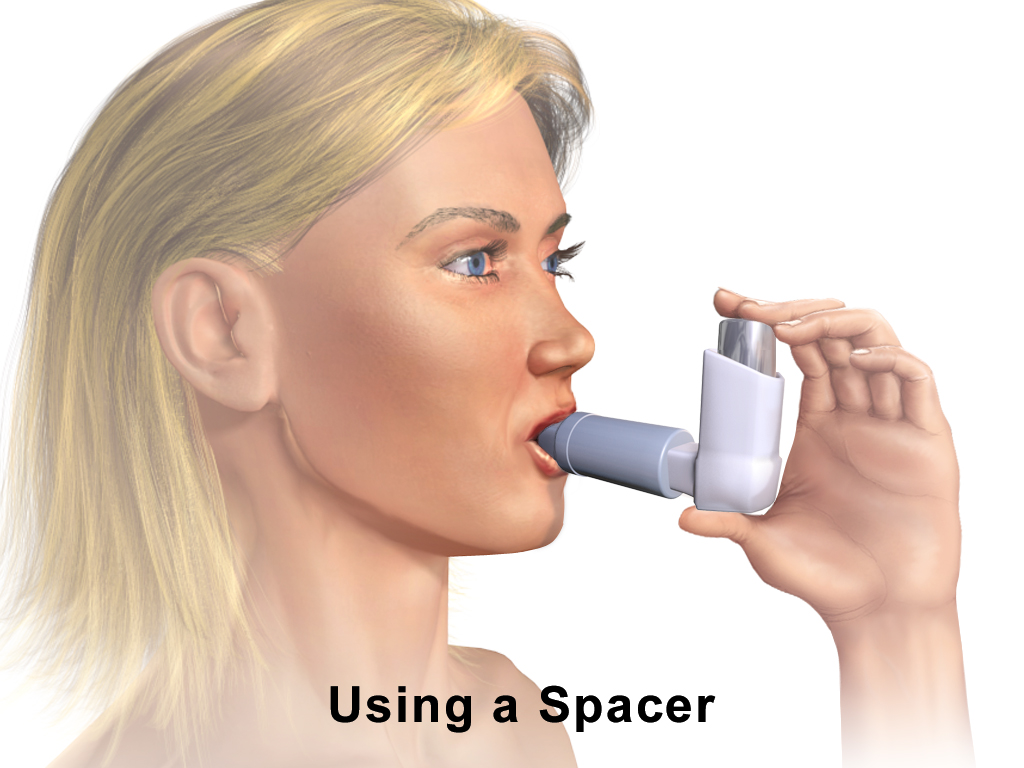
- Attach the spacer: insert the MDI into the spacer; add a face mask for a child 5 years and under if the mouthpiece is not held.
- Set the nebulizer: place the vial in the cup and connect it to the set driving gas; confirm the flow before the cup is used.
Phase 2: Perform
- Seal and breathe: the patient seals the lips on the mouthpiece (or the mask fits the face) and takes one puff.
- Breathe from the spacer: 5–6 calm breaths after each puff; if the patient cannot hold one breath, use tidal breathing (per GINA 2026).
- Repeat by severity: mild, 4 puffs; moderate, 4–6 puffs; severe, 6–10 puffs, one at a time.
- Nebulize to dryness: run the nebulizer until mist stops, usually 5–15 min for 2.5 mg, with a mouthpiece if ipratropium is given.
Phase 3: Confirm & Secure
- Start the timer: record the time, number of puffs or nebulizer end time, and the drug.
- Reassess: work of breathing, speech, wheeze, respiratory rate, SpO₂ and heart rate (see Confirmation & Monitoring).
- Repeat only by protocol: use the interval for the severity and stop if no response; escalate rather than repeat by default.
Alternative Technique: In-Line Delivery on a Ventilator
This page doesn't cover BVM, CPAP or NIV in-line technique, and no verified source was retrieved for it. Ventilator placement and dose follow the ventilator manual and local protocol.
- Place the device on the inspiratory limb: An MDI with spacer goes on the inspiratory limb, ahead of the Y-piece. Where a nebulizer sits depends on the device type (see the device label and ventilator manual).
- Avoid continuous nebulization by default: Continuous flow above the patient's inspiratory flow causes dyssynchrony. The added flow can read as minute volume, so hypoventilation may not alarm.
- Use a spacer, not an elbow: On ventilator models, an MDI with spacer delivered several times more drug than an MDI at a connector, or an in-line device with no chamber.
- Watch the circuit: check tidal volume, pressures, EtCO₂ and alarms during and after each dose; stop if dyssynchrony occurs.
Confirmation & Monitoring
Primary Confirmation
Look for real improvement on reassessment. Breathing gets easier. The patient speaks in longer phrases, uses less accessory muscle and holds SpO₂ in target. One good set doesn't earn a stop. Reassess after every set.
Secondary Confirmation
- Air entry and wheeze on auscultation, when the chest is audible
- Respiratory rate falling toward normal for age
- Heart rate and rhythm stable after repeated doses
- Ventilated: waveform EtCO₂ present, pressures and volumes stable
| Finding | Success | Failure / Malposition |
|---|---|---|
| Speech and posture | Speaks in phrases; can lie down | Speaks in words; unable to speak, drink or lie down |
| SpO₂ | 92–95% on oxygen (adult asthma) | Below 92% on oxygen |
| Respiratory rate | Falling after each set | Above 30/min, or rising |
| Chest | Wheeze audible and easing | Silent or quiet chest: a severe sign, not improvement |
| Heart rate and rhythm | Stable after each set | Persistent tachycardia, palpitations or new arrhythmia |
| EtCO₂ (ventilated) | Stable waveform, no dyssynchrony | Rising EtCO₂ or hypoventilation during in-line dosing; a low-volume alarm may not sound |
Ongoing Monitoring
- Continuous SpO₂; capnography when ventilated or when the patient is drowsy
- Reassess 20–30 min after each set, and review at least hourly in an ongoing attack (per GINA 2026)
- Potassium and ECG when repeated beta-agonist doses are given
Troubleshooting
| Problem | Likely Cause | Fix |
|---|---|---|
| Little response after three sets | Severity underestimated; poor delivery; fixed obstruction | Escalate: IV magnesium, systemic steroids, NIV or intubation, transfer (per protocol) |
| Cough, little drug delivered (MDI) | Breathing too fast; no spacer; puff not shaken | Use spacer; one puff at a time; 5–6 breaths; shake before each puff |
| No mist from nebulizer | Low or no driving gas; kinked tubing; empty cup | Check driving gas flow and tubing per device label; refill or replace the set |
| Blurred vision or eye pain (ipratropium) | Mist reaching the eyes through a loose mask | Use a mouthpiece; follow the protocol for eye exposure |
| Desaturation during a nebulizer set | Transient V/Q mismatch from the bronchodilator (per GINA 2026) | Keep oxygen on; reassess SpO₂ every few minutes; oxygen-driven nebulizer if needed |
| Drowsy, rising CO₂ (COPD) | Oxygen-driven nebulizer with high flow; no monitoring | Switch to air-driven or ultrasonic; oxygen by cannula to 88–92% (per BTS 2017) |
| Hypoventilation during in-line dosing, with no low-volume alarm | Continuous nebulizer bias flow can mask low exhaled volume; dyssynchrony | Watch EtCO₂, delivered and exhaled tidal volume and chest rise; if any low-volume alarm sounds, stop the nebulizer and check the circuit |
| Tremor, palpitations, fast heart rate after repeated doses | Beta-agonist toxicity | Check rhythm and potassium; reassess the need for more doses before giving any |
If It Still Fails
- Confirm the drug and device: product, dose, puff count and driving gas were correct.
- Escalate the drugs: IV magnesium for severe asthma in patients 2 years and older, and systemic corticosteroids, per protocol.
- Treat anaphylaxis first if present: IM epinephrine, then bronchodilator (epinephrine IM).
- Support breathing: noninvasive ventilation or intubation per protocol (Noninvasive Ventilation, Intubation).
- Transfer: continue monitoring and treatment en route; reassess after each move.
Complications
| Complication | Recognition | Prevention | Management |
|---|---|---|---|
| Rare Paradoxical bronchospasm | Wheeze and chest tightness that worsen right after a dose | Check the response after the first dose | Stop the drug; switch to alternative therapy (albuterol label) |
| Delayed Beta-agonist toxicity | Tachycardia, palpitations, tremor, hypokalemia, arrhythmia, lactic acidosis | Reassess before each repeat; limit sets to the protocol | Check rhythm and potassium; stop further beta-agonist until reassessed |
| Immediate Desaturation during a nebulizer set | SpO₂ drop during or just after treatment | Oxygen on during treatment | Oxygen to target; reassess; oxygen-driven nebulizer if needed |
| Immediate Eye exposure to ipratropium | Blurred vision, eye pain, pupil change | Mouthpiece instead of a loose mask | Follow protocol for eye exposure; monitor; watch for worsening narrow-angle glaucoma (label) |
| Delayed CO₂ retention in COPD | Drowsiness, confusion, falling consciousness | Air-driven or ultrasonic nebulizer; limit oxygen-driven sets | Ventilatory support; oxygen to 88–92% (per BTS 2017) |
| Immediate Hypoventilation during in-line nebulizer | Falling exhaled volume, rising EtCO₂ or falling chest rise after a continuous nebulizer starts; a low-volume alarm may not sound | Intermittent, timed dosing; avoid continuous flow by default | Stop the nebulizer; ventilate and check the circuit |
Paradoxical Bronchospasm
Wheeze that gets worse right after an inhaled dose is life-threatening. Stop the drug. Support oxygenation and ventilation, then start the alternative therapy the protocol names.
Special Populations
Pediatrics
- Spacer: under about 5 years, use a spacer with face mask; give one puff at a time with 5–6 breaths after each (per GINA 2026)
- Nebulizer dose: the albuterol label gives 2.5 mg for children 15 kg and over; under 15 kg, doses under 2.5 mg use the 0.5% concentrate
- Label gap: The US albuterol 0.083% nebulizer label starts at age 2 years, so use under 2 is off-label. The US Ventolin HFA label says safety and effectiveness under 4 years are not demonstrated. GINA 2026 still uses spacer doses for 5 years and under in acute asthma. Medical direction sets the protocol.
- Ipratropium: 0.25 mg for 5 years and under (GINA); off-label under 12 per the US label; see the ipratropium page for age cut-offs
- Other pages: pair this with weight-based dosing, pediatric vital signs and croup. This page doesn't treat bronchiolitis (1–23 months). For that, go to bronchiolitis
Older Adults
- Beta-agonists can drive tachycardia and arrhythmia. Check rhythm before and after repeated sets (albuterol label caution).
- Digoxin and diuretics stack extra arrhythmia and potassium risk on top. Check potassium when doses repeat.
Pregnancy
- Treatment: GINA 2026 says to manage acute asthma in pregnancy aggressively. That means SABA, oxygen and early systemic corticosteroids, to avoid fetal hypoxia. Pregnant patients may get less appropriate treatment than non-pregnant ones.
- Oxygen: NAEPP EPR-3 (2007) aims for SaO₂ above 95% in pregnant women. GINA 2026 sets no separate target.
- Albuterol label: Pregnant patients with asthma should be watched closely, and the medication adjusted as necessary.
- Ipratropium label: Animal studies showed no teratogenic effect. Even so, use ipratropium in pregnancy only if it's clearly needed.
Physiologically Difficult
- COPD with hypercapnia risk: Drive the nebulizer with air or ultrasound. Keep oxygen at 88–92% with continuous oximetry (per BTS 2017).
- Ventilated patients: In the circuit, an MDI with spacer is more efficient than an elbow connector. Avoid continuous nebulization by default.
- Severe presentation: Transfer and treatment start now. Don't wait for a full assessment.
Post-Procedure Care & Transport
Immediate Aftercare
- Reassess at 20–30 min after the last set, and review at least hourly while the attack continues (per GINA 2026)
- Keep SpO₂ monitoring until the patient is stable on the planned route
- Return the oxygen to the usual device once the nebulizer is finished (per BTS 2017)
Ongoing Maintenance
- Clean the nebulizer per its label after use; do not reuse single-dose vials
- Follow the manufacturer on washing or priming. Some spacers need a detergent pre-wash, or 2–4 priming puffs, because of static charge (per GINA 2026).
- Cap the MDI between uses; read the dose counter at handoff
Transport Considerations
- Set the nebulizer's oxygen before the vehicle moves. A flow that drops stops the mist.
- Reassess after every move. Masks and circuits can slip in transport.
- When noise or vibration hides the work of breathing, trust SpO₂, EtCO₂ and the monitor.
- Ventilated: keep in-line devices on the inspiratory limb; re-check after every move
Document & Hand Off
- The drug, the product and the dose in mcg or mg. Puff count or vial, and the time of each set.
- Which device it was: MDI with spacer, jet nebulizer or in-line position. Driving gas or flow.
- How severe it was at the start. How the patient responded after each set. When the last set ran.
- SpO₂, heart rate, respiratory rate and any change in rhythm.
- Any complications, such as tremor, tachycardia, eye exposure, desaturation or circuit alarms.
- Escalation: magnesium, steroids, NIV, intubation, transfer
Clinical Pearls & Pitfalls
Pearls
- Breath is the delivery: take one puff, then breathe 5–6 breaths from the spacer (per GINA 2026).
- Spacer for most children: For most children, GINA picks pMDI with spacer over a nebulizer.
- Ventilator circuit: in the cited studies, a spacer in the circuit delivered several times more drug than an elbow connector.
- Combine in one nebulizer: ipratropium can go in the same nebulizer as albuterol, provided it's used within one hour (ipratropium label).
- Mouthpiece for ipratropium: a loose mask sends mist into the eyes.
- Air-driven in COPD: in hypercapnic patients, oxygen-driven nebulizers carry a risk of CO₂ retention (per BTS 2017).
Common Pitfalls
- Puffs as mg: 100 mcg per puff (GINA) and 90 mcg per puff (US label) come from different products. Name the product.
- Repeat by default: reassess before every set. No response at one hour? Escalate.
- Continuous in-line nebulizer: hypoventilation can go unseen if nobody checks the bias flow and the alarms.
- Quiet chest read as better: a silent chest in asthma is a severe sign. Not an improvement.
- Oxygen-driven nebulizer in COPD: long sets at high flow, with no SpO₂ monitoring, put the patient at risk of hypercapnia.
Education & Skill Maintenance
Skill Maintenance
- Practice the spacer breath pattern on a simulator: one puff, then 5–6 breaths, with a mask fit for a child.
- Run a checklist drill: product, puffs, driving gas, mouthpiece versus mask, and reassessment time.
- Simulate an in-line dose on a ventilator circuit, and debrief the alarms and the timing.
- Check the spacer and nebulizer kit at each shift or unit inspection; replace worn or cracked parts.
References
- Global Initiative for Asthma (GINA). Global strategy for asthma management and prevention: 2026 update. Box 9-6 (acute care, age 6 years and older) and Box 12-4 (children 5 years and younger). 2026. https://ginasthma.org/wp-content/uploads/2026/05/GINA-2026-Strategy-Report-WMS.pdf
- GlaxoSmithKline LLC. VENTOLIN HFA (albuterol sulfate) inhalation aerosol: full prescribing information. DailyMed, U.S. National Library of Medicine; revised April 2024. https://dailymed.nlm.nih.gov/dailymed/drugInfo.cfm?setid=d92c5d6b-ff10-4087-36a2-1cfc464cb967
- Ritedose Pharmaceuticals, LLC. Albuterol sulfate inhalation solution, USP 0.083%: prescribing information. DailyMed, U.S. National Library of Medicine; updated April 30, 2026. https://dailymed.nlm.nih.gov/dailymed/drugInfo.cfm?setid=b72742df-1a6b-4483-aff3-3e79db5e015d
- Nephron Pharmaceuticals Corporation. Ipratropium bromide inhalation solution, USP 0.02%: prescribing information. DailyMed, U.S. National Library of Medicine; updated April 8, 2025. https://dailymed.nlm.nih.gov/dailymed/drugInfo.cfm?setid=db8095db-d1fd-4099-9fb1-d1ad4e284976
- O'Driscoll BR, Howard LS, Earis J, et al. British Thoracic Society guideline for oxygen use in adults in healthcare and emergency settings. BMJ Open Respir Res. 2017;4(1):e000170. https://doi.org/10.1136/bmjresp-2016-000170
- Dhand R. How should aerosols be delivered during invasive mechanical ventilation? Respir Care. 2017;62(10):1343–1367. https://doi.org/10.4187/respcare.05803
- Georgopoulos D, Mouloudi E, Kondili E, Klimathianaki M. Bronchodilator delivery with metered-dose inhaler during mechanical ventilation. Crit Care. 2000;4(4):227–234. https://doi.org/10.1186/cc698
- National Heart, Lung, and Blood Institute, National Asthma Education and Prevention Program. Expert Panel Report 3: Guidelines for the Diagnosis and Management of Asthma. Full report; August 2007. https://www.nhlbi.nih.gov/sites/default/files/media/docs/EPR-3_Asthma_Full_Report_2007.pdf
Medical Disclaimer
- For Educational Purposes Only: This content is intended for educational reference and should not be used for clinical decision-making.
- Not a Substitute for Professional Judgment: Always consult your local protocols, institutional guidelines, and supervising physicians.
- Verify Before Acting: Users are responsible for verifying information through authoritative sources before any clinical application.