

Bedside Snapshot
- Recognize
- Wheeze or chest tightness with speech limited to phrases, accessory muscle use, and PEF or FEV₁ below 50% predicted (severe). Children: PRAM 8 or higher.
- Red Flags
- Silent chest, drowsiness, confusion, cyanosis or exhaustion; SpO₂ below 92% on air; normal or rising PaCO₂ with PaO₂ below 60 mmHg
- First Actions
- Sit upright; oxygen to SpO₂ 92–95%; albuterol with ipratropium, repeated up to 3 times; systemic steroid within 1 hr; IV access; call ALS; no sedatives
- Key Doses
- Albuterol 2.5–5 mg nebulized (or 4–10 puffs MDI) every 20–30 min, up to 3 times; methylprednisolone 40–125 mg IV once; magnesium 2 g IV over 20 min (children 40–50 mg/kg, max 2 g)
- Don't Miss
- Anaphylaxis with asthma (IM epinephrine first); sedatives or opioids that stop breathing in a tiring patient; aminophylline, which is not recommended
- Escalate & Transport
- Acute care facility for any severe attack; ICU or PICU for drowsiness, silent chest or no response at 1 hr; intubation planned before exhaustion
Definition & Pathophysiology
Status asthmaticus is the attack that ignores the first bronchodilator and corticosteroid. “Attack” and “severe acute asthma” mean different things in the literature. This page uses the severity grades in Recognition & Red Flags instead. Near-fatal asthma is an attack with respiratory arrest that needs mechanical ventilation, or a PaCO₂ of 45 mmHg or higher.
Three things narrow the small airways: smooth muscle squeezes, the mucosa swells and mucus plugs the lumen. Air gets trapped on the way out. That is dynamic hyperinflation, or auto-PEEP. Trapped pressure rises in the chest, blocks venous return and can drop the blood pressure. Ventilation-perfusion mismatch causes hypoxemia. Then the work of breathing climbs. The patient tires, and CO₂ retention follows.
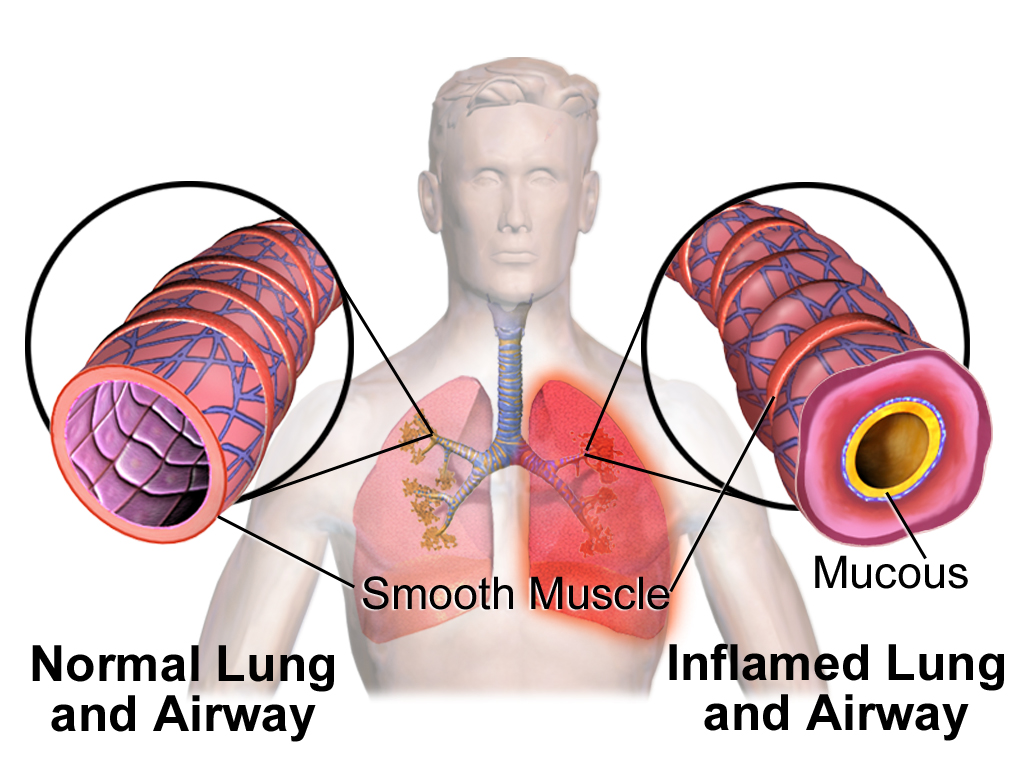
- Common triggers: a viral respiratory infection, an allergen or irritant, or a missed inhaled corticosteroid dose. Aspirin or NSAIDs can also push a patient into a severe exacerbation
- Anaphylaxis can look like asthma: food-induced anaphylaxis often presents as life-threatening asthma
- Highest-risk history: ever intubated or admitted to ICU for asthma, or a severe exacerbation in the past year
- Course: most attacks build over hours to days. Sudden onset is different. In published cohorts, those attacks more often need intubation and ICU admission
Recognition & Red Flags
Grade severity from what you see and what you measure. Treat at the first moderate or severe sign. Don't wait for a peak flow value. Mild attacks talk in full sentences, can lie flat and hold PEF or FEV₁ above 70% predicted.
| Finding | Moderate | Severe | Life-threatening |
|---|---|---|---|
| Speech and alertness | Talks in phrases; prefers sitting | Unable to speak, drink or lie down | Drowsy, confused or cyanotic |
| Respiratory rate | Increased | Adults and adolescents: above 30/min. Children: age-specific; above 40/min is severe at age 5 and under (GINA Box 12-1) | — |
| Accessory muscles | Used | Used | — |
| Chest | Expiratory wheeze; reduced air entry | Silent or quiet chest | — |
| SpO₂ on room air | 92% or higher | Below 92% | — |
| PEF or FEV₁ (% predicted or personal best) | 50–70% | Below 50% | — |
| PRAM (ages 2–17) | 4–7 | 8–10 | 11–12 |
Red Flags
- Silent or quiet chest, drowsiness, confusion or cyanosis
- Unable to speak, drink or lie down
- SpO₂ below 92% on room air
- PEF or FEV₁ below 50% predicted or personal best, not improving after the first bronchodilator set
- Fatigue or somnolence: rising PaCO₂ and the need for airway support
- Ongoing need for short-acting beta₂-agonist (SABA) more often than every 1–2 hours
Assessment & Diagnostics
At the bedside, asthma is a clinical diagnosis. Measure severity and oxygenation first. Order labs only when they will change the escalation.
| Check | Why | Act If |
|---|---|---|
| Severity (speech, respiratory rate, accessory muscles, PEF or FEV₁) | Objective grading sets the level of care | PEF below 50% predicted: severe; reassess by 1 hr or sooner |
| SpO₂ on room air | Hypoxemia from ventilation-perfusion mismatch | Below 92%: oxygen to 92–95%. See Oxygen |
| Blood gas (ABG or VBG) when PEF or FEV₁ is below 50%, or no response | PaCO₂ is often below 40 mmHg early; a normal or high PaCO₂ with PaO₂ below 60 mmHg means respiratory failure | |
| Lactate and potassium | High-dose SABA causes lactic acidosis and hypokalemia | |
| Continuous ECG and SpO₂ | SABA-related tachycardia and arrhythmia | New arrhythmia or ST change: review the SABA dose and treat per protocol |
| Chest X-ray | Not routine; pneumothorax, pneumonia or heart failure can mimic asthma | Unilateral absent breath sounds, or no response to treatment: image |
| Admission risk | More than 8 SABA actuations in 24 hours, or prior intubation or ICU stay, predicts admission | Admit if SpO₂ stays below 92% on room air, SABA is needed more often than every 1–2 hours, or dyspnea persists 4–6 hours after steroids |
Differential & Mimics
- Anaphylaxis: Hives, lip or tongue swelling, or hypotension after an exposure. IM epinephrine comes first. See Anaphylaxis
- Pneumothorax: One side goes silent, and that hemithorax changes suddenly. Image the chest
- Inducible laryngeal obstruction: inspiratory stridor or a voice change, with little or no wheeze. Bronchodilators do little
- Acute heart failure: crackles, raised neck veins, orthopnea and a cardiac history. Wheeze can still occur. That is cardiac asthma
- COPD exacerbation: older patients with a smoking history, sputum production and emphysema on imaging
- Pulmonary embolism: sudden dyspnea and tachycardia with hypoxemia. Wheeze is often absent
- Hyperventilation or panic: no measured airflow limitation and no hypoxemia. Hyperventilation can pass for a worsening asthma attack
BLS Management
- Position: let the patient sit upright. Inability to lie flat is a severity marker, not a position to force.
- Patient's own reliever: help with albuterol by spacer, shaking the inhaler before each puff and giving one puff at a time. If the patient cannot hold a breath, use tidal breathing. If the patient's reliever is ICS-formoterol (MART), use it as the action plan directs; GINA 2026 says to continue it.
- Oxygen only below target: give oxygen when SpO₂ is below 92% on room air, titrated to 92–95%. Do not give routine oxygen at 92% or higher. Pregnant patients: see Special Populations.
- Call for ALS early and keep the patient calm and still. Do not give sedatives.
- Reassess after each treatment: speech, work of breathing, SpO₂ and alertness.
Key dose: albuterol 4–6 puffs by spacer, repeated every 20 min for up to 3 sets, is the GINA 2026 dose for a moderate attack. See Albuterol.
ALS Management
Doses vary by protocol; follow local protocols and medical direction.
- Nebulized albuterol (Paramedic/RN/CCT): 2.5 mg nebulized, the nebulizer dose in GINA 2026. Some protocols use 5 mg for severe attacks (protocol-dependent). Or 4–6 puffs (moderate) or 6–10 puffs (severe) by spacer. Repeat up to 3 times, 20–30 minutes apart. Mild attack? GINA 2026 also lists ICS-formoterol as an alternative to SABA in adults, adolescents and children 6–11. Where albuterol is not available, terbutaline is another SABA. The evidence on continuous versus intermittent nebulization conflicts, so follow local protocol. See Albuterol.
- Add ipratropium (Paramedic/RN/CCT): 0.5 mg nebulized with albuterol, up to 3 doses; GINA 2026 uses 0.25 mg. See Ipratropium.
- Systemic corticosteroid early: give within 1 hour for any moderate or severe attack. Methylprednisolone 40–125 mg IV once, or prednisone 40–50 mg PO daily for 5–7 days. The oral route is just as good as IV. See Methylprednisolone and Prednisone.
- Epinephrine only for anaphylaxis: IM or intranasal epinephrine comes first when anaphylaxis is present with asthma. It is not routine for asthma alone. See Epinephrine IM.
- Avoid: sedatives and opioids (respiratory depression), and aminophylline or theophylline (not recommended).
- Advanced airway (Paramedic/RN/CCT): prepare for intubation once the patient is drowsy, confused, has a silent chest, has a rising PaCO₂ or is exhausted. Choose the induction agent per protocol. See RSI.
- Bag ventilation if needed: small tidal volume, slow rate and a long expiratory pause to limit air trapping.
Cardiac Arrest in Asthma
Asthma stops the heart mainly through hypoxemia, hypercarbia and acidosis. Trapped pressure in the chest adds to it. It chokes venous return and cardiac output. Start standard resuscitation. Then the asthma-specific measures from Part 10 of the 2025 AHA Guidelines for CPR and ECC (Adult and Pediatric Special Circumstances of Resuscitation):
- Tension pneumothorax: Watch for a sudden jump in peak inspiratory pressure or hard ventilation. Either one should prompt a check for tension pneumothorax (COR 1, LOE C-LD).
- Low-rate ventilation: ventilating slow and small is reasonable in adults (COR 2a, LOE C-LD) and children (COR 2a, LOE C-EO).
- Air trapping: active exhalation maneuvers may be considered for life-threatening asthma that resists standard therapies (COR 2b, LOE C-EO). In the supportive text, that means a brief ventilator disconnect, or a pause in bag-mask ventilation with chest compression to help air out. The evidence is case series with mixed results. One case series of 4 adults showed no improvement with external compression.
- Advanced support: For asthma that resists standard therapy, ECLS is a reasonable option (COR 2a, LOE C-LD). Volatile anesthetics may be considered in the same setting (COR 2b, LOE C-LD).
- Magnesium and ketamine: Part 10 says the data are too thin to judge either one in life-threatening asthma.
ED & ICU Management
GINA 2026 says ICU management of asthma is outside its scope. The ICU settings below come from a 2019 review. They need intensivist review.
- Reassess at 1 hour or sooner: SpO₂, respiratory rate, air entry, PEF or FEV₁ and mental status. Not improving, or getting worse? That is your ICU referral.
- IV magnesium: 2 g IV over 20 minutes as a single dose. Give it to adults and children who do not respond to initial therapy or have persistent hypoxemia. Children whose FEV₁ is still below 60% predicted after 1 hour of care qualify too. It is not for routine use. Nebulized magnesium adds no benefit. See Magnesium Sulfate.
- Steroid route: IV steroid if the patient cannot swallow, is vomiting, or needs NIV or intubation.
- Noninvasive ventilation: The evidence is weak, and GINA makes no recommendation. Skip it in agitated patients. Don't sedate someone to fit the mask. See Noninvasive Ventilation.
- Helium-oxygen: may be considered for severe attacks that fail standard therapy, where available.
- Ketamine: use it as an induction agent. That label range of 1 to 4.5 mg/kg IV slowly over 60 seconds (or 1–2 mg/kg at 0.5 mg/kg/min) is written for anesthesia induction, not for RSI in asthma. For RSI in asthma, the commonly used dose is 1–2 mg/kg IV per protocol, as described in the Kostakou 2019 review. Hypotensive or in shock? Reduce the dose. Have fluids and vasopressors ready before induction. A 2022 systematic review found no clear benefit in refractory severe exacerbations. Ketamine is not a rescue bronchodilator. See Ketamine.
- Initial ventilator settings: tidal volume 6 mL/kg ideal body weight, rate 8–10/min, inspiratory-to-expiratory ratio at least 1:3 (up to 1:4 or 1:5), expiratory time 4–5 seconds, plateau pressure below 30 cmH₂O, PEEP 0 initially, FiO₂ 100% then titrated. See Mechanical Ventilation.
- Permissive hypercapnia: accept a rising PaCO₂, as long as it climbs no faster than about 10 mmHg per hour. Don't raise the rate to chase it.
- Auto-PEEP and hypotension: check for expiratory flow that never returns to zero. That means trapped gas. A brief ventilator disconnect may relieve the hyperinflation and the hypotension it causes. Add fluid or vasopressor support as needed. See Cardiac Arrest in Asthma under ALS Management.
- Sedation and paralysis: sedate for synchrony. Reach for neuromuscular blockade only for persistent, dangerous hypercapnia, hypoxemia or asynchrony. See Analgosedation.
- ECMO referral: Refer for refractory hypercapnia and acidosis despite maximal conventional therapy. The evidence comes from case series and registry data. ECLS is COR 2a (LOE C-LD) in 2025 AHA Part 10; see Cardiac Arrest in Asthma under ALS Management. See ECMO.
- Discharge: ICS-containing treatment (ICS-formoterol maintenance-and-reliever for adults and adolescents), reliever reduced to as-needed use, and follow-up within 2–7 days (2–5 days in children).
Transport Considerations
- Destination: any severe attack goes to an acute care facility. Drowsiness, confusion, a silent chest or no response at 1 hour means ICU or PICU, or a center that can intubate.
- Continue in transit: repeat albuterol every 20–30 minutes per protocol and watch for SABA toxicity (tachycardia, arrhythmia, hypokalemia).
- Monitor: continuous SpO₂ and ECG. Add capnography once the patient is on an advanced airway or NIV, because a rising EtCO₂ points to CO₂ retention. See Capnography.
- Oxygen: titrate to SpO₂ 92–95% (adjusted for altitude). Start it when SpO₂ is below 92% on air, as in BLS. Don't hold oxygen just because oximetry is unavailable. Watch for somnolence or fatigue, which signal hypercapnia. GINA 2026 associates controlled oxygen with lower mortality than 100% oxygen in hospitalized asthma. So skip the 100% non-rebreather as routine.
- Altitude: SpO₂ normally runs lower above about 1,500–2,000 m. GINA 2026 says to adjust targets for altitude. Air medical crews, this one is for you.
- Ventilated patient: keep the low rate and the long expiratory time. Treat the auto-PEEP alarms and the hypotension before you go back to the usual rate.
- Handoff: time and dose of each SABA and anticholinergic, steroid time, magnesium time, PEF or FEV₁ trend, PRAM or severity grade, blood gas and response.
Special Populations
- Pediatrics: use PRAM for ages 2–17 (see Recognition). Albuterol 4–6 puffs by spacer or 2.5 mg nebulized for ages 6–11, as GINA 2026 states; weight-based albuterol (0.15 mg/kg, min 2.5 mg, max 5 mg) is a protocol alternative. Magnesium for age 2 and older: 40–50 mg/kg IV, max 2 g, over 20–60 minutes, as the GINA 2026 text gives; not for routine use (indications as in ED & ICU Management). Prednisolone or prednisone 1–2 mg/kg PO daily, max 40 mg/day for ages 6–11, usually 3–5 days. Oral dexamethasone 0.3–0.6 mg/kg once daily for 1–2 days, max 12 mg per GINA 2026, is an alternative with similar relapse rates. Don't continue it past 2 days. Add ipratropium with albuterol for moderate to severe attacks per local protocol dose. Children 5 and under follow a separate GINA pathway (Box 12): ipratropium 0.25 mg nebulized, prednisolone maximum 20 mg/day under age 2 and 30 mg/day at ages 2–5, and dexamethasone 0.3–0.6 mg/kg once (max 12 mg). See weight-based dosing and respiratory distress and failure.
- Pregnancy: treat an exacerbation promptly, as you would in a non-pregnant adult. GINA notes that exacerbations in pregnancy put the infant at risk, so treatment should not wait. Keep inhaled corticosteroids going. SABA, ICS and theophylline are not linked to a higher rate of fetal abnormality. Hypoxemia is a fetal risk. GINA 2026 says to avoid fetal hypoxia by managing exacerbations aggressively with SABA, oxygen and early systemic corticosteroids. The 92–95% target on this page is the general asthma target. GINA gives no separate pregnancy oxygen number. Don't under-oxygenate. Confirm any pregnancy-specific target with medical direction and obstetric guidance.
- Older Adults: older age, female sex and socioeconomic disadvantage predict admission. With beta-agonist therapy, check the ECG for ischemia and arrhythmia.
- Renal Impairment: no specific adjustment is established for the acute doses on this page. Magnesium builds up when kidney function is poor. Review it against renal function.
- Hepatic Impairment: no specific adjustment established.
- Obesity: adult doses are fixed, not weight-based. Pediatric weight-based doses use actual body weight, unless protocol says otherwise.
- Patients on Beta-Blockers: beta-blockers, eye drops included, can trigger bronchospasm. They have been implicated in some asthma deaths. Cardiac benefit is proven, so the decision rests with medical direction.
Pitfalls & Safety Checks
- Error: treating asthma arrest like any other arrest. Trapped gas (auto-PEEP) and tension pneumothorax are the reversible causes to chase. Ventilate low and slow, with small tidal volumes and a long expiratory time. If the patient is refractory to standard therapy, consider a brief ventilator disconnect or a pause in bag-mask ventilation to let trapped gas escape (COR 2b, LOE C-EO). When peak pressure jumps or ventilation gets hard, evaluate for tension pneumothorax and treat it if found. Otherwise, follow standard ACLS. See Cardiac Arrest in Asthma under ALS Management.
- Error: sedating the exhausted patient. In severe asthma, sedatives and opioids can stop breathing. Treat the bronchospasm and plan for airway support instead.
- Error: reassuring with a quiet chest or a normal PaCO₂. A quiet chest, or a PaCO₂ that fails to rise in a tiring patient, is failure in progress.
- Error: missing anaphylaxis. Asthma with hives, swelling or hypotension after an exposure. IM epinephrine goes first.
- Error: high rate with short expiration. It drives auto-PEEP and hypotension at intubation. Hold the rate near 8–10/min and keep expiration long.
- Error: over-treating with SABA. Repeated high-dose SABA causes lactic acidosis, hypokalemia and arrhythmia. That is why GINA 2026 uses lower SABA doses than older protocols.
- Error: IV or nebulized magnesium too early. IV magnesium is for patients who fail initial therapy. Nebulized magnesium adds nothing.
- Error: ketamine without a hemodynamic plan. In a 2026 RCT of critically ill adults (not asthma-specific), cardiovascular collapse during intubation hit 22.1% with ketamine and 17.0% with etomidate. 28-day mortality did not differ. Have fluids and vasopressors ready before induction.
Clinical Pearls
References
- Global Initiative for Asthma (GINA). Global Strategy for Asthma Management and Prevention: 2026 update (GINA 2026 Strategy Report). Chapter 9 (Box 9-6) and Chapter 12. 2026. https://ginasthma.org/2026-gina-strategy-report/
- Kostakou E, Kaniaris E, Filiou E, et al. Acute Severe Asthma in Adolescent and Adult Patients: Current Perspectives on Assessment and Management. Journal of Clinical Medicine. 2019;8(9):1283. https://doi.org/10.3390/jcm8091283
- La Via L, Sanfilippo F, Cuttone G, et al. Use of ketamine in patients with refractory severe asthma exacerbations: systematic review of prospective studies. European Journal of Clinical Pharmacology. 2022;78(10):1613–1622. https://doi.org/10.1007/s00228-022-03374-3
- Casey JD, Seitz KP, Driver BE, et al. Ketamine or Etomidate for Tracheal Intubation of Critically Ill Adults. New England Journal of Medicine. 2026;394(16):1608–1620. https://doi.org/10.1056/NEJMoa2511420
- Ambrożej D, Adamiec A, Forno E, et al. Intravenous magnesium sulfate for asthma exacerbations in children: Systematic review with meta-analysis. Paediatric Respiratory Reviews. 2024;52:23–30. https://doi.org/10.1016/j.prrv.2024.01.003
- Par Health. KETALAR (ketamine hydrochloride) injection, CIII: full prescribing information. US Food and Drug Administration label, revised 03/2026. 2026. https://www.accessdata.fda.gov/drugsatfda_docs/label/2026/016812s057lbl.pdf
- Cao D, et al. Part 10: Adult and Pediatric Special Circumstances of Resuscitation: 2025 American Heart Association Guidelines for Cardiopulmonary Resuscitation and Emergency Cardiovascular Care. Circulation. 2025;152(suppl 2):S578–S672. doi:10.1161/CIR.0000000000001380. https://cpr.heart.org/en/resuscitation-science/cpr-and-ecc-guidelines/adult-and-pediatric-special-circumstances-of-resuscitation
Medical Disclaimer
- For Educational Purposes Only: This content is intended for educational reference and should not be used for clinical decision-making.
- Not a Substitute for Professional Judgment: Always consult your local protocols, institutional guidelines, and supervising physicians.
- Verify Before Acting: Users are responsible for verifying information through authoritative sources before any clinical application.