

Bedside Topline
- What It Does
- HeartMate 3 (HM3) is an implanted continuous-flow pump that draws blood from the left ventricle to the ascending aorta. A pulse may be weak or absent, so do not rely on it.
- Key Settings & Targets
- Speed: 3,000–9,000 rpm fixed (HM3); set by the LVAD team
- Doppler MAP: <90 mmHg (manufacturer); team sets the protocol
- Low-flow alarm: 2.5 or 2.0 L/min
- INR: 2.0–3.0
- Check Every Hour
- Pump hum over the left chest
- Speed, flow, PI, power and alarms
- Battery, power cables and backup controller
- Bleeding and urine color
- Top Alarm → First Move
- Pump not running: call the LVAD team now; check the hum, both power cables and the battery. Do not change the controller without team direction.
- Never
- Stop the pump
- Change controller settings without team direction
- Pull, twist or kink the driveline
- Give blood products or thrombolytics before consulting the LVAD team
- Escalate Now If
- Power at 10 W or more, or a falling PI
- Pump not running after checks
- New neurologic deficit or major bleeding
- Driveline disconnected or damaged
Overview & How It Works
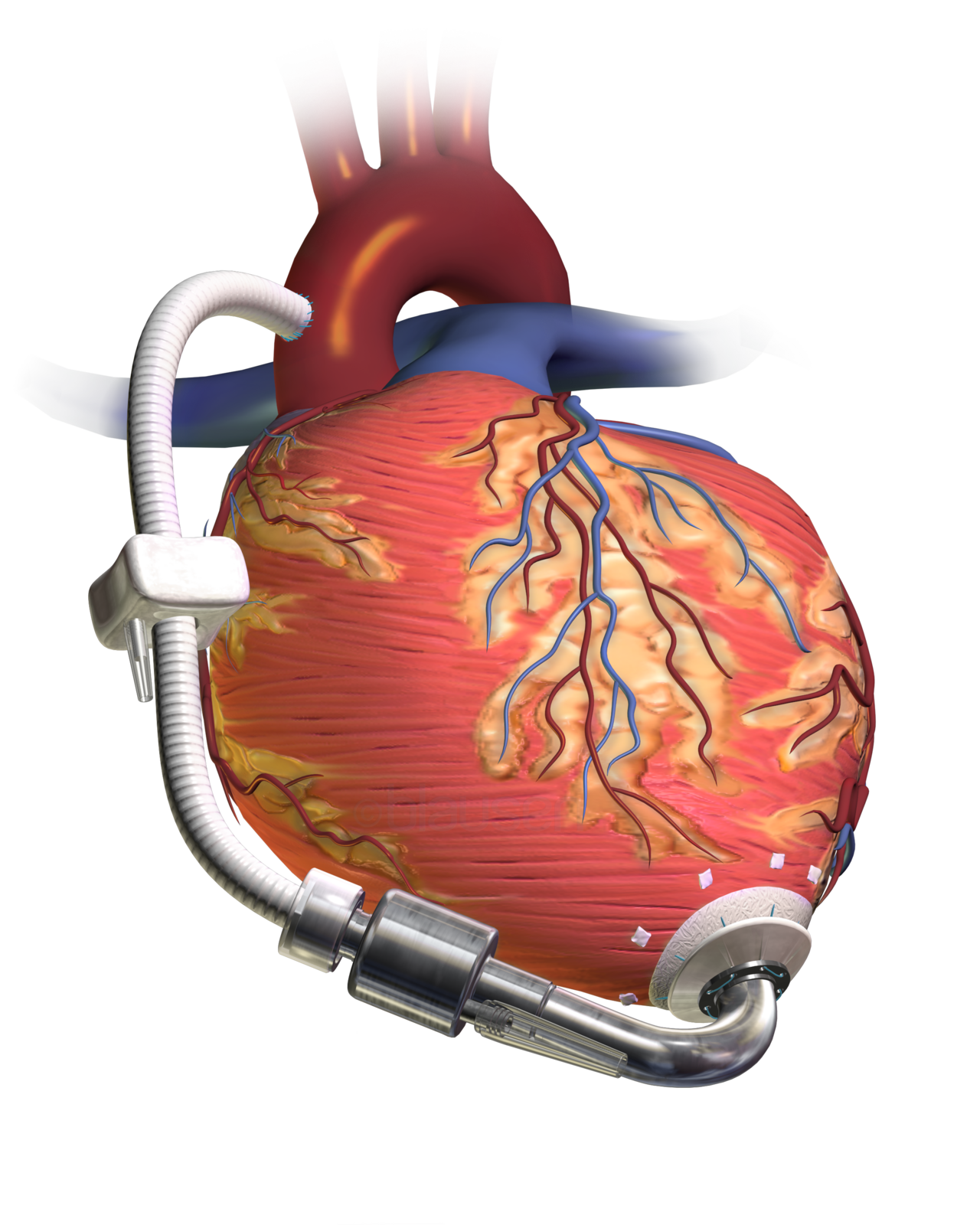
A left ventricular assist device (LVAD) is an implanted mechanical pump. It takes blood out of the left ventricle and sends it to the ascending aorta. It does part or all of the work of a failing ventricle. The HeartMate 3 is a fully magnetically levitated centrifugal-flow pump.
Its labeled uses are bridge to transplant, myocardial recovery and destination therapy in advanced heart failure. The pulse may be weak or absent, so don't count on it. Check the pump hum and Doppler MAP first.
Key Components
| Component | Where It Sits | What It Does |
|---|---|---|
| Inflow cannula | Apex of the left ventricle | Draws blood from the LV into the pump |
| Pump | Implanted between the inflow cannula and outflow graft | Moves blood at the fixed speed set by the LVAD team; flow is an estimate, not a direct measurement |
| Outflow graft | Ascending aorta | Returns pumped blood to the systemic circulation |
| Driveline | Exits the skin (abdomen); a thin pump cable joins a modular cable | Carries power and data; must not be pulled, twisted, kinked or sharply bent |
| Batteries and System Controller | Patient-worn batteries (14 V lithium-ion) or Mobile Power Unit, connected to the controller | Delivers power and shows speed, flow, PI, power and alarms; a backup controller and charged batteries stay with the patient |
Flow Path
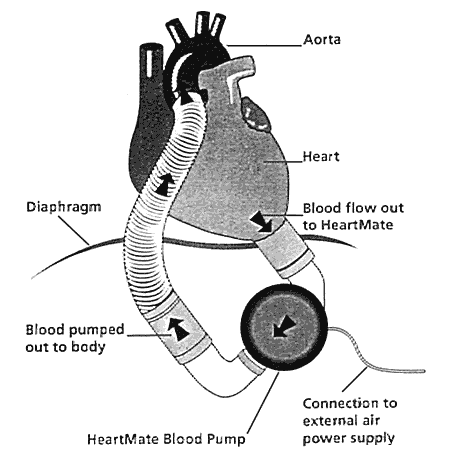
- The inflow cannula at the LV apex lets blood into the pump.
- The rotor pushes blood through at the fixed speed the system is set to.
- From there, the outflow graft delivers blood into the ascending aorta.
- Power travels from the controller, through the modular cable and pump cable, to the pump. Each LV contraction adds a small flow pulse, and the controller averages those pulses as the pulsatility index (PI).
Physiology & Hemodynamic Effects
On every cycle the pump pulls blood out of the LV. That drops the LV pressure and the pulse pressure. The circulation becomes largely continuous-flow, and that changes how pressure, pulse and blood pressure cuffs read.
What It Does
| Parameter | Effect | Why It Matters |
|---|---|---|
| Pulsatility | ↓ Pulse pressure; continuous flow | A palpable pulse may be absent, and oscillometric cuffs and pulse oximetry may not read |
| Artificial pulse mode | ↔ Turns on at 4,000 rpm and above; pump beats about 30 times per minute | The pump beats asynchronously with the heart, so the pulse you feel is not a native heartbeat |
| LV unloading | ↓ LV pressure and volume | Reduces LV wall stress, but an underfilled LV causes suction and PI events |
| Blood pressure at a set speed | ↑ MAP → ↓ flow | Higher pressure in the aorta lowers flow through the pump; hypertension also raises stroke risk |
| Right ventricle | ↓ RV output → ↓ LV filling | RV failure is a listed adverse event; the LV needs adequate right-sided filling |
| Pump power | ↑ Power may signal pump thrombus or aortic insufficiency | Rising power at 10 W or more needs an urgent team call (the manufacturer lists both causes) |
What It Depends On
- Preload: LV filling. Low filling drops the PI and can cause suction.
- Afterload: Aortic pressure. At a set speed, a higher MAP means less flow.
- Rhythm: Arrhythmias shift LV filling and can set off PI events.
- Right ventricular function: Enough RV output keeps the LV filled.
- Speed and position: The LVAD team sets the speed. A sudden speed or power change can set off a PI event.
Types, Modes & Configurations
| Type / Mode | Route / Configuration | Support or Output | Best For | Key Limitation / Risk |
|---|---|---|---|---|
| HeartMate 3 (fully magnetically levitated centrifugal) | Apex inflow to ascending aorta; driveline to controller | Fixed speed 3,000–9,000 rpm; flow is estimated from speed, power and hematocrit | Bridge to transplant, myocardial recovery or destination therapy (label) | Patients must be anticoagulated; MRI and swimming are warned against |
| HeartMate II (axial-flow) | Apex inflow to ascending aorta | Older continuous-flow design; output not verified here | Still seen in some patients; the comparator arm in MOMENTUM 3 | In MOMENTUM 3, suspected or confirmed pump thrombosis occurred in 10.1% vs 0% with the HeartMate 3 |
| HeartWare HVAD (centrifugal) | Apex inflow to ascending aorta | Not verified on this page | Historical device; not for new implants | Sale stopped June 3, 2021; FDA classified the action as Class I; later HVAD recalls followed |
Mode Settings
- Speed: The LVAD team sets a fixed speed in rpm on the System Monitor or HeartMate Touch. Bedside staff leave it alone.
- Artificial pulse: It turns on at 4,000 rpm and above. The pump then beats about 30 times per minute, out of step with the heart. A p icon marks the mode.
- PI event: The controller drops speed to the low limit, then ramps back up. No audible alarm sounds for a PI event.
Indications, Contraindications & Evidence
Indications
- Labeled use: Short- and long-term mechanical circulatory support as a bridge to transplant or to myocardial recovery, or as destination therapy (manufacturer label summary).
- Population: Adults and children with advanced refractory left ventricular heart failure and an appropriate body surface area (label wording).
- Selection: The LVAD and heart failure teams decide candidacy, timing and whether to use an LVAD or temporary support (Impella, ECMO or balloon pump). Your job at the bedside is recognition and safe transport.
Contraindications
- Absolute (label): Patients who cannot tolerate anticoagulation therapy, or who are allergic to it.
- Other contraindications and warnings: The full instructions for use list more. This page does not summarize them. Check the current IFU before any decision.
Limitations
- Pulse and BP: The pulse may be weak or absent, so don't rely on it. Automatic BP monitors may not be accurate. Manual Doppler is recommended.
- Oximetry: Pulse oximetry may not read. The technology depends on pulsatile flow.
- ECG: The pump can throw electromagnetic interference onto the monitor. Changing where the leads go may reduce it.
- Bleeding and thrombosis: These patients are anticoagulated. Bleeding and pump thrombosis are both recognized risks.
Key Evidence
| Trial / Guideline (Year) | Population | Bottom Line |
|---|---|---|
| REMATCH (2001, landmark trial) | NYHA class IV heart failure, ineligible for transplant | LVAD improved 1-year survival (52% vs 25%) compared with medical therapy, but serious adverse events were more frequent, mainly infection, bleeding and device malfunction |
| MOMENTUM 3 (2017) | 294 randomized adults; HeartMate 3 vs axial-flow HeartMate II | Primary composite at 6 months 86.2% vs 76.8%; reoperation for pump malfunction 0.7% vs 7.7%; suspected or confirmed pump thrombosis 0% vs 10.1% |
| MOMENTUM 3 five-year follow-up (2022) | 536 patients on support at 2 years were eligible for the extended phase; 477 contributed data | 5-year Kaplan-Meier survival to transplant, recovery or support free of disabling stroke or reoperation 54.0% (centrifugal) vs 29.7% (axial); overall survival 58.4% vs 43.7%. Observational per-protocol follow-up |
| AHA scientific statement on VAD hypertension (2022) | Patients with ventricular assist devices | Hypertension is the most readily identifiable and preventable cause of stroke; treat to a Doppler MAP target |
| ISHLT consensus on hemocompatibility (2024) | Durable continuous-flow LVAD patients | Summarizes prevention and management of pump thrombosis, bleeding, stroke and hemolysis; the full text sets the detail |
Setup, Settings & Targets
| Parameter | Typical Target | If Below | If Above |
|---|---|---|---|
| Doppler MAP | <90 mmHg (manufacturer target: mean BP below 90 mmHg); some teams aim lower, and the LVAD team sets the protocol target | These sources give no lower limit. Check volume status, rhythm, speed and PI; call the LVAD team | Hypertension raises stroke risk; treat to the team's target and call the LVAD team |
| Pump speed | 3,000–9,000 rpm fixed; set by the LVAD team | Not a bedside change; call the LVAD team | Not a bedside change; call the LVAD team |
| Flow estimate | Above 2.5 L/min; low-flow alarm at a preset 2.5 or 2.0 L/min | Low-flow alarm: check MAP, rhythm and PI; call the team | — |
| PI | Observed range 1–10; stable at rest | A significant drop may mean lower blood volume | Rapid swings: check rhythm, coughing or sudden speed or power change |
| Power | Below 10 W; report any double-digit demand of 10 W or more | Gradual decrease may mean flow obstruction; evaluate | 10 W or more: thrombus or aortic insufficiency possible; call the team now |
| INR | 2.0 to 3.0 (goal varies for each patient) | Thrombosis risk; team adjusts therapy | Bleeding risk; team adjusts therapy |
Initial Settings
- Speed: The implant or LVAD team sets a fixed rpm. The controller shows it within ±100 rpm of actual.
- Low speed limit: The Settings screen records it. The team sets it.
- Hematocrit: The flow estimate uses it, so an accurate value matters for the flow reading.
Sizing & Positioning
Echocardiography confirms pump position during the team's assessment. Bedside staff don't reposition or adjust the device. For BP, manual Doppler is the recommended method, not an automatic cuff.
Doppler MAP Technique
- Place a Doppler probe with gel over the brachial or radial artery.
- Inflate the cuff until the signal disappears, then deflate slowly.
- The cuff pressure at which the signal first returns is the Doppler MAP. Follow your center's protocol.
An arterial line gives an invasive MAP, so use it when you have one. A 2026 single-centre study found that Doppler MAP tracked invasive MAP closely (Kahraman et al.).
Waveforms & Console Interpretation
Normal
- Speed: Shown in rpm. Under normal conditions, the display matches actual speed within ±100 rpm.
- Power: Reported in watts. It measures motor voltage and current directly.
- PI: Flow pulses from LV contraction, averaged over 15-second intervals.
- Auscultation: A steady mechanical hum over the left upper chest means the pump is running.
- Artificial pulse: From 4,000 rpm, a beat about every 2 seconds.
Abnormal Patterns
| Pattern | What You See | Cause | Fix |
|---|---|---|---|
| PI event | Speed drops to the low limit, then ramps back; no audible alarm | Sudden power or speed change, cough, arrhythmia, ventricular suction, LV volume swings, IABP | Check rhythm and volume; avoid abrupt changes; notify the team |
| Low-flow alarm | Flow estimate below 2.5 or 2.0 L/min | Higher blood pressure at a set speed, low LV filling, obstruction | Check Doppler MAP and rhythm; call the team |
| Rising power | Power at 10 W or more, or climbing trend | Thrombus deposits in the pump; aortic insufficiency (manufacturer lists both) | Urgent team call; check for hemolysis and neurologic signs |
| Gradual power decrease | Slow fall in power over time | Obstruction of flow | Evaluate with the team |
| Falling PI with stable MAP | PI drops while MAP holds | Lower blood volume | Assess volume status with the team |
Monitoring & Ongoing Care
The LVAD team sets how often each check happens. The list below shows the checks the manufacturer asks clinicians to make.
| Frequency | What to Check | Expected / Action |
|---|---|---|
| Hourly (per team protocol) | Pump hum over the left chest; speed, flow, PI and power on the controller; active alarms; battery or Mobile Power Unit connection | Continuous hum; PI in range; any alarm is acted on (see Alarms & Troubleshooting) |
| Every shift | Doppler MAP; neurologic checks (speech, face, arm and leg strength); bleeding; urine color; driveline exit site | MAP in the team's target; new deficit or dark urine: call the team |
| Daily | Driveline dressing per implant-center protocol; weight; breathing; INR and hemolysis labs per team | Infection signs, driveline tears or weight gain with breathlessness: report |
Positioning & Mobility
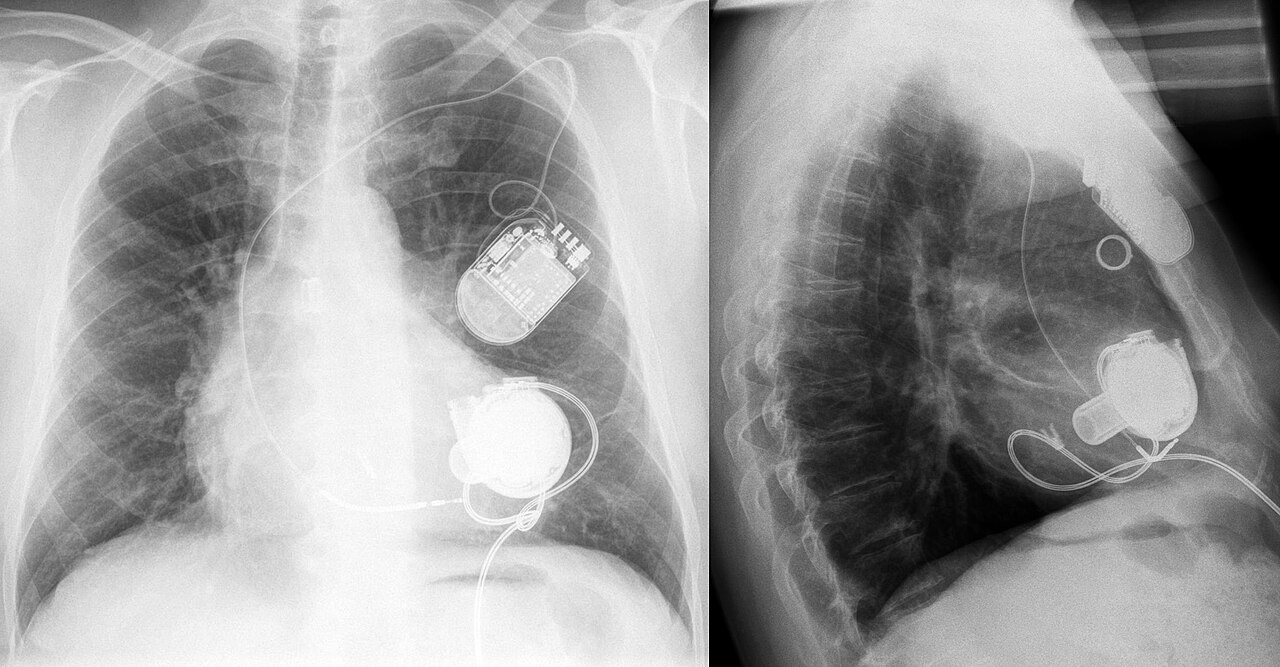
- Driveline: Don't pull, twist, kink or sharply bend it. Use an anchoring system so it can't get pulled.
- Transfers: Avoid pulling or kinking the driveline when strapping the patient to a stretcher.
- Sleep: Whenever sleep is possible, the patient must stay connected to the power module or Mobile Power Unit.
- Water: No swimming (manufacturer warning).
Anticoagulation & Hematology
| Strategy / Agent | Typical Target | Monitoring | Watch For |
|---|---|---|---|
| Warfarin | INR 2.0 to 3.0 (manufacturer goal; varies per patient) | INR per LVAD team | Bleeding from GI tract, nose or driveline; thrombosis if below goal |
| Antiplatelet (often aspirin) | Set by the LVAD team; not specified in the sources used here | Per team | Bleeding; use varies by center |
| Heparin High-alert | Per protocol for bridging or procedures; see the heparin page | aPTT or anti-Xa per protocol | Bleeding; heparin-induced thrombocytopenia |
Hemolysis
Hemolysis is a listed adverse event. Report dark or tea-colored urine, a falling hemoglobin, and rising lactate dehydrogenase (LDH) or plasma free hemoglobin. These sources give no numeric cutoff, so use the team's thresholds. See hemoglobin and bilirubin.
Bleeding & Platelets
On anticoagulation, bleeding is a major risk. Check platelets and PT/INR per team. As the manufacturer's emergency guide directs, consult the LVAD care team before giving blood products, thrombolytics or coagulants.
Key Medications & Drug Considerations
| Medication | Role Here | Typical Adult Dose / Target | Device-Specific Notes |
|---|---|---|---|
| Warfarin High-alert | Long-term anticoagulation | INR 2.0–3.0 (manufacturer goal); dosing by LVAD team | Do not change without team direction; bleeding and thrombosis risks both matter |
| Heparin High-alert | Bridging or procedural anticoagulation | Per protocol; see the heparin page | Monitor aPTT or anti-Xa per protocol |
| Norepinephrine High-alert | MAP support | 0.05–0.5 mcg/kg/min IV infusion; titrate to MAP (norepinephrine page) | Vasoconstriction raises afterload and can lower flow at a set speed; titrate to the MAP target and watch PI and power |
| Dobutamine High-alert | Inotropic support | 2–20 mcg/kg/min IV infusion (dobutamine page) | Can raise heart rate and arrhythmia risk; watch PI after changes |
| Milrinone High-alert | Inodilator | 0.375–0.75 mcg/kg/min IV (milrinone page) | Vasodilation can lower MAP. Label: reduce the infusion rate in renal impairment. The 50 mcg/kg loading dose is given over 10 minutes only if ordered |
| Amiodarone High-alert | Ventricular arrhythmia | Stable VT: 150 mg IV over 10 min (amiodarone page) | Treat arrhythmias that drop PI or flow. Potentiates warfarin: INR and bleeding risk rise (label: INR up about 100% in 3 to 4 days). Notify the team to recheck INR |
| Dexmedetomidine High-alert | Sedation | 0.2–0.7 mcg/kg/hr IV (dexmedetomidine page) | Reduces agitation and large movements that can pull or kink the driveline. Can cause bradycardia and hypotension (label); reassess MAP and PI after changes |
Alarms & Troubleshooting
| Alarm / Problem | What You See | Likely Causes | First Actions |
|---|---|---|---|
| Pump not running | No hum; green pump-running symbol off | Power cable disconnected; battery depleted; controller fault | 1) Call the LVAD team now; this is time-critical. 2) Check both power cables are fully engaged and secured, and the driveline connections. 3) Check battery charge; replace it or connect the Mobile Power Unit. |
| Low flow | Low-flow alarm; flow estimate below 2.5 or 2.0 L/min | Higher BP at set speed; low LV filling; obstruction | 1) Measure Doppler MAP and check symptoms. 2) Check for a kinked driveline and for the hum. 3) Call the LVAD team; do not change controller settings. |
| Battery alarms | Yellow diamond: under 15 minutes of power; red battery: under 5 minutes | Battery depletion | 1) Connect to the Mobile Power Unit or a charged battery now. 2) Keep a backup controller and charged batteries with the patient. |
| PI event | Speed drops to low limit then ramps; no audible alarm | Sudden power or speed change, cough, arrhythmia, suction | 1) Check rhythm and volume. 2) Look for the trigger. 3) Notify the team. |
| High power | Power at 10 W or more | Thrombus in the pump; aortic insufficiency | 1) Call the LVAD team urgently. 2) Assess for stroke, dark urine and hemolysis. |
| Driveline problem | Yellow line visible at connection; tear or separation in the driveline | Partial disconnect; strain on the cable | 1) Do not pull or twist. 2) Secure the driveline. 3) Check the modular cable connection and call the team. |
Complications & Red Flags
| Complication | How You Recognize It | Immediate Action | Prevention |
|---|---|---|---|
| Pump thrombosis (during use) | Rising power, falling flow or PI, dark urine, hemolysis | Call the LVAD team urgently | INR in range; adherence; team monitoring |
| Stroke (during use) | New facial droop, speech change, weakness, altered mental status | Activate stroke pathway per local protocol; check MAP; consult the LVAD team before thrombolytics (manufacturer) | Hypertension control to the team's MAP target |
| Bleeding (during use) | Bloody stool, nosebleeds, bleeding from the exit site | Control bleeding; call the team; do not change anticoagulation alone | INR in range; bleeding questions at every contact |
| Driveline infection (during use) | Redness, drainage or fever at the exit site | Report per implant-center protocol | Sterile dressing changes per protocol |
| Arrhythmia (during use) | VT or VF with PI drop or low flow | ACLS per current AHA guidance; defibrillation may be used | Antiarrhythmic plan per team |
| Aortic insufficiency | Rising power; new murmur | Call the LVAD team | Team echo follow-up |
| Right heart failure | Low flow, rising venous pressure, edema, falling urine output | Call the team; consider temporary right support per team | Early recognition; fluid and rhythm management |
| Low blood volume (during use) | Falling PI with stable MAP; PI events; low-flow alarm | Assess volume status with the team; avoid abrupt speed or power changes | Team-directed volume management |
| Driveline damage or disconnection | Yellow line visible; tear; loose connection | Do not pull; secure; call the team | Anchoring system; no pulling or kinking |
- Pump not running, or no hum after checks
- Low-flow or power alarm that does not resolve
- New neurologic deficit
- Major bleeding
- Cardiac arrest
- Disconnected or damaged driveline
Emergencies: Arrest, Power Loss & Device Failure
Cardiac Arrest with an LVAD
- Start CPR and ACLS if the patient is unresponsive and perfusion can't be confirmed. Any one of these counts: no Doppler MAP, no palpable pulse, or a stopped pump (no hum). A humming pump doesn't prove perfusion. The pulse may be weak or absent, so don't hold back CPR because of the LVAD.
- Call the LVAD team now. Then check the pump. Listen for the hum over the left chest, look at the controller, and make sure both power cables are engaged.
- Compressions and the cannula: Compressions can dislodge the tubing and cause fatal bleeding (manufacturer). It is a recognized risk, but it should not delay CPR when perfusion can't be confirmed. The attending physician makes the decisions.
- Defibrillation, pacing and airway follow standard ACLS. The manufacturer says external defibrillation, cardioversion and pacing may be used. Pad position for LVAD patients is not verified here, so use standard placement and confirm it with the team.
- Do not stop the pump and don't change the System Controller without direction from the LVAD team.
- If possible, transport to the implant center, bringing all LVAD equipment and the caregiver.
Pump Not Running
- Contact the LVAD team immediately, in parallel with the steps below. Time is critical when the pump stops.
- Keep the patient alive first: Assess, then treat any arrest or unstable rhythm per ACLS or standard protocols.
- Auscultate for the hum. Then check the pump-running symbol on the controller.
- Check connections: confirm both power cables are fully engaged and secured, and that the driveline connections are intact.
- If the pump still does not start, check battery charge and replace it or connect the Mobile Power Unit. The patient and caregiver have been trained for LVAD emergencies. Follow the team's direction. Do not change the controller without team direction.
- Place on the ECG monitor. Treat other problems per standard protocols.
Power or Battery Failure
- Switch power source. Move the pump onto the Mobile Power Unit or a charged battery, and keep it running.
- Use the backup controller. The charged batteries travel with the patient.
- Call the LVAD team and ask for a plan that keeps support running during transport.
Driveline Disconnect or Damage
- Do not pull, twist or kink the driveline.
- Secure the driveline and check the modular cable connection for a visible yellow line.
- Before any reconnection, call the LVAD team (MCS team).
Weaning & Discontinuation
Readiness Criteria
No numeric weaning criteria appear in these sources. Because myocardial recovery is a labeled indication, explant is possible in selected patients. The LVAD team sets the criteria and the monitoring, usually with echocardiography.
Weaning Steps
- Team review: The LVAD team reviews trends in speed, PI and power, plus imaging.
- Team-directed change: Only the team changes speed, through the System Monitor or HeartMate Touch. Bedside staff leave speed alone.
- Team monitoring: Watch for recovery and for failure signs listed below.
Failure Criteria: Step Back Up
- Return of heart failure symptoms
- Recurrent PI events or low-flow alarms
- Rising power or hemolysis signs
Removal & Post-Removal Care
Explant is a surgical procedure, and post-removal care follows the surgical team's plan. These sources don't include the details.
Escalation
When right-sided failure or device failure leaves the patient without adequate support, the team may bring in temporary support such as Impella or ECMO. Those pages cover both.
Transport Considerations
Before You Move
- Battery: Confirm charge. Each battery pair lasts 10 to 17 hours. Carry the Mobile Power Unit.
- Backup: A backup System Controller and charged batteries stay with the patient at all times.
- Equipment: Bring all LVAD equipment and the travel case with emergency contact information.
- Lines: Secure the driveline and check the connections.
- Team: Brief the receiving team and the LVAD care team.
If You Are Not the Device Specialist
- Watch: Pump hum, controller alarms and battery.
- Never touch: The controller settings, the driveline or the cables beyond the checks above.
- Call: The LVAD care team for direction whenever possible.
- CPR and defibrillation: Use the emergency steps in this page. Defibrillation may be used, and the pump is not stopped.
During Transport
- Avoid pulling, twisting or kinking the driveline when strapping the patient to the stretcher.
- Any emergency transport mode is acceptable. The manufacturer's guide says patients are permitted to fly.
- Keep the caregiver with the patient. Both have been trained for LVAD emergencies.
Air Medical & Altitude
The manufacturer's emergency guidance permits air transport. These sources don't cover altitude effects on the device, so follow the air medical protocol and the LVAD team's advice.
Handoff
- Device: HeartMate 3, speed, flow estimate, PI and power trends
- Perfusion: Doppler MAP, mental status and urine output
- Power: Battery and backup status; connection to the Mobile Power Unit
- Anticoagulation: INR, antiplatelet and the last bleeding events
- Alarms: Recent alarms, any PI events and what was done
- Access: Driveline exit site and limb checks
- Goals: Patient goals and the LVAD team contact
Special Populations
Pediatric & Neonatal
The HeartMate 3 label covers adult and pediatric patients with an appropriate body surface area. Pediatric LVAD implants and management belong at specialist centers. This page gives no pediatric device settings or drug doses. For pediatric shock, see the pediatric shock page. For weight-based dosing, see the weight-based dosing page.
Pregnancy & Peripartum
A pregnancy with an LVAD is a specialist decision. The LVAD team and the obstetric team plan anticoagulation and delivery together.
Other
The manufacturer's guidance permits air travel. MRI and swimming are restricted, so see Limitations.
Bedside Pearls & Teaching Script
Systematic Walk-Through
- Indication: Bridge, recovery or destination therapy?
- Pump: Is the hum present? Are speed, flow, PI and power in range?
- Perfusion: Doppler MAP and mental status.
- Controller: Alarms, battery, Mobile Power Unit and backup controller present?
- Anticoagulation: INR goal, bleeding signs and any heparin infusion.
- Complications: Neurologic change, dark urine, driveline site.
- Today's goal: Transport plan and LVAD team contact.
Pearls
- The pulse may be weak or absent, so don't rely on it.
- Doppler MAP is the recommended BP method. Automatic cuffs may be inaccurate.
- Check the pump hum before the screen.
- Never stop the pump to solve a problem, and never pull the driveline.
- The backup controller and charged batteries travel with the patient.
References
- Abbott. (2025). HeartMate 3 Left Ventricular Assist Device: Pump Parameter Overview (MAT-2007803 v3.0). Abbott. https://www.cardiovascular.abbott/content/dam/cv/cardiovascular/hcp/education-training/heart-failure/documents/hf-heartmate3-lvad-pump-parameters.pdf
- Abbott. (2021). Emergency Care for the HeartMate 3 LVAD Patient (MAT-2008033 v2.0). Copy hosted by the University of Iowa Health Care. https://www.healthcare.uiowa.edu/marcom/uihc/heart_vascular_center/Emergency-Care-for-the-HeartMate-3-Patient.pdf
- Hollis, I. B., Jennings, D. L., Krim, S., Ton, V.-K., Ducharme, A., Cowger, J., et al. (2024). An ISHLT consensus statement on strategies to prevent and manage hemocompatibility related adverse events in patients with a durable, continuous-flow ventricular assist device. The Journal of Heart and Lung Transplantation, 43, 1199–1234. https://doi.org/10.1016/j.healun.2024.04.065
- Eisen, H. J., Flack, J. M., Atluri, P., Bansal, N., Breathett, K., Brown, A. L., et al. (2022). Management of hypertension in patients with ventricular assist devices: A scientific statement from the American Heart Association. Circulation: Heart Failure, 15, e000074. https://doi.org/10.1161/hhf.0000000000000074
- Mehra, M. R., Naka, Y., Uriel, N., Goldstein, D. J., Cleveland, J. C., Colombo, P. C., et al. (2017). A fully magnetically levitated circulatory pump for advanced heart failure (MOMENTUM 3). New England Journal of Medicine, 376, 440–450. https://doi.org/10.1056/NEJMoa1610426
- Mehra, M. R., Goldstein, D. J., Cleveland, J. C., Cowger, J. A., Hall, S., Salerno, C. T., et al. (2022). Five-year outcomes in patients with fully magnetically levitated vs axial-flow left ventricular assist devices in the MOMENTUM 3 randomized trial. JAMA, 328(12), 1233–1242. https://doi.org/10.1001/jama.2022.16197
- Rose, E. A., Gelijns, A. C., Moskowitz, A. J., Heitjan, D. F., Stevenson, L. W., Dembitsky, W., et al. (2001). Long-term use of a left ventricular assist device for end-stage heart failure (REMATCH). New England Journal of Medicine, 345(20), 1435–1443. https://doi.org/10.1056/NEJMoa012175 (landmark trial)
- Kahraman, U., Oguz, E., Kasumovi, V., Kapkin, A. Y., Daylan, A., Ertugay, S., et al. (2026). Clinical evaluation of Doppler blood pressure measurement in continuous-flow LVAD patients: Implications for postoperative management. Journal of Cardiovascular Development and Disease, 13(6), 276. https://doi.org/10.3390/jcdd13060276
- U.S. Food and Drug Administration. (2021). Recalls related to the HVAD system (HeartWare Ventricular Assist Device). Accessed October 14, 2026. https://www.fda.gov/medical-devices/cardiovascular-devices/recalls-related-hvad-system
- Peberdy, M. A., Gluck, J. A., Ornato, J. P., Bermudez, C. A., Griffin, R. E., Kasirajan, V., et al. (2017). Cardiopulmonary resuscitation in adults and children with mechanical circulatory support: A scientific statement from the American Heart Association. Circulation, 135(24), e1115–e1134. https://doi.org/10.1161/CIR.0000000000000504
- Cao, D., Arens, A. M., Chow, S. L., Easter, S. R., Hoffman, R. S., Lagina, A. T., et al. (2025). Part 10: Adult and pediatric special circumstances of resuscitation: 2025 American Heart Association guidelines for cardiopulmonary resuscitation and emergency cardiovascular care. Circulation, 152(16 suppl 2), S578–S672. https://doi.org/10.1161/CIR.0000000000001380
Medical Disclaimer
- For Educational Purposes Only: This content is intended for educational reference and should not be used for clinical decision-making.
- Not a Substitute for Professional Judgment: Always consult your local protocols, institutional guidelines, and supervising physicians.
- Verify Before Acting: Users are responsible for verifying information through authoritative sources before any clinical application.