

Bedside Snapshot
- Recognize
- Spinal cord injury, usually at or above T6, with hypotension and bradycardia from lost sympathetic tone. Exclude bleeding first. Record the motor and sensory level and whether the injury is complete.
- Red Flags
- Hypotension with bradycardia; failing breathing with a cervical injury; sudden severe headache with a BP surge (autonomic dysreflexia); any MAP below the protocol target
- First Actions
- Spinal precautions; control bleeding; oxygen and airway support; IV or IO access; fluid bolus for SBP under 90 mmHg; cardiac monitor; call for ALS and a trauma-center transport
- Key Doses
- Norepinephrine 8–12 mcg/min IV to start, titrated to the SCI MAP goal; atropine 1 mg IV/IO every 3–5 min, max 3 mg, for symptomatic bradycardia; child atropine 0.02 mg/kg (max 0.5 mg)
- Don't Miss
- Vasopressors before bleeding is excluded; a BP surge treated as anxiety; succinylcholine after the acute phase of injury (hyperkalemia)
- Escalate & Transport
- ICU-level monitoring for cervical injury and MAP augmentation; arterial line for titration; early airway planning; transport to a trauma center for decompression within 24 hours of injury
Definition & Pathophysiology
Traumatic spinal cord injury (SCI) is damage to the cord from blunt trauma. Falls and motor vehicle crashes cause most of it. Neurogenic shock is the low pressure and slow heart rate that follow an injury at or above T6. You only make that call after bleeding is excluded.
- Mechanism: the lesion cuts the signal that keeps sympathetic outflow running. Vessels below the lesion lose their tone. With nothing pushing back, vagal activity slows the heart
- Level matters: the shock pattern shows up with cervical and high thoracic injuries, above T6. Spinal shock is different. Reflexes below the lesion drop out, and that can happen at any level
- Autoregulation is lost: for hours to days after the injury, the cord can't buffer blood pressure swings. Hypotension adds secondary ischemic injury
- Autonomic dysreflexia: a different problem in the same patients. Sympathetic overactivity comes in sudden bursts. Recognition and Special Populations cover it
In SCI the blood pressure goal exists to perfuse the cord, and protocol sets the number. It is not the septic-shock target of 65 mmHg. Don't borrow that one.
Recognition & Red Flags
Neurogenic Shock
- Pattern: low pressure and a slow heart rate after a neck or upper back injury. A motor or sensory level often shows on exam. Hypothermia can develop too
- Not every hypotensive trauma patient has neurogenic shock: a fast heart rate with low pressure points to bleeding. Hemorrhagic or cardiogenic shock can sit alongside neurogenic shock
Spinal Cord Syndromes
- Complete (ASIA A): no motor or sensory function is left in the lowest sacral segments. Incomplete injuries (ASIA B to D) still show voluntary anal contraction or some perineal sensation
- Central cord: the most common incomplete pattern. Arms are weaker than legs, and that usually follows a hyperextension injury
- Anterior cord: motor is gone below the level, and so are pain and temperature. Touch position and vibration sense survive. The cause is anterior spinal artery injury, or bone or disc pushed back into the cord
- Brown-Séquard: weakness and loss of vibration and proprioception on the lesion side. Pain and temperature are lost on the opposite side, starting about two levels below the lesion
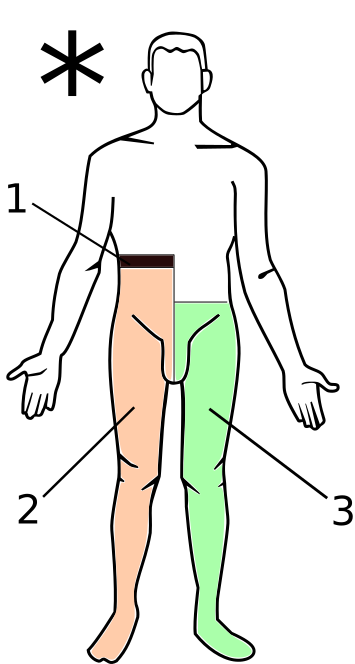
Bleeding comes first: treat the hypotensive patient after a fall or crash as hemorrhage until you find the source. Vasopressors don't replace hemorrhage control.
Red Flags
- Systolic BP under 90 mmHg with bradycardia after a spinal injury
- MAP below the protocol target, or any hypotensive episode in the first 72 hours. Each one worsens neurologic recovery
- Shallow or failing breathing, falling SpO₂ or rising EtCO₂ with a cervical or high thoracic injury
- Sudden severe headache, flushing or sweating with a sharp rise in systolic BP above baseline: autonomic dysreflexia. Protocol sets the size of rise that defines it and the treatment threshold
Assessment & Diagnostics
Check the cord and the circulation together. Stop the bleeding and treat the low pressure while you record the neuro exam.
| Check | Why | Act If |
|---|---|---|
| Motor and sensory level, AIS grade | Defines the injury level and whether it is complete | Record at first contact and at each handoff. A new deficit needs urgent spine team review |
| BP, HR and rhythm | Hypotension and bradycardia define neurogenic shock | SBP under 90 mmHg: fluid bolus and vasopressor per protocol. Symptomatic bradycardia: Adult Bradycardia pathway |
| 12-lead ECG | Vasopressor escalation and augmented MAP can cause tachyarrhythmia, atrial fibrillation, ventricular tachycardia and troponin rise | New arrhythmia or ST change: 12-lead ECG; review the vasopressor dose and rate |
| Breathing and EtCO₂ | Respiratory insufficiency is common, and cervical injuries may need mechanical ventilation | Falling SpO₂ or rising EtCO₂: airway support and early airway plan. See Capnography |
| Bleeding | Hemorrhage is the main mimic | Any external or suspected internal bleeding: Hemorrhage Control before vasopressors |
| Bladder and bowel | Distension is a common trigger of autonomic dysreflexia | Sudden BP surge: check the catheter and rectum for distension or impaction |
| CT, then MRI | CT excludes bony instability; MRI defines the cord injury | Spine surgery and neurosurgery consult; MRI can be added per the trauma team |
Differential & Mimics
- Hemorrhagic shock: tachycardia, a bleeding source or low hemoglobin. Stop the bleeding first. See Hemorrhagic Shock
- Spinal shock without neurogenic shock: reflexes drop out below a lesion at any level, but pressure and heart rate hold. The cardiovascular pattern belongs to injuries above T6
- Obstructive shock: tension pneumothorax or tamponade. Look in Shock States
- Anxiety or pain: both can ride along with autonomic dysreflexia. A sharp systolic rise above baseline with a headache points to dysreflexia. Run the trigger check next
BLS Management
- Spinal precautions (spinal motion restriction): suspect SCI in any patient with a neck or back injury and a concerning mechanism. Hold the head and neck in line by hand, apply a cervical collar per local protocol, and secure the patient to the cot or a vacuum mattress. Use a long backboard only for extrication or transfer. Take it off as soon as possible to limit pressure injury. Local protocol decides who needs spinal motion restriction. NEXUS or the Canadian C-spine rule may be part of that call. See Spinal Motion Restriction
- Bleeding: control external bleeding first. Don't assume neurogenic shock until you've excluded bleeding. See Hemorrhage Control
- Airway and breathing: open the airway with the head kept in line, give high-flow oxygen, and assist ventilation if breathing is failing
- Temperature: neurogenic shock impairs temperature control. Check it, then treat hypothermia or overheating per protocol
- Monitor: BP, pulse, rhythm, SpO₂ and mental status. Record the level and grade of any deficit as you find it
- Autonomic dysreflexia: sudden headache with a BP surge? Raise the head and trunk as far as spinal precautions allow. Loosen tight clothing and remove stimuli. Then call medical direction
- Early notification and transport: call the receiving trauma center early and ask for transport priority
ALS Management
Doses vary by protocol; follow local protocols and medical direction. Check your protocol table before you draw anything up.
- Access and monitoring (Paramedic/RN/CCT): IV or IO access, cardiac monitoring and a 12-lead ECG for rhythm change or chest pain
- Fluid first for SBP under 90 mmHg (Paramedic/RN/CCT): give a crystalloid bolus per protocol and reassess after each one. If hypotension persists, add a vasopressor
- Vasopressor (Paramedic/RN/CCT): norepinephrine shows up in many protocols. The label starts at 8–12 mcg/min IV. Typical maintenance is 2–4 mcg/min, so many protocols start lower and titrate to the SCI MAP goal. Some protocols dose by weight (mcg/kg/min). Use the protocol table and check the unit. Run it into a large vein as the label directs. Don't wait for central access. Start peripherally. Watch the site the whole time. If it extravasates, stop the infusion and infiltrate phentolamine per protocol or medical direction. The 2024 guideline doesn't recommend one vasopressor over another
- Bradycardia with hypotension (Paramedic/RN/CCT): atropine 1 mg IV/IO every 3–5 min to a maximum of 3 mg, per the Adult Bradycardia pathway. Pace when atropine fails or the block is infranodal, using transcutaneous pacing. While pacing gets set up, an alternative is a chronotropic infusion of epinephrine or dopamine, per the AHA bradycardia algorithm and local protocol
- Autonomic dysreflexia (Paramedic/RN/CCT): after the trigger check and upright positioning, give a short-acting antihypertensive per protocol if systolic BP stays high. Before any nitrate, check for recent PDE-5 inhibitor use (sildenafil, tadalafil, vardenafil, avanafil). Nitrate labels contraindicate the combination. It can cause severe hypotension
ED & ICU Management
- Decompression timing: early surgery within 24 hours of injury is the preferred option for adults, whatever the injury level. Patients decompressed within 24 hours had a better chance of recovering at least 2 AIS grades at 6 months (RR 2.76)
- MAP target (2024 guideline, weak recommendation): push MAP to at least 75–80 mmHg, and don't go above 90–95 mmHg, for 3 to 7 days after injury. The 2025 German guideline sets 70–90 mmHg for 2 to 3 days, with a maximum of 7. Some protocols still run the older 85–90 mmHg target for 7 days
- Arterial line: place one for beat-to-beat MAP once vasopressors are running and you're titrating often. The 2024 guideline makes no call on spinal cord perfusion pressure targets
- Vasopressor choice: the guideline makes no recommendation here. One observational series, summarized in the 2024 guideline, linked dopamine to more complications than phenylephrine
- Complications of augmentation: tachycardia, bradycardia, atrial fibrillation, ventricular tachycardia, troponin rise, ST change and acidosis. A small 2025 randomized trial (92 randomized, 38 completed 6-month follow-up, so underpowered) found the augmented arm (MAP above 85–90) had more respiratory complications (78% vs 39%) and longer ventilation than the conventional arm (MAP above 65–70). The neurologic difference wasn't significant. The total sensory score difference came close (P = .06)
- Airway: cervical injuries may need mechanical ventilation. Suctioning and laryngoscopy can trigger reflex bradycardia or asystole. Have atropine ready before you manipulate the airway. Track vital capacity and EtCO₂ trends. Falling vital capacity or rising EtCO₂ warns of ventilatory failure coming. Succinylcholine is contraindicated after the acute phase of injury with upper motor neuron injury. The label doesn't say when the risk starts. Hyperkalemia risk climbs over time and usually peaks 7 to 10 days after injury. Use a non-depolarizing alternative per the RSI protocol and local protocol
- Corticosteroids: the 2025 German guideline recommends against them in the acute phase of traumatic SCI (strong recommendation). The trauma-center decision lives on the methylprednisolone page
- Thromboprophylaxis: early heparin is recommended by the German guideline (strong). Weigh it against hemorrhage risk. Mechanical prophylaxis goes in per protocol
- Skin and positioning: pressure-injury risk climbs with time on a long board or stretcher. Get the board off early. Pad bony points and log-roll the patient to turn them
- Bladder and bowel: place a urinary catheter when retention or output monitoring is needed. A full bladder or impaction is a common autonomic dysreflexia trigger
- Disposition: ICU-level monitoring for cervical injury, hemodynamic instability and MAP augmentation. A mild central cord pattern may be managed in a step-down unit
Transport Considerations
- Destination: transport as fast as possible to a tertiary trauma center (German guideline, strong recommendation). The decompression clock starts at injury. Within 24 hours is preferred
- Spinal precautions: keep them on for the whole transport
- Vasopressor infusion: keep it running on a pump. Check the concentration label at every bag change. Wean the rate gradually. Avoid abrupt withdrawal, per the norepinephrine label. Watch the IV site the whole time. If it infiltrates, stop the infusion and treat extravasation per the norepinephrine page
- Monitoring in transit: continuous BP, rhythm and SpO₂. If bradycardia is present, place pacing pads early, per the Adult Bradycardia pathway
- Handoff: time of injury, injury level and AIS grade, the vasopressor drug, rate and last titration, MAP target, fluids given, last bladder and bowel status and any autonomic dysreflexia episode
- Equipment: suction, bag-valve mask with oxygen, atropine and the vasopressor infusion, with lines secured
- Air transport: follow the air medical protocol for pump and infusion management
Special Populations
- Pediatrics: the sources reviewed for this page set no pediatric MAP or vasopressor target. The adult 2024 target doesn't transfer. Use age-based norms in pediatric vital signs and the pediatric shock approach. Dose by weight: atropine 0.02 mg/kg IV/IO (max 0.5 mg). Norepinephrine follows the weight-based protocol (see weight-based dosing). Adult atropine dosing doesn't transfer either
- Pregnancy: the sources reviewed set no SCI-specific MAP target for pregnancy. Injuries at or above T6 carry autonomic dysreflexia risk. Bring in obstetric anesthesia and the spine team early
- Older Adults: central cord syndrome shows up most often after falls, usually with hyperextension. The sources reviewed set no age-specific MAP adjustment
- Renal Impairment: no specific adjustment is established. Follow the drug pages
- Hepatic Impairment: no specific adjustment is established. Follow the drug pages
- Obesity: state the dosing weight for norepinephrine (actual, ideal or adjusted). Pick one convention per patient, per the norepinephrine page
- Patients on Anticoagulants: bleeding risk runs higher, and hemorrhage is easier to miss. Exclude bleeding before any vasopressor. Follow the local anticoagulant reversal protocol
Pitfalls & Safety Checks
- Error: using the septic-shock MAP goal of 65 mmHg. Use the SCI range protocol sets. The 2024 guideline suggests 75–80 mmHg as the lower limit, and no more than 90–95 mmHg for 3 to 7 days
- Error: starting a vasopressor before bleeding is ruled out. Look for hemorrhage, control it, then continue vasopressor support as needed
- Error: treating a sudden BP surge as anxiety or pain. Check the bladder and bowel. Upright the patient as far as spinal precautions allow. Treat BP per protocol
- Error: giving succinylcholine after the acute phase of injury with upper motor neuron injury. The label gives no start time for the risk. It climbs over time and usually peaks 7 to 10 days after injury. Use a non-depolarizing alternative per the RSI protocol
- Error: confusing norepinephrine mcg/min with mcg/kg/min. It's a high-alert error. Double-check the dosing unit, weight and pump rate at start and at each bag change
- Error: trusting atropine alone when the block is infranodal, such as Mobitz II or complete block with a wide escape. Pace
Augmentation has a cost: a small, underpowered 2025 randomized trial found no significant neurologic difference from MAP above 85–90 mmHg. It did find more respiratory complications (78% vs 39%). When you augment, watch for arrhythmia and ventilator needs.
Clinical Pearls
Exam discriminator: low pressure with a slow heart rate after a high injury is the classic neurogenic picture. Low pressure with a fast heart rate means bleeding until proven otherwise.
Brown-Séquard pattern: weakness on the lesion side, with pain and temperature gone on the opposite side, puts the lesion on one side of the cord.
Central cord pattern: arms go weaker than legs after a hyperextension injury in an older patient. Of the incomplete syndromes, this is the one you'll see most.
Evidence strength: the 2024 MAP recommendation is weak and conditional. The target depends on your local SCI protocol.
References
- Kwon BK, Tetreault LA, Martin AR, Arnold PM, Marco RAW, Newcombe VFJ, Zipser CM, et al. A clinical practice guideline for the management of patients with acute spinal cord injury: recommendations on hemodynamic management. Global Spine J. 2024;14(3 suppl):187S–211S. https://doi.org/10.1177/21925682231202348
- Fehlings MG, Tetreault LA, Hachem L, et al. An update of a clinical practice guideline for the management of patients with acute spinal cord injury: recommendations on the role and timing of decompressive surgery. Global Spine J. 2024;14(3 suppl):174S–186S. https://doi.org/10.1177/21925682231181883
- Sajdeya R, Yanez ND, Kampp M, et al. Early blood pressure targets in acute spinal cord injury: a randomized clinical trial. JAMA Netw Open. 2025;8(9):e2525364. https://doi.org/10.1001/jamanetworkopen.2025.25364
- Cryns N, Himmelhaus S, Irrgang S, et al. Clinical practice guideline: the diagnosis and treatment of acute spinal cord injury. Dtsch Arztebl Int. 2025:219–224. https://doi.org/10.3238/arztebl.m2025.0034
- Krassioukov A, Linsenmeyer TA, Beck LA, et al. Evaluation and management of autonomic dysreflexia and other autonomic dysfunctions: preventing the highs and lows. Consortium for Spinal Cord Medicine guideline. J Spinal Cord Med. 2021;44(4):631–683. https://doi.org/10.1080/10790268.2021.1925058
- Anectine (succinylcholine chloride) injection, prescribing information. Sandoz Inc. DailyMed; revised 11/2023; accessed 10/2026. https://dailymed.nlm.nih.gov/dailymed/drugInfo.cfm?setid=04a4e6f5-6fa1-42e1-a3f9-21fca7786b15
- Norepinephrine bitartrate injection, prescribing information. Baxter Healthcare Corporation. DailyMed; accessed 10/2026. https://dailymed.nlm.nih.gov/dailymed/drugInfo.cfm?setid=e375a0b9-4d26-4749-bbc3-43d63a7cf65a
- Wang TY, Park C, Zhang H, et al. Management of acute traumatic spinal cord injury: a review of the literature. Front Surg. 2021;8:698736. https://doi.org/10.3389/fsurg.2021.698736
- American College of Surgeons Committee on Trauma, American College of Emergency Physicians, National Association of EMS Physicians. Spinal motion restriction in the trauma patient: a joint position statement. Prehosp Emerg Care. 2018;22:659–661. https://doi.org/10.1080/10903127.2018.1481476
- 2020 American Heart Association Guidelines for Cardiopulmonary Resuscitation and Emergency Cardiovascular Care. Part 3: Adult Basic and Advanced Life Support. Circulation. 2020;142(16 suppl 2):S366–S468. https://doi.org/10.1161/CIR.0000000000000916
Medical Disclaimer
- For Educational Purposes Only: This content is intended for educational reference and should not be used for clinical decision-making.
- Not a Substitute for Professional Judgment: Always consult your local protocols, institutional guidelines, and supervising physicians.
- Verify Before Acting: Users are responsible for verifying information through authoritative sources before any clinical application.
AI Assistance Notice
AI was used to assist in organizing, paraphrasing, and formatting this information.