

Bedside Snapshot
- Use It For
- Disabling acute ischemic stroke within 3 hr (US label; 3 to 4.5 hr is off-label, see Indications); STEMI when primary PCI is more than 120 min away
- Adult Dose
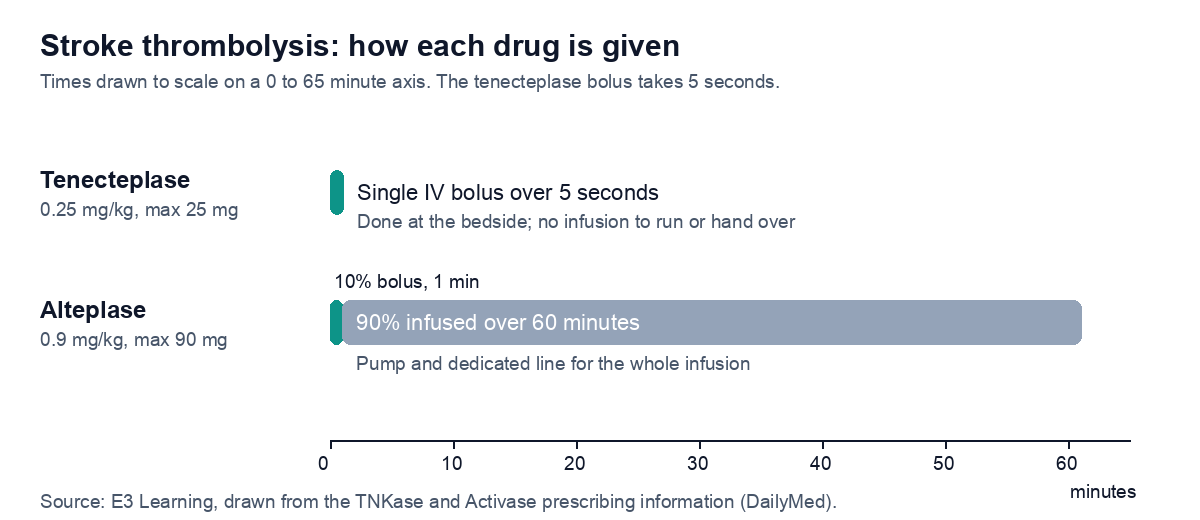
- AIS: 0.25 mg/kg IV bolus over 5 sec by weight band, max 25 mg
- STEMI: 30–50 mg IV bolus over 5 sec by weight band, max 50 mg
- Pediatric Dose
- Not established in children: specialist use only; no labeled pediatric dose
- Onset / Duration
- IV: immediate after the 5-sec bolus; half-life 90–130 min; bleeding can appear 1 or more days later
- Do Not Give / Hold If
- Active bleeding or bleeding diathesis; intracranial surgery or trauma within 2 months; intracranial neoplasm, AVM or aneurysm; suspected dissection; stroke: active ICH; STEMI: prior ICH or stroke within 3 months
- Watch For
- Intracranial bleeding (headache, vomiting, BP surge, new deficit: stop, CT); systemic bleeding; tongue or lip angioedema; reperfusion arrhythmias (STEMI)
- Reversal / Rescue
- No antidote: stop further doses. Per protocol: fibrinogen (concentrate 3–4 g IV or cryoprecipitate 10 units) and tranexamic acid (adult 1 g IV over 10 min; see their pages). STAT CBC, PT/INR, aPTT, fibrinogen
- Must Remember
- Tenecteplase has two doses: stroke 0.25 mg/kg (max 25 mg), STEMI 30–50 mg by band. Never write tPA or TNK; name the drug, indication and mg dose
Indications
Emergency & Prehospital
- Acute ischemic stroke (AIS): Disabling deficit, within 3 hr of symptom onset. That is the US label. The AcT trial (a disabling-deficit population) enrolled patients up to 4.5 hr. Door-to-needle goal: within 60 min of arrival (AHA/ASA stroke guideline). Mobile stroke units may give it before hospital arrival where protocols allow.
- ST-elevation myocardial infarction (STEMI): Give fibrinolysis when primary PCI cannot start within 120 min of first medical contact and symptoms began under 12 hr. Pharmacoinvasive use means lytic first, then transfer for angiography. Time goal: lytic within 30 min of arrival (ACC/AHA ACS guideline).
ED / ICU / Transport
- Stroke at 3 to 4.5 hr: Past the US label window, so off-label. The AcT trial (disabling deficit, enrolled within 4.5 hr) found tenecteplase non-inferior to alteplase. The 2026 AHA/ASA guideline abstract says it revisits thrombolytic eligibility. Its full text was not checked for this page, so follow the stroke protocol.
- Stroke at 4.5 to 24 hr: Imaging-selected patients only. A stroke expert decides. Off-label.
- Stroke with large-vessel occlusion: Give the lytic, and do not hold up endovascular thrombectomy (EVT) when both are indicated. A 2025 meta-analysis of five randomized trials (1,028 patients) found no significant difference between tenecteplase and alteplase in 90-day excellent recovery or symptomatic intracerebral hemorrhage in LVO (Yao et al.).
Other Uses
- Pulmonary embolism or catheter occlusion: Not labeled for tenecteplase. Alteplase carries the label for massive PE and for catheter restoration. See the fibrinolytics class page. Any tenecteplase use there is off-label and protocol-driven.
Dosing & Administration
Doses vary by protocol; follow local protocols and medical direction.
Available Forms
- 25 mg and 50 mg single-dose vials: white to pale yellow lyophilized powder. Each vial is co-packaged with Sterile Water for Injection: 5.2 mL with the 25 mg vial, 10 mL with the 50 mg vial. Reconstituted to 5 mg/mL.
- Stroke doses fit the 25 mg vial, and the maximum is 25 mg. A 25 mg vial cannot supply a STEMI dose above 25 mg. STEMI stock needs the 50 mg vial.
High-Alert Medication: Alteplase and tenecteplase get confused in orders written as "tPA" or "TNK". At every weight band the STEMI dose is twice the stroke dose (for example, 70 to under 80 kg: 20 mg vs 40 mg). Name the drug, the indication and the mg dose. A second clinician then checks drug, indication, weight band and volume before the bolus.
Adult Dosing
| Indication | Dose & Route | Repeat / Max | Notes |
|---|---|---|---|
| AIS: tenecteplase | 0.25 mg/kg single IV bolus over 5 sec, by weight band (table below) | Single dose; max 25 mg | High-alert Label: within 3 hr of onset; 3 to 4.5 hr is off-label (see Indications). Use the stroke bands only. The labeled stroke dose is 0.25 mg/kg; do not substitute other mg/kg doses |
| STEMI: tenecteplase | 30–50 mg single IV bolus over 5 sec, by weight band (table below) | Single dose; max 50 mg | High-alert With aspirin and an anticoagulant per protocol; transfer to a PCI center immediately. Choose lysis or PCI as the strategy, not both (label 5.6) |
Weight Bands
| Actual Weight | Stroke (AIS) Dose | STEMI Dose |
|---|---|---|
| Under 60 kg | 15 mg (3 mL) | 30 mg (6 mL) |
| 60 to under 70 kg | 17.5 mg (3.5 mL) | 35 mg (7 mL) |
| 70 to under 80 kg | 20 mg (4 mL) | 40 mg (8 mL) |
| 80 to under 90 kg | 22.5 mg (4.5 mL) | 45 mg (9 mL) |
| 90 kg or more | 25 mg (5 mL) | 50 mg (10 mL) |
Pediatric Dosing
| Indication | Dose (per kg) & Route | Max Single / Max Total | Notes |
|---|---|---|---|
| AIS or STEMI | Not established in children | Specialist use only | High-alert Label 8.4: safety and effectiveness not established. Any pediatric lytic is off-label and specialist-directed |
Pediatric: Nothing in the label sets a pediatric tenecteplase dose. Lytic decisions in children belong to pediatric stroke, cardiology or hematology teams. For the general pediatric framework, see weight-based dosing.
Preparation & Administration
- Reconstitution: use only the co-packaged Sterile Water for Injection. Direct the stream onto the powder, swirl gently and do not shake; slight foaming settles in a few minutes.
- Timing: reconstitute immediately before use. If not used at once, refrigerate the vial at 2–8 °C (36–46 °F) and use within 8 hr; the product has no antibacterial preservative.
- Bolus: inspect for particles or discoloration, connect the syringe directly to the IV port and push over 5 seconds.
- Dextrose: incompatible. Flush dextrose-containing lines with 0.9% sodium chloride before and after the bolus.
- Line and punctures: no intramuscular injections; avoid internal jugular and subclavian punctures. If an arterial puncture is unavoidable, use a compressible upper-extremity vessel and hold pressure for at least 30 min.
Dosing Notes:
- Go by the label band, built on actual or estimated weight. Do not hold treatment back to weigh the patient.
- The band is the labeled dose. A dose calculated at 0.25 mg/kg can differ from it. At 65 kg, that calculation gives 16.25 mg, while the band is 17.5 mg. Pick one method per system.
- Keep the stroke and STEMI charts apart. Never give a STEMI band for stroke.
Contraindications & Precautions
Contraindications
- Active internal bleeding
- Known bleeding diathesis
- Intracranial or intraspinal surgery or trauma within 2 months
- Current severe uncontrolled hypertension (stroke: BP must be below 185/110 mmHg before the bolus; see Hold / Reassess)
- Intracranial condition that raises bleeding risk: intracranial neoplasm, arteriovenous malformation or aneurysm
- AIS only: active intracranial hemorrhage
- STEMI only: history of intracranial hemorrhage; ischemic stroke within 3 months
- Suspected aortic dissection (not a label entry; a clinical absolute)
Precautions
- Stroke, relative (stroke-team decision; commonly used protocol screens): recent intracranial hemorrhage; ischemic stroke within 3 months; recent major surgery or trauma; GI or GU bleeding within 21 days; a direct oral anticoagulant (DOAC) within 48 hr; therapeutic low-molecular-weight heparin (LMWH) within 24 hr; heparin with an elevated aPTT. The label says treatment can start before coagulation results when there is no recent oral anticoagulant or heparin use. The 2026 AHA/ASA guideline text was not checked for these screens. The stroke team and local protocol decide.
- Label bleeding risk (relative): Systolic BP above 175 or diastolic above 110 mmHg. That is a bleeding-risk warning in label 5.1, not a bolus hold threshold. Also: recent major surgery, obstetric delivery, organ biopsy or noncompressible vessel puncture; recent GI or GU bleeding; recent trauma; acute pericarditis; subacute bacterial endocarditis; hemostatic defects from severe hepatic or renal disease; diabetic hemorrhagic retinopathy; advanced age; current anticoagulant use.
- Anticoagulants before the bolus: If the pretreatment INR is over 1.7 or aPTT is elevated, the tenecteplase label (section 2.1) says closely monitor patients. The Activase (alteplase) label (section 2.1) says discontinue. Stroke teams decide these cases.
- Planned PCI (STEMI): In the label trial, tenecteplase plus PCI had worse outcomes than PCI alone. Mortality was 6.7% vs 4.9%. Cardiogenic shock was 6.3% vs 4.8%. Choose one reperfusion strategy.
- Stroke, mild non-disabling deficit: Not a lytic indication. Antiplatelet therapy per guideline.
Hold / Reassess If
- Before the stroke bolus: BP must be below 185/110 mmHg. If it is higher, treat (for example labetalol or nicardipine) and recheck. Do not give the lytic while BP stays above 185/110. This is a commonly used stroke-protocol threshold from the AHA/ASA guideline lineage (2026 text not checked).
- Before the STEMI bolus: Systolic BP above 180 or diastolic BP above 110 mmHg is a relative contraindication in ACC/AHA guidance. Treat first, then recheck.
- Severe headache, nausea or vomiting, acute hypertension, or a worse neurologic exam after a stroke bolus: stop further treatment and get an emergent noncontrast CT.
- After a stroke bolus, if BP is above 180/105 mmHg, check more often and treat per protocol (for example labetalol or nicardipine).
- Serious bleeding not controlled by pressure: stop heparin and antiplatelet agents and start the bleeding steps.
- Tongue, lip or airway swelling: stop further doses and follow the angioedema steps.
Rule Out Aortic Dissection: Dissection can look like chest pain with ST elevation, or like a stroke. A lytic can be fatal. Suspected dissection is a contraindication. Resolve it before the bolus.
Adverse Effects & Toxicity
Common
- Bleeding, the most frequent adverse reaction in all approved indications: puncture sites, gums, bruising, urine or stool
- Orolingual angioedema: about 1% (1.0% with tenecteplase vs 1.4% with alteplase in the label stroke trial)
- Hypersensitivity: urticaria and rash
- STEMI: reperfusion arrhythmias (accelerated idioventricular rhythm, sinus bradycardia, PVCs, VT)
Serious / Life-Threatening
| Effect | Recognition | Management |
|---|---|---|
| Symptomatic intracranial hemorrhage | Headache, vomiting, BP surge, falling GCS or new deficit; label stroke trial 3.4% vs 3.1% for alteplase | Stop further doses; STAT noncontrast CT; reversal steps below; neurosurgery and hematology |
| Major bleeding (GI, GU, retroperitoneal, access site) | Flank or back pain with hypotension, expanding hematoma, falling hemoglobin; can start 1 or more days after the dose | Stop heparin and antiplatelet agents; compress; transfuse per protocol; bleeding steps |
| Hemopericardium or tamponade (STEMI) | Hypotension, distended neck veins, muffled heart sounds | Emergent cardiac team; stop all antithrombotics; resuscitate per protocol |
| Orolingual angioedema | Tongue or lip swelling, voice change, drooling, stridor | Airway first: involve airway expertise early and prepare for awake fiberoptic or surgical airway. Stop further doses; hold ACE inhibitors. Epinephrine, antihistamine and steroid per anaphylaxis protocol, but these may not work if swelling is bradykinin-mediated (for example, with ACE inhibitor use) |
| Anaphylaxis or laryngeal edema | Urticaria, bronchospasm, stridor, hypotension | Give epinephrine, antihistamine and corticosteroid per protocol (label 5.2) |
| Cholesterol embolization | Livedo reticularis, purple toes, new kidney injury | Investigate any new embolic event; supportive care |
| Embolism from left heart thrombus | Stroke or limb ischemia after lysis with mitral stenosis or atrial fibrillation (label 5.3) | Investigate; anticoagulation decision with cardiology or the stroke team |
Overdose & Toxicity Management
- Risk: a dose above the weight band (over 25 mg for stroke or 50 mg for STEMI), or a STEMI band given for stroke, which roughly doubles the dose, raises bleeding risk.
- Antidote: none. The half-life of 90–130 min limits ongoing exposure, but bleeding can appear 1 or more days later.
- Bleeding support: fibrinogen replacement per protocol (see fibrinogen); antifibrinolytic per protocol (see tranexamic acid); protamine if heparin is infusing.
- Report: file a medication-error report and review band charts and order entry.
Bleeding after a stroke lytic
- Stop: any further tenecteplase, heparin and antiplatelet agents.
- Labs: STAT CBC, PT/INR, aPTT, fibrinogen, type and crossmatch.
- Imaging: emergent noncontrast head CT for any neurologic change.
- Replace and treat: fibrinogen (concentrate 3–4 g IV or cryoprecipitate 10 units, per the fibrinogen page) and tranexamic acid (1 g IV over 10 min, per the tranexamic acid page). Transfuse per protocol. Doses are protocol-dependent.
- Consult: neurosurgery and hematology. Watch BP, ICP and temperature.
Monitoring
| Parameter | When / How Often | Target / Act If |
|---|---|---|
| Clinical: neuro checks and BP (stroke) | Per stroke-unit protocol; commonly every 15 min during and for 2 hr, every 30 min for 6 hr, then hourly to 24 hr | Before the bolus: BP below 185/110 mmHg. After: above 180/105 mmHg, treat per protocol. Any neurologic decline: stop, obtain CT |
| Clinical: lips, tongue and airway | During and after the bolus, for as long as protocol requires | Swelling: airway first, then the angioedema steps |
| Clinical: ECG and symptoms (STEMI) | Continuous; reassess reperfusion at 60–90 min | Under 50% ST resolution in the lead with maximal ST elevation, ongoing pain, shock or arrhythmia: urgent angiography for rescue PCI (permitted by label 5.6) |
| Clinical: bleeding | At every assessment: puncture sites, gums, urine, stool, flank, abdomen | New bleeding or falling hemoglobin: stop, STAT labs (hemoglobin) |
| Laboratory: glucose | Before any stroke lytic | Below 50 mg/dL: treat, then reassess the deficit. Hyperglycemia: manage per protocol (glucose) |
| Laboratory: platelets, PT/INR, aPTT | Before the bolus only if anticoagulant use or coagulopathy is suspected; STAT with any bleeding | |
| Laboratory: fibrinogen | STAT with any bleeding | Low fibrinogen with bleeding: replacement per protocol (fibrinogen) |
| Imaging: CT or MRI (stroke) | Before starting antithrombotics after a stroke lytic, per protocol | Hemorrhage or new deficit: stop further treatment and reassess |
| Infusion safety: dose check | Before the bolus and at every handoff | Drug, indication, weight, band, mg dose and volume checked by a second clinician |
- Lab artifact: Coagulation tests and fibrinogen can read falsely abnormal during therapy unless the laboratory prevents in-vitro lysis (label 7.1).
- Procedures: Avoid intramuscular injections and new punctures (label 5.1). Hold non-urgent nasogastric tubes, urinary catheters or arterial lines per stroke protocol.
Interactions & Compatibility
Clinically Significant Interactions
| Drug / Class | Effect | What To Do |
|---|---|---|
| Anticoagulants (heparin, enoxaparin, fondaparinux, DOACs, warfarin) | Additive bleeding | STEMI: enoxaparin per label, started 15 min before to 30 min after the lytic begins; heparin per protocol. Stroke: heparin and aspirin in the first 24 hr were not studied with tenecteplase; follow stroke protocol |
| Antiplatelets (aspirin, clopidogrel, GP IIb/IIIa inhibitors) | Additive bleeding | STEMI: aspirin and clopidogrel per the 2025 ACS guideline and protocol. Stroke: antiplatelet timing per stroke protocol |
| ACE inhibitors | Higher risk of orolingual angioedema | Watch tongue and lips; hold the ACE inhibitor if swelling starts |
| Antifibrinolytics (tranexamic acid, aminocaproic acid) | Oppose the lytic | Use only to treat bleeding, never as routine prophylaxis |
| NSAIDs and other hemostasis-impairing drugs | Additive bleeding | Avoid when possible (label 5.1) |
| Dextrose-containing solutions | Precipitation in the line | Flush with 0.9% sodium chloride before and after the bolus (label 2.5) |
IV Compatibility
- Tenecteplase: Dextrose and tenecteplase do not mix. Flush dextrose-containing lines with 0.9% sodium chloride before and after the single bolus.
- Reconstituted product: No antibacterial preservative is in the product. Use it right away, or refrigerate and use within 8 hr.
- Check against an institutional compatibility resource.
Special Populations
- Pediatrics: Safety and effectiveness are not established (label 8.4). No pediatric tenecteplase dose is labeled. See the Pediatric Dosing table. Pediatric lytic decisions belong to specialists only.
- Neonates: No specific adjustment is established. Not labeled for neonates.
- Pregnancy: Stroke and STEMI are life-threatening in pregnancy. Case reports of related thrombolytics show no increase in major birth defects. There are no tenecteplase pregnancy data. Rabbit studies showed no maternal or direct embryo toxicity (label 8.1). Do not withhold life-sustaining therapy. Decide with obstetrics.
- Lactation: There are no data on tenecteplase in human or animal milk, on its effect on the breastfed infant, or on milk production. Weigh the benefit of breastfeeding against the mother's clinical need (label 8.2).
- Older Adults: 72% of stroke trial patients were 65 or older, and 49% were 75 or older (label 8.5). For STEMI at 75 or older, STREAM-1 found excess intracranial hemorrhage with full-dose tenecteplase. A pooled STREAM-1 and STREAM-2 analysis of patients 75 and older found comparable ST resolution with half dose and no intracranial hemorrhage compared with primary PCI. The half dose is not in the US label, so follow local protocol. For enoxaparin at 75 or older, give no IV bolus (see the enoxaparin page).
- Renal Impairment: No labeled tenecteplase adjustment. Severe kidney disease raises bleeding risk (label 5.1). Enoxaparin dosing is reduced at creatinine clearance under 30 mL/min (label).
- Hepatic Impairment: No labeled adjustment. The liver is the major clearance route (label 12.3). Significant hepatic dysfunction raises bleeding risk (label 5.1).
- Obesity / Dosing Weight: Bands run on actual or estimated weight (label 14.1). From 90 kg up, the maximum dose applies: 25 mg for stroke, 50 mg for STEMI.
Field & Transport Considerations
- Scope: Mobile stroke units and some paramedic programs give stroke or STEMI lytics under protocol and medical oversight. RN and critical-care transport teams manage post-lytic monitoring. Scope varies by state and agency protocol.
- Storage & Stability: Store the lyophilized powder at room temperature up to 30 °C (86 °F), or refrigerated at 2–8 °C (36–46 °F) (label 16.2). Reconstituted, use it right away, or refrigerate and use within 8 hr. Do not leave kits in a hot vehicle.
- Carried Concentration: Reconstituted tenecteplase is 5 mg/mL in both vial sizes. Read the stroke band or the STEMI band, not both. Draw the band volume.
- Infusions in Transport: None. Tenecteplase is one bolus, with no pump and no infusion to hand over. Flush dextrose lines before and after the push.
- After a Stroke Lytic (drip and ship): There is no infusion to watch. Keep neurologic and BP checks on schedule. Avoid intramuscular injections and new punctures. Hold antithrombotics until imaging and protocol allow. If the neuro exam worsens, stop and divert for CT.
- After a STEMI Lytic: Go straight to a PCI center. Defibrillator pads stay on. Watch for reperfusion arrhythmias, recurrent pain or shock.
- Handoff Essentials: agent and mg dose, weight used (measured or estimated), last known well or symptom onset, bolus time, BP trend and drugs, neuro trend, antithrombotics given, any bleeding or swelling.
Clinical Pearls
Never Write tPA or TNK: A "tPA" or "TNK" order is a known path to error. Write tenecteplase or alteplase, plus the indication and the mg dose.
Two Doses, One Drug: Stroke is 0.25 mg/kg, capped at 25 mg. STEMI is 30–50 mg by band. Keep separate band charts. Label stock by indication.
Tenecteplase vs Alteplase (Stroke): In the AcT trial, one tenecteplase bolus was non-inferior to alteplase. mRS 0–1 at 90–120 days: 36.9% vs 34.8% (unadjusted risk difference 2.1%). Symptomatic hemorrhage: 3.4% vs 3.2%. The practical gain is transport. One bolus, no infusion.
Disabling, Not a Number: AcT enrolled patients with a disabling neurologic deficit. A low NIHSS does not rule out a disabling deficit. Think inability to walk or speak.
Exam Discriminator: STEMI vs ST Depression: Lytics are for ST elevation, or a true posterior MI, when PCI is more than 120 min away. ST depression alone gets no lytic.
Band, Not Math: Use the band table. At 65 kg, 0.25 mg/kg works out to 16.25 mg, but the band is 17.5 mg. Never give a STEMI band for stroke. It doubles the dose.
Pharmacology
Mechanism of Action
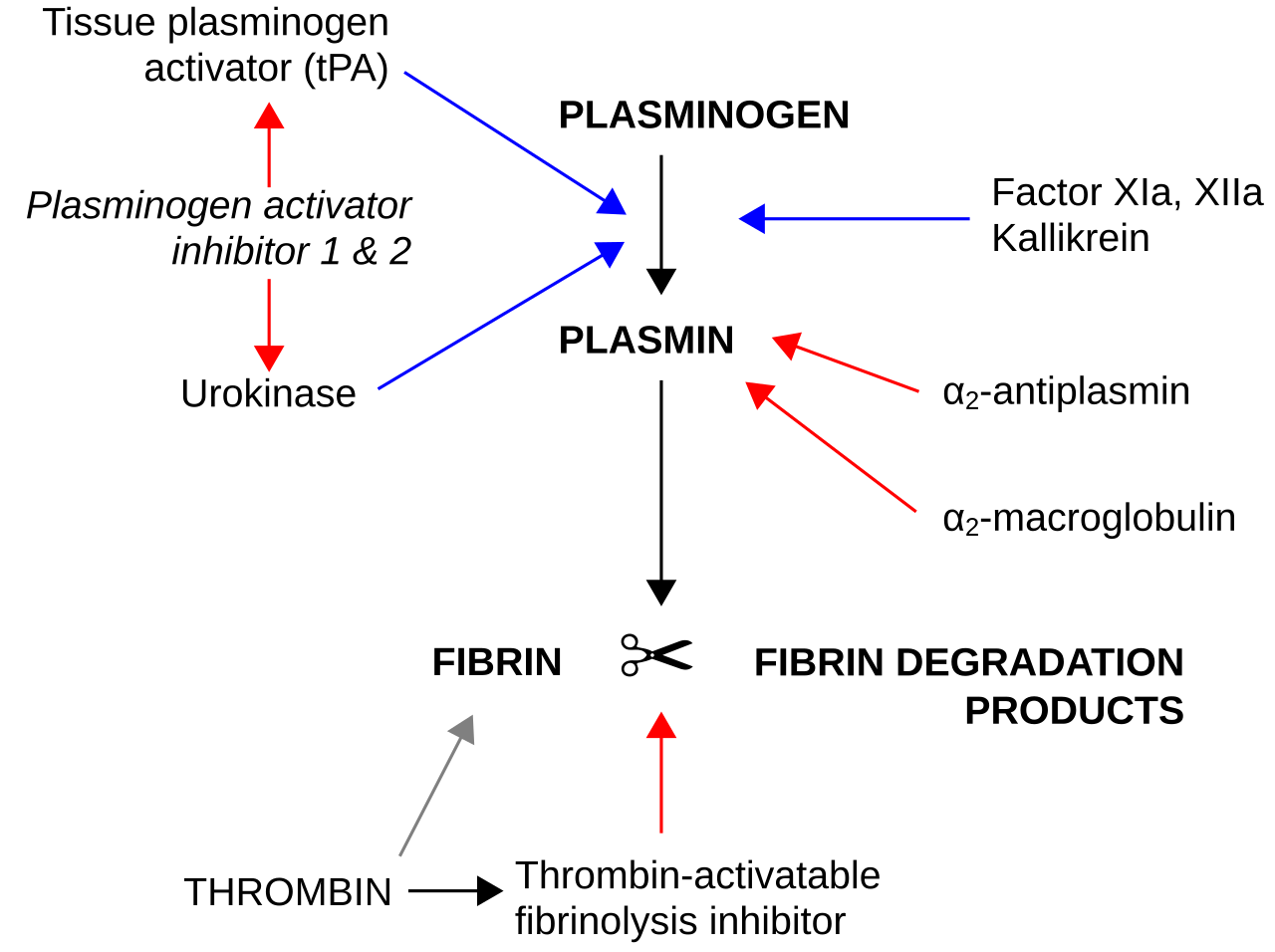
- Modified human tissue plasminogen activator (tPA): threonine 103 to asparagine, asparagine 117 to glutamine, and a tetra-alanine substitution at amino acids 296–299 (label 11)
- Binds fibrin and converts plasminogen to plasmin. That conversion is increased when fibrin is present (label 12.1).
- Plasmin cuts the fibrin. The thrombus dissolves and flow returns.
- Fibrin specificity reduces systemic plasminogen activation and fibrinogen degradation. Its effect on bleeding in clinical use is not established (label 12.1).
- STEMI doses of 30–50 mg lower circulating fibrinogen by 4–15% and plasminogen by 11–24% (label 12.2).
Pharmacokinetics
| Route | Onset | Peak | Duration |
|---|---|---|---|
| IV bolus | Immediate | — | Terminal half-life 90–130 min; bleeding risk can persist 1 or more days |
- Half-life: terminal phase 90–130 min in STEMI patients; plasma clearance 99–119 mL/min (label 12.3)
- Metabolism / Elimination: the liver is the major clearance mechanism (label 12.3)
- Distribution: central volume 4.22–5.43 L, approximating plasma volume; steady-state volume 6.12–8.01 L, suggesting some extravascular distribution (label 12.3)
- Linearity: pharmacokinetics are linear and dose-proportional across 30–50 mg (label 12.3)
Names & Classification
- Generic Name
- Tenecteplase (ten-EK-te-plase)
- Brand Names
- TNKase (US)
- Pharmacologic Class
- Plasminogen activator (recombinant, modified tissue plasminogen activator)
- Therapeutic Class
- Thrombolytic (fibrinolytic) agent
- Controlled Substance
- Not controlled
- ISMP High-Alert
- Yes: ISMP high-alert medication (thrombolytic agents)
- Look-Alike / Sound-Alike
- TNKase / Activase (alteplase); tenecteplase / alteplase
- Error-Prone Abbreviations to Avoid
- "tPA", "TNK", "rt-PA": write the generic name
References
- Genentech, Inc. (2025). TNKase (tenecteplase) for injection: Prescribing information (revised 02/2025). DailyMed, U.S. National Library of Medicine. https://dailymed.nlm.nih.gov/dailymed/drugInfo.cfm?setid=e647640d-c395-4b4b-a0be-1162f9c21d84
- Genentech, Inc. (2022). Activase (alteplase) for injection: Prescribing information (revised 09/2022). DailyMed, U.S. National Library of Medicine. https://dailymed.nlm.nih.gov/dailymed/drugInfo.cfm?setid=c669f77c-fa48-478b-a14b-80b20a0139c2
- Prabhakaran, S., Gonzalez, N. R., Zachrison, K. S., et al. (2026). 2026 Guideline for the Early Management of Patients With Acute Ischemic Stroke: A Guideline From the American Heart Association/American Stroke Association. Stroke, 57, e316–e436. https://doi.org/10.1161/STR.0000000000000513. A correction was published (doi:10.1161/STR.0000000000000530, 2026).
- Menon, B. K., Buck, B. H., Singh, N., et al. (2022). Intravenous tenecteplase compared with alteplase for acute ischaemic stroke in Canada (AcT): a pragmatic, multicentre, open-label, registry-linked, randomised, controlled, non-inferiority trial (landmark trial). Lancet, 400, 161–169. https://doi.org/10.1016/S0140-6736(22)01054-6
- Bainey, K. R., Welsh, R. C., Zheng, Y., et al. (2024). Pharmaco-invasive strategy with half-dose tenecteplase in patients with STEMI: prespecified pooled analysis of patients aged ≥75 years in STREAM-1 and 2. Circulation: Cardiovascular Interventions, 17, e014251. https://doi.org/10.1161/CIRCINTERVENTIONS.124.014251
- Rao, S. V., O'Donoghue, M. L., Ruel, M., et al. (2025). 2025 ACC/AHA/ACEP/NAEMSP/SCAI guideline for the management of patients with acute coronary syndromes. Circulation, 151, e771–e862. https://doi.org/10.1161/CIR.0000000000001309
- Yao, B., Wang, X., Wu, Y., et al. (2025). Tenecteplase versus alteplase for intravenous thrombolysis of acute ischemic stroke patients with large-vessel occlusion: a systematic review and meta-analysis. Frontiers in Neurology, 16, 1487711. https://doi.org/10.3389/fneur.2025.1487711
Medical Disclaimer
- For Educational Purposes Only: This content is intended for educational reference and should not be used for clinical decision-making.
- Not a Substitute for Professional Judgment: Always consult your local protocols, institutional guidelines, and supervising physicians.
- Verify Before Acting: Users are responsible for verifying information through authoritative sources before any clinical application.
AI Assistance Notice
AI was used to assist in organizing, paraphrasing, and formatting this information.