

Bedside Snapshot
- Recognize
- Barking cough, inspiratory stridor, hoarseness
- Usually 6 months to 3 years; often worse at night
- Score with the Westley score (five signs)
- Red Flags
- Stridor at rest, retractions, cyanosis, altered consciousness, decreased air entry, Westley 8 or more. Drooling or a muffled voice is not croup.
- First Actions
- Keep the child calm and upright with a caregiver. Oxygen for hypoxemia. Dexamethasone for every child. Nebulized epinephrine for moderate or severe croup (stridor at rest or distress).
- Key Doses
- Dexamethasone 0.6 mg/kg PO, IM or IV once (max 16 mg)
- Racemic 2.25% 0.05 mL/kg nebulized (max 0.5 mL)
- L-epinephrine 1 mg/mL 0.5 mL/kg nebulized (max 5 mL)
- Don't Miss
- Epiglottitis (drooling, sniffing posture), bacterial tracheitis (toxic, high fever), foreign body (choking), anaphylaxis (hives, angioedema).
- Escalate & Transport
- Observe at least 2 hours after the last epinephrine dose
- Escalate when the score does not fall or signs persist
- Call the airway team early; protocol sets thresholds
Overview & Pediatric Differences
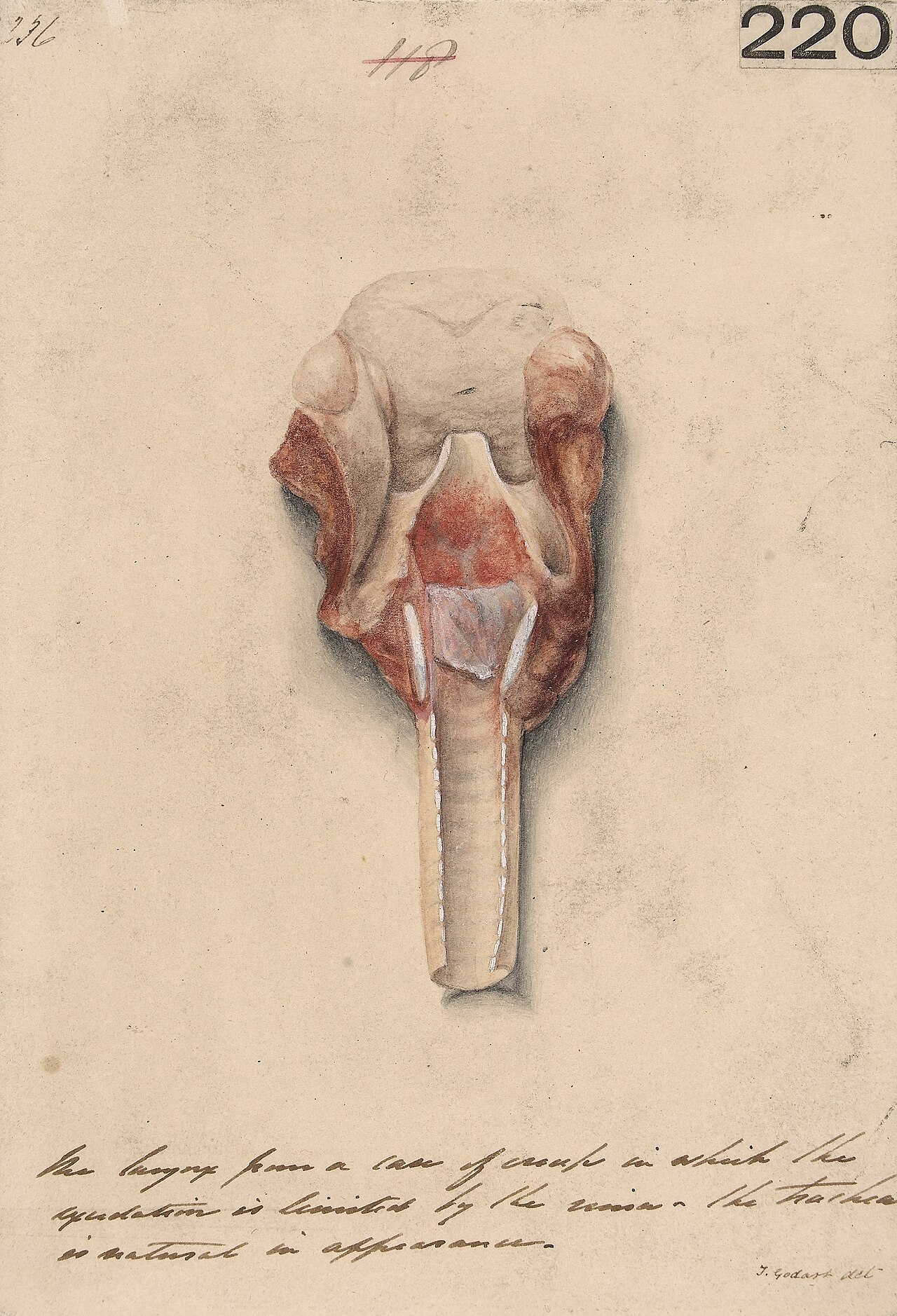
Croup is viral laryngotracheobronchitis. The larynx, trachea and bronchi swell, and that swelling gives you the barking cough, inspiratory stridor and hoarseness. Parainfluenza virus is the cause most often identified.
Croup hits about 3% of children aged 6 months to 3 years. It accounts for about 7% of hospitalizations for fever or acute respiratory illness in children under 5. Most children with croup never get admitted. Fewer than 5% are, and 1% to 3% of those admitted need intubation.
Why Kids Are Different
- Small lumen: In a small airway, the same swelling takes away far more. Laminar resistance rises with the fourth power of the radius (Poiseuille). Flow through the narrowed segment speeds up and turns turbulent, and that turbulence produces stridor.
- Night-time pattern: Nights are often the worst. Symptoms peak within 24 to 48 hours. Most episodes resolve within 48 hours to a week.
- Fever is optional: Many children run a low-grade fever. No fever does not lower your suspicion of croup.
- Look-alikes are serious: Epiglottitis (now rare where Hib is vaccinated) and bacterial tracheitis both show up with stridor, and both can deteriorate fast. Use the Differential Diagnosis table.
Recognition & Severity
Every child with stridor gets the Westley Croup Score. Add up the five signs, then rescore after each treatment. The total grades severity at the bedside, but read it alongside color, work of breathing and mental status. Never let the number stand alone.
Westley Croup Score
| Sign | Points |
|---|---|
| Level of consciousness | Normal (including sleep) 0; disoriented 5 |
| Cyanosis | None 0; with agitation 4; at rest 5 |
| Stridor | None 0; when agitated 1; at rest 2 |
| Air entry | Normal 0; decreased 1; markedly decreased 2 |
| Retractions | None 0; mild 1; moderate 2; severe 3 |
| Total score | Severity |
|---|---|
| 2 or less | Mild |
| 3 to 7 | Moderate |
| 8 to 11 | Severe |
| 12 or more | Impending respiratory failure |
Age-Specific Presentation
- Infants under 6 months: Croup is less typical this young. Stridor that worsens with crying points to other causes, such as an airway hemangioma.
- Toddlers and preschoolers (6 months to 3 years): This is the classic age. Expect a barking cough, hoarseness and stridor, with no drooling and no toxic look.
- Children over 3 years: Past 3 years, croup falls outside the AFP age range. Epiglottitis (3 to 12 years) and bacterial tracheitis (under 6 years) have to be ruled out.
Differential Diagnosis
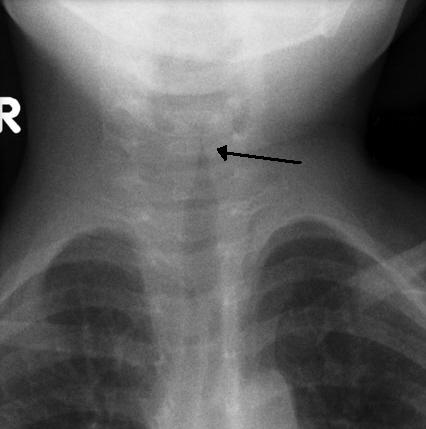
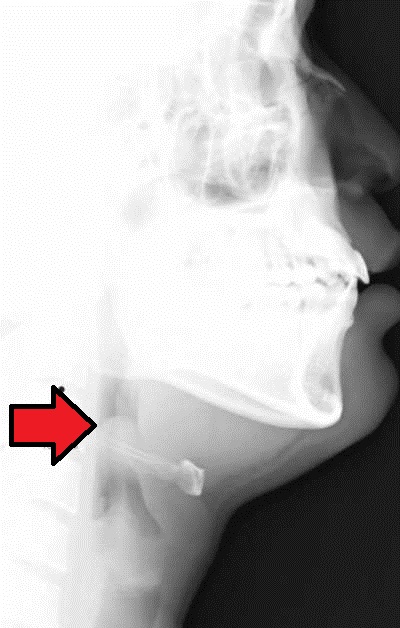
Croup is diagnosed at the bedside. Routine imaging and labs are not needed. Save radiography for the child in whom another diagnosis is suspected.
| Condition | Distinguishing Features | Key Test or Finding |
|---|---|---|
| Croup | 6 months to 3 years; barking cough, hoarseness, stridor; no drooling; not toxic | Clinical diagnosis; no test required |
| Bacterial tracheitis | Usually under 6 years; high fever; rapidly progressive; appears toxic; often Staphylococcus aureus | Neck radiograph: irregular tracheal mucosa; CBC |
| Epiglottitis | 3 to 12 years; sore throat, dysphagia, drooling, muffled voice; sniffing posture; cough often absent | Neck radiograph: thickened epiglottis (thumb sign). Do not examine the throat unless the airway team is ready |
| Foreign body aspiration | Under 3 years; sudden choking or drooling; no prodrome | History of witnessed choking; airway endoscopy |
| Anaphylaxis or angioedema | Exposure, hives, lip or tongue swelling, rapid onset | Clinical; IM epinephrine (see Medications & Dosing) |
In one intensive care series, drooling was highly sensitive and specific for epiglottitis. Cough is what sets croup apart. The steeple sign on the neck radiograph is neither specific nor sensitive for croup.
Management by Severity
Every child with croup gets dexamethasone, whatever the severity. Moderate or severe croup adds nebulized epinephrine. Agitation makes the airway worse, so keep the child calm, comfortable and with a caregiver.
Mild (Westley 2 or less)
- Dexamethasone once, by mouth if the child can swallow (see Medications & Dosing).
- Oxygen for hypoxemia or severe respiratory distress.
- Rescore after treatment. Discharge or transport follows local protocol and medical direction.
Moderate or Severe (Westley 3 or more)
- Dexamethasone as above.
- Nebulized epinephrine, racemic 2.25% or L-epinephrine 1 mg/mL, per protocol, for stridor at rest or respiratory distress. Epinephrine is recommended for moderate to severe croup. Rescore 10 to 30 minutes later. In the 1978 racemic trial, scores improved at 10 and 30 minutes but not at 120 minutes.
- Observe at least 2 hours after the last epinephrine dose before any discharge.
- Transport and escalate if stridor at rest, retractions or cyanosis persist, the score does not fall, or the child needs repeated epinephrine. Thresholds are protocol-dependent.
Treatments That Do Not Help
- Humidified mist: Mist does not meaningfully help moderate croup. Do not use it as treatment.
- Heliox: The evidence is thin. A 2021 Cochrane review found benefit that is uncertain. Use it only where protocol and medical direction allow.
- Outdoor cold air: One single-center randomized trial found that 30 minutes of outdoor air below 10 °C, added to oral dexamethasone, improved the Westley score at 30 minutes more often than room air did (49% vs 24%). Think of it as an adjunct. It never replaces steroid or epinephrine.
Management by Type: Bacterial Tracheitis & Epiglottitis
Bacterial tracheitis and epiglottitis are the ones to suspect. Think of them when the child looks toxic, runs a high fever, drools, has a muffled voice, sits in a sniffing position, or fails to respond to croup treatment.
- Protect the airway first: keep the child with the caregiver, sitting upright. Do not examine the throat or lay the child flat unless the airway team is ready to intubate.
- Intubate for severe airway obstruction: tracheal intubation, supportive therapy and broad-spectrum antibiotics are appropriate in severe airway infection and obstruction (Paramedic/RN/CCT, per local protocol).
- Antibiotics: Staphylococcus aureus leads in published series. Methicillin-sensitive strains dominated one 2019 case series (see References). Ceftriaxone on its own leaves MRSA uncovered, so empiric regimens add an agent active against S. aureus, MRSA included (for example vancomycin), chosen per local antibiogram, pediatric infectious disease input and protocol. Ceftriaxone dosing is in the table below.
- Steroids: No evidence shows glucocorticoids change the outcome in bacterial tracheitis. Don't expect dexamethasone to treat these conditions.
Medications & Dosing
| Drug | Dose & Route | Max | Notes |
|---|---|---|---|
| Dexamethasone | 0.6 mg/kg PO, IM or IV once = 0.15 mL/kg of 4 mg/mL (IM or IV) |
16 mg per dose (protocol cap; some protocols use 10 mg) |
Single dose for any severity. PO when the child can swallow. The 0.15 mg/kg dose is an alternative in some protocols: the 2023 Cochrane review found no difference at 2 hours, and 0.6 mg/kg had the better 24-hour score in one trial. If dexamethasone cannot be given, nebulized budesonide or oral prednisolone are alternatives per protocol; AFP 2018 prefers dexamethasone, which was superior to budesonide for symptom scores. |
| Racemic epinephrine 2.25% High-alert |
0.05 mL/kg nebulized (volume of 2.25% solution) |
0.5 mL per dose |
Moderate or severe croup. Dilution per protocol. Effect is seen within 10 to 30 minutes and wears off; observe at least 2 hours. The L-epinephrine-equivalent dose is about 0.5 mg/kg, the same as the L-epinephrine row; the volume is tenfold smaller. |
| L-epinephrine 1 mg/mL (1:1,000) High-alert |
0.5 mL/kg nebulized = 0.5 mg/kg of 1 mg/mL |
5 mL (5 mg) per dose |
Conventional volume per AFP 2018 and the 2026 review. One RCT found 0.1 mg/kg (max 1 mg) not inferior in moderate to severe croup. Off-label route. Confirm the volume with protocol. |
| Epinephrine 1 mg/mL (anaphylaxis, if it is the differential) High-alert |
0.01 mg/kg IM = 0.01 mL/kg of 1 mg/mL |
0.3 mg per dose |
Repeat every 5 to 15 minutes as needed. Same dose as the Pediatric Weight-Based Dosing page. |
| Ceftriaxone | 50–75 mg/kg/day IV or IM, once daily or divided every 12 hours |
2 g per day |
Serious-infection dose from the E3 ceftriaxone page (label). Does not cover MRSA: add S. aureus or MRSA coverage per protocol (see Management by Type). |
Treat all three epinephrine rows as high-alert. Doses vary by protocol; follow local protocols and medical direction.
Monitoring, Reassessment & Disposition
| Parameter | Target or Timing | Notes |
|---|---|---|
| Westley score | Before treatment, then 10 to 30 minutes after each nebulized dose | A falling score is the sign of response. A score that does not fall is a reason to escalate. |
| Work of breathing and stridor | Continuously while on the stretcher | Retractions, stridor at rest, altered consciousness: escalate and call the airway team. |
| Oxygenation | SpO₂ target per protocol | Oxygen for hypoxemia or severe distress. Cyanosis means severe disease. Minimize agitation, which worsens the airway. |
| Heart rate and rhythm | With each epinephrine dose | Frequent treatments need monitoring for adverse cardiac effects. |
| Observation period | At least 2 hours after the last epinephrine dose | The 2026 review found the epinephrine effect was not sustained at 2 hours. |
- Discharge: Send the child home only when the score is low, the child is comfortable after the observation period, and caregivers can recognize warning signs. Follow local protocol.
- Admission or transfer: Admit or transfer for persistent severe signs, a need for repeated epinephrine, or any airway concern. Thresholds are protocol-dependent.
Pitfalls & Safety Checks
| Pitfall | Consequence | Prevention |
|---|---|---|
| Mixing up racemic and L-epinephrine volumes | A wrong-volume nebulization: the volumes differ tenfold although the drug doses are similar (about 0.5 mg/kg L-epinephrine equivalent), so the error is roughly a 10-fold overdose or underdose | Read the drug, concentration and volume (0.05 mL/kg racemic vs 0.5 mL/kg L-epinephrine) back |
| Examining the throat of a drooling child | Complete airway obstruction in epiglottitis | Keep the child with the caregiver, upright; examine only with the airway team ready |
| Expecting dexamethasone to work now | Persistent stridor and the wrong reassurance | Epinephrine bridges the wait; steroid response builds over about 2 hours |
| Discharging soon after epinephrine | Rebound of symptoms after the effect wears off | Observe at least 2 hours after the last dose |
| Using humidified mist as treatment | Delay in effective treatment | Give steroid and epinephrine; mist has no significant benefit |
| Treating the steeple sign as proof | Missed bacterial tracheitis or epiglottitis | Use the clinical picture; the sign is neither specific nor sensitive |
Special Populations
Infants Under 6 Months
- Croup is less typical this young. Stridor that worsens with crying points to another cause, such as a laryngeal or airway hemangioma.
- Epiglottitis and bacterial tracheitis stay on the list. Age does not rule them out.
Recurrent Croup
- More than two episodes a year calls for evaluation. Clinically significant bronchoscopy findings were linked to prior intubation, age under 3 years and prematurity.
Children With Heart Disease or Frequent Treatment
- Nebulized epinephrine can push the heart rate up and cause other cardiac effects. Repeated treatments mean repeated monitoring.
Adolescents
- Past the AFP age range, croup is uncommon. Rule out epiglottitis and the other causes of stridor.
- Weight-based doses stop at the stated maximum. For adult dosing, use protocol thresholds.
Prehospital & Transport Considerations
| Level | Typical Role in Croup |
|---|---|
| EMT | Assess stridor, retractions, cyanosis and mental status; keep the child calm and upright with a caregiver; oxygen per protocol; report to the paramedic |
| AEMT | As EMT; medication routes and doses per state and agency protocol |
| Paramedic | Westley score before and after treatment; dexamethasone and nebulized epinephrine per protocol; transport decision |
| RN (ED/ICU) | Rescore; dexamethasone and nebulized epinephrine; observation of at least 2 hours; airway team |
| Critical Care Transport | Airway and ventilation for a child who deteriorates; steroid and epinephrine continued per protocol; observation during transport |
Roles are usually set per state or agency protocol.
- Keep the child with a caregiver: Crying makes the airway worse, so have the caregiver hold the child upright and do not separate them.
- Handoff: give a structured handoff (MIST or IMIST-AMBO) with the Westley score before and after each treatment and the time of every dose.
- Cold air: Where protocol allows, a short outdoor cold-air exposure may add to the steroid. It never stands in for dexamethasone or epinephrine.
Clinical Pearls
References
- Aregbesola A, Tam CM, Kothari A, Le ML, Ragheb M, Klassen TP. Glucocorticoids for croup in children. Cochrane Database Syst Rev. 2023;1(1):CD001955. https://pubmed.ncbi.nlm.nih.gov/36626194/
- Smith DK, McDermott AJ, Sullivan JF. Croup: diagnosis and management. Am Fam Physician. 2018;97(9):575–580. https://www.aafp.org/pubs/afp/issues/2018/0501/p575.html
- Westley CR, Cotton EK, Brooks JG. Nebulized racemic epinephrine by IPPB for the treatment of croup: a double-blind study. Am J Dis Child. 1978;132(5):484–487 (landmark trial). https://pubmed.ncbi.nlm.nih.gov/347921/
- Lee JH, Jung JY, Lee HJ, et al. Efficacy of low-dose nebulized epinephrine as treatment for croup: a randomized, placebo-controlled, double-blind trial. Am J Emerg Med. 2019;37(12):2171–2176. https://doi.org/10.1016/j.ajem.2019.03.012
- Siebert JN, Salomon C, Taddeo I, et al. Outdoor cold air versus room temperature exposure for croup symptoms: a randomized controlled trial. Pediatrics. 2023 Sep;152(3):e2023061365. https://pubmed.ncbi.nlm.nih.gov/37525974/
- Wei Y, Li L, Wei N, Pu Y, Zhao J, Xiong P. Nebulized epinephrine for croup in children: an updated systematic review. Front Pediatr. 2026;14. https://doi.org/10.3389/fped.2026.1886410
- Casazza G, Graham ME, Nelson D, et al. Pediatric bacterial tracheitis: a variable entity: case series with literature review. Otolaryngol Head Neck Surg. 2019;160(3):546–549. https://pubmed.ncbi.nlm.nih.gov/30348058/
- Moraa I, Sturman N, McGuire TM, van Driel ML. Heliox for croup in children. Cochrane Database Syst Rev. 2021;8(8):CD006822. https://pubmed.ncbi.nlm.nih.gov/34397099/
Medical Disclaimer
- For Educational Purposes Only: This content is intended for educational reference and should not be used for clinical decision-making.
- Not a Substitute for Professional Judgment: Always consult your local protocols, institutional guidelines, and supervising physicians.
- Verify Before Acting: Users are responsible for verifying information through authoritative sources before any clinical application.