

Bedside Snapshot
- Recognize
- Hematemesis or melena (upper source); hematochezia (lower source, or a brisk upper bleed). Hypotension, tachycardia or syncope with any of these means active hemorrhage.
- Red Flags
- Hypotension or tachycardia; syncope or confusion; hemoglobin under 7 g/dL; known cirrhosis; bleeding on an anticoagulant or antiplatelet; ongoing melena or hematochezia
- First Actions
- Two large-bore IVs or IO; oxygen; suction and keep NPO; transfuse per hemoglobin and instability; protect the airway before endoscopy if mentation is altered
- Key Doses
- Octreotide 50 mcg IV bolus, then 25–50 mcg/hr for 2–5 days (suspected variceal); ceftriaxone 1 g IV every 24 hr; pantoprazole 80 mg IV, then 8 mg/hr for 72 hr after endoscopic hemostasis
- Don't Miss
- Tranexamic acid (no benefit, more VTE); routine NG tube before endoscopy; FFP to correct an INR alone; a PPI in place of endoscopy; brisk hematochezia that is upper in origin
- Escalate & Transport
- Variceal bleeding: balloon tamponade as a bridge (24 hr) and early TIPS when criteria are met. Lower bleeding: CT angiography, then interventional radiology. Go to a center with 24-hour endoscopy and IR.
Definition & Pathophysiology
Gastrointestinal (GI) bleeding is blood loss from anywhere in the tract. Overt bleeding shows up as hematemesis, melena or hematochezia. Upper bleeds start in the esophagus, stomach or duodenum. Lower bleeds are hematochezia or bright red blood per rectum from a colorectal source (per ACG 2023 definition). Peptic ulcer is the usual culprit in upper bleeds. In cirrhosis, esophageal or gastric varices can be the source.
- Upper GI causes: peptic ulcer disease (the most common cause), other mucosal lesions such as Mallory-Weiss tears, and varices from portal hypertension
- Lower GI causes: diverticular bleeding, angioectasias, ischemic colitis, hemorrhoids, colorectal neoplasia, postpolypectomy bleeding, colitis and rectal ulcers
- Mechanism: an eroded ulcer opens an artery or vein. A varix bleeds when its wall tension runs high. Wall tension climbs with portal pressure and with the diameter of the varix (per AASLD 2024)
- Clinical course: some bleeds stop on their own. The outcomes risk tools try to predict are rebleeding and death. Early resuscitation and early endoscopy change that course
Both pathways start the same way: airway, circulation, IV access. After that, the source and the risk score drive the calls on endoscopy, drugs and transfusion.
Recognition & Red Flags
Typical Presentations
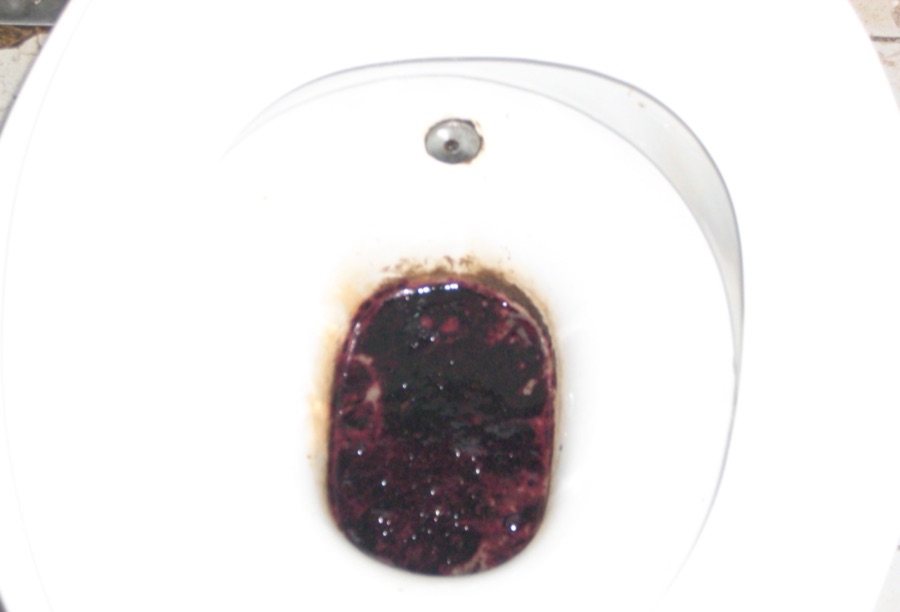
- Upper source: hematemesis or melena (black, tarry, sticky stool). Melena on rectal exam pushes the odds toward an upper source (per ACG 2023)
- Lower source: hematochezia, bright red blood per rectum
- Severe hematochezia: don't rule out an upper source. A brisk upper bleed can present as bright red blood. If history and labs make the pretest probability high, get an urgent EGD (per ACG 2023)
Red Flags
- Hemodynamic compromise: hypotension or tachycardia by local protocol thresholds. Systolic pressure and pulse both count toward the Glasgow-Blatchford score
- Syncope or altered mental status
- Hemoglobin under 7 g/dL (with preexisting cardiovascular disease, a higher threshold such as 8 g/dL may be considered, per AABB 2023)
- Bleeding on an anticoagulant or antiplatelet, or with known cirrhosis
- Ongoing melena or hematochezia after initial fluids
Assessment & Diagnostics
At first, the diagnosis is clinical. Start treatment. Then let the labs and risk scores decide disposition and timing.
| Check | Why | Act If |
|---|---|---|
| Hemodynamics and mental status | Volume loss; these are Glasgow-Blatchford items | Hypotension or tachycardia by local protocol: resuscitate and escalate per protocol (see ALS Management) |
| Hemoglobin (serial) | Transfusion trigger; a value taken after fluids can read low (per ACG 2021). Hemoglobin | Under 7 g/dL: transfuse. Hypotensive patients can be transfused above 7 g/dL. A higher threshold such as 8 g/dL may be considered with preexisting cardiovascular disease (per AABB 2023) |
| BUN and creatinine | BUN is a Glasgow-Blatchford item. BUN | Enter in the score; interpret with hemodynamics and source |
| INR, platelets, fibrinogen | Anticoagulant or liver-related coagulopathy. PT/INR | Do not transfuse FFP or platelets to a number alone (per AASLD 2024). Life-threatening anticoagulant bleed: see Anticoagulant Reversal |
| Glasgow-Blatchford score | Identifies very-low-risk patients (score 0 to 1) | Score 0 to 1: may be discharged with outpatient follow-up (per ACG 2021). Higher score: not very low risk; admit and plan endoscopy |
| Child-Pugh class (cirrhosis) | Sets early TIPS candidacy (per AASLD 2024) | Class C 10 to 13, or class B above 7 with active bleeding at endoscopy: pre-emptive TIPS |
| Endoscopy timing | Diagnosis and therapy | Suspected variceal: within 12 hr. Nonvariceal upper: within 24 hr (per ACG 2021) |
| CT angiography (lower source) | First test for ongoing hemodynamically significant hematochezia (per ACG 2023) | Extravasation: interventional radiology for angiography and embolization |
Differential & Mimics
- Anorectal source: hemorrhoids or other anorectal lesions. A careful rectal exam tells you whether the blood comes from the anorectal region (per ACG 2023)
- Upper source presenting as hematochezia: brisk upper bleeds can look like bright red blood. Melena on rectal exam points upper (per ACG 2023)
- Ischemic colitis: one of the common lower sources listed by ACG 2023
- Postpolypectomy bleeding: bleeding after recent colonoscopy or polypectomy (per ACG 2023)
- Dieulafoy lesion or colorectal varices: less common causes (per ACG 2023)
BLS Management
- Scene and airway: assess airway, breathing and circulation first. Call for ALS early when there is hematemesis, melena or hematochezia with dizziness, pallor or low blood pressure.
- Position: lie supine if hypotensive. Turn the patient on the side if vomiting or unconscious, and keep the airway clear.
- Suction and keep NPO: suction blood and emesis. Give nothing by mouth. Why it matters: aspiration pneumonia is the most common infection in patients admitted for variceal bleeding (per AASLD 2024).
- Oxygen to the local SpO₂ target, high flow if the patient is in shock.
- Record the bleeding: color, amount and time of each episode of hematemesis, melena or hematochezia. Ask about cirrhosis, alcohol use, anticoagulants, antiplatelets and prior bleeding. Do not give anticoagulants or antiplatelets, and record the name and time of the last dose.
- Monitor and reassess airway, breathing, pulse, blood pressure and mental status every 5 minutes.
- Transport priority: active bleeding or a hemodynamic change means you go fast, to a hospital with endoscopy.
ALS Management
Doses vary by protocol; follow local protocols and medical direction.
- IV access: two large-bore IVs, or IO if IV access fails (Paramedic/RN/CCT). See IO Access and IV Insertion
- Red cells: transfuse for hemoglobin under 7 g/dL in stable patients (per ACG 2021). A higher threshold such as 8 g/dL may be considered with preexisting cardiovascular disease (per AABB 2023). In suspected variceal bleeding, avoid over-transfusion. Transfuse hypotensive patients at higher hemoglobin levels (per ACG 2021). See Blood Transfusion
- Plasma and platelets: do not give to correct an INR or platelet count alone (per AASLD 2024). Use massive transfusion or hemorrhagic shock protocols for life-threatening bleeding
- Fluids in hemorrhage: give crystalloid cautiously. In ongoing hemorrhagic shock, blood is preferred to large crystalloid volumes. In suspected variceal bleeding, avoid over-expansion, because higher portal pressure raises rebleeding risk. Follow local protocol. See Hemorrhagic Shock, Massive Transfusion and Damage Control Resuscitation
- Airway: if mentation is altered or aspiration risk is high, place an endotracheal tube before endoscopy (per AASLD 2024). Use RSI per protocol. See RSI
- Suspected cirrhosis: octreotide 50 mcg IV bolus, then 25–50 mcg/hr for 2–5 days (Paramedic/RN/CCT, per protocol; variceal use is off-label). See Octreotide
- Antibiotic: ceftriaxone 1 g IV every 24 hr with the vasoactive drug in suspected cirrhosis (Paramedic/RN/CCT, per protocol). See Ceftriaxone
ED & ICU Management
- Disposition: A Glasgow-Blatchford score of 0 to 1 may mean going home with outpatient follow-up (per ACG 2021). For lower bleeding, an Oakland score of 8 or less supports early outpatient evaluation (per ACG 2023)
- Transfusion: restrictive. Red cells at hemoglobin under 7 g/dL in stable hospitalized adults (per ACG 2021, AABB 2023). AABB 2023 says a higher threshold such as 8 g/dL may be chosen with preexisting cardiovascular disease. In suspected or confirmed variceal bleeding, avoid over-transfusion. Higher portal pressure raises rebleeding risk, and hepatology sets the variceal target. The restrictive trials mostly excluded hemorrhagic shock, so in that setting transfuse per shock protocol (per ACG 2023)
- Endoscopy timing: upper endoscopy within 24 hr of presentation for nonvariceal bleeding (per ACG 2021), and within 12 hr for suspected variceal bleeding (per AASLD 2024)
- Pre-endoscopy erythromycin: 250 mg IV, given 20 to 90 min before endoscopy (per ACG 2021, dose and timing per local protocol). Erythromycin prolongs the QT interval and inhibits CYP3A4. Before you give it, check the QTc and any other QT-prolonging drugs (for example, amiodarone or ondansetron). Avoid it when the QT is prolonged
- Pre-endoscopy PPI: neither recommended nor refused. The trials showed no benefit for further bleeding or mortality (per ACG 2021). A PPI never replaces early endoscopy
- Nonvariceal ulcer, after endoscopic hemostasis: pantoprazole 80 mg IV bolus, then 8 mg/hr for 72 hr, or 40 mg two to four times daily for 3 days, oral if feasible (per ACG 2021). Then oral twice daily for the first 2 weeks. See Pantoprazole
- Endoscopic therapy: guidelines back it for ulcers with active spurting or oozing, and for nonbleeding visible vessels (per ACG 2021). In esophageal varices, band ligation is the standard endoscopic approach (per AASLD 2024)
- Variceal bundle: vasoactive therapy and ceftriaxone 1 g IV every 24 hr from presentation. Octreotide 50 mcg IV bolus, then 25–50 mcg/hr for 2–5 days (see Octreotide, variceal use is off-label). Some protocols use terlipressin as an alternative. Dosing sits with hepatology and local protocol. It is not FDA-approved for variceal bleeding, since its US label covers only hepatorenal syndrome. The boxed warning is for serious or fatal respiratory failure, and volume overload makes that more likely. Don't start it while SpO₂ is below 90%. Monitor SpO₂ continuously, and stop it if SpO₂ falls below 90% (FDA Terlivaz label, reference 9)
- Ceftriaxone duration: until stable for discharge or 5 days, whichever is shorter (per AASLD 2024)
- Nonselective beta-blocker: start when vasoactive therapy stops, and no later than day 5 (per AASLD 2024)
- Uncontrolled variceal bleeding: an endotracheal tube, then balloon tamponade or an esophageal stent as a bridge. Balloon tamponade has a 24 hr limit. A stent can stay up to 1 week (per AASLD 2024)
- TIPS: pre-emptive TIPS within 24 to 72 hr of endoscopy for Child-Pugh class C 10 to 13, or class B above 7 with active bleeding at endoscopy. Rescue or salvage TIPS for rebleeding (per AASLD 2024)
- Persistent or recurrent bleeding: repeat endoscopy, transcatheter embolization if endoscopic therapy fails (per ACG 2021)
- Lower source: CT angiography first for ongoing hemodynamically significant hematochezia (per ACG 2023). If there is extravasation, go to interventional radiology promptly for angiography and embolization. Most inpatients get nonurgent colonoscopy. Urgent colonoscopy within 24 hr has not been shown to reduce rebleeding (per ACG 2023)
- Anticoagulant reversal: warfarin with life-threatening bleeding and a sharply high INR: 4-factor PCC is preferred over FFP (per ACG 2023). Dabigatran: idarucizumab. Apixaban or rivaroxaban: andexanet alfa is no longer marketed in the US (AstraZeneca ended US sales on December 22, 2025, per FDA), so use 4-factor PCC per local protocol (off-label for these drugs, no labeled dose). See Anticoagulant Reversal, Prothrombin Complex Concentrate and Vitamin K
Transport Considerations
- Destination: a hospital with 24-hour endoscopy, interventional radiology and ICU. For suspected variceal bleeding, pick a center that can scope within 12 hr and place a TIPS or balloon tamponade
- Clock: endoscopy targets start the clock at hospital presentation. That is 12 hr for suspected variceal bleeding and 24 hr for other upper bleeding (per AASLD 2024, ACG 2021)
- In transit: continuous ECG and SpO₂, blood pressure and pulse every 5 minutes, suction at hand, watch for hematemesis and airway change, reassess the need for blood
- Infusions: an octreotide infusion (25–50 mcg/hr) on a pump, if started, keep its start time and rate on the handoff
- Equipment: two large-bore IVs or IO, suction, airway kit and RSI drugs per protocol, blood per protocol. Do not place an NG tube routinely before endoscopy (per AASLD 2024)
- Handoff: time and volume of each bleed, hemoglobin trend, blood given, drugs and times (octreotide, ceftriaxone, PPI, erythromycin), cirrhosis status, last anticoagulant dose and any reversal given
Special Populations
- Pediatrics: use weight-based dosing and pediatric vital signs (Weight-Based Dosing, Pediatric Vital Signs). For hemodynamically stable critically ill children without a hemoglobinopathy, cyanotic heart disease or severe hypoxemia, the restrictive red cell threshold is 7 g/dL (per AABB 2023). Pediatric GI bleeding has different causes than adult bleeding. Variceal bleeding in children reflects portal hypertension. Transfer significant bleeding to a pediatric center with pediatric GI and critical care. This page doesn't verify a pediatric dose for octreotide, ceftriaxone, pantoprazole or erythromycin. Use pediatric GI or critical care direction
- Pregnancy: for suspected variceal bleeding, octreotide or somatostatin may be used. Terlipressin should be avoided, since it stimulates uterine contraction (per AASLD 2024). The early TIPS trials excluded pregnant patients (per AASLD 2024)
- Older Adults: lower GI bleeders are older, with more comorbidities, higher transfusion needs and longer stays (per ACG 2023)
- Hepatic Impairment: grade cirrhosis with Child-Pugh. That class sets TIPS timing (per AASLD 2024). Avoid routine FFP and cryoprecipitate for the INR (per AASLD 2024). Confusion in cirrhosis can be hepatic encephalopathy, which GI bleeding can trigger, or alcohol withdrawal. Check glucose and treat per protocol. Lactulose and encephalopathy care sit outside this page
- Patients on Anticoagulants: reversal is for life-threatening bleeding that doesn't respond to resuscitation and to stopping the drug (DOAC), or for a sharply high INR (warfarin) (per ACG 2023). See Anticoagulant Reversal
Pitfalls & Safety Checks
- Error: tranexamic acid for GI bleeding. HALT-IT (12,009 patients) found death from bleeding at 4% in both groups. Venous thromboembolism was higher with TXA (0.8% vs 0.4%). ACG 2023 recommends against antifibrinolytics in lower GI bleeding. Outside a trial, don't give TXA for GI bleeding
- Error: routine NG tube before endoscopy. AASLD 2024 discourages routine pre-endoscopic NG placement. Aspiration pneumonia is the most common infection in patients admitted for variceal bleeding
- Error: FFP or platelets for an INR or platelet count alone. Variceal bleeding has shown no benefit from it. Liberal plasma can worsen portal pressure and survival (per AASLD 2024)
- Error: waiting for endoscopy before the vasoactive drug and antibiotic. Start both as soon as possible in known or suspected cirrhosis (per AASLD 2024)
- Error: a PPI in place of endoscopy. A pre-endoscopy PPI has shown no benefit for further bleeding or mortality (per ACG 2021). The endoscopy clock still runs: 24 hr for nonvariceal, 12 hr for variceal
- Error: applying the restrictive transfusion threshold in shock. The threshold trials mostly excluded shock. For hypotensive patients, transfuse per protocol (per ACG 2021, ACG 2023)
- Error: assuming severe hematochezia is lower. A brisk upper bleed can look like bright red blood. Perform urgent EGD when the pretest probability of an upper source is high (per ACG 2023)
Clinical Pearls
References
- Laine L, Barkun AN, Saltzman JR, Martel M, Leontiadis GI. ACG Clinical Guideline: Upper Gastrointestinal and Ulcer Bleeding. Am J Gastroenterol. 2021;116:899–917. https://doi.org/10.14309/ajg.0000000000001245
- Sengupta N, Feuerstein JD, Jairath V, et al. Management of Patients With Acute Lower Gastrointestinal Bleeding: An Updated ACG Guideline. Am J Gastroenterol. 2023;118:208–231. https://doi.org/10.14309/ajg.0000000000002130
- Kaplan DE, Ripoll C, Thiele M, et al. AASLD Practice Guidance on risk stratification and management of portal hypertension and varices in cirrhosis. Hepatology. 2024;79:1180–1211. https://doi.org/10.1097/HEP.0000000000000647
- Carson JL, Stanworth SJ, Guyatt G, et al. Red Blood Cell Transfusion: 2023 AABB International Guidelines. JAMA. 2023;330:1892–1902. https://doi.org/10.1001/jama.2023.12914
- Roberts I, Shakur-Still H, Afolabi A, et al. Effects of a high-dose 24-h infusion of tranexamic acid on death and thromboembolic events in patients with acute gastrointestinal bleeding (HALT-IT): an international randomised, double-blind, placebo-controlled trial. Lancet. 2020;395:1927–1936. https://doi.org/10.1016/S0140-6736(20)30848-5
- Villanueva C, Colomo A, Bosch A, et al. Transfusion strategies for acute upper gastrointestinal bleeding. N Engl J Med. 2013;368:11–21 (landmark trial). https://doi.org/10.1056/NEJMoa1211801
- Blatchford O, Murray WR, Blatchford M. A risk score to predict need for treatment for upper-gastrointestinal haemorrhage. Lancet. 2000;356:1318–1321 (landmark derivation study). https://doi.org/10.1016/S0140-6736(00)02816-6
- United States Food and Drug Administration. Update on Andexxa (andexanet alfa) safety; safety communication dated December 18, 2025 (AstraZeneca ending its sales, effective December 22, 2025). https://www.fda.gov/vaccines-blood-biologics/safety-availability-biologics/update-safety-andexxa
- United States Food and Drug Administration. TERLIVAZ (terlipressin) prescribing information (2022 label), NDA 022231; boxed warning for serious or fatal respiratory failure; indication limited to hepatorenal syndrome. https://www.accessdata.fda.gov/drugsatfda_docs/label/2022/022231s000lbl.pdf
Medical Disclaimer
- For Educational Purposes Only: This content is intended for educational reference and should not be used for clinical decision-making.
- Not a Substitute for Professional Judgment: Always consult your local protocols, institutional guidelines, and supervising physicians.
- Verify Before Acting: Users are responsible for verifying information through authoritative sources before any clinical application.