

Bedside Snapshot
- Recognize
- Cardiac arrest after trauma: no pulse and no effective breathing. When trauma is evident or suspected, treat it as traumatic arrest: hemorrhage, airway and chest causes come first
- Red Flags
- Obvious injuries incompatible with life, signs of prolonged arrest, or a valid DNR order. A non-shockable rhythm carries an extremely low chance of ROSC; mechanism or rhythm alone should not end resuscitation
- First Actions
- Control external bleeding: direct pressure, packing, tourniquet
- Secure the airway by the least invasive method
- Decompress the chest only for suspected tension
- Compressions are secondary to life-saving steps; do not delay them for compressions
- Key Doses
- Epinephrine (not routine): 1 mg IV/IO every 3–5 min only where protocol uses it, after LSIs. The 1 mg dose is standard ACLS, not a TOHCA recommendation; the statement gives no dose. TXA and blood: Hemorrhagic Shock page
- Don't Miss
- Hypovolemia resuscitation cannot correct. Missed pleural space on needle thoracostomy: 34.6% of 124 lateral needles (2026 autopsy series, 77 non-transported patients); lateral placement reached pleura more often than anterior
- Escalate & Transport
- Trauma center per local protocol, with an early transport decision. ROSC needs surgical or interventional bleeding control and post-arrest care. Thoracotomy is a hospital decision under strict criteria
Definition & Pathophysiology
Traumatic cardiac arrest is an arrest caused by injury. The 2025 joint position statement calls it traumatic out-of-hospital circulatory arrest (TOHCA). The statement lists the possible causes: massive hemorrhage, airway obstruction, obstructive shock, respiratory disturbance, cardiogenic causes and massive head trauma. Several of these are mechanical or volume problems. Start with the cause, not the medical arrest algorithm.
- Mechanism: Compressions come second. The joint statement puts the life-saving interventions first (hemorrhage control, airway, and chest decompression for suspected tension pneumothorax) and advises against routine epinephrine before them.
- Published outcomes: The numbers are low. Survival to discharge was 1.9% in a Nova Scotia population-based registry (1,042 adults, 2007–2023). One Level 1 center’s resuscitative thoracotomy cohort reported 5.8% (467 patients). A multicenter cohort of 996 children and adults (2010–2019) reported 7.4% survival at 30 days.
- Blunt and penetrating injury: Blunt trauma made up 71.7% of the Nova Scotia cohort. Where penetrating injury is rare, a 2026 Austrian Delphi consensus stresses strict indications, trauma-center and physician-led prerequisites, and the clamshell technique.
Recognition & Red Flags
Presentation
- Arrest after injury: unresponsive with no pulse and no effective breathing after a penetrating or blunt mechanism.
- Hidden source: the bleed may sit in the chest, abdomen, pelvis or thigh. A small external wound does not exclude major bleeding.
Trauma changes the first steps: Trauma evident or suspected? Start with hemorrhage, airway and chest causes. Cause unclear, especially without clear signs of life-threatening trauma? Standard BCLS and ACLS apply.
Red Flags
- Penetrating trauma with no pulse
- Non-shockable rhythm (PEA or asystole): an extremely low likelihood of return of spontaneous circulation (ROSC) or survival with neurologic recovery
- Clinical concern for tension pneumothorax
- Any withhold criterion (see Assessment & Diagnostics)
Assessment & Diagnostics
You make this diagnosis at the bedside. Life-saving interventions come first, before the monitor and before POCUS. The checks below decide whether to continue, withhold or stop.
| Check | Why | Act If |
|---|---|---|
| Injury pattern and mechanism | Locates bleeding and obstruction; applies the withhold check | Injuries incompatible with life, or signs of prolonged arrest: withhold per protocol. Mechanism alone should not end resuscitation |
| Advance directives | Documented patient wishes | DNR, DNAR or allow-natural-death order: withhold, per the joint statement |
| Rhythm | Sets the shock pathway and the outlook | Shockable: defibrillate per the adult pathway. Non-shockable: very low chance of ROSC, but not the sole reason to stop |
| Chest exam | Identifies the chest indication for decompression | Clinical concern for tension: decompress per protocol. No empiric bilateral decompression without suspected chest trauma |
| Point-of-care ultrasound (POCUS), where carried | Absent cardiac motion may inform prognosis | Use after the indicated life-saving interventions; should not delay them |
| Prehospital CPR duration | Longer CPR before thoracotomy tracks worse survival | No universal time cutoff is established: use local termination criteria and medical direction |
Differential & Mimics
- Medical arrest with an unclear cause: When the cause is unclear, especially without clear signs of life-threatening trauma, standard BCLS and ACLS apply. See Adult Cardiac Arrest.
- Hemorrhagic shock with a pulse: not arrest yet. Resuscitate per Hemorrhagic Shock.
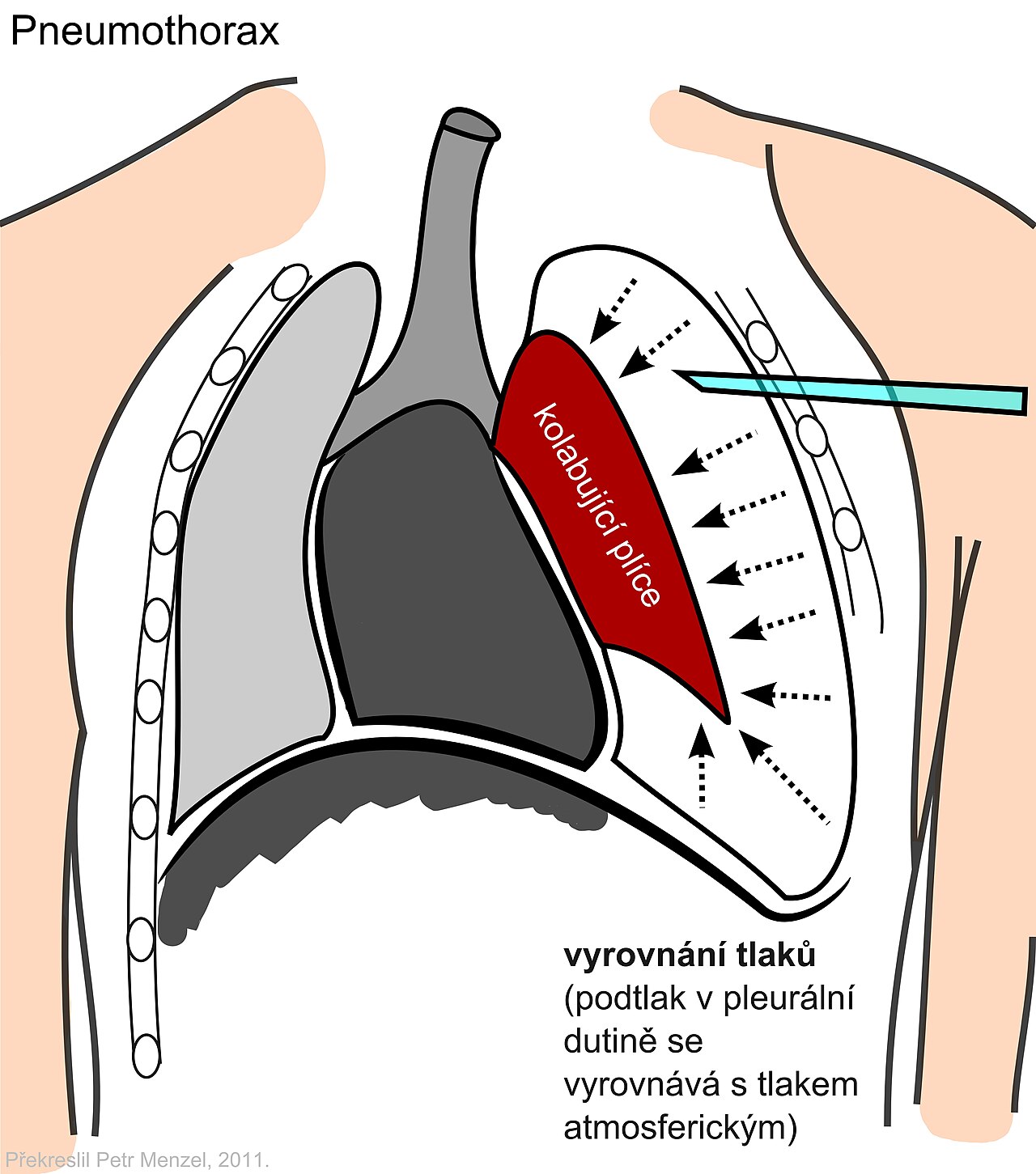
- Tension pneumothorax without arrest: clinical concern is reason enough to decompress. See Pneumothorax, Tension Pneumothorax and Hemothorax.
BLS Management
- Scene safety and mechanism: note the mechanism, time of injury, and any anticoagulant or antiplatelet use.
- Stop external bleeding: direct pressure, wound packing and tourniquets, per protocol. The joint statement lists these first. See Hemorrhage Control.
- Airway: use the least invasive approach that keeps the airway patent, oxygenation and ventilation adequate.
- Compressions secondary to the steps above: external chest compressions may be considered, but only secondary to the life-saving interventions. Do not delay or interrupt bleeding control or airway care to compress.
- Notify and decide on transport early: identify patients who may benefit from a trauma center when transport is safe and appropriate, and request ALS.
ALS Management
Doses vary by protocol; follow local protocols and medical direction. Your scope sets the limit on each action.
- Life-saving interventions first (Paramedic/RN/CCT): tourniquet, hemostatic packing or pelvic binder per protocol, before any drug. See Hemorrhage Control.
- Volume or blood resuscitation (Paramedic/RN/CCT): for suspected hemorrhage, go by protocol and the Hemorrhagic Shock page. It is not on the joint statement’s life-saving-intervention list. Observational data tie fluid infusion to better sustained ROSC and 30-day survival. The page gives no dose.
- Chest decompression (Paramedic/RN/CCT): clinical concern of tension pneumothorax is the trigger, per protocol. Without suspected chest trauma, bilateral decompression on a guess is not indicated. See Needle Decompression and Figure 1.
- Access (Paramedic/RN/CCT): IV or IO access per protocol. See IO Access.
- Monitor after the life-saving interventions: place the cardiac monitor and POCUS once the indicated interventions are done, not before.
- Epinephrine (Paramedic/RN/CCT): not routine. Where the protocol uses it, give 1 mg IV/IO every 3–5 min, and never before the life-saving interventions above. See Epinephrine IV.
- Shockable rhythm (Paramedic/RN/CCT): defibrillate per the adult pathway. See Defibrillation.
- Airway device (Paramedic/RN/CCT): supraglottic airway or intubation per protocol. See Supraglottic Airway and Intubation.
ED & ICU Management
- Definitive hemorrhage control: surgery, angioembolization or other procedures per the Hemorrhagic Shock page.
- Resuscitative thoracotomy (hospital decision): criteria differ by system, so know which set yours uses. EAST looks first at signs of life. WTA looks at prehospital arrest time. In a 2026 single-center cohort of 467 patients, 98.5% met EAST criteria and 5.8% survived to discharge. A 2026 Austrian multisociety consensus calls for strict indications and major trauma-center and physician-led prerequisites, and it prefers the clamshell technique.
- Blood, tranexamic acid and calcium: follow the Hemorrhagic Shock page for product ratio, TXA (see Tranexamic Acid) and calcium.
- After ROSC: post-arrest care and a search for a surgical or interventional source. See Post-Cardiac Arrest Care.
- Head injury: massive head trauma is on the cause list. Manage per Traumatic Brain Injury.
Transport Considerations
- Destination: the target is a trauma center inside the local trauma system. The joint statement stresses regional trauma capability and active EMS physician oversight.
- Transport or stop: decide per local protocol. There is no universal time cutoff. Mechanism or rhythm alone is not a reason to stop.
- In transit: reassess the chest, bleeding sites and airway after each move.
- On-scene factors: cost and organ donation stay out of on-scene decisions, per the joint statement.
- Handoff: time of injury and arrest; each life-saving intervention with its time (tourniquet, packing, decompression side and placement, airway); epinephrine doses and times; rhythm history; prehospital CPR duration.
Special Populations
- Pediatrics: the evidence is thin. A 2026 meta-analysis of 13 studies found survivors reached ROSC early (pooled mean resuscitation about 6 min). No survivor was identified after resuscitation longer than 45 min. Doses are weight-based. See Pediatric Cardiac Arrest and weight-based dosing. The joint statement covers adults only. Pediatric traumatic arrest needs local pediatric protocols and PALS for weight-based equipment and doses. The adult sequence on this page does not cover children.
- Pregnancy: the mother comes first. Resuscitate her with left uterine displacement. Perimortem delivery follows the Cardiac Arrest in Pregnancy pathway.
- Patients on Anticoagulants: bleeding risk runs higher. Reversal depends on the agent, per the Hemorrhagic Shock page.
- Traumatic Brain Injury: massive head trauma appears on the cause list. Brain matter extruding from an open skull injury is a withhold criterion. See Traumatic Brain Injury.
Pitfalls & Safety Checks
Needle placement misses the pleural space: A 2026 autopsy series looked at prehospital needle thoracostomies in traumatic arrest. Of 124 lateral chest-wall needles, 35.5% sat outside the recommended landmarks and 34.6% did not reach the pleural space (77 non-transported patients). Lateral placement reached the pleural space more often than anterior. Check the landmarks. Then reassess after every decompression.
- Error: Starting the medical arrest drug pathway first. Epinephrine is not routine in traumatic arrest, and it does not come before the life-saving interventions.
- Error: Decompressing both sides on a guess, with no chest trauma suspected.
- Error: Stopping on mechanism or rhythm alone. The joint statement says neither is enough by itself.
- Error: Continuing resuscitation past a withhold criterion. Those are injuries incompatible with life, signs of prolonged arrest, or a valid DNR, DNAR or allow-natural-death order.
- Error: Long on-scene CPR that holds up hemorrhage control. In a 2026 cohort of 487 patients who reached the ED and had resuscitative thoracotomy, longer prehospital CPR went with worse outcomes. That is an association. It is not a transport cutoff.
- Error: Letting a POCUS finding make the call. It may inform prognosis after the interventions. It does not make the decision.
Clinical Pearls
Never stop on these alone: mechanism and rhythm are not enough to call it. The joint statement says so. A non-shockable rhythm still carries an extremely low chance of ROSC.
Epinephrine data are observational: Read these as associations. A 2026 propensity-matched registry from Korea found 5.1% survival to discharge with prehospital epinephrine, against 2.6% in matched controls without it. A 2025 multicenter cohort tied epinephrine to sustained ROSC (adjusted OR 4.0), but not to crude 30-day or one-year survival. The joint statement still advises against routine use.
Thoracotomy criteria differ: EAST and WTA criteria pick different patients. Follow the ones your trauma system has adopted.
References
- Breyre AM, George N, Nelson AR, et al. (2025). Prehospital Management of Adults With Traumatic Out-of-Hospital Circulatory Arrest—A Joint Position Statement. Joint statement of the National Association of EMS Physicians, the American College of Surgeons Committee on Trauma and the American College of Emergency Physicians. Ann Emerg Med, 85(3), e25–e39. https://doi.org/10.1016/j.annemergmed.2024.12.015
- Hart L, Lester S, Grady Z, et al. (2026). Eastern vs. Western trauma guidelines for resuscitative thoracotomy: A comparative analysis of indications, outcomes, and philosophical approaches. J Trauma Acute Care Surg. https://doi.org/10.1097/TA.0000000000005166
- Erblich R, Meier J, Mahecic TT, et al. (2025). Associations between four standard interventions as well as epinephrine use and sustained ROSC, 30-day and one-year survival of patients in traumatic cardiac arrest: a multicentre, retrospective cohort study. Scand J Trauma Resusc Emerg Med, 33(1), 165. https://doi.org/10.1186/s13049-025-01486-0
- Chai HS, Park GJ, Kim YM, et al. (2026). Prehospital epinephrine as a bridge to survival in traumatic cardiac arrest: A nationwide propensity score-matched analysis. Am J Emerg Med, 109, 52–57. https://doi.org/10.1016/j.ajem.2026.06.039
- Green RS, Green D, Hannah M, et al. (2026). A population-based analysis of prognostic factors associated with survival in adult traumatic cardiac arrest patients. CJEM, 28(10), 939–948. https://doi.org/10.1007/s43678-026-01247-7
- Engel TW 2nd, Amundson A, Nickel L, et al. (2026). Prehospital Needle Thoracostomies in Traumatic Cardiac Arrest: Forensic Insights into Procedural Performance and Successes. Acad Forensic Pathol. https://doi.org/10.1177/19253621261456952
- Erblich R, Knöll M, Wildner B, et al. (2026). Duration of Resuscitation and Survival of Pediatric Traumatic Cardiac Arrest: A Systematic Review of the Literature and Meta-Analysis. Pediatr Emerg Care. https://doi.org/10.1097/PEC.0000000000003706
- Dünser MW, Grassmann D, Hamp T, et al. (2026). Resuscitative thoracotomy in traumatic cardiac arrest: Multisociety consensus recommendations for settings with a low prevalence of penetrating injuries. Wien Klin Wochenschr, 138 (Suppl 7), 623–640. https://doi.org/10.1007/s00508-026-02771-3
- Yamaguchi K, Takahashi K, Abe T, et al. (2026). Survival after Resuscitative Thoracotomy in the Emergency Department: An Analysis of 487 Trauma Patients with Prehospital Cardiopulmonary Resuscitation. J Am Coll Surg. https://doi.org/10.1097/XCS.0000000000002130
Medical Disclaimer
- For Educational Purposes Only: This content is intended for educational reference and should not be used for clinical decision-making.
- Not a Substitute for Professional Judgment: Always consult your local protocols, institutional guidelines, and supervising physicians.
- Verify Before Acting: Users are responsible for verifying information through authoritative sources before any clinical application.
AI Assistance Notice
AI was used to assist in organizing, paraphrasing, and formatting this information.