

Bedside Snapshot
- Recognize
- Any hyperkalemic ECG change (peaked T, PR or P-wave change, QRS widening, bradycardia, sine wave) at any K⁺ level, or K⁺ ≥6.5 mEq/L. Confirm the lab value; do not wait for it to treat an ECG change.
- Red Flags
- QRS widening, heart rate under 50, junctional rhythm, sine wave, new arrhythmia, weakness or paralysis, or a dialysis patient who has missed a session
- First Actions
- Continuous monitor and 12-lead ECG; IV calcium for any ECG change; insulin with dextrose; nebulized albuterol as adjunct; start potassium removal; check glucose and K⁺ on schedule
- Key Doses
- Regular insulin 10 units IV with dextrose 25 g
- Calcium gluconate 3 g IV over 10 min; calcium chloride 1 g IV/IO push in arrest, or over 5 min peri-arrest or central line; repeat if ECG persists (off-label)
- Albuterol 10–20 mg neb, adjunct only
- Don't Miss
- Dismissing the value as hemolysis and delaying treatment of an ECG change. Rebound hyperkalemia after the insulin shift wears off, and hypoglycemia for hours after insulin.
- Escalate & Transport
- Urgent dialysis for K⁺ ≥6.5 mEq/L in a dialysis patient. Refer for urgent renal or critical-care opinion. Arrhythmia, QRS widening or no response: ICU. Transport to a monitored unit with dialysis access.
Definition & Pathophysiology
Hyperkalemia is a serum potassium (K⁺) above the reference range. The danger is electrical. Potassium slows conduction between myocytes. The PR interval and QRS widen, the P waves flatten and, at the extreme, the heart slows, blocks or stops. This page uses the UK Kidney Association (UKKA) 2026 bands throughout: mild 5.5–5.9, moderate 6.0–6.4 and severe ≥6.5 mEq/L (1 mEq/L equals 1 mmol/L for K⁺).
The atria are more sensitive than the ventricles. The sinoatrial node and His bundle are the least sensitive. That is why sinus slowing and AV block come late.
- Kidney failure: acute kidney injury, CKD stages 4–5 (eGFR under 30 mL/min/1.73 m²) and dialysis dependence, especially after a missed session (UKKA Table 10)
- Drugs: RAAS inhibitors and mineralocorticoid antagonists, potassium-sparing diuretics, supplements, trimethoprim, NSAIDs, non-selective beta-blockers, salt substitutes and digoxin toxicity (UKKA Table 6)
- Shift out of cells: insulin deficiency, including diabetic ketoacidosis (UKKA Table 10)
- Cell breakdown: when cells break open, they dump intracellular K⁺ into the blood. Hemolysis, tissue breakdown, rhabdomyolysis and crush injury all do this.
- Pseudohyperkalemia: a falsely high value. The sample is the problem when it is hemolyzed, delayed or cold. Very high platelet or red-cell counts can do it too, as the UKKA 2026 guideline notes
Calcium protects the heart, but it does not lower K⁺. Here's the catch with insulin: it shifts K⁺ into cells for about 2 hours, then the K⁺ can rebound. That is why a removal step (binder or dialysis) is needed.
Recognition & Red Flags
Presentation
Don't count on symptoms. They are often non-specific, and many patients have none. Severe cases can cause muscle weakness or paresthesias and may progress to flaccid paralysis per the UKKA 2026 guideline. Most cases turn up on a lab result, in a dialysis history or on a 12-lead ECG, not at the bedside.
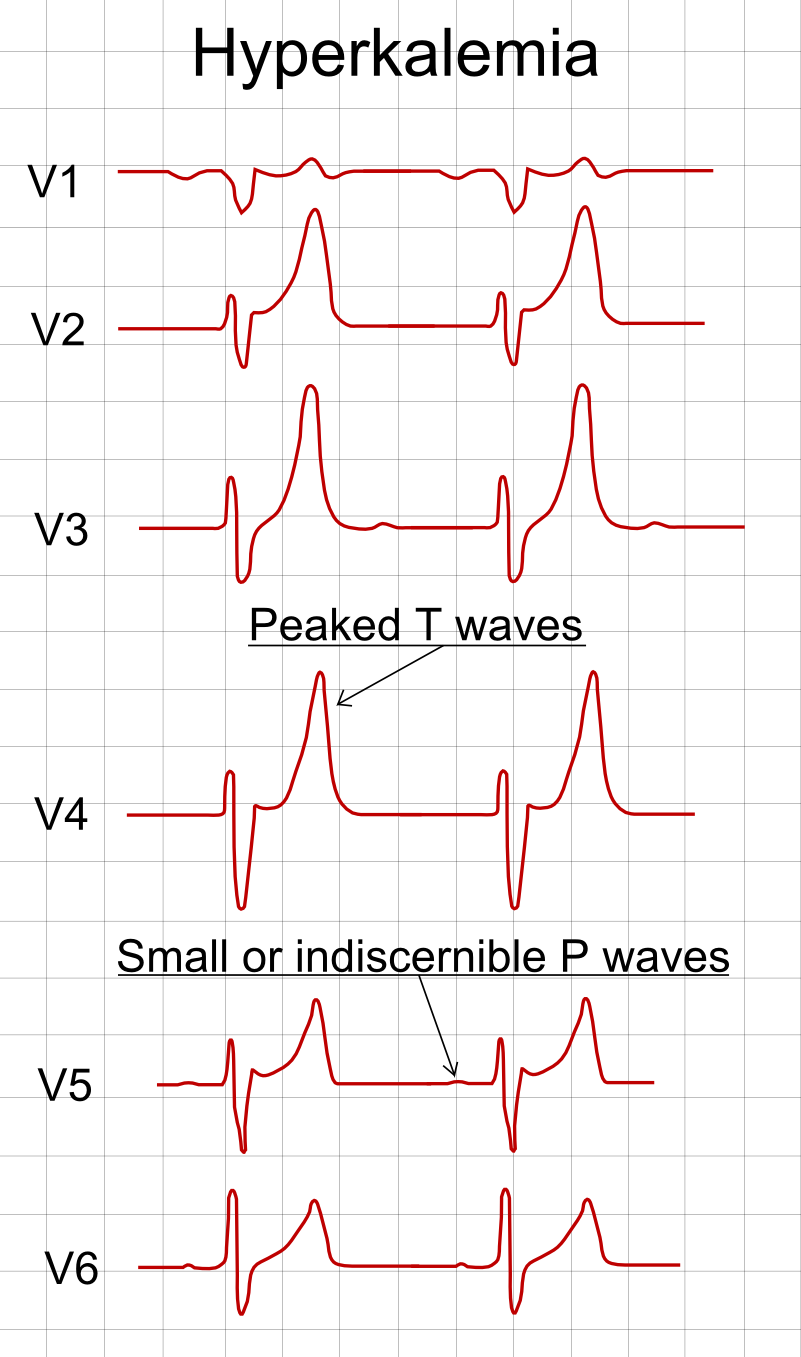
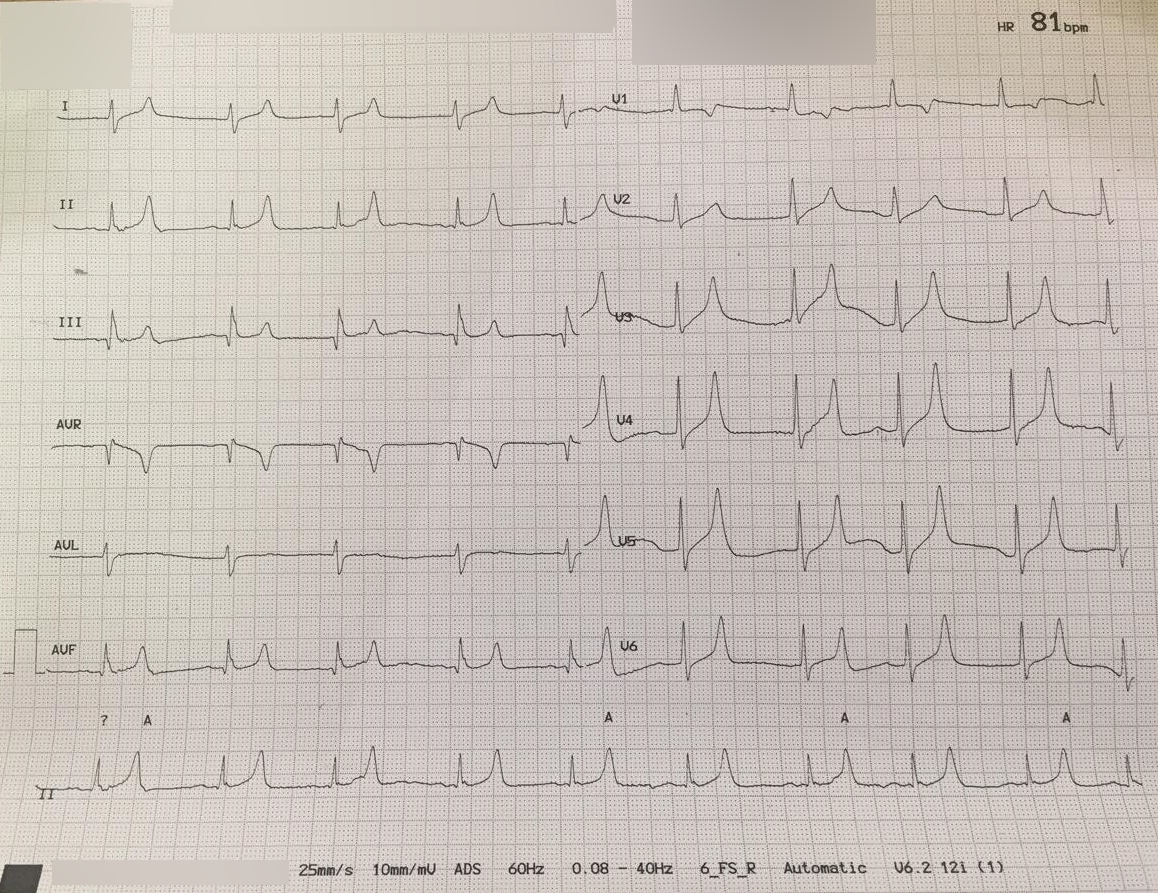
ECG pattern as K⁺ rises
The changes usually come in this order. They don't always come one after another.
- Peaked T waves: tall, narrow-based and symmetric. This is the most common sign, and often the first one you see. On its own, it is rarely life-threatening.
- PR prolongation and small or absent P waves: atrial conduction is slowing.
- QRS widening: ventricular conduction slows. That is a red flag.
- Bradycardia, junctional rhythm, a sine-wave pattern, ventricular arrhythmia or asystole: these come late, and they signal life-threatening toxicity.
Red Flags
- Any hyperkalemic ECG change at any potassium level, or K⁺ ≥6.5 mEq/L
- QRS widening, heart rate under 50 or a junctional rhythm: in one ED cohort, these were the findings most strongly linked to short-term adverse events
- Sine-wave pattern, new arrhythmia, or cardiac arrest
- Weakness or paralysis, or a dialysis patient who has missed a session
Assessment & Diagnostics
Abnormal ECG? Treat first and confirm second. A slow result must not hold up calcium.
| Check | Why | Act If |
|---|---|---|
| 12-lead ECG and rhythm | Shows the effect of K⁺ on conduction and is the trigger for calcium | Any hyperkalemic change: IV calcium now and continuous monitoring (UKKA 14.1–14.2). See 12-lead ECG acquisition and electrolyte ECG |
| Point-of-care K⁺ | Whole-blood result from a blood gas analyzer in minutes (UKKA 15.2) | High value: treat any ECG change now; send a formal laboratory K⁺ at the same time |
| Laboratory K⁺ on a free-flowing sample | Confirms the value and detects pseudohyperkalemia (UKKA 15.1, 15.3) | Suspected pseudohyperkalemia: repeat on paired lithium heparin and clotted samples. Do not delay treatment of an ECG change to do it |
| Blood glucose | Must be known before insulin; hypoglycemia is the main risk (UKKA 16.3.3, 17.2) | Under 126 mg/dL (7.0 mmol/L) before insulin: add the glucose infusion in the ALS section |
| Kidney function, urine output and dialysis history | Identifies AKI, CKD stages 4–5 or a missed dialysis session (UKKA Table 10) | Hemodialysis patient with K⁺ ≥6.5 mEq/L: urgent dialysis (UKKA 18.1). See creatinine |
| Medication review | RAAS inhibitors, NSAIDs, trimethoprim, potassium-sparing diuretics, supplements, non-selective beta-blockers and digoxin (UKKA Table 6) | Hold or review the potassium-raising drug with the prescriber. If digoxin is involved, check the digoxin level |
For more detail, go to the potassium and glucose pages. They cover collection and interpretation.
Differential & Mimics
- Pseudohyperkalemia: a high K⁺ caused by the sample: hemolyzed, delayed or cold, or with very high platelet counts. A normal ECG and a normal K⁺ on a free-flowing repeat tell it apart from true hyperkalemia (UKKA 15.3)
- Hyperacute T waves of early STEMI: a T-wave change alone cannot tell the two apart. Look for PR, P-wave and QRS change, and compare with a prior ECG. See STEMI recognition
- Sodium-channel blocker toxicity (tricyclic antidepressants): wide QRS and hypotension, with a normal K⁺ and a relevant drug history. See sodium bicarbonate
- Bradycardia from other causes: when the K⁺ is normal, the bradycardia pathway applies. See adult bradycardia
BLS Management
- Think of it in high-risk patients: dialysis or CKD, acute kidney injury, crush or prolonged entrapment, a new potassium-raising drug, or weakness with a slow pulse.
- Take the history: the last dialysis session, urine output, medicines (RAAS inhibitors, NSAIDs, trimethoprim, potassium supplements, salt substitutes) and any time of entrapment (UKKA 13.1).
- Monitor: pulse, blood pressure, SpO₂, respiratory effort and mental status. Record a 12-lead ECG if the protocol allows (12-lead ECG acquisition).
- Support: oxygen for hypoxia and a position that eases breathing. Keep the patient still with a cardiac monitor where one is available.
- Call ALS early and report: the K⁺ value and time, the ECG findings, the medicines, the dialysis status and the entrapment time. Request transport priority to a facility that can monitor the heart and start dialysis.
ALS Management
For any ECG change, give calcium first. Shift and remove potassium at the same time. Calcium does not lower K⁺.
- Monitoring (Paramedic/RN/CCT): continuous cardiac monitoring for K⁺ ≥6.5 mEq/L, for any ECG change, and for clinically unwell patients with K⁺ 6.0–6.4 (UKKA 14.2). A 12-lead ECG if available
- IV or IO access (Paramedic/RN/CCT): large-bore access, IO if IV fails (IO access). Give calcium, insulin and dextrose through a large vein
- Calcium for any ECG change (Paramedic/RN/CCT): calcium gluconate 10%, 30 mL (3 g) IV over 10 min, or calcium chloride 10%, 10 mL (1 g) IV over 5 min peri-arrest or with central or deep access, into a patent large vein; in arrest, calcium chloride 1 g IV/IO push. Repeat if the ECG change persists. In arrest or peri-arrest, calcium chloride is the preferred choice (UKKA 16.2b). Calcium works within about 3 minutes, and the effect lasts 30–60 minutes. Differs from FDA label: the US labels list only hypocalcemia and cap the rate (calcium gluconate 200 mg/min for adults, so 3 g takes at least 15 min; calcium chloride 1 mL/min, central or deep vein, no bolus). The hyperkalemia rate here (gluconate 30 mL over 10 min, chloride 10 mL over 5 min) is from UKKA 2026 and is off-label. The gluconate label requires dilution before IV use. See Calcium Gluconate and Calcium Chloride
- Calcium line safety (Paramedic/RN/CCT): confirm a patent, free-flowing IV before calcium. Calcium irritates tissue. If extravasation occurs, stop the infusion at that site, treat per protocol and watch for tissue necrosis (gluconate label). Do not mix calcium with bicarbonate or phosphate, or give it at the same Y-site as ceftriaxone (gluconate label, any age). Give bicarbonate on a separate line.
- Insulin with dextrose (Paramedic/RN/CCT): regular insulin 10 units IV with dextrose 25 g (50 mL of 50%), given over 5–15 min into a large vein, with an independent double check. Recommended for K⁺ ≥6.5 mEq/L and suggested for 6.0–6.4 (UKKA 16.3.1–16.3.2). Insulin dose: some US protocols use 5 units or 0.1 units/kg. A pooled analysis of 10 retrospective studies found less hypoglycemia with lower doses and no difference in K⁺ fall (the Moussavi meta-analysis); a later study (Finder) found 10 units lowered K⁺ more (0.9 vs 0.63 mmol/L); UKKA 2026 states more study is needed before 5 units can be recommended. This site uses 10 units with the glucose rules above. For kidney impairment or low body weight give the same dose with the extra D10 and scheduled checks. Some services do not carry insulin. See Insulin and Dextrose
- Glucose infusion (Paramedic/RN/CCT): if pre-treatment glucose is under 126 mg/dL (7.0 mmol/L), start 10% glucose at 50 mL/h for 5 hours (25 g) after the insulin (UKKA 16.3.3)
- Albuterol, adjunct only (Paramedic/RN/CCT): nebulized albuterol 10–20 mg for K⁺ ≥6.5 mEq/L, optional for 6.0–6.4. It is never the only treatment for severe hyperkalemia (UKKA 16.4.1–16.4.3). Expect tachycardia, tremor and headache. Use 10 mg only in ischemic heart disease, and use caution with tachyarrhythmia. It starts working in about 30 minutes and peaks at about 2 hours. Not used in cardiac arrest (AHA 2025 Part 10, COR 3: No Benefit, LOE C-EO). Differs from FDA label: off-label dose (label nebulized dose is 2.5 mg for asthma). 10–20 mg is from UKKA 2026. See Albuterol
- Sodium bicarbonate, not routine: UKKA 2026 suggests against routine IV bicarbonate for acute hyperkalemia (16.5, 2C). It is suggested in hyperkalemic cardiac arrest (25.3, 2C); AHA 2025 Part 10 rates it COR 2b, LOE C-EO, effectiveness not well established. See Sodium Bicarbonate
- Airway (Paramedic/RN/CCT): when hyperkalemia is known or suspected, avoid succinylcholine for RSI, because it raises K⁺ (UKKA Table 6 lists suxamethonium). See RSI and Succinylcholine.
- Cardiac arrest from hyperkalemia: run ACLS. The 2025 ACLS cardiac arrest algorithm lists hyperkalemia as a reversible cause. AHA 2025 Part 10 rates IV calcium (LOE C-LD), IV sodium bicarbonate (C-EO) and IV insulin-glucose (C-EO) each COR 2b, effectiveness not well established, and inhaled albuterol COR 3: No Benefit (C-EO). AHA gives a dose for insulin-glucose only: regular insulin 10 units IV over 15–30 min with dextrose 50 g (D50 50 g IV bolus) (Table 3). The calcium chloride 1 g (10 mL of 10%) IV/IO push is from UKKA 2026 (25.1); the sodium bicarbonate 50 mEq IV/IO dose is from UKKA 2026 (25.3) and the FDA label. Differs from UKKA 2026: UKKA 2026 (25.2.1) gives 25 g of glucose (plus D10 50 mL/hr if glucose is under 126 mg/dL); AHA 2025 Table 3 gives 50 g. Consider renal replacement during CPR if hyperkalemia resists medical therapy and staff and equipment are available; consider starting if there is no ROSC within 15 min (UKKA 25.4).
- Bradycardia or instability: treat per the bradycardia protocol and use transcutaneous pacing if needed
ED & ICU Management
- Step 1, protect the heart: IV calcium as in ALS. Give calcium for a toxic ECG, even when dialysis is available right now (UKKA 18.2)
- Step 2, shift: insulin with dextrose. K⁺ starts to fall within about 15 minutes, peaks at 30–60 minutes and holds for up to 2 hours before it usually rebounds gradually (UKKA 16.3). Repeat the insulin-glucose dose if K⁺ is not below 6 mEq/L within 2 hours; seek specialist advice if it remains uncontrolled (UKKA). Each repeat dose raises the hypoglycemia risk
- Glucose schedule: check glucose at 0, 30, 60, 90, 120, 180, 240, 300 and 360 minutes after insulin (UKKA 17.2). Hypoglycemia risk is higher with no diabetes, a pre-treatment glucose under 126 mg/dL, low body weight or kidney impairment (UKKA 16.3.3, 17.2). Give IV insulin only with close glucose and potassium monitoring
- Step 3, remove: UKKA 2026 recommends sodium zirconium cyclosilicate (SZC, Lokelma) in the emergency management of K⁺ ≥6.5 mEq/L (16.6.1a, 1B). The US label says it should not be used as emergency treatment for life-threatening hyperkalemia, because its onset is delayed. Give it as a removal step, never in place of calcium and insulin. Dose: 10 g three times daily for up to 48 hours (US label; UKKA 2026 allows up to 72 hours for severe hyperkalemia), then 10 g daily with adjustment by 5 g. Each 5 g dose contains about 400 mg of sodium: monitor for edema and use caution in heart failure or renal disease (label). Label trial data show a fall by 1 hour. Separate other oral drugs by 2 hours. Patiromer (Veltassa) 8.4 g once daily, adjusted in 8.4 g steps (maximum 25.2 g). Its onset is slow: trial data show the potassium fall by 7 hours. Separate other oral drugs by 3 hours
- Dialysis: a hemodialysis patient with K⁺ ≥6.5 mEq/L needs urgent dialysis (UKKA 18.1). If dialysis is not immediately available, give standard medical therapy (UKKA 18.3). Any patient with life-threatening hyperkalemia, or a poor response to initial therapy, needs an urgent nephrology or critical-care call on renal replacement therapy (UKKA 19.6).
- Diuretics: loop diuretics are an adjunct for chronic hyperkalemia, according to UKKA 2026 (Guideline 7.1). They are not part of the acute algorithm
- Monitoring after treatment: check K⁺ at 1, 2, 4, 6 and 24 hours after identifying and treating moderate or severe hyperkalemia (UKKA 17.1.2). Watch for rebound
- Consults and disposition: urgent renal or critical-care opinion for severe hyperkalemia that persists after initial treatment (UKKA 19.1). Admit to continuous cardiac monitoring; ICU care for any airway, breathing, circulation or conscious-level problem (UKKA 19.4–19.5)
Transport Considerations
- Destination: a monitored ICU or enhanced-care unit with dialysis access for severe hyperkalemia (UKKA 19.5–19.6). A dialysis patient with an ECG change goes to the facility that can start dialysis without delay
- Time targets: calcium works within minutes and wears off in 30–60 minutes. Insulin lowers K⁺ within about 15 minutes. The fall holds for up to about 2 hours, then usually rebounds gradually (UKKA 16.3). Keep glucose checks going for 6 hours, because the hypoglycemia risk lasts that long. Run them on schedule in transit (UKKA 17.2)
- Continue and monitor: keep continuous cardiac monitoring running, repeat the ECG after any calcium dose, keep the 10% glucose infusion on its pump, and check glucose on schedule. Have pacing capability available
- Handoff essentials: K⁺ values with times, ECG before and after treatment, each calcium dose with time, insulin units and dextrose grams with time, the glucose series, each albuterol dose, the last dialysis session, urine output and all medicines
- Equipment: calcium gluconate and calcium chloride, regular insulin, 50% and 10% dextrose, a nebulizer for albuterol, a glucometer and a monitor that records a 12-lead
Special Populations
- Pediatrics: the UKKA 2026 regimens are written for adults. Give calcium for an ECG change or arrest. For adults and children, AHA 2025 Part 10 rates IV calcium in hyperkalemic arrest COR 2b (recommendation 1). In cardiac arrest from suspected hyperkalemia: calcium chloride 20 mg/kg (0.2 mL/kg of 10%) IV/IO slowly over 5 min, max 1 g per dose; peripheral alternative calcium gluconate 100 mg/kg (1 mL/kg of 10%) IV bolus, the NASEMSO v3.0 pediatric gluconate dose in the hyperkalemia arrest pathway (p. 119; that pathway gives no per-dose maximum for children). In pediatric arrest, sodium bicarbonate is a special-circumstance option for hyperkalemia (AHA 2025 Part 8, recommendation 5). No dose is given on this page. Regular insulin 0.1 units/kg IV over 15–30 min, max 10 units, with 10% dextrose 5 mL/kg IV (AHA 2025 Part 10, Table 3). Routine calcium in pediatric arrest is COR 3: No Benefit. Hyperkalemia is a special circumstance (AHA 2025 Part 8, recommendation 6). For non-arrest hyperkalemia no pediatric dose is established here; use weight-based dosing and the pediatric protocol. Use pediatric vital signs. Calcium gluconate is contraindicated in neonates who receive ceftriaxone (FDA label), and the label bars Y-site co-administration with ceftriaxone at any age. Patiromer is labeled for ages 12 and older (4 g daily to start for ages 12–17). Sodium zirconium cyclosilicate has not been established in children (FDA label)
- Pregnancy: No pregnancy-specific hyperkalemia regimen turned up in the sources for this page. Manage as for an adult, with ECG-guided calcium and close monitoring. Involve obstetrics early. Both binder labels say the drugs are not absorbed systemically, so maternal use is not expected to result in fetal exposure (Lokelma) or fetal risk (Veltassa)
- Older Adults: 58% of sodium zirconium cyclosilicate trial participants were 65 or older. The effect showed no overall difference (FDA label). Patiromer users aged 65 and older reported more gastrointestinal adverse reactions (FDA label)
- Renal Impairment: on hemodialysis, start sodium zirconium cyclosilicate at 5 g daily on non-dialysis days, or 10 g if K⁺ is above 6.5 mEq/L (FDA label). Watch for hypokalemia between sessions (FDA label). Insulin sensitivity depends on kidney function. Check glucose closely
- Hepatic Impairment: the sources used for this page identify no specific hepatic adjustment. Follow the regimen above with glucose and potassium monitoring
- Patients on Digoxin: digoxin toxicity can raise K⁺ (UKKA Table 6). The gluconate label says calcium should be avoided in patients receiving cardiac glycosides. Calcium has been linked to digoxin toxicity in case reports only. A retrospective 17-year series cited by UKKA (23 of 161 patients given IV calcium) showed no increase in dysrhythmia or mortality, though UKKA notes methodological concerns. For a hyperkalemic ECG change, treat with calcium under continuous ECG monitoring, check a digoxin level and involve toxicology, who can advise on digoxin immune Fab. See digoxin immune Fab
- Crush injury and rhabdomyolysis: muscle breakdown releases K⁺. UKKA lists rhabdomyolysis among the conditions that put moderate hyperkalemia at risk of further rise. Ask about entrapment and how long it lasted (BLS step 2). When feasible, get a 12-lead ECG and K⁺, and treat any ECG change with IV calcium as in ALS Management. The sources reviewed did not quantify the timing or size of the K⁺ rise after release, so monitor the ECG and K⁺ closely after extrication.
- Patients on Beta-Blockers: non-selective beta-blockers are listed among drugs that increase hyperkalemia risk (UKKA Table 6)
- Patients on RAAS Inhibitors: the most common drug cause. Review the drug with the prescriber rather than stopping it on the bedside
Pitfalls & Safety Checks
- Error: waiting for the lab before treating an ECG change. Give calcium first. It acts within minutes
- Error: treating calcium as the potassium-lowering drug. Calcium only protects the heart, and only for 30–60 minutes. Start insulin with dextrose and a removal step at the same time
- Error: swapping calcium salts mL for mL. Calcium chloride packs about three times more calcium per mL than calcium gluconate. That makes 10 mL of 10% calcium chloride equal to 30 mL of 10% calcium gluconate (6.8 mmol) (UKKA)
- Error: giving calcium too fast or on a shared line. Give calcium at the stated rates (gluconate 30 mL over 10 min; chloride 10 mL over 5 min peri-arrest or with central access, or a 1 g IV/IO push in arrest), not as a rapid bolus outside arrest. These rates exceed the FDA label limits (1 mL/min for calcium chloride, 200 mg/min for calcium gluconate in adults; see ALS). Faster bolus rates can cause hypotension, bradycardia, syncope and arrest. Keep calcium off the bicarbonate, phosphate and ceftriaxone lines (see ALS)
- Error: insulin without dextrose or without glucose checks. Check glucose before insulin and on the schedule above for at least 6 hours
- Error: albuterol alone for severe hyperkalemia (UKKA 16.4.3, 1A), or routine bicarbonate as a potassium-lowering step (UKKA 16.5)
- Error: using sodium polystyrene sulfonate in a patient with bowel dysfunction or with sorbitol. Intestinal necrosis, some of it fatal, is a label warning. Sorbitol raises the risk (FDA label). Binders are not an emergency treatment (label)
- Error: discharging after one normal K⁺, or without a rebound check. Recheck K⁺ at 1, 2, 4, 6 and 24 hours (UKKA 17.1.2)
Clinical Pearls
References
- Alfonzo A, et al. Clinical practice guidelines: Treatment of acute hyperkalaemia in adults (updated July 2026). UK Kidney Association; 2026. https://www.ukkidney.org/sites/default/files/documents/FINAL%20VERSION%20-%20UKKA%20CLINICAL%20PRACTICE%20GUIDELINE%20-%20MANAGEMENT%20OF%20HYPERKALAEMIA%20IN%20ADULTS%20-%20UPDATED%20JULY%202026_0.pdf
- 2025 AHA Guidelines for CPR and ECC, Part 10: Adult and Pediatric Special Circumstances of Resuscitation (Hyperkalemia recommendations 1–4 and Table 3). Cao D, et al. Circulation. 2025;152(16 suppl 2):S578–S672. PMID: 41122889. https://cpr.heart.org/en/resuscitation-science/cpr-and-ecc-guidelines/adult-and-pediatric-special-circumstances-of-resuscitation (DOI https://doi.org/10.1161/CIR.0000000000001380)
- American Heart Association. (2025). 2025 AHA Guidelines for CPR and ECC, Part 8: Pediatric Advanced Life Support, recommendations 5 and 6 (routine sodium bicarbonate and calcium in pediatric arrest: COR 3: No Benefit, except special circumstances such as hyperkalemia). https://cpr.heart.org/en/resuscitation-science/cpr-and-ecc-guidelines/pediatric-advanced-life-support
- Moussavi K, et al. Reduced alternative insulin dosing in hyperkalemia: a meta-analysis of effects on hypoglycemia and potassium reduction. Pharmacotherapy. 2021. https://doi.org/10.1002/phar.2596
- Finder, et al. 5 versus 10 units of intravenous insulin for hyperkalemia in patients with moderate renal dysfunction. J Emerg Med. 2022. https://doi.org/10.1016/j.jemermed.2021.10.027
- Jessen MK, et al. Pharmacological interventions for the acute treatment of hyperkalaemia: a systematic review and meta-analysis. Resuscitation. 2025;208:110489. https://doi.org/10.1016/j.resuscitation.2025.110489
- Durfey N, et al. Severe Hyperkalemia: Can the Electrocardiogram Risk Stratify for Short-term Adverse Events? West J Emerg Med. 2017;18(5):963–971. https://doi.org/10.5811/westjem.2017.6.33033
- Calcium gluconate injection, prescribing information (Amneal Pharmaceuticals; DailyMed, revised 05/2026). FDA label. https://dailymed.nlm.nih.gov/dailymed/drugInfo.cfm?setid=13d7cfc9-ff7a-437e-8c21-d9709ac07d48
- Calcium chloride injection, prescribing information (Henry Schein; DailyMed, revised 10/2025). FDA label. https://dailymed.nlm.nih.gov/dailymed/drugInfo.cfm?setid=0a3b8e0e-efb0-465b-84cb-d120b3096ebd
- Lokelma (sodium zirconium cyclosilicate) for oral suspension, prescribing information (AstraZeneca; DailyMed, revised 02/2024). FDA label. https://dailymed.nlm.nih.gov/dailymed/drugInfo.cfm?setid=90bf8e28-748d-4e4b-a19f-9cf483370eff
- Veltassa (patiromer) for oral suspension, prescribing information (Vifor Pharma; DailyMed, revised 01/2025). FDA label. https://dailymed.nlm.nih.gov/dailymed/drugInfo.cfm?setid=bf002984-d6c9-46df-aecb-a07733f763c1 Sodium polystyrene sulfonate for oral suspension and rectal use, prescribing information (DailyMed, revised 04/2024). FDA label. https://dailymed.nlm.nih.gov/dailymed/drugInfo.cfm?setid=03a0b525-5e48-4e76-b1fa-700eab10d20a
- National Association of State EMS Officials. (2022). NASEMSO National Model EMS Clinical Guidelines, Version 3.0 (March 2022): Cardiac Arrest, p. 119 (calcium chloride 20 mg/kg = 0.2 mL/kg; calcium gluconate 100 mg/kg = 1 mL/kg); Crush, p. 223 (calcium chloride maximum 1 g over 5 minutes). https://nasemso.org/docs.ashx?id=1444322
Medical Disclaimer
- For Educational Purposes Only: This content is intended for educational reference and should not be used for clinical decision-making.
- Not a Substitute for Professional Judgment: Always consult your local protocols, institutional guidelines, and supervising physicians.
- Verify Before Acting: Users are responsible for verifying information through authoritative sources before any clinical application.